Bad Backache In Early Pregnancy A Survival Guide
If you’re feeling a nagging ache in your lower back just weeks into your pregnancy, you're not imagining things. Yes, a bad backache in early pregnancy is surprisingly common, and it often catches women by surprise long before a baby bump even makes an appearance.
Many people think back pain is something that only happens in the third trimester, but your body starts its incredible transformation almost immediately.
Why Early Pregnancy Back Pain Happens

So what’s really going on? That early ache is a direct result of the powerful hormonal and structural changes your body initiates right from the start. Getting to the root of these causes can make the experience feel a lot more normal—and help you find the right path to relief.
The Hormonal Shift
The main culprit behind that early back pain is a hormone called relaxin. Your body ramps up its production of relaxin almost as soon as you conceive. Its job is to soften the tough ligaments in your pelvis, making everything more flexible to prepare for delivery down the road.
But this loosening effect isn't just confined to your hips; it also impacts the ligaments that keep your spine stable and aligned.
With your joints becoming more flexible, the small stabilizing muscles around your spine and in your core have to work much harder to keep everything supported. This new, heavier workload can lead to muscle fatigue and that familiar, persistent ache.
Early Posture Changes
Even with no visible bump, your center of gravity is already starting to shift. You might not even notice it, but you're likely making tiny, subconscious adjustments to how you stand, walk, and sit to make room for your growing uterus.
These subtle changes put new and different kinds of stress on your lower back muscles, which can easily lead to soreness.
And you're definitely not alone in feeling this. A comprehensive in-depth analysis of several studies found that as many as 28.3% of pregnant women experience low back pain in the first trimester—well before the baby's weight is a significant factor.
Understanding What Causes First Trimester Back Pain
If you're dealing with a bad backache in early pregnancy, it can feel confusing. There's no big belly to blame it on yet! To really get what’s going on, it helps to think of your body as a construction site, quietly preparing for a major project months down the line.
The real MVP—or culprit, depending on how your back feels—is a hormone called relaxin. Your body starts producing it very early on. Its primary mission is to soften the tough ligaments around your pelvis, making everything more flexible for childbirth. But relaxin doesn't just stick to one area; it travels throughout your entire body, affecting all your ligaments, including the ones that support your spine.
The Relaxin Effect on Your Spine
As those spinal ligaments loosen up, they get a little more "wobbly." This means the small, deep muscles in your lower back and core, which normally just cruise along, are suddenly forced to work overtime to keep you stable.
This new, constant demand on your muscles is a classic recipe for fatigue and soreness. It’s that deep, persistent ache that can leave you feeling drained.
It's kind of like trying to stand firm on a slightly wobbly platform. Your leg muscles would have to constantly fire and adjust to keep you from tipping over. That's exactly what your back and core muscles are doing now, and it's exhausting work.
This whole process kicks off incredibly early, often before you've even seen a positive pregnancy test. It's one of the first fundamental shifts your body makes to get ready for the months ahead.
The Shift in Your Center of Gravity
Even without a visible baby bump, things are already starting to shift. As your uterus begins to grow, it tilts forward, pulling your center of gravity along with it. Your body, being the smart machine it is, instinctively tries to counterbalance this.
How? You'll likely start to arch your lower back a bit more, creating a more pronounced curve. This posture, known as lordosis, puts a continuous, low-grade strain on your lumbar spine and the muscles around it.
This postural shift creates a couple of key problems:
- Muscle Fatigue: Your back muscles are stuck in a constantly tensed state, which naturally leads to exhaustion and that all-too-familiar soreness.
- Joint Stress: The deeper curve in your spine puts extra pressure on the small facet joints that connect your vertebrae, leading to stiffness and pain.
Getting a handle on these root causes—the hormonal loosening of ligaments and the subtle shifts in your posture—is the first real step toward feeling better. Instead of just gritting your teeth and enduring the pain, you can see it for what it is: a signal from your body. This knowledge shifts you from a place of worry to one of proactive care, empowering you to find real, targeted relief for that bad backache in early pregnancy. Once you understand the "why," you can focus on the "how" of getting comfortable again.
Red Flags When Your Back Pain Needs A Doctor
That dull, persistent ache in your lower back can feel like an unwelcome but expected part of early pregnancy. And most of the time, it is. But how do you know when that ache is just another muscular complaint versus a sign that you need to call your doctor?
Learning to spot the difference is crucial. While most back pain is tied to hormones and your changing posture, certain symptoms are your body's way of sending up a flare. Ignoring them isn't an option. These are the signs that it's time to get a professional medical opinion, and fast.
Recognizing Serious Symptoms
If your back pain shows up with any of the friends listed below, it's a clear signal to call your doctor or midwife right away. These aren't the typical aches and pains of early pregnancy and warrant an immediate evaluation.
-
Severe, Sharp, or One-Sided Pain: If the pain is intense, stabbing, or focused on one side of your lower back or abdomen, it could indicate an ectopic pregnancy. This is a serious medical emergency. You can learn more about related issues in our guide to pelvic pain after an ectopic pregnancy.
-
Rhythmic, Cramping Pain: Pain that comes and goes in waves or feels like menstrual cramps that tighten and release could be a sign of uterine issues or, in rare cases, preterm labor.
-
Pain with Fever or Chills: A backache paired with a fever, chills, or burning during urination strongly suggests a kidney or bladder infection. These infections require antibiotics and can become serious if left untreated.
-
Numbness or Tingling: Any loss of feeling, significant weakness, or a "pins and needles" sensation in your legs, feet, buttocks, or pelvic region is a major warning sign. This could point to nerve compression that needs urgent assessment.
This decision tree can help you visualize when to be concerned about back pain in the first trimester.
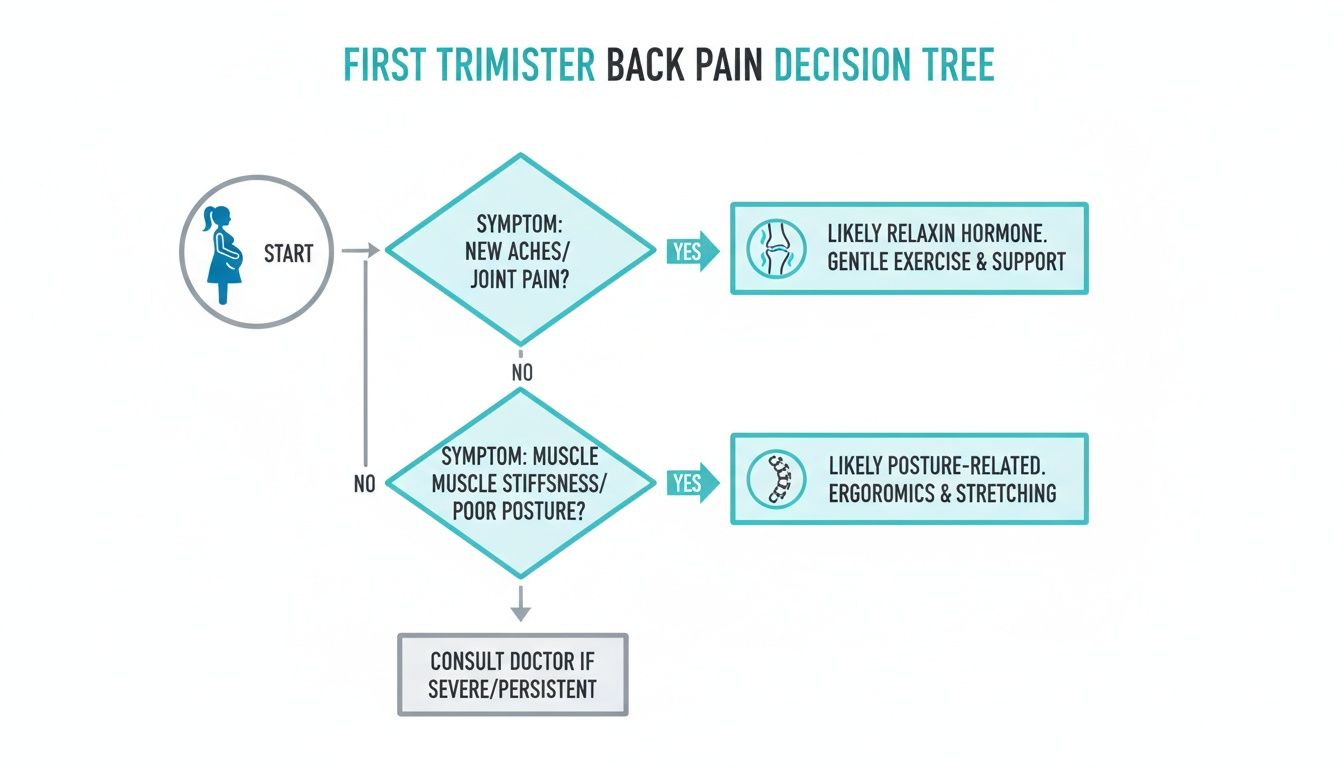
As you can see, the common culprits are usually hormonal shifts and postural changes. It’s the other symptoms that accompany the pain that should prompt a call to your provider.
Your healthcare team would much rather you call about something that turns out to be nothing than have you wait and worry at home with a potentially serious issue. Trust your gut—if the pain feels "wrong" or different, make the call.
Finding Safe Relief With At-Home Care
When that early pregnancy backache hits, it’s easy to feel like you just have to endure it. But you really don’t. Long before your first prenatal appointment, you have plenty of safe, practical ways to find relief right at home and start feeling more in control.
The idea is to gently work with your body, not against it, as it goes through these incredible changes. These techniques are all about easing muscle strain, encouraging better posture, and stopping a minor ache from becoming a major problem. Think of them as your first line of defense.
Gentle Heat and Movement
Sometimes the simplest things work best, and that's definitely true for applying a little warmth. A warm compress or a heating pad on a low-to-medium setting can feel like a miracle for sore, achy back muscles.
Just apply it to your lower back for 15-20 minutes at a time. The heat helps boost blood flow, which in turn helps relax those tight muscles. One important note: always keep the heating pad away from your abdomen and never crank it up to a high setting.
Now, pair that warmth with some gentle movement. I know, when your back hurts, the last thing you want to do is move. But staying still can actually make you feel stiffer. These simple, pregnancy-safe movements are a great place to start:
- Cat-Cow Pose: Get on your hands and knees and slowly flow between arching your back up like a cat and letting your belly drop down. This is fantastic for mobilizing your spine and releasing built-up tension.
- Pelvic Tilts: You can do these anywhere—standing against a wall or lying on the floor with your knees bent. Just focus on gently pressing the small of your back flat against the surface, holding for a beat, and then releasing. It’s a subtle move that works wonders for strengthening the deep muscles that support your spine.
By making small, consistent efforts with heat and stretching, you’re doing more than just finding temporary relief. You are actively supporting your body where it needs it most during this time of rapid change.
Everyday Ergonomics and Support
Often, the biggest source of relief comes from tweaking the small things you do all day, every day. The way you sit at your desk, how you stand, and even your shoes can make or break your back comfort.
Simple shifts in your routine can have a huge impact. For example, learning how the way you sit matters when pregnant is key to managing discomfort. A quick fix is to roll up a small towel and place it behind the curve of your lower back for instant support.
Think about making these small but powerful changes:
- Supportive Footwear: It’s time to put the high heels away for a while. Opt for shoes that give you good arch support and cushioning. Your entire body’s alignment starts from the ground up!
- Smart Lifting: If you have to pick something up—even something light—always bend from your knees, not your waist. Keep your back straight and let your powerful leg muscles do the lifting.
- Side Sleeping: This is the gold standard for pregnancy. Try sleeping on your side with a pillow wedged between your bent knees. This simple trick helps align your hips, pelvis, and spine, taking a ton of pressure off your lower back while you rest.
These at-home approaches are designed to give you comfort right now, but they also set the stage for a healthier, more comfortable rest of your pregnancy. And if the pain does stick around or gets worse, everything you've tried gives you valuable information to share when you seek professional help.
How Prenatal Physical Therapy Targets Back Pain
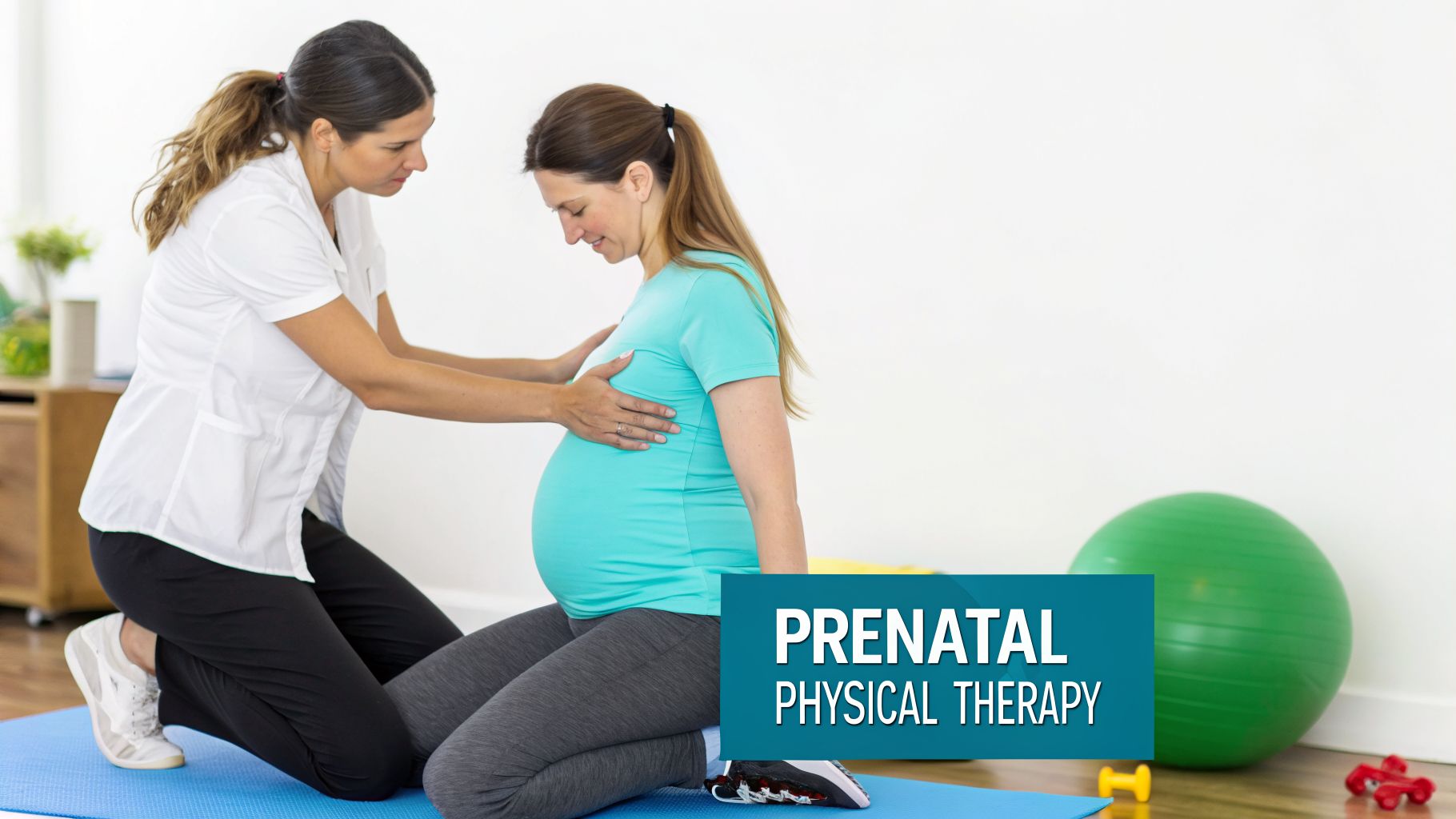
When you've tried all the at-home remedies and that bad backache just won't quit, it's your body's way of telling you it needs more specific support. This is exactly where prenatal physical therapy shines. It goes far beyond general advice, offering a plan created just for you by a specialist who deeply understands the pregnant body.
Think of a women's health physical therapist as a biomechanical detective for your pregnancy. They don't just look at the ache; they dig into its root cause. They connect the dots between your unique posture, muscle imbalances, and daily routines to figure out why you're in pain. From there, they build a strategy for real, long-lasting relief.
The whole process starts with a thorough evaluation. Your therapist will look at your posture, check your movement patterns, and pinpoint which muscles are too weak and which are working overtime. Every part of your treatment plan flows from this initial discovery session.
Your Personalized Treatment Plan
A prenatal PT session is the opposite of a one-size-fits-all workout. It’s a hands-on, highly customized process where your therapist uses a combination of techniques to restore balance and build strength, addressing the specific sources of your back pain.
Your plan will likely weave together several key elements to support your changing body.
1. Gentle Manual Therapy
This is where the therapist uses skilled, hands-on techniques to release tension and improve movement. They might gently mobilize stiff joints in your pelvis or lower back, or use soft tissue work to calm down those tight, overworked muscles that are pulling your spine out of alignment.
2. Targeted Strengthening Exercises
Forget generic crunches or ab work. A prenatal therapist will guide you through exercises that zero in on the deep core and pelvic floor muscles. These muscles act as your body's "internal corset." Strengthening them provides vital support for your spine, especially as pregnancy hormones make your ligaments looser.
3. Posture and Body Mechanics Coaching
You'll learn practical ways to move through your day that protect your back—everything from how to sit at your desk to how to lift a toddler without strain. This expert coaching helps you unlearn painful habits and replace them with patterns that keep you comfortable.
A key goal of prenatal physical therapy is empowerment. The aim is not just to provide temporary relief in the clinic but to equip you with the knowledge and tools to manage your own symptoms, prevent future pain, and feel strong throughout your pregnancy journey.
Building A Resilient Foundation
The work you do with a physical therapist in early pregnancy is a smart investment in your future comfort. By addressing muscle imbalances and unhelpful movement patterns now, you’re building a stronger, more resilient foundation for the months to come.
This proactive approach can stop a minor ache from turning into a major problem in your second and third trimesters.
To see how this specialized care can help you, take a look at our dedicated guide to prenatal and postpartum physical therapy. It's the first step toward a more comfortable and active pregnancy.
Building a Stronger Pregnancy to Prevent Future Pain
Once you’ve found some relief for your current backache, the conversation needs to shift. The best long-term strategy isn’t about just chasing pain away—it’s about building a body that’s resilient enough to prevent it from coming back. It’s a proactive approach that prepares you for the incredible journey ahead.
Think of it less like treating a single muscle cramp and more like training for a marathon. We're aiming to create a strong, stable foundation that can gracefully adapt to the constant changes of pregnancy.
Building Your Body’s Support System
A few smart habits established now can make a world of difference as your pregnancy progresses. By focusing on building stability from the inside out, you create a powerful defense against nagging back pain.
-
Start a Safe and Smart Exercise Routine: Once your doctor gives you the green light, begin a gentle exercise program. The real game-changers are your glutes and your transverse abdominis (your deepest core muscle). Strong glutes act as the primary stabilizers for your pelvis, while a strong core works like a natural corset, supporting your spine and taking pressure off your lower back.
-
Master the Art of Supportive Sleep: Sleeping on your side with a firm pillow wedged between your knees isn't just about comfort; it's a structural necessity. This simple trick keeps your hips aligned, which takes a significant amount of strain off your lower back and sacroiliac (SI) joints—two areas that become especially vulnerable thanks to the joint-loosening hormone relaxin.
-
Practice Posture Awareness All Day Long: How you stand, sit, and even lift things matters more than ever. Try to keep your weight balanced evenly on both feet when standing, and avoid locking your knees. When you're sitting, especially for long periods, tuck a small pillow or a rolled-up towel behind your lower back to help maintain its natural curve and prevent slumping.
A huge part of this preventative mindset centers on functional physical therapy exercises. These aren't just random movements; they are specifically designed to strengthen your body for the real-world tasks of daily life, making you more resilient to injury and discomfort.
This whole approach, rooted in physical therapy principles, empowers you to build a body that’s truly prepared for the demands of pregnancy, labor, and recovery. To go a step further, you can learn about specific pelvic floor exercises in pregnancy that are essential for creating this complete and stable foundation.
Your Questions On Early Pregnancy Back Pain Answered
When you're newly pregnant and your back starts aching, a million questions can run through your mind. It's completely normal to worry about what's safe and what will actually help. Let's tackle some of the most common concerns we hear from expecting mothers.
Can I Use A Heating Pad For Back Pain?
So many women ask if a heating pad is okay, and the good news is, yes—with a few important guidelines. Applying gentle warmth to your lower back can be wonderfully soothing for those tight, sore muscles.
Just be sure to keep the setting on low or medium, and limit your sessions to about 15-20 minutes at a time. The most important rule? Never, ever place a heating pad directly on your belly. The main concern is raising your core body temperature, so it's always a good idea to run it by your OB/GYN just to be safe.
What Is The Best Sleeping Position?
This is a game-changer for many. The best thing you can do for nighttime relief is to sleep on your side with a firm pillow wedged between your bent knees. This simple adjustment helps align your spine, pelvis, and hips, taking a tremendous amount of pressure off your lower back.
For even more support, you can place a small, rolled-up towel under your waist where it naturally curves. This position becomes even more important as your pregnancy progresses and your center of gravity shifts further.
When Should I See A Physical Therapist?
You don't have to wait until you're in agony to get help. If that backache is becoming a constant companion, waking you up at night, or making it hard to walk or sit comfortably, that's your cue. It’s the perfect time to see a physical therapist who specializes in prenatal care.
Getting ahead of the problem with early intervention often means faster relief and can stop the pain from getting worse. A therapist can give you the right tools to build a foundation for a much more comfortable and active pregnancy.
Don't let early pregnancy back pain dictate your experience. The women's health specialists at Lake City Physical Therapy are experts at creating personalized plans that get to the root of your discomfort. We'll help you build the strength and resilience you need for the incredible journey ahead.
Take the first step toward a more comfortable pregnancy and schedule your evaluation today.
Published via Outrank