Joint Pain Pregnancy: Causes and Relief
You roll out of bed, take a few steps, and your hips feel stiff. Later, getting out of the car sends a sharp catch through your pelvis. By evening, your lower back aches, your wrists feel swollen, and you start wondering whether this is “just pregnancy” or something you should pay attention to.
That uncertainty is common. Joint pain pregnancy symptoms can feel strange because they often show up in places you didn’t expect, and they can change from week to week. What felt like a minor annoyance early on can become a real limit on walking, sleeping, working, or even turning over in bed.
The reassuring part is that pregnancy joint pain usually has a clear reason behind it. Your body is adapting, not failing. The more helpful truth is that common doesn’t mean you have to just push through it. There are practical ways to reduce strain, calm irritated joints, and restore stability, especially when you understand how the pelvis, core, and pelvic floor work together. If you’re also dealing with back pain early on, this guide on bad backache in early pregnancy can help you make sense of what you’re feeling.
Why Joint Pain Is a Common Part of Pregnancy
Pregnancy asks your body to do two competing jobs at once. It has to become more mobile in some areas so birth is possible, while still keeping you stable enough to stand, walk, lift, sleep, and move through the day. That tension is why so many people feel achy, off-balance, or unexpectedly fragile in their joints.
A lot of pregnant patients describe the same pattern. They don’t feel “injured.” They just notice that ordinary movements start to feel different. Stairs feel heavier. Standing on one leg to put on pants becomes awkward. Sleeping comfortably gets harder. The pain may come and go, which can make it confusing.
That doesn’t mean it’s random.
Pregnancy changes ligament support, weight distribution, posture, and fluid balance all at once. Those changes often build over time, so the discomfort can feel mild at first and then become much more noticeable as the pregnancy progresses. In clinical practice, what people often call “just soreness” is really a mix of joint irritation, muscle overwork, and reduced stability.
Pregnancy pain is common, but “common” and “normal to ignore” are not the same thing.
There’s also a major blind spot in a lot of public advice. Many resources talk about the hips, back, and pelvis, but barely mention the pelvic floor. That matters because the pelvic floor helps support the base of the pelvis. When it isn’t coordinating well with the deep core and hip muscles, the joints around the pelvis often have to absorb more strain than they should.
Why reassurance and action both matter
It helps to know that many pregnant women experience musculoskeletal pain. It also helps to know that pain is information. Sometimes it’s your body asking for less load. Sometimes it’s asking for better support. Sometimes it’s asking for skilled help instead of generic stretching.
A useful mindset is this:
- Validate the symptom: Your pain is real, even if it started gradually.
- Look for patterns: Notice whether it’s worse with walking, rolling in bed, stairs, sitting, or swelling.
- Respond early: Small changes in support, movement, and stability work better than waiting until the pain becomes intense.
Understanding the Causes of Pregnancy Joint Pain
Pregnancy joint pain usually builds from several changes happening at once. The joints are handling more load, the body is redistributing that load in a new way, and the muscle system that normally keeps everything steady has to adapt quickly. If that muscular support does not keep up, pain often shows up first in the pelvis, low back, hips, or wrists.
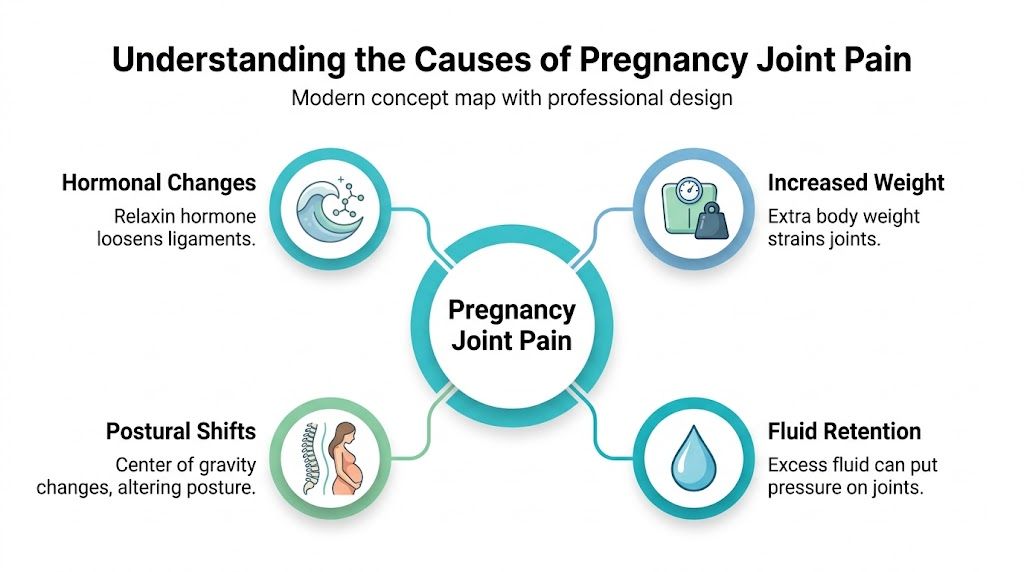
One of the biggest missing pieces in this conversation is the pelvic floor. These muscles do more than support the bladder and bowel. They help stabilize the base of the pelvis, coordinate with the deep abdominal muscles, and contribute to how force transfers through the hips and sacroiliac joints. During pregnancy, if the pelvic floor is overworking, under-recruiting, or not timing well with the rest of the core, the surrounding joints often take more strain.
Hormones change how much passive support your joints get
Relaxin gets the most attention, but the larger issue is that pregnancy hormones change connective tissue behavior. Ligaments and joint capsules provide less passive restraint than usual, especially around the pelvis. That is useful for pregnancy and birth. It also means the body has to rely more heavily on active support from muscles.
That trade-off matters.
If the deep core, hips, and pelvic floor are coordinating well, many people stay relatively comfortable even as their body changes. If that support system is lagging, the same normal pregnancy changes can create a sense of shifting, pinching, aching, or instability. I often explain it this way to patients: the problem isn't just that things are looser. The problem is that the stabilizing muscles now have a harder job.
This also explains why aggressive stretching is not always the right answer. A muscle can feel tight because it is working overtime to create stability, not because it needs more length.
Load increases, but support does not always increase with it
As pregnancy progresses, weight-bearing joints handle more force with daily tasks. The pelvis, spine, knees, ankles, and feet all feel that change. A joint does not need to be injured to become painful. Repeated overload is enough, especially when the body is spending more time on one leg during walking, stair climbing, dressing, or turning in bed.
The pelvis is often where this becomes most obvious because it sits at the center of load transfer between the trunk and legs. If the pelvic floor and deep abdominal system are not giving the pelvis a steady base, the sacroiliac joints and pubic joint can become more sensitive with normal movement. That is one reason two pregnant women with similar weight gain can feel very different day to day.
Common symptom triggers include:
- Long periods of standing, which increase compressive load through the low back and pelvis
- Stairs, hills, and uneven ground, which demand more hip and pelvic control
- Single-leg activities, such as putting on pants or stepping into a car
- End-of-day fatigue, when stabilizing muscles lose efficiency
Postural changes are a response, not a flaw
As the abdomen grows, the center of mass shifts forward. Many pregnant women respond by leaning the trunk back, increasing lower back extension, locking the knees, or gripping through the glutes and upper abdominals. These are normal adaptations. They are also less efficient.
Over time, those strategies can change how pressure moves through the spine and pelvis. The abdominal wall is already managing stretch. If the rib cage, diaphragm, deep abdominals, and pelvic floor are not working together well, the body often substitutes with bracing, clenching, or hanging on the joints. That pattern can make walking, rolling in bed, or standing from a chair feel much harder than it should.
Fluid retention can irritate smaller joints and nerves
Pregnancy pain is not limited to the pelvis. Fluid retention can increase pressure in the hands, wrists, fingers, ankles, and feet. In these areas, people often notice stiffness, puffiness, tingling, or numbness more than sharp joint pain.
That difference matters clinically. Pelvic and low back symptoms often relate more to load transfer and muscular control. Hand and wrist symptoms are more likely to be aggravated by swelling and local compression. Both are common in pregnancy, but they respond best to different strategies.
A useful practical rule is this: if pain feels unstable, catching, or worse with single-leg movement, look closely at support and coordination. If it feels puffy, stiff, or numb, swelling and compression may be playing a bigger role.
Where It Hurts Most Common Sites for Pregnancy Joint Pain
Pregnancy joint pain tends to cluster in a few predictable areas, but the sensation can vary a lot. One person feels a dull, tired ache. Another feels a sharp catch with turning, walking, or climbing stairs. Naming the location and the pattern matters because it helps distinguish muscle fatigue from true joint irritation.

A review in PMC on rheumatic and musculoskeletal symptoms in pregnancy notes that in the US, 3.6 million live births occur annually, and 50% of women report related musculoskeletal pain. The same review explains that symptoms often peak in the second and third trimesters, with pelvic girdle pain showing up in the hips, groin, and pubic areas due to sacroiliac joint stress. It also cites a study of 155 pregnant women in which 9% developed arthritis and 16% experienced arthralgia, primarily affecting hand joints and worsening in the third trimester.
Pelvic girdle pain
Pelvic girdle pain often sits around the sacroiliac joints, the back of the pelvis, or the pubic area in the front. People describe it as sharp, grinding, pinching, or unstable. It’s often worse when weight shifts unevenly from one leg to the other.
Common triggers include:
- Rolling in bed
- Getting out of a car
- Climbing stairs
- Standing on one leg to dress
- Taking longer walks
Pelvic girdle pain is often mistaken for “general back pain,” but it behaves differently. It tends to flare with transitional movements and asymmetrical loading.
Lower back pain
Lower back pain in pregnancy is often more diffuse. It may feel broad, achy, or pressure-like across the lumbar spine or just above the pelvis. This kind of pain often builds over the day, especially with prolonged standing or poor sitting support.
It can also be a downstream effect. If the pelvis is unstable, the lower back often tries to create stiffness to compensate. The result is an overworked lumbar area that feels tight and sore even when the true driver is below it.
Hips and groin
Hip pain can show up on the outer hips, deep in the buttocks, or through the groin. Night pain is common because side sleeping compresses tissues and exposes asymmetries in pelvic support.
Groin pain deserves attention because many patients assume it means they stretched something. Sometimes that’s true. Often, though, it reflects stress through the front of the pelvic ring and reduced load-sharing across the pelvis.
If pain spikes with turning in bed, stairs, or standing on one leg, think about pelvic stability first.
Hands and wrists
Not all joint pain pregnancy symptoms are below the waist. Swelling can make fingers feel stiff and rings feel tight. Wrists may ache, tingle, or feel weak, especially at night or first thing in the morning.
Hand symptoms are easy to dismiss because they seem unrelated to the growing belly, but they fit the pregnancy pattern. Fluid retention changes pressure in small spaces and can irritate tissues that already have less room to move.
A quick symptom map
| Area | Common sensation | Often aggravated by |
|---|---|---|
| Pelvis and SI region | Sharp, catching, unstable | Rolling, stairs, single-leg tasks |
| Lower back | Dull ache, fatigue, stiffness | Prolonged standing, unsupported sitting |
| Hips and groin | Soreness, pinching, side-lying discomfort | Walking, side sleeping, turning |
| Hands and wrists | Stiffness, swelling, tingling | Nighttime, gripping, morning swelling |
Safe At-Home Strategies for Managing Joint Pain
Self-care works best when it matches the kind of pain you’re having. A swollen wrist needs a different approach than an irritated sacroiliac joint. That may sound obvious, but many pregnant women get generic advice like “stretch more” or “just rest,” and neither is enough on its own.
According to Chapel Hill OBGYN’s discussion of managing joint pain during pregnancy, joint pain severity tracks with load distribution. Weight gain increases stress on the knees, ankles, and hips, while fluid retention creates swelling and pressure in areas like the hands and wrists. That’s why site-specific strategies make more sense than one blanket fix.

Reduce load before you chase relief
Start with the mechanics of your day. If your joints are irritated, every awkward transfer adds up.
- Change how you move in bed: Keep your knees together and roll your whole body as one unit instead of twisting through the pelvis.
- Sit with support: A small lumbar roll or folded towel can reduce the urge to collapse into the low back.
- Use both feet evenly: Avoid prolonged standing with more weight dumped into one hip.
- Break up long bouts of sitting or standing: Your joints usually tolerate shorter intervals better than one long stretch.
If you want a broader foundation for protecting your joints beyond pregnancy, this article on how to keep joints strong offers useful context.
Use support tools that actually match the problem
A belly band can reduce strain if your lower back and pelvis feel heavy or unstable. Supportive shoes can make a bigger difference than people expect, especially if ankle and knee discomfort builds as the day goes on.
For sleep, pillow setup matters more than pillow quantity. A well-positioned knee and belly support can reduce twisting through the pelvis and unload the hips. If you want ideas for choosing a specialized sleep pillow designed for pregnancy, that guide gives a practical breakdown of shapes and positioning options.
Better support usually beats tougher endurance. If a tool helps you move with less strain, it’s worth using.
Match the strategy to the body part
Here’s where a lot of people waste effort. They use the same fix for every symptom.
For load-bearing joints like the low back, hips, knees, and ankles, try:
- Postural resets: Gentle stacking of ribs over pelvis rather than leaning back.
- Short walks instead of long ones: Keep movement, reduce overload.
- Gentle strength work: Focus on control, not intensity.
- Rest breaks before pain escalates: Recovery works better earlier.
For swollen hands and wrists, try:
- Position changes: Don’t keep the wrists bent for long periods.
- Gentle hand and finger motion: Movement can reduce stiffness.
- Circulation support: Elevation and light movement often help more than forceful stretching.
- Ice when swelling dominates: Especially if the area feels hot or puffy.
What usually doesn’t work well
Some common habits give only temporary relief or make things worse later.
- Aggressive stretching: Not ideal when instability is the main issue.
- Ignoring pain until evening: By then, tissues are already irritated.
- Unsupportive footwear: Soft, flimsy shoes can increase lower-body strain.
- Doing less and less: Too much inactivity often increases stiffness.
A better goal is steady, supported movement. Not perfect posture. Not powering through. Just reducing unnecessary strain while keeping the body moving enough to avoid stiffness and deconditioning.
How Prenatal Physical Therapy Provides Lasting Relief
At-home strategies can calm symptoms. Prenatal physical therapy can address why those symptoms keep coming back.
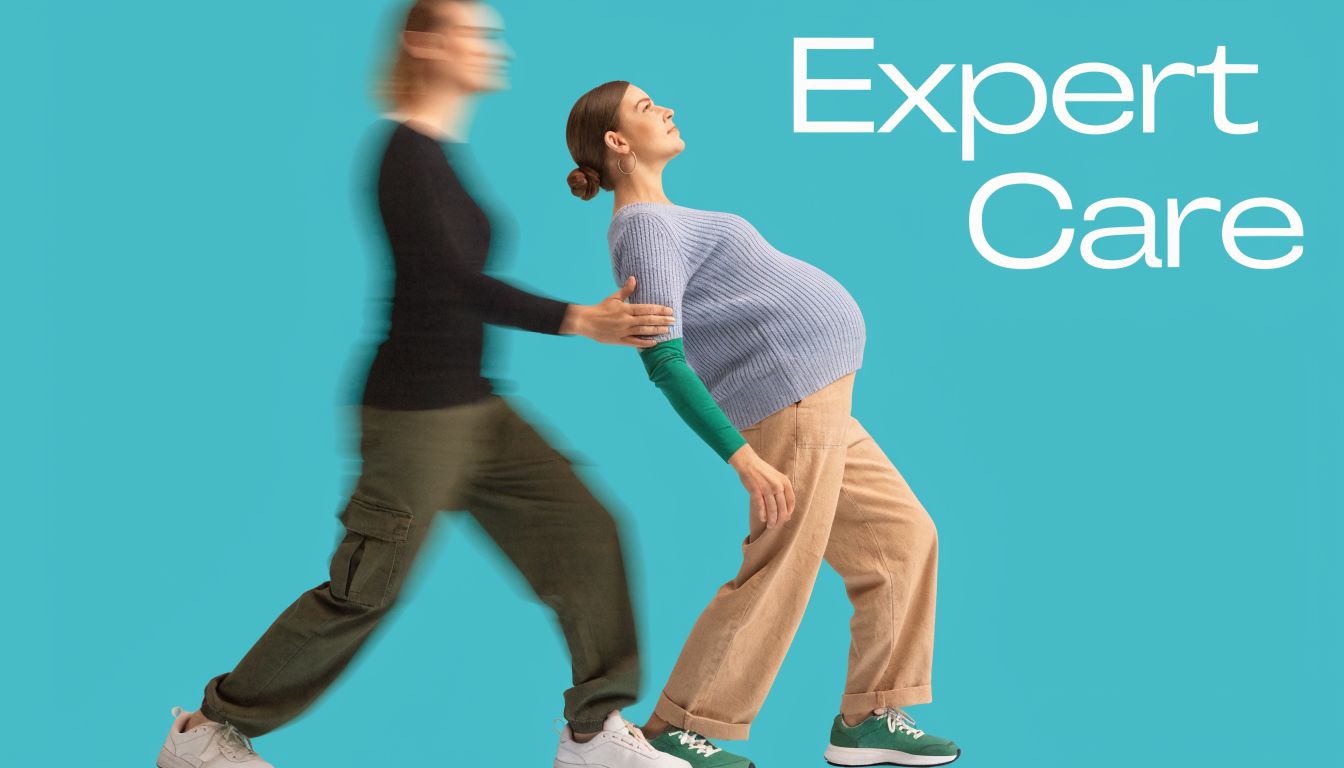
That difference matters. If a joint is irritated because the pelvis is unstable, heat may soothe it and a pillow may support it, but neither one retrains how your body transfers load. The key shift happens when treatment improves alignment, muscle coordination, and stability where pregnancy has made support less reliable.
One of the biggest missed pieces is the pelvic floor. A page on joint pain during pregnancy and pelvic floor care notes that 60 to 80% of pregnancies involve sacroiliac joint dysfunction, yet mainstream education rarely explains how pelvic floor weakness compounds this instability. That gap matters because weak abdominal and pelvic floor muscles fail to support increasingly lax ligaments.
The pelvic floor is part of the stability system
Many people hear “pelvic floor” and think only about bladder control or postpartum recovery. But during pregnancy, the pelvic floor is also part of the pressure and support system that helps stabilize the pelvis from below.
When the pelvic floor coordinates well with the deep abdominals, diaphragm, and hip muscles, the pelvis tends to handle load more efficiently. When it doesn’t, the sacroiliac joints and pubic region can become more reactive. That doesn’t always mean the pelvic floor is weak in a simple sense. Sometimes it’s overactive, poorly timed, or unable to adapt to changing pressure.
A skilled prenatal physical therapist looks at the whole system rather than chasing the sore spot.
What treatment usually includes
Prenatal PT is not a generic exercise handout. It’s usually a targeted combination of assessment, movement correction, and symptom-specific treatment.
A therapist may focus on:
- Pelvic alignment and movement patterns: Not to “perfect” your posture, but to reduce repeated strain.
- Manual therapy: Gentle hands-on work can help calm painful tissues and improve how joints and surrounding muscles move.
- Deep core retraining: This is control work, not intense ab exercises.
- Glute and hip strengthening: These muscles help the pelvis absorb force during walking and transfers.
- Pelvic floor assessment: This is often the missing piece in persistent pelvic and low back pain.
- Functional modifications: Getting out of bed, climbing stairs, lifting, and sitting at work all matter.
Patients are often surprised by how much symptom relief comes from changing a few high-frequency movements rather than doing long exercise sessions.
The body usually doesn’t need more effort. It needs better load-sharing.
Why the whole kinetic chain matters
Pregnancy doesn’t create isolated joint pain. It changes connective tissue, center of gravity, spinal posture, breathing mechanics, and abdominal support. A therapist trained in prenatal care looks at how those pieces interact.
That broader lens matters especially when pain seems out of proportion, keeps moving around, or isn’t improving with basic home care. The problem may not be exactly where you feel it most.
A lot of pregnant women also feel relief from having someone explain what is happening in their body in practical terms. When pain stops feeling mysterious, movement gets less guarded, and that alone can reduce some of the protective tension driving symptoms.
For a fuller look at why this kind of care matters during and after pregnancy, this resource on why you need physical therapy during and after pregnancy gives a helpful overview.
A visual walkthrough can also help make these ideas easier to apply:
What works better than waiting
A common trade-off in pregnancy care is deciding whether to wait and see or get help early. Waiting can make sense for mild, occasional soreness. It works less well when pain is affecting sleep, walking, exercise, work, or mood.
Earlier care often means:
- Less compensation: You haven’t spent months moving around pain.
- Easier retraining: Habits are more flexible.
- Better preparation for birth and postpartum: Stability work now can support recovery later.
The goal isn’t to eliminate every sensation. Pregnancy is physically demanding. The goal is to help you move with less pain, more confidence, and better support from the muscles that are supposed to be helping you.
When to Seek Medical Care for Your Joint Pain
Most pregnancy joint pain is mechanical. It relates to load, swelling, posture, or ligament laxity. But not every ache belongs in the “normal pregnancy discomfort” bucket, and that distinction matters.
A review on systemic connective tissue and postural changes in pregnancy describes pregnancy-related hormonal changes as a systemic alteration in connective tissue integrity, not just a local sore spot. It also notes that the center of gravity shifts anteriorly, with compensations through lumbar lordosis and sacral tilt. In practice, that means severe pain or pain paired with whole-body symptoms deserves professional evaluation.
Pregnancy joint pain red flags
| Symptom | Potential Concern | Action to Take |
|---|---|---|
| Sudden, severe joint or pelvic pain | Significant joint irritation or another medical issue needing assessment | Contact your OB, midwife, or medical provider promptly |
| Pain with fever or chills | Infection or illness not explained by routine musculoskeletal strain | Contact your medical provider promptly |
| Significant swelling in one leg | Circulatory issue requiring urgent evaluation | Seek immediate medical advice |
| Severe headache or visual changes with body pain | Pregnancy-related medical complication requiring urgent attention | Contact your OB or go in urgently |
| Pain that rapidly worsens or limits basic walking | More than routine pregnancy discomfort | Schedule a medical assessment |
A simple way to decide
Mechanical pain usually behaves predictably. It often changes with position, improves with support, and flares with certain movements. Concerning pain is more likely to feel intense, unusual, constant, or paired with symptoms that don’t fit a musculoskeletal pattern.
Call sooner if:
- You can’t explain the change
- The pain is escalating quickly
- You have other symptoms that feel systemic
- Daily function drops suddenly
When symptoms feel different, not just worse, it’s smart to get checked.
If you’re heading into a visit and want to make it more productive, this guide on how to prepare for a doctor appointment can help you organize symptoms, questions, and timelines.
Your Path Forward to a More Comfortable Pregnancy
Joint pain pregnancy symptoms are common, but they aren’t random and they aren’t something you have to endure. Your body is adapting to major hormonal, postural, and load-related changes. Once you understand that, the pain tends to feel less alarming and more workable.
The biggest shift for many women is moving from a symptom-only mindset to a support-and-stability mindset. Ice, rest, pillows, and posture changes can help. So can reducing uneven load through the pelvis and choosing better movement strategies during the day. But lasting improvement often comes from addressing the system underneath the pain, especially the connection between the hips, deep core, and pelvic floor.
That’s the part too many people miss. The pelvic floor is not just a postpartum topic. During pregnancy, it helps form the base of your support system. When it’s functioning well, the pelvis often feels steadier and movement feels less threatening.
Listen to patterns, not just pain intensity. If symptoms are mild, start with support and movement changes. If they’re persistent, disruptive, or confusing, get skilled help early. A more comfortable pregnancy usually isn’t about doing more. It’s about doing the right things sooner.
Frequently Asked Questions About Pregnancy Joint Pain
A common scenario in the clinic is this: pain starts as a mild ache when rolling in bed or getting out of the car, then gradually shows up with walking, stairs, or standing on one leg to get dressed. Questions usually follow once it begins affecting sleep or making everyday movement feel less reliable.
Is joint pain during pregnancy normal?
Yes. It is common for joints to feel more stressed during pregnancy because your center of mass shifts, your tissues become more mobile, and the muscles that usually steady the pelvis and trunk have to work differently.
What matters is how the pain behaves. Occasional soreness that settles with rest is different from pain that keeps building, wakes you at night, or makes walking and transfers feel unstable. I pay close attention to pelvic floor function here because those muscles help support the base of the pelvis. If that support system is underperforming or overgripping, hip, low back, and pelvic pain often become more persistent.
Does pregnancy joint pain affect labor?
It can affect comfort, positioning, and stamina during labor, especially if the pelvis, hips, or lower back are already sensitive. That does not mean labor will automatically be harder. It means preparation matters.
Better pelvic stability, breathing mechanics, and movement options often give patients more positions they can tolerate and better control over pain during late pregnancy and labor. That is one reason prenatal physical therapy is useful before symptoms become severe.
Will the pain go away after delivery?
Many pregnancy-related aches improve after birth as joint loading and pregnancy-related tissue changes decrease. Recovery is not always immediate, though. If you spent months shifting weight away from one side, gripping through the glutes, bracing the abdominals, or losing pelvic floor coordination, those patterns can continue postpartum.
Some people feel much better within weeks. Others need guided rehab to restore strength, mobility, and pressure management.
Can I take over-the-counter pain medicine?
Check with your OB, midwife, or prescribing clinician before taking any medication during pregnancy. Medication decisions depend on trimester, health history, and the type of pain you are having. NSAIDs are generally avoided later in pregnancy because of fetal risks, so it is smart to confirm what is appropriate for you before using anything over the counter.
What kind of exercise helps most?
The best exercise is usually the kind your body can tolerate without increasing symptoms later that day. For many pregnant patients, that means low-irritation strengthening, walking within tolerance, gentle mobility work, and exercises that improve pelvic, core, and pelvic floor coordination.
More exercise is not always better. Better support is better. If a workout repeatedly triggers sharp pelvic pain, groin pain, or a sense that the pelvis is giving way, the plan needs to change.
If joint pain is making pregnancy harder than it needs to be, Lake City Physical Therapy offers women’s health-focused care for prenatal and postpartum recovery, including pelvic floor therapy and pregnancy-related pain support. The right plan can help you move with less pain, better stability, and more confidence through the rest of your pregnancy.

