7 Signs You Need Pelvic Floor Therapy
Have you ever leaked a little when you sneezed and brushed it off as “just part of having kids”? Or noticed a heavy, dragging feeling in your pelvis and assumed you only needed to rest more? That gap in conventional thinking keeps a lot of women stuck. Many symptoms tied to the pelvic floor get normalized for years before anyone explains that they’re treatable.
They are not things you have to live with. They’re messages from your body that a key support system needs attention. Your pelvic floor is a group of muscles at the base of the pelvis that helps support your bladder, bowel, and reproductive organs. It also plays a major role in continence, sexual function, breathing mechanics, and core control.
When those muscles are weak, overactive, irritated, or poorly coordinated, the effects can show up far beyond the bathroom. Some women notice leakage. Others notice pelvic pain, pressure, constipation, painful sex, or a sudden inability to tolerate running, lifting, or even long walks. In postpartum recovery, oncology care, and sports performance, pelvic floor issues often hide inside symptoms that seem unrelated at first.
That’s why signs you need pelvic floor therapy aren’t always dramatic. Sometimes they’re subtle. You stop jumping in workouts. You change how you dress because of pads. You avoid intimacy. You map out bathroom stops before every errand. You feel less at home in your body.
Pelvic floor therapy can help because treatment isn’t limited to doing more Kegels. Good care looks at strength, timing, relaxation, scar mobility, breathing, bowel and bladder habits, load management, and your real goals. If you’re trying to care for a newborn, finish a race, recover after cancer treatment, or get through the day without discomfort, those details matter.
Here are seven signs it’s time to take your symptoms seriously.
1. Urinary Incontinence Stress Urgency or Mixed
Do you plan your day around the nearest bathroom, wear a pad for workouts, or brace before every cough because you are not sure your bladder will hold?
Urinary leakage is one of the clearest signs that the pelvic floor needs attention. That includes leaking with coughing, sneezing, laughing, lifting, jumping, or running. It also includes a sudden urge to urinate that is hard to delay, or a mixed pattern where both leakage and urgency show up.
I see women dismiss this symptom for months because it only happens in certain moments. A long run triggers it. Picking up a child triggers it. The final reps of a heavy lift trigger it. The pattern may look different across postpartum recovery, sport, and midlife, but the clinical question is the same. Can your pelvic floor manage pressure, timing, and bladder control under the demands of your real life?
What works and what often backfires
Pelvic floor rehab works best when treatment matches the reason for the leakage. Some women need strength. Others need better coordination, better relaxation between efforts, or better pressure control through the abdomen and rib cage. Women recovering after pelvic cancer treatment may also need tissue mobility work, scar management, and bladder habit retraining alongside muscle work.
Guessing usually slows progress.
Random Kegels done all day, clenching the glutes during exercise, hovering over the toilet, or restricting fluids too much can irritate the bladder and reinforce poor mechanics. If you want a clearer picture of the common causes, this overview of urinary incontinence in women explains the different patterns in plain language.
Practical rule: Leakage during exercise or daily activity is a symptom to assess, not something you need to accept to stay active.
A good plan often includes breathing retraining, bladder scheduling, pressure management during lifting and impact, and a graded return to higher-level activity. For athletes, that may mean changing load, volume, or exercise selection for a few weeks instead of stopping training altogether. For postpartum women, it may mean rebuilding control before returning to running. For oncology patients, it may mean addressing both strength loss and tissue sensitivity after treatment.
Small changes that can help now
Keep a simple symptom log for one week. Write down when leakage happens, what you were doing, whether urgency came first, and whether your bladder was very full. Those details help separate stress incontinence from urgency, mixed incontinence, and habit-based bladder irritation.
You can also start with a few practical changes:
- Empty your bladder with purpose: Go before a workout or long car ride, but avoid frequent "just in case" trips.
- Exhale on effort: Breathe out as you stand up, lift, push, or land instead of holding your breath.
- Watch urgency triggers: Caffeine, alcohol, carbonated drinks, and artificial sweeteners can aggravate some bladders.
- Scale impact, not all activity: Walking, cycling, strength work, and controlled drills are often a better starting point than repeated leaking during jumps or runs.
Early treatment matters because compensation becomes a habit. Women start avoiding classes, changing routes, skipping intimacy, or limiting fluids to stay ahead of symptoms. Pelvic floor therapy gives you a way to address the problem directly and get back to daily life, postpartum recovery, sport, or cancer rehabilitation with a plan that fits your body.
2. Pelvic Pain During Intercourse
Pain with intercourse often gets minimized, delayed, or explained away. But pain with penetration, deep aching, burning, or sharp muscle tension is one of the most important signs you need pelvic floor therapy. In many cases, the issue isn’t weakness. It’s overactivity, guarding, scar restriction, or poor tissue mobility.
For postpartum women, this may show up after tearing, episiotomy, or a C-section when abdominal and pelvic mechanics change. For women with endometriosis, pelvic pain may persist even when they’re already getting medical care. Athletes can also develop a very tense pelvic floor from repeated bracing, gripping, and impact.
A lot of women assume they should stretch it out on their own or force their way past it. That usually backfires.
Here’s the emotional side that matters clinically. If your body expects pain, it starts protecting against it. The pelvic floor tightens more. Anticipation rises. Intimacy becomes stressful even when you want connection.
A more useful first step is getting the muscular and mechanical piece assessed. Pelvic floor physical therapy for painful intercourse can address tissue restrictions, muscle guarding, relaxation, and graded return to pain-free intimacy.

When relaxing is more important than strengthening
Generic internet advice can be harmful. If your pelvic floor is already tight and reactive, more strengthening can increase symptoms. Many women need down-training first. That can include diaphragmatic breathing, manual therapy, scar work, relaxation drills, and positional changes.
Painful sex is not a relationship problem to push through. It’s a medical symptom that deserves treatment.
Useful habits between visits often include:
- Communicate clearly: Tell your partner what kind of pain you feel and when it starts.
- Use slow breathing: Longer exhales can help reduce guarding.
- Choose positions you can control: More control usually means less apprehension and less protective muscle tension.
- Use warmth first: Heat to the pelvic area may help muscles relax before intimacy.
- Pause during flares: If tissues are irritated, forcing penetration usually reinforces the pain cycle.
For oncology patients, this can also be part of treatment recovery. Scar tissue, radiation effects, hormonal changes, and fear around pain can all affect pelvic floor function. That doesn’t mean the problem is “just tension.” It means the plan has to address the whole picture.
3. Fecal Incontinence or Urgency With Bowel Movements
This symptom is often the one women are least likely to mention. Urgency, smearing, loss of gas control, or stool leakage can feel embarrassing, but it’s absolutely a reason to seek pelvic floor therapy.
The bowel and bladder systems share space, muscles, and pressure strategies. If you’re dealing with urinary symptoms too, that overlap isn’t surprising. After childbirth, especially if there was perineal trauma or sphincter injury, bowel control may change in ways women don’t expect.
Athletes can notice this during long runs or high-adrenaline events. Other women feel intense urgency after meals, or when they can’t get to a restroom quickly. Some stop eating before exercise or social events to avoid accidents. That’s a major quality-of-life burden.
Why bowel symptoms need specific treatment
Pelvic rehab for bowel symptoms isn’t just “tighten the muscles.” The plan often involves coordination, sensation, stool consistency, toileting mechanics, and how you manage urge control. Some women push too hard and repeatedly strain. Others hold tension all day and can’t lengthen when it’s time to empty.
If constipation and pelvic floor dysfunction are part of the same picture, treatment has to address both. This discussion of IBS and pelvic floor dysfunction can help you understand that relationship.
A few practical changes can reduce aggravation while you’re getting assessed:
- Use better toilet posture: Put your feet on a small stool so the pelvic floor can lengthen more naturally.
- Don’t rush or strain: Pushing harder usually increases pressure and irritation.
- Track stool pattern and urgency: Timing, consistency, and food triggers matter.
- Coordinate with your care team: Diet, hydration, medication effects, and pelvic floor mechanics all interact.
Signs it’s affecting more than your bowels
Women often start rearranging life around this symptom. They map bathrooms, decline travel, or avoid exercise classes. That’s not a small issue.
A postpartum patient may say, “I’m not leaking stool, but I never feel fully in control.” An endurance athlete may report bowel urgency at the same point in every run. A woman in cancer recovery may struggle with pelvic scarring, pressure changes, or bowel urgency after treatment. These are exactly the kinds of patterns a pelvic health therapist should evaluate.
The right plan may include manual therapy, bowel retraining, breathing work, urge-control strategies, and sometimes biofeedback to reconnect sensation with muscular response. The important point is simple. Silent suffering is common here, but it isn’t necessary.
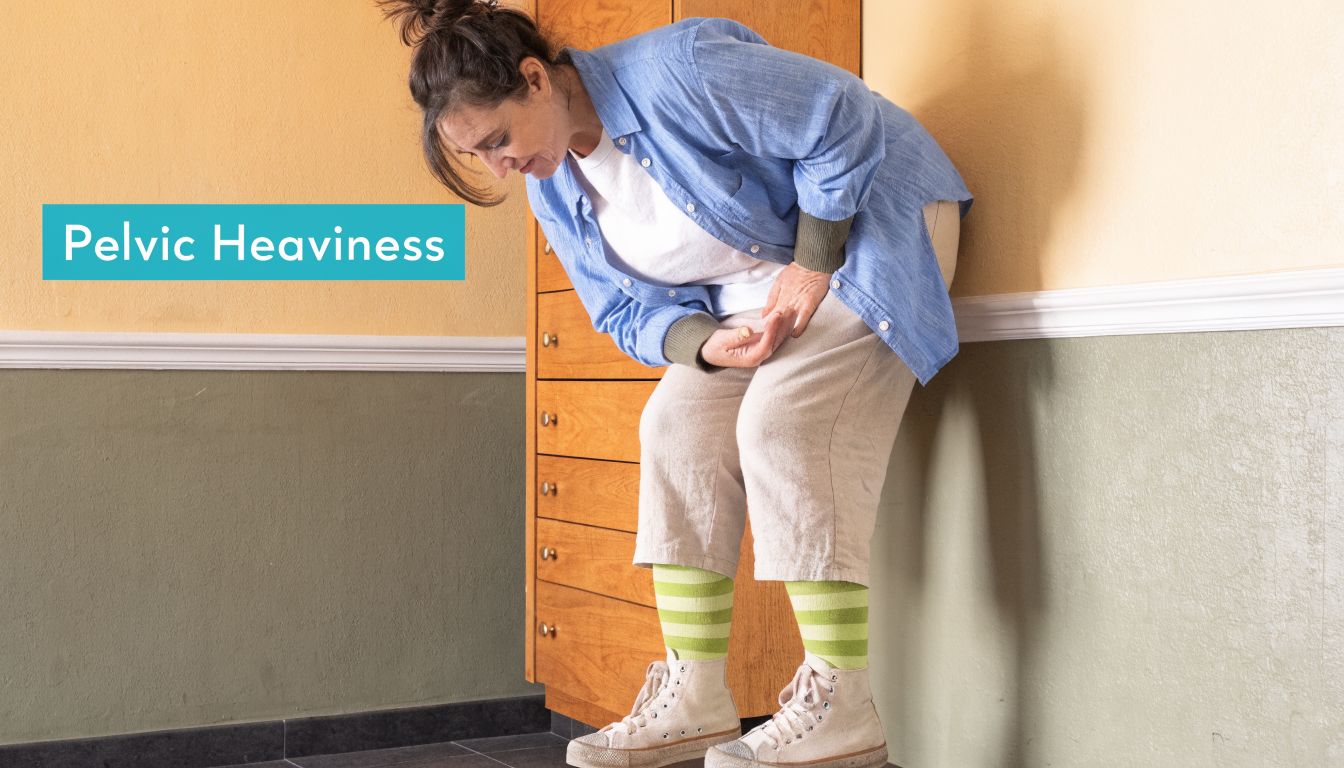
4. Pelvic Heaviness or Pressure Sensation
A heavy, dragging, or bulging sensation in the vagina or pelvis often points to pelvic organ prolapse or reduced support from the pelvic floor. Women describe it in very specific ways. “It feels like something is falling out.” “There’s pressure by the end of the day.” “I feel worse after standing, lifting, or working out.”
That symptom deserves attention early, especially postpartum and during perimenopause. Pelvic organ prolapse affects 3% to 6% of women overall and up to 50% of parous women, according to this overview of signs that may indicate pelvic floor therapy.
That doesn’t mean every feeling of pressure is severe prolapse. It does mean you shouldn’t ignore it or wait until it becomes more disruptive.
First-line management is usually conservative
Many women assume prolapse automatically means surgery. Often, conservative care is the first step. That can include pelvic floor training, pressure management, bowel support, lifting mechanics, activity modification, and sometimes a pessary through your medical provider.
What usually makes symptoms worse is repeated straining. Heavy lifting with poor bracing, chronic constipation, breath-holding, or jumping back into impact too soon can all increase downward pressure.
If heaviness gets worse as the day goes on, after workouts, or after lifting, that pattern matters.
A CrossFit athlete might feel pressure during barbell cycling or double-unders. A postpartum mom may notice it most after carrying the baby all day. A nurse or teacher may feel it after long hours on her feet. Different lives, same mechanism. The pelvic floor needs more support and better load sharing.
Practical steps while you wait for evaluation
Start by reducing unnecessary strain. Exhale on effort. Avoid bearing down to “brace.” Use a stool for bowel movements if constipation is part of the picture. If a certain exercise creates a clear bulging or pressure response, scale it back rather than forcing it.
These adjustments can help:
- Lift with pressure control: Exhale as you rise or exert.
- Pause impact training: Running and jumping may need to wait until support improves.
- Address constipation early: Bowel straining can drive prolapse symptoms.
- Ask about a pessary if needed: Mechanical support can be very useful while strength and coordination improve.
Kegels can help some women, but not all. If the pelvic floor is already gripping or if coordination is poor, squeezing harder won’t solve the problem. A personalized exam matters much more than generic advice.
5. Persistent Pelvic Pain
Not all pelvic floor problems show up as leakage or pressure. Sometimes the clearest sign is persistent pain in the pelvis, lower abdomen, tailbone, hips, or low back that hasn’t responded to standard care.
Women often get bounced between providers. Imaging may be unremarkable. Orthopedic exercises may help a little but not enough. The pain may flare with sitting, stress, intimacy, bowel movements, or exercise. Pelvic floor dysfunction is often missed because the symptoms don’t look “urogynecologic” enough at first glance.
That gap matters. Some women with pelvic floor dysfunction present without the classic leakage pattern and instead show up with unresolved pain or constipation that seems musculoskeletal on the surface, as discussed in this overview of lesser-known pelvic floor dysfunction signs.
When pain patients need a different plan
Chronic pelvic pain usually responds poorly to brute-force strengthening. If pain has been present for a while, the nervous system may be guarding, tissues may be sensitive, and the pelvic floor may be overactive. In that situation, treatment often starts with reducing threat, restoring movement options, and teaching the body how to relax again.
Women with endometriosis, interstitial cystitis, prior surgery, or oncology-related scarring may all fit this category. So can athletes who keep training through subtle warning signs until the system becomes irritable.
A broader conversation about graded activity can be useful. General principles for exercising safely with a specific condition apply here too. Build capacity without repeatedly provoking the tissue or the nervous system.
What tends to help
A detailed symptom map is important. Where is the pain? What aggravates it? Is it linked to sitting, orgasm, bowel movements, training volume, or your menstrual cycle? That history often reveals more than people expect.
Commonly useful strategies include:
- Relaxation before strengthening: Tight, painful muscles usually need to let go first.
- Heat rather than aggressive stretching: Warmth and down-training can calm protective muscle tone.
- Gradual re-entry into activity: Total rest often increases fear and deconditioning.
- Multidisciplinary care: Gynecology, oncology, GI, or pain management may need to work alongside PT.
“My MRI was normal” doesn’t rule out pelvic floor involvement.
For women in cancer recovery, pain may involve scar mobility, tissue sensitivity, hormonal changes, or protective movement patterns after treatment. For athletes, persistent hip or deep pelvic pain may be less about a single strained tissue and more about how the pressure system is functioning under load. That distinction changes treatment.
6. Weak Core or Pelvic Floor Muscles Post Pregnancy
Have you been cleared at your postpartum visit but still feel like your trunk is not working with you? That gap between medical healing and physical readiness is common, especially when you are lifting a baby, feeding in awkward positions, carrying gear, and trying to return to exercise on little sleep.
After pregnancy, weakness rarely means a simple lack of strength. More often, it is a coordination problem involving the diaphragm, abdominal wall, pelvic floor, and the way your body manages pressure. Delivery can add scar sensitivity, nerve irritation, or tissue strain. A cesarean birth, vaginal delivery, tearing, or forceps use can all leave a different rehabilitation picture, even when recovery is considered routine.

What weakness really looks like postpartum
Sometimes the signs are obvious. You leak when you lift the car seat or cough. You cannot tolerate a short jog, a workout class, or a long walk without symptoms.
Sometimes they are quieter. You brace hard to roll in bed. Your abdomen domes during sit-ups or even when getting off the floor. Your back, hips, or pubic bone ache after a day of baby care. You feel unstable, disconnected, or unsure how to turn your core on without bearing down.
Those patterns matter because postpartum recovery is not only about getting stronger. It is about restoring timing and load transfer. Athletes often notice this when they try to return to lifting, running, or field sports and realize their usual bracing strategy no longer works. Women recovering after medically complex births may need a slower progression because fatigue, pain, and scar mobility change what the body can tolerate.
Many new mothers also delay care because they assume therapy will take too much time. In practice, treatment is often focused and task-specific. The goal is to improve the things you do every day, not add busywork to an already full schedule.
What to build first
Postpartum rehab works best when the first goal is control. Once control improves, strength and impact tolerance usually come much more smoothly.
A useful progression often looks like this:
- Restore breathing and pressure management: Learn how to exhale with effort, expand the rib cage, and stop bearing down during simple tasks.
- Reconnect the deep system: Train the lower abdominals and pelvic floor to respond together instead of gripping with the upper abs, glutes, or breath.
- Practice real tasks: Lifting the baby, standing from the floor, carrying laundry, pushing a stroller, and getting in and out of the car are rehabilitation exercises when done well.
- Build toward your actual goals: A postpartum runner needs a different progression than a mother whose main goal is pain-free childcare. A woman returning after cancer treatment, abdominal surgery, or birth trauma may need more emphasis on scar mobility, tissue tolerance, and fatigue management.
This is why generic advice like “just do Kegels” or “wait six weeks” falls short. Good pelvic floor therapy matches the plan to your delivery history, symptoms, daily demands, and return-to-activity goals.
If your core still feels unreliable months after birth, that is not something you have to push through. It is a treatable sign that your system needs skilled retraining, not more guessing.
7. Difficulty With High Impact Exercise or Sport
Some women never leak at rest but can’t get through a run, dance class, volleyball practice, or lifting session without symptoms. If your body tolerates daily life but not sport, that still counts. Trouble returning to high-impact activity is one of the clearest signs you need pelvic floor therapy, especially for athletes and active women.
This is a major blind spot in generic pelvic health advice. Sports symptoms often get mislabeled as poor conditioning, postpartum deconditioning, or something you just manage with pads and willpower. But the pelvic floor is part of athletic performance. It has to absorb force, coordinate with breathing, and respond quickly under load.
Female runners are a clear example. A 2023 study found that 42% of female runners experience pelvic floor dysfunction contributing to incontinence or pain during runs, while only 15% seek specialized therapy, according to this discussion of athletic signs of pelvic floor dysfunction.
Athletes often need more than Kegels
A runner may need stride and pressure management. A CrossFit athlete may need a different bracing strategy. A dancer may need better pelvic floor relaxation because she’s gripping through the hips and abdominals all day. A triathlete may need symptom-specific planning for swim, bike, and run transitions.
That’s why generalized strength advice often falls short. Some athletes need strength, but others need down-training, coordination, impact progression, and load management. More effort is not always better.
A practical return-to-sport plan usually includes:
- Sport-specific testing: Symptoms during jumps, sprints, lifts, and fatigue should be examined directly.
- Breathing under load: Breath-holding can overwhelm the pelvic floor during impact and heavy effort.
- Graded exposure: Walk, jog, run. Lower load, then higher load. Short bouts before long sessions.
- Temporary support if needed: Some women use pads or a pessary while rehab is underway.
Performance matters too
This isn’t only about avoiding symptoms. It’s about restoring confidence and efficiency. When athletes fear leakage or pressure, they change mechanics. They cut stride length, brace too hard, stop fueling, avoid drills, or skip competitions. That affects performance and recovery.
For postpartum athletes, this often intersects with identity. The body that once felt reliable suddenly feels unpredictable. For women in oncology recovery, returning to movement may involve scar mobility, pressure changes, fatigue management, and rebuilding trust in the body after treatment. Both groups benefit from a plan that respects the sport and the person.
7 Signs Indicating Need for Pelvic Floor Therapy
| Condition | 🔄 Implementation Complexity | Resource Requirements | 📊 Expected Outcomes | 💡 Ideal Use Cases | ⭐ Key Advantages |
|---|---|---|---|---|---|
| Urinary Incontinence (Stress, Urgency, or Mixed) | Moderate, assessment, structured PT + home program | Regular PT visits (6–12 wks), home exercises, possible biofeedback | High likelihood of reduced leakage within 4–8 weeks with adherence | Female athletes, postpartum women, perimenopausal women with leakage | ⭐ Non‑surgical, evidence‑based; restores continence and activity participation |
| Pelvic Pain During Intercourse (Dyspareunia) | Moderate–High, manual therapy, muscle relaxation, gradual desensitization | PT skilled in sexual health, possible multidisciplinary referral (gynecology, mental health), tools (dilators) | Good reduction in pain/muscle tension over weeks; chronic cases may need longer | Women with penetration pain, postpartum scarring, pelvic floor hypertonia | ⭐ Addresses root causes; improves sexual function and relationship quality |
| Fecal Incontinence or Urgency with Bowel Movements | Moderate, targeted sphincter training, biofeedback, bowel management | PT + biofeedback, dietitian input, possible physician evaluation for nerve damage | Significant improvement possible; often requires 8–12+ weeks and diet changes | Postpartum urgency, OASIS recovery, coexisting urinary incontinence | ⭐ Restores sphincter control and sensation; often prevents surgery |
| Pelvic Heaviness or Pressure Sensation (Prolapse) | Moderate, strength training, activity modification, ongoing maintenance | PT sessions, home program, possible pessary fitting, lifestyle changes | Symptom reduction for mild–moderate prolapse; may delay or avoid surgery | Mild–moderate prolapse, postpartum women, those lifting regularly | ⭐ Conservative, cost‑effective symptom management that preserves activity |
| Persistent Pelvic Pain (Chronic Pelvic Pain Syndrome) | High, multimodal approach, pain education, long-term strategy | Frequent PT, multidisciplinary team (psychology, gynecology, urology), longer duration | Improved function and pain coping; full resolution less predictable | Chronic pain >3–6 months, complex/comorbid pain conditions | ⭐ Multimodal care reduces medication/surgical reliance and improves tolerance |
| Weak Core or Pelvic Floor Muscles Post-Pregnancy | Low–Moderate, progressive, protocolized rehabilitation | Early PT (from 6–8 wks), consistent home program, time commitment (3–6 months) | Strong evidence for restored function and return to exercise with early care | Early postpartum women aiming to return to daily activity/sport | ⭐ High efficacy when started early; enables safe return to pre‑pregnancy activity |
| Difficulty With High‑Impact Exercise or Sport (Return to Activity Limitations) | Moderate, sport‑specific progression, coordination with coaches | Sports PT with pelvic health expertise, progressive loading plan, protective aids | Enables graded return to sport over weeks–months; reduces recurrence risk | Athletes (running, CrossFit, triathlon, team sports) limited by pelvic symptoms | ⭐ Restores performance and confidence; integrates pelvic floor with sport mechanics |
Your Path Forward What to Expect and How to Start
If you recognized yourself in any of these signs, the most important point is simple. You do not have to just live with them. Pelvic floor symptoms are common, but they are treatable, and good treatment is specific.
That specificity matters because the pelvic floor can be weak, tight, poorly timed, irritated, or some combination of all four. A woman with leakage during jump rope may need pressure management and strength. A woman with painful intercourse may need relaxation and scar work. A woman with prolapse symptoms may need support, coordination, and load modification. The plan should match the pattern.
There are a few situations where you shouldn’t wait for a routine physical therapy evaluation. Seek urgent medical care if you have sudden loss of bowel or bladder control, numbness in the saddle region, or pelvic pain with fever or vomiting. Those symptoms need immediate medical assessment.
For everyone else, a pelvic floor evaluation is usually straightforward, respectful, and adjusted to your comfort level. Your therapist should start by listening. That includes your symptoms, your daily routine, your exercise background, your pregnancy or surgical history, your cancer treatment history if relevant, and what you hope to get back to doing.
The exam may include movement screening, breathing assessment, posture and pressure management, abdominal and hip testing, and, with your consent, an internal pelvic exam. That internal assessment can help identify muscle tone, tenderness, coordination, strength, and whether you’re dealing with weakness, overactivity, or both. Consent matters at every step. You should always know what’s being assessed and why.
Treatment often combines several pieces rather than one magic exercise:
- Manual therapy: Gentle treatment for tight muscles, scar restrictions, and painful tissues.
- Targeted exercise: Strengthening when weakness is the issue, and down-training when overactivity is the problem.
- Biofeedback: Visual or auditory feedback that helps you learn how to contract or relax correctly.
- Bladder and bowel retraining: Strategies for urgency, frequency, constipation, and pressure management.
- Functional retraining: Returning to lifting, running, sex, work tasks, and daily movement with better control.
- Education: Understanding triggers, habits, and mechanics so symptoms don’t keep coming back.
That last point is one of the biggest differences between pelvic floor therapy and generic advice online. Internet guidance often treats every symptom like a weakness problem. In practice, many women need a more nuanced approach. Sometimes Kegels help. Sometimes they make symptoms worse. Sometimes the issue is breath-holding during lifts, constipation driving prolapse symptoms, a tender C-section scar affecting abdominal coordination, or a hypertonic pelvic floor in a high-performing athlete.
Progress doesn’t always look dramatic at first. It may start with less urgency, less pressure as the day closes, being able to walk farther without symptoms, tolerating intimacy more comfortably, or feeling more in control during workouts. Those changes matter because they’re signs the system is working better, not just harder.
If you’re looking for care in North Idaho or Eastern Washington, Lake City Physical Therapy offers women’s health services that include pelvic floor therapy, prenatal and postpartum rehab, oncology physical therapy, and women’s sports physical therapy. For many women, having one clinic that understands leakage, prolapse, painful sex, scar mobility, and return to activity in the context of real life makes it easier to start.
The hardest part is usually not the therapy itself. It’s deciding your symptoms count. They do.
If you’re ready to stop guessing and get a plan built around your symptoms and goals, Lake City Physical Therapy offers pelvic health evaluations for concerns like leakage, prolapse, pelvic pain, painful intercourse, postpartum recovery, oncology rehabilitation, and return to sport. You can explore their resources or schedule a visit to discuss what’s been going on and what kind of treatment fits your situation.