How Long Postpartum Recovery Really Takes
Postpartum recovery is not just 6 weeks. Early healing happens in the first 6 weeks, but full physical and biological recovery often takes 6 to 18 months, and some systems keep changing even longer.
That matters because a lot of moms are told to expect a finish line at the six-week visit. In real life, that appointment is usually a checkpoint, not the end of recovery. If you're still tired, still feeling unlike yourself, still noticing leaking, pressure, weakness, or pain months later, that doesn't mean you're failing. It often means your body is still doing exactly what postpartum bodies do. The better question isn't just “how long postpartum,” but which part of recovery are we talking about: bleeding, incision healing, pelvic floor strength, hormones, return to exercise, or feeling steady in your body again.
The Myth of the Six Week Postpartum Checkup
The phrase “6-week postpartum recovery” is everywhere, but it's too small for what the body goes through. Yes, the first six weeks are important. That's when bleeding tapers, tissues begin closing, and your uterus shrinks down dramatically. But that short window doesn't capture the full story.
A major recent review discussed in this postpartum recovery timeline overview points to a much longer process. In a 2024 analysis of over 1.3 million blood tests, researchers found that while some body systems settle within months, immune markers and metabolic processes can continue remodeling for 12 to 18 months. That's a very different picture from “you should be back to normal by your checkup.”
Why six weeks became the default
The six-week visit isn't useless. It helps screen for immediate healing issues, infection concerns, bleeding problems, mood symptoms, and birth-related complications. But the visit often gets treated like a finish line because it's a convenient medical milestone.
For many moms, that's where the confusion begins. You may hear “you're cleared,” then assume your muscles, scar tissue, pelvic floor, core, sleep-deprived nervous system, and hormones are all ready for sex, running, lifting, and busy days on your feet. Clearance for activity isn't the same as readiness for impact.
Practical rule: Think of the six-week mark as the end of the emergency phase, not the end of healing.
What recovery really looks like
A better way to think about postpartum is as a long transition with layers:
- Early repair: bleeding, swelling, soreness, incision or tear healing
- Foundation rebuilding: breathing, pressure control, core coordination, pelvic floor retraining
- Functional recovery: walking longer, lifting, carrying, returning to work, exercise, intimacy
- System-wide recovery: hormones, sleep regulation, immune shifts, metabolism, emotional steadiness
That longer view can be a relief. If you've wondered why your body still feels different months later, you're not broken. You're postpartum.
If you want a deeper look at why early support matters, this guide on why sooner is better for mothers postpartum care is a helpful next read.
Your Postpartum Timeline The First Six Weeks
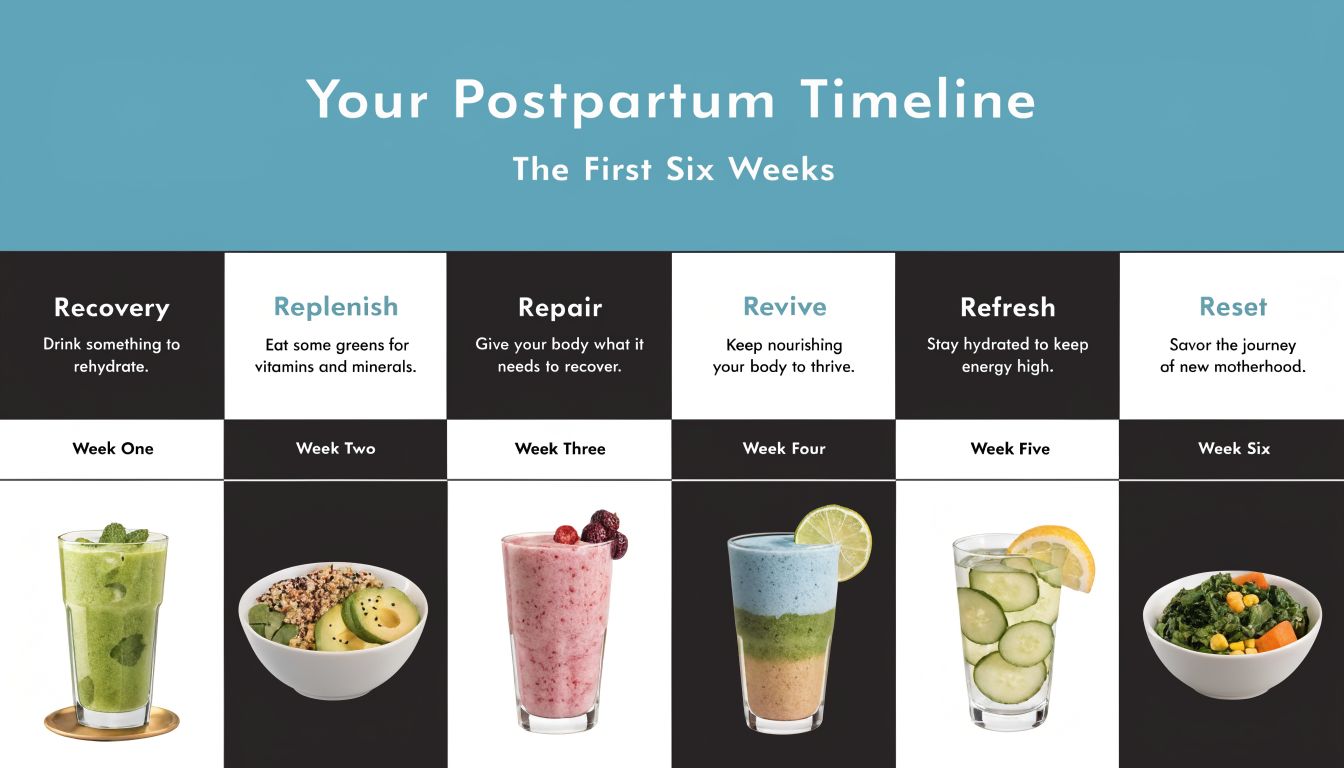
The first six weeks are often treated like a short recovery block. In real life, they are more like the body’s protection phase. Your system is closing wounds, shifting hormones, adjusting fluid levels, and relearning pressure control while you care for a newborn on very little sleep. Knowing what is typical can make this stretch feel less confusing.
What is happening inside your body
Right after birth, your uterus begins shrinking back toward its pre-pregnancy size. The American College of Obstetricians and Gynecologists explains in its postpartum recovery guidance that cramping can continue in the early days, especially during breastfeeding, because feeding triggers hormones that help the uterus contract.
Bleeding after birth, called lochia, also changes over time. It usually starts heavier and red, then gradually becomes lighter in both flow and color over the following weeks. A useful way to read lochia is to treat it like a volume dial. If activity turns the dial up again, your body may need more rest and less strain.
That pattern matters because many moms assume feeling a little better means tissues are ready for more. Early improvement can be misleading. Skin may close before deeper muscles and connective tissues regain support.
A simple week-by-week map
| Time | What often happens | What to focus on |
|---|---|---|
| Days 1 to 4 | Bleeding is usually heaviest, cramping, swelling, soreness, deep fatigue | Rest often, stay hydrated, accept help, use short easy walks around the room |
| Week 2 | Bleeding often begins to lighten, sitting and standing may feel easier, but you still tire quickly | Gentle breathing, regular meals, body mechanics for feeding and lifting |
| Weeks 3 to 4 | You may feel more capable and accidentally do too much | Pace your day, break tasks into smaller pieces, notice whether bleeding or pressure increases |
| Weeks 5 to 6 | Daily movement may feel smoother, but weakness, heaviness, and leaking can still show up | Prepare questions for your follow-up visit, keep activity gradual, avoid treating clearance as full recovery |
Vaginal birth and C-section recovery can look different
A vaginal birth often leaves behind perineal soreness, stitches, pelvic heaviness, or hemorrhoid pain. A C-section adds abdominal healing, scar sensitivity, and more challenge with rolling, standing, and lifting. Both routes affect the pelvic floor, core, breathing pattern, and pressure system.
A simple comparison helps here. Your core and pelvic floor work like the bottom and sides of a canister. During pregnancy and birth, that canister has been stretched, pressurized, and sometimes injured. In the first six weeks, the goal is not hard exercise. The goal is to get that system coordinating again so everyday tasks like getting out of bed, carrying the baby, and having a bowel movement feel steadier.
What can be confusing in this phase
Symptoms do not always appear on day one. Some women feel mostly sore and tired early on, then notice leaking, heaviness, or a dragging sensation only after they start walking longer, lifting the car seat more often, or trying exercise later. That delayed pattern is one reason the six-week myth causes so much frustration. Early healing and full recovery are not the same thing.
Periods can return early if you are not breastfeeding, and ovulation can happen before the first period. If you are breastfeeding, cycles may stay away longer, but that timing is not predictable enough to use as birth control unless your clinician has explained a specific method.
Red flags worth calling about
Contact your medical provider if you notice:
- Bleeding that suddenly gets heavier, especially if it had been slowing down
- Large clots, foul odor, or unusual discharge
- Pain that is increasing instead of easing
- Fever, chills, or feeling sick overall
- A strong bulging or pressure sensation
- Burning with urination, calf pain, chest pain, or shortness of breath
Small routines can make these early weeks easier. Planning meals, setting up feeding stations, and asking for task help can lower physical stress while you heal. For practical day-to-day support, these essential tips for new mothers are a helpful starting point.
Navigating Postpartum Months Two Through Six
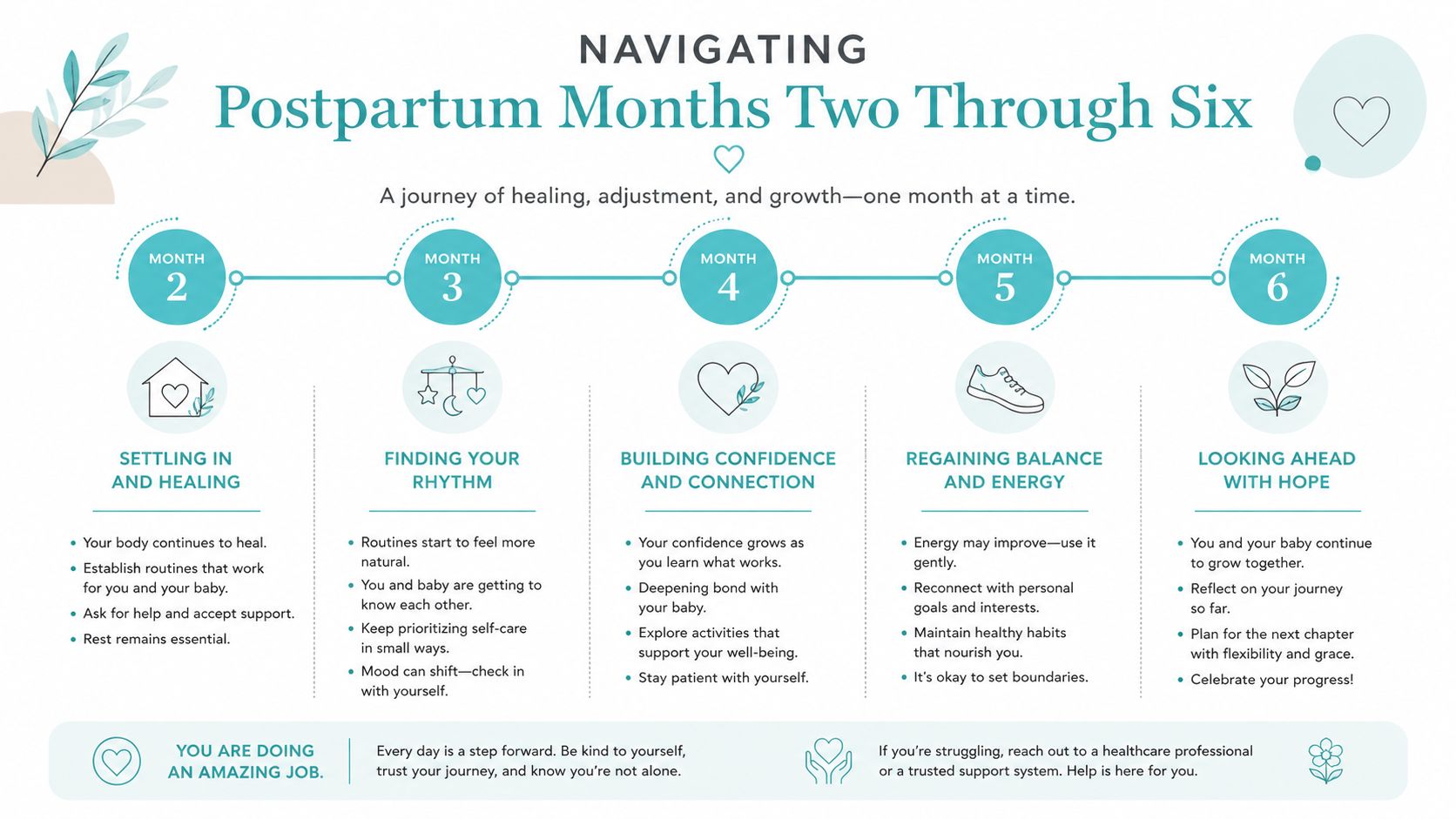
Many women expect months two through six to feel like the home stretch. In real life, this phase often feels more like rebuilding after the cast comes off. The injury may be healing, but strength, coordination, and stamina still need time and guided practice.
Why this phase feels so confusing
By now, you may be doing more normal life. More walking. More baby carrying. More time on your feet. Maybe a return to work, errands, housework, or early exercise. Your outside life speeds up before your body has fully caught up.
That mismatch matters.
A postpartum care review in The American Journal of Obstetrics and Gynecology30548-5/fulltext) describes postpartum care as an ongoing process rather than a single visit. That framework fits what many mothers feel in this window. Healing is still happening, and the demands on your body are rising at the same time.
What often shows up between two and six months
This is often the stage when symptoms become clearer, not because you suddenly caused damage, but because load is increasing. Your baby is heavier. You may start pushing a stroller up hills, carrying the infant seat one-handed, standing to cook again, or trying classes and longer walks.
Common examples include:
- Urine leakage with coughing, lifting, or exercise
- Pelvic heaviness or pressure later in the day
- Low back, hip, or pubic pain during longer activity
- Abdominal doming or coning with getting up or exercising
- Pain with sex or a feeling of tightness and guarding
- A core that feels weak or disconnected, even if your belly looks smaller
Many moms get nervous when symptoms appear "late." A better way to see it is this: early tissue healing and higher-level function run on different timelines.
Your core works like a pressure system
A lot of women are told to strengthen the core, then get handed crunches, planks, or a generic workout app. That approach misses how the postpartum trunk works.
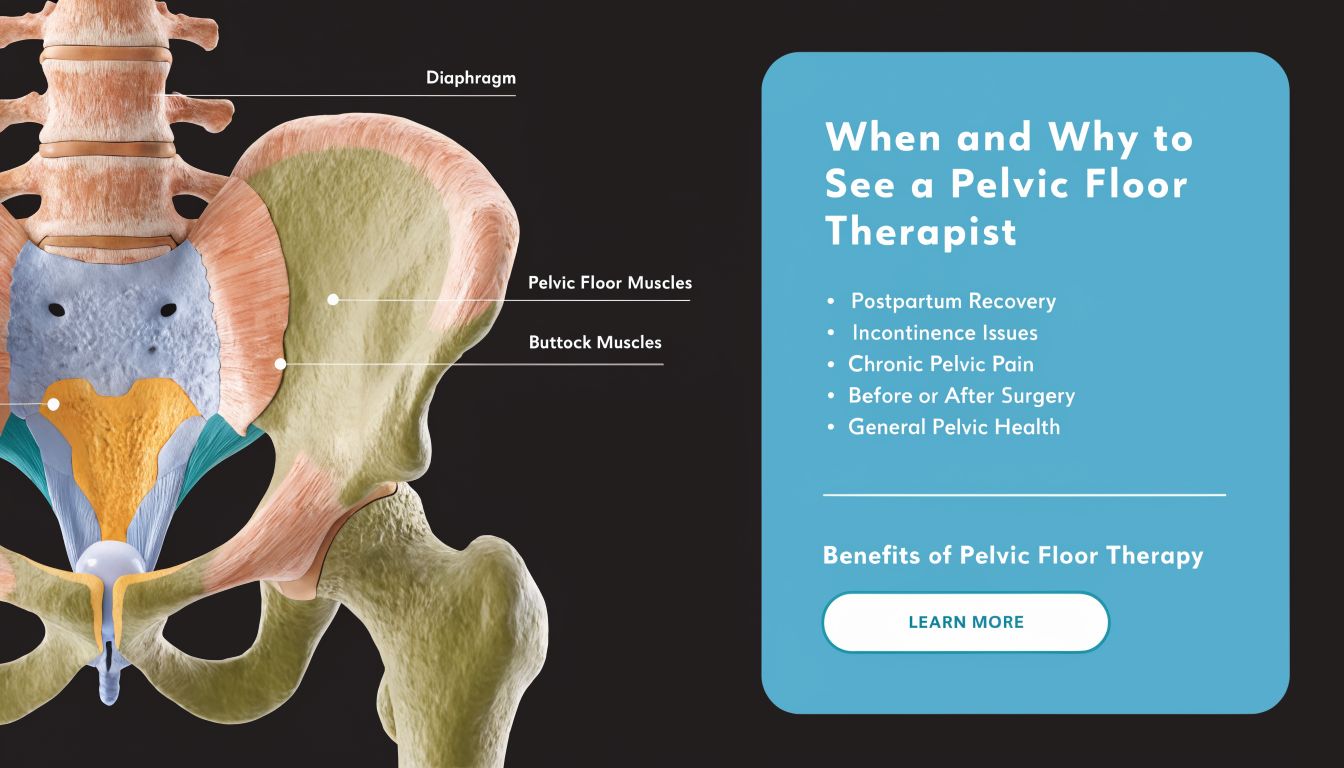
Your core is a pressure system. The diaphragm forms the top. The abdominal wall wraps around the sides. The pelvic floor forms the bottom. Your back muscles and rib cage help direct the pressure. When these parts share the load well, everyday tasks feel steadier. When timing is off, pressure often gets pushed downward or forward, which can show up as leaking, heaviness, back pain, or doming through the abdomen.
That is why the first step is often coordination, not intensity.
A simple starting point is to notice what happens during effort. When you stand up, lift the baby, or exhale during a harder task, do you hold your breath, clench hard, or bear down? Those patterns are common. They are also trainable.
Diastasis recti is about function, not just the gap
Diastasis recti means the tissue along the midline of the abdomen has stretched. Many women focus on the width of the gap because it is easy to measure and easy to worry about. Function tells you more.
A stronger question is whether your abdominal wall can manage pressure during real life. Can you roll out of bed without bulging through the middle? Can you pick up your baby without feeling your belly push forward? Can you breathe and move without bracing like you are preparing for impact?
Those signs give a clearer picture of recovery than appearance alone.
Hormones and feeding choices can still affect how you feel
If you are breastfeeding, lower estrogen can contribute to vaginal dryness, tissue sensitivity, and a general feeling that your joints or core are less supported. If you are no longer breastfeeding, cycle changes may bring symptom ups and downs from week to week.
None of that means your body is failing. It means the postpartum period is still active. Your body is adapting, and symptoms can shift as hormones, sleep, stress, and activity change.
What helps in this stage
The goal in months two through six is to build capacity gradually. For many women, that means:
- reconnecting breath with the pelvic floor and lower abdominals
- improving lifting mechanics for baby care tasks
- increasing walking or exercise in small, repeatable steps
- choosing strengthening work that does not create downward pressure
- getting help early if leaking, heaviness, pain, or doming keeps showing up
This phase often needs more support than women are led to expect. Six weeks is usually the point when immediate medical concerns have settled. It is rarely the point when the body is fully ready for every demand of motherhood, work, exercise, and sex.
Your Body After Six Months Postpartum
Six months postpartum is often when significant demands emerge. Life asks more of your body. You may be carrying a heavier baby, spending longer on your feet, trying workouts again, returning to work, or hoping sex will feel normal without so much planning and recovery time.
From the outside, this stage can look like you are "back." Inside, many tissues are still adapting.

Why problems often show up after six months
A helpful way to understand this stage is to separate healing from capacity. Healing is how the body repairs tissue. Capacity is how well that tissue handles real-life demand, like lifting a car seat, jogging, pushing a stroller uphill, or being on your feet all day.
Pregnancy and birth affect muscles, fascia, nerves, joints, and pressure control across the whole trunk and pelvis. The American College of Obstetricians and Gynecologists explains that postpartum care should be an ongoing process, not a single visit, because physical recovery and health needs continue well beyond the early weeks in the ACOG Committee Opinion on optimizing postpartum care.
That longer timeline helps explain a pattern many mothers find confusing. You feel fairly good, then you increase activity, and symptoms appear. The symptom did not come out of nowhere. Higher demand revealed a system that was still rebuilding.
Signs your body is asking for more support
These signs are common after six months postpartum, and they are worth paying attention to:
- Leaking urine with coughing, sneezing, jumping, running, or urgency
- Heaviness or pressure in the vagina or pelvis, especially later in the day
- Pain with sex or ongoing dryness, guarding, or deep discomfort
- Abdominal doming or poor core control during lifting, sit-ups, or exercise
- Low back, hip, or SI joint pain that flares with carrying, walking, or workouts
- A constant need to brace before lifting, standing up, or changing positions
A simple analogy can help here. Your core and pelvic floor work more like a pressure system than a single muscle. If the canister does not manage pressure well, added load often shows up as leaking, bulging, pain, or a feeling that everything is working too hard.
Why the six to eighteen month window matters
This is one of the biggest postpartum myths. Many women expect the six-week visit to mark the end of recovery, then expect six months to mean they should be fully healed. For a lot of bodies, six months is closer to the middle of the process.
That does not mean something is wrong with you. It means full physiological and functional recovery often takes much longer than people are told. Strength, coordination, tissue tolerance, sleep disruption, feeding demands, scar mobility, and hormone changes all affect how your body performs.
This is also why prolapse symptoms or incontinence may become more obvious later, not earlier. As activity rises, the body has less room to compensate.
A better question than "Am I healed yet?"
Try asking, "Can my body handle my real life well?"
That question is more useful because motherhood is repetitive load. It is not one heavy lift. It is dozens of awkward lifts, long holds, poor sleep, quick position changes, and bursts of effort all day long.
A better checklist looks like this:
- Can you lift your child without breath-holding?
- Can you walk fast, squat, or climb stairs without pressure or leaking?
- Can you exercise and still feel okay later that day?
- Can you cough or sneeze without feeling vulnerable through the pelvic floor?
- Can you be intimate without fear, guarding, or pain?
If those answers are still shaky, targeted rehab may help you rebuild the missing pieces. A postpartum pelvic floor physical therapy plan can address strength, coordination, scar mobility, pressure management, and return-to-exercise progressions in a way general advice often does not. You can learn what that care involves through postpartum pelvic floor physical therapy.
What progress often looks like at this stage
Progress after six months is rarely dramatic. It is usually steadier and more practical than that.
You notice you can carry the diaper bag and baby together without symptoms. You stop leaking when you hurry to the bathroom. Sex feels less guarded. Your abdomen responds during effort instead of bulging forward. You finish a walk or workout and feel normal the next morning.
Those are strong recovery signs. They reflect function, not just time on the calendar.
When and Why to See a Pelvic Floor Therapist
A pelvic floor physical therapist looks at postpartum recovery differently than a routine medical checkup. Your OB or midwife is essential for medical safety. A pelvic floor PT focuses on function. That means how you breathe, lift, walk, exercise, use your core, manage pressure, and coordinate the pelvic floor with real life.
The timing is earlier than most women think
Many people wait until symptoms are severe. That's understandable, especially if you've been told leaking is normal after babies or pain with sex just needs time. But the better moment to get checked is often when symptoms first show up.
According to this postnatal recovery discussion, pelvic floor dysfunction often emerges or worsens 3 to 6 months postpartum as activity increases. The same source notes that PT-led rehab can resolve 80 to 90% of incontinence and prolapse cases, and that 25% of women report new pelvic floor symptoms at 6 to 12 months after returning to exercise.
Those numbers matter because they challenge a common myth. If symptoms appear later, that doesn't make them unrelated to birth. It often means you reached the stage when your body was finally being asked for more.
Reasons to book an evaluation
Here are clear signs to get assessed:
- Any leaking at all: even if it's only “a little” with sneezing or jumping
- Heaviness or bulging: pressure in the vagina, especially later in the day
- Pain with sex or pelvic exams: pain is information, not something to push through
- Ongoing abdominal weakness: especially if your trunk bulges or domes with effort
- Back, hip, or tailbone pain after birth: particularly if it started after pregnancy or delivery
- Fear of exercise: because you don't trust what your body will do
What the first visit usually includes
A good pelvic floor PT visit should feel collaborative, not rushed. It often includes a conversation about pregnancy, birth, symptoms, bladder and bowel habits, exercise goals, and what daily tasks feel hard.
The physical exam may include:
- Posture and breathing assessment
- Core and movement testing
- Pelvic floor assessment, sometimes internal, only with your consent
- A treatment plan built around your goals, not generic handouts
If an internal exam feels intimidating, know this. It is not mandatory. Consent matters, and you should always understand what is being assessed and why.
“I just thought this was normal after kids” is one of the most common things postpartum patients say. Common doesn't mean you have to live with it.
Why generic Kegels aren't enough
Many women are told to do Kegels without being examined. The problem is that symptoms can come from weakness, poor coordination, overactivity, scar restriction, pressure mismanagement, or a mix of all of those. Some pelvic floors need strengthening. Others need relaxation and better timing.
That's why individualized care matters. This overview of pelvic floor physical therapy for postpartum recovery shows what specialized support can look like when the goal is not just healing, but feeling confident in your body again.
Your Emotional Recovery Timeline Is Just as Important
Physical recovery gets more attention because you can point to stitches, bleeding, scars, and exercise. Emotional recovery is quieter, but it shapes everything. The same mother who wants to walk more, move better, and feel strong again may also be grieving her old routine, feeling touched out, worrying constantly, or wondering why everyone else seems to be coping better.
That emotional load changes how recovery feels in the body.
What many new moms experience first
In the early days, mood swings, crying easily, and feeling unusually sensitive can happen as hormones shift and sleep disappears. For some women, those feelings soften as the first couple of weeks pass. For others, sadness, panic, numbness, dread, irritability, or obsessive worry keep growing.
The hard part is that many moms explain those feelings away. They tell themselves they're just tired, just hormonal, just not organized enough, just bad at this. That self-talk can delay support.
Signs that deserve real attention
Please talk to a qualified medical or mental health professional if you notice:
- Sadness that doesn't lift
- Constant anxiety or racing thoughts
- Trouble sleeping even when you have the chance
- Feeling detached from yourself, your baby, or daily life
- Loss of pleasure in things you used to enjoy
- Shame, hopelessness, or feeling like everyone would be better off without you
If you ever have thoughts of harming yourself or your baby, seek emergency help right away.
Why body and mind can't be separated
Sleep deprivation affects pain tolerance, patience, energy, and healing behavior. Fear can make people clench through their abdomen and pelvic floor all day. Stress can make symptoms feel louder. If intimacy hurts, leaking feels embarrassing, or exercise brings anxiety, emotional strain and physical symptoms start feeding each other.
That's one reason postpartum care has to be more whole-person than is commonly expected. The brain is adapting, too. If you'd like a deeper look at that connection, this piece on brain changes and postpartum depression neuroscience gives useful context.
Gentle support counts
You don't need to wait until things feel extreme to look for support. Some mothers benefit from counseling. Some need medication evaluation. Some need more practical help at home, more rest, or fewer expectations. Many need all of the above.
Simple resources can help you name what you're feeling. If anxiety has become a big part of your postpartum experience, this free anxiety education hub can be a helpful starting place for understanding symptoms and coping tools.
Recovery isn't only about getting your body back. It's also about feeling safe, steady, and like yourself again.
If your recovery feels slower than you expected, that doesn't mean you're doing it wrong. Postpartum is a major physical and emotional transition. Healing often asks for more time, more support, and more honesty than our culture gives it.
Frequently Asked Postpartum Recovery Questions
Is it too late to start pelvic floor therapy if I'm months or years postpartum
No. It's not too late. Postpartum symptoms can be addressed long after birth because rehab focuses on how your body functions now. If you're leaking, feeling pressure, avoiding exercise, or having pain with sex, those are still valid treatment goals whether your baby is a newborn or in elementary school.
Aren't Kegels enough
Not always. Kegels are a tool, not a full plan. Some women need strength, but others need relaxation, better breathing, scar mobility work, pressure management, or coordination training. If you do Kegels on a pelvic floor that is already overactive or poorly coordinated, symptoms may stay the same or even feel worse.
How do I find the right provider
Look for a pelvic floor physical therapist who regularly treats postpartum patients and asks about your goals, symptoms, birth history, exercise, bladder and bowel habits, and daily function. Ask whether they offer internal pelvic floor assessment, whether it's always consent-based, and whether they help with return to exercise as well as pain or leakage. Practical help outside the clinic matters too, and these Practical gifts for new parents can make the day-to-day postpartum load a little lighter while you focus on healing.
If you're dealing with leaking, pelvic pressure, painful sex, core weakness, or you don't feel fully recovered, Lake City Physical Therapy offers specialized postpartum and pelvic floor care designed around a realistic timeline of healing. With women’s health-focused clinicians, multiple locations across North Idaho and Eastern Washington, and telehealth options, their team can help you rebuild strength, reduce symptoms, and return to daily life and exercise with more confidence.