How to Treat Endometriosis Naturally: A Practical Guide
Some mornings, endometriosis pain decides your schedule before your feet even hit the floor. You may already be doing many of the “right” things, using a heating pad, skipping hard workouts, trying to eat better, maybe even hearing that you should just do more yoga. Then the pain still flares, your pelvis feels guarded, sex hurts, your abdomen bloats, and generic advice starts to feel insulting.
Natural care can help, but only when it's specific. If you're trying to figure out how to treat endometriosis naturally, the goal isn't to chase one miracle remedy. It's to build a plan that lowers inflammation, calms an overprotective nervous system, reduces pelvic floor tension, and helps you move through daily life with less fear and less pain.
Your Action Plan for Natural Endometriosis Management
Endometriosis is not just “bad cramps.” It can affect the way you move, sleep, eat, train, work, and relate to your own body. That's why a useful natural plan has to be broader than supplements or stretching alone.
A practical plan usually includes four pillars:
- Food that reduces inflammatory load and supports hormone processing
- Movement that matches your flare state, instead of pushing through pain
- Nervous system regulation, because persistent pain can make the body more reactive
- Complementary care, such as acupuncture or heat, that helps you get relief without relying on one tool
Many women get stuck because they treat every pain spike like a sign to stop moving completely, or they do the opposite and keep forcing high-intensity exercise into a body that's already bracing. Neither extreme works well for long.
The best natural plan is usually the one you can repeat during real life, not just during your most motivated week.
If you've been told to “just live with it,” that message is wrong. You may not control every flare, but you can absolutely influence how often symptoms ramp up, how intense they become, and how well your body recovers afterward. That starts with understanding your own patterns and using strategies that fit them.
For a deeper overview of symptoms, medical care, and conservative treatment options, this endometriosis guide from Lake City Physical Therapy is a helpful starting point.
How to Eat for Endometriosis Pain Relief
You finish dinner and your lower abdomen swells so much that your waistband feels tight within an hour. By bedtime, the pelvic heaviness is worse, and the next morning you are constipated, sore, and already behind. That pattern is common with endometriosis. Food does not remove lesions, but it can change how much inflammation, bowel irritation, bloating, and pain sensitivity your body has to deal with day to day.
The goal is not a perfect diet. The goal is a pattern you can repeat during work weeks, travel, bad pain days, and low-energy mornings. In clinic, I see better follow-through when women stop overhauling everything at once and start with meals that reduce flare triggers without making life harder.
What to emphasize daily
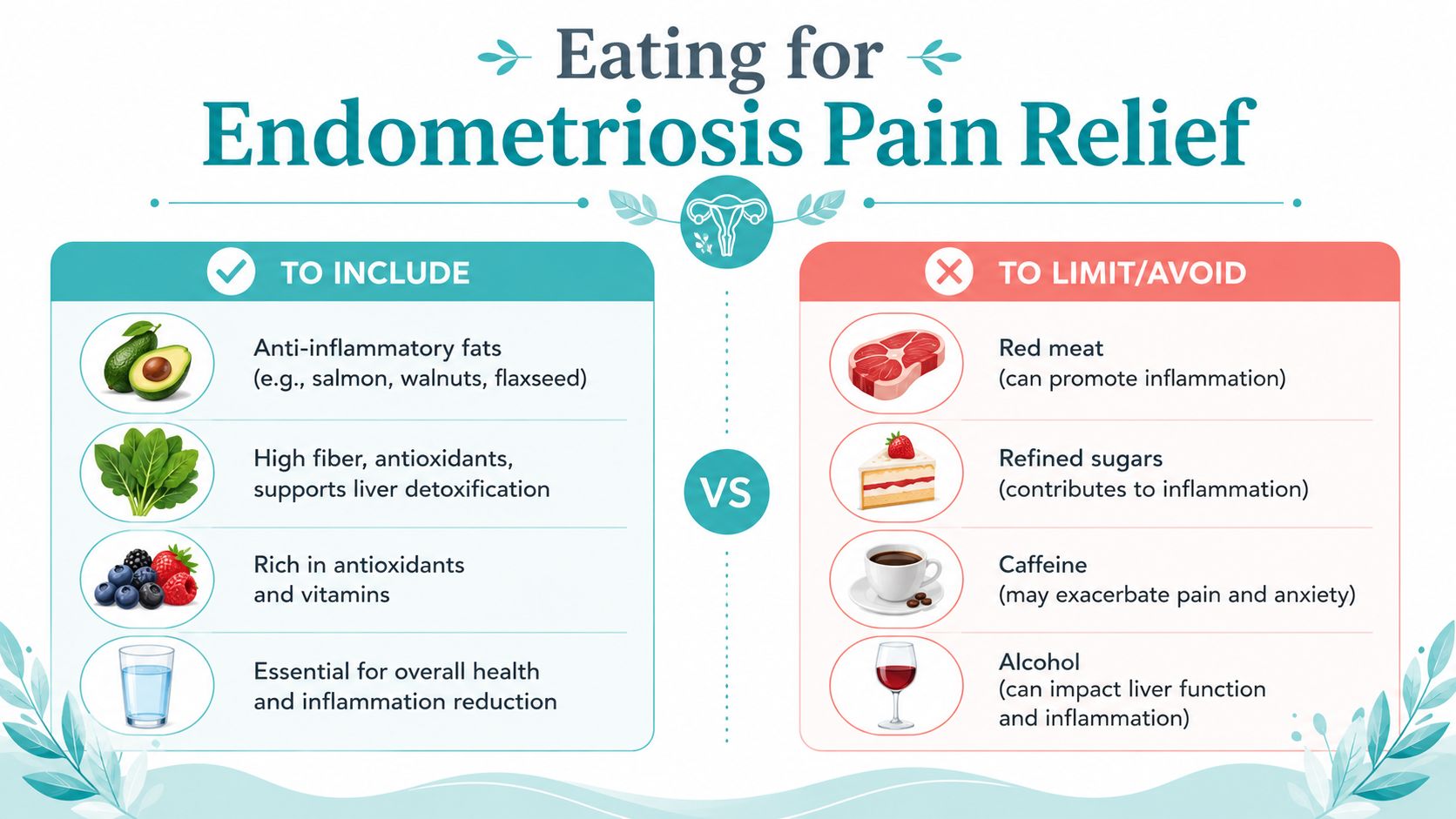
A plant-heavy, anti-inflammatory eating pattern appears to help some women with endometriosis pain and bloating, including patterns that include vegetables, fiber, and omega-3 fats, according to the Endometriosis Association review on hormonal versus natural treatments.
In practical terms, that usually means:
- Vegetables at two meals most days. Cruciferous vegetables such as broccoli, cauliflower, arugula, and Brussels sprouts are useful if your digestion tolerates them well.
- Fruit with antioxidant value. Berries are a good option. Citrus, kiwi, and cherries also work well for many women.
- Fiber-rich staples. Beans, lentils, oats, ground flaxseed, and whole grains can support bowel regularity, which matters because constipation often increases pelvic pressure and pain.
- Omega-3 foods several times a week. Salmon, sardines, walnuts, chia, and flax are strong choices.
- Regular fluids through the day. This is especially helpful if bowel movements are hard, infrequent, or painful.
If meal planning feels overwhelming, a simple anti-inflammatory diet meal plan can make the first week easier.
What to limit without becoming restrictive
Rigid food rules often backfire. A short-term elimination approach can be useful in selected cases, especially when bowel symptoms are severe, but long-term restriction can add stress, reduce food variety, and make social eating miserable. A better starting point is to reduce the foods that commonly keep symptoms stirred up while building meals that satisfy you.
| Food pattern | Why it may be unhelpful | Better swap |
|---|---|---|
| Processed foods | Often displace higher-fiber, more nutrient-dense meals | Build meals around whole foods most of the time |
| Excess red meat | May make it harder to maintain an anti-inflammatory pattern | Rotate in fish, legumes, tofu, or poultry |
| High sugar intake | Can worsen energy swings and leave meals less filling | Pair carbs with protein and fat |
| Frequent alcohol | Can worsen sleep and symptom stability | Keep it occasional, especially during flares |
One trade-off matters here. Some high-fiber foods are helpful in the long run but can temporarily increase gas or bloating if you add them too quickly. If your belly gets distended by evening, increase fiber gradually and pair it with enough fluids. Women who also have IBS-type symptoms may need a more individualized plan than a standard "eat more vegetables" message.
Practical rule: Build breakfast and lunch first. Many women do better when they focus on making their most repeated meals more supportive, rather than obsessing over occasional treats.
A simple breakfast might be oats with chia, berries, and walnuts. A simple lunch might be rice, salmon or lentils, cooked greens, and olive oil. Repetition is useful here. It lowers decision fatigue and makes it easier to spot which foods alleviate or aggravate symptoms.
If bloating, constipation, or pain with bowel movements is a major part of your symptom pattern, a pelvic health plan often works better when food changes and body-based treatment happen together. This is one reason our six-step physical therapy program for endometriosis includes lifestyle factors that affect pelvic tension and bowel function, not just exercise.
Supplements with some evidence behind them
Some women also consider supplements such as N-acetylcysteine, curcumin, magnesium, or omega-3s. These are not substitutes for consistent meals, sleep, medical care, or pelvic rehab, but they may have a role in a broader plan.
Common study-based ranges described in integrative care include:
- Omega-3 EPA/DHA at 1,000 to 1,500 mg/day
- Magnesium at 400 to 800 mg/day
- Curcumin at 500 to 1,000 mg/day
- NAC at 900 to 1,200 mg/day
Supplements are not automatically low-risk. Magnesium can loosen stools or worsen GI upset in some people. Curcumin can interact with medications. NAC is not appropriate in every case. Review any new supplement with your physician, pharmacist, or dietitian before you start.
Pelvic Floor PT and Exercise for Endometriosis
“Do gentle exercise” sounds harmless. For many women with endometriosis, it's too vague to be useful.
If your pelvic floor is already overactive, some exercise choices can worsen pain. Hard planks, aggressive abdominal work, breath-holding during lifts, impact-heavy training during a flare, or forcing deep stretching into a guarded pelvis can all increase pressure and muscle gripping. The problem isn't movement itself. The problem is which movement, at what time, and with what tissue response.
Why the pelvic floor matters
With endometriosis, pain often leads to bracing. Bracing can become habitual. Over time, the pelvic floor, abdominals, hips, and diaphragm stop coordinating well. That's why a woman may say, “My MRI doesn't explain how tight and irritated everything feels.”
A structured pelvic floor physical therapy program can reduce pain by 2 to 4 points on a 10-point scale in 65 to 75% of participants, and the process often includes an education phase, 6 to 10 sessions of manual therapy and down-training, followed by integration into daily movement and activity, as described in this pelvic floor physiotherapy review.
That middle piece, down-training, matters. It means teaching the pelvic floor to let go before asking it to get stronger.
What down-training actually looks like
Down-training is not passive rest. It's active recovery for a system that's been stuck on “guard.”
Useful starting strategies include:
- Diaphragmatic breathing. Lie on your back with knees bent, one hand on the ribs and one on the lower belly. Inhale through the nose and let the ribs widen. Exhale slowly without forcing your stomach flat.
- Pelvic drop awareness. During the inhale, imagine the pelvic floor softening downward instead of pulling up.
- Gentle hip mobility. Supported child's pose, figure-four stretch, or adductor rock-backs can help if they don't trigger symptoms.
- Walking or easy cycling. Rhythmic, low-impact movement often calms the nervous system better than complete inactivity.
Women with active flares often do better with short sessions. Five to ten minutes done consistently is usually more helpful than one heroic workout followed by two days of pelvic heaviness.
A better movement progression
Many active women want to know when they can return to running, CrossFit, dance, or lifting. The answer depends less on motivation and more on whether your body can tolerate load without a rebound in symptoms.
A practical progression looks like this:
Phase 1 with flare control first
During a flare, choose movement that reduces threat.
- Good options include walking, recumbent biking, pool walking, and mobility work paired with relaxed breathing.
- Use caution with crunches, V-ups, heavy squats with breath-holding, running intervals, box jumps, and anything that makes you clench through the pelvis.
- Stop or modify if you notice pelvic pressure, burning, pain with urination or bowel movements, or increased pain later that day.
Phase 2 with coordination before intensity
When symptoms settle, start rebuilding control.
Try:
- bodyweight sit-to-stands
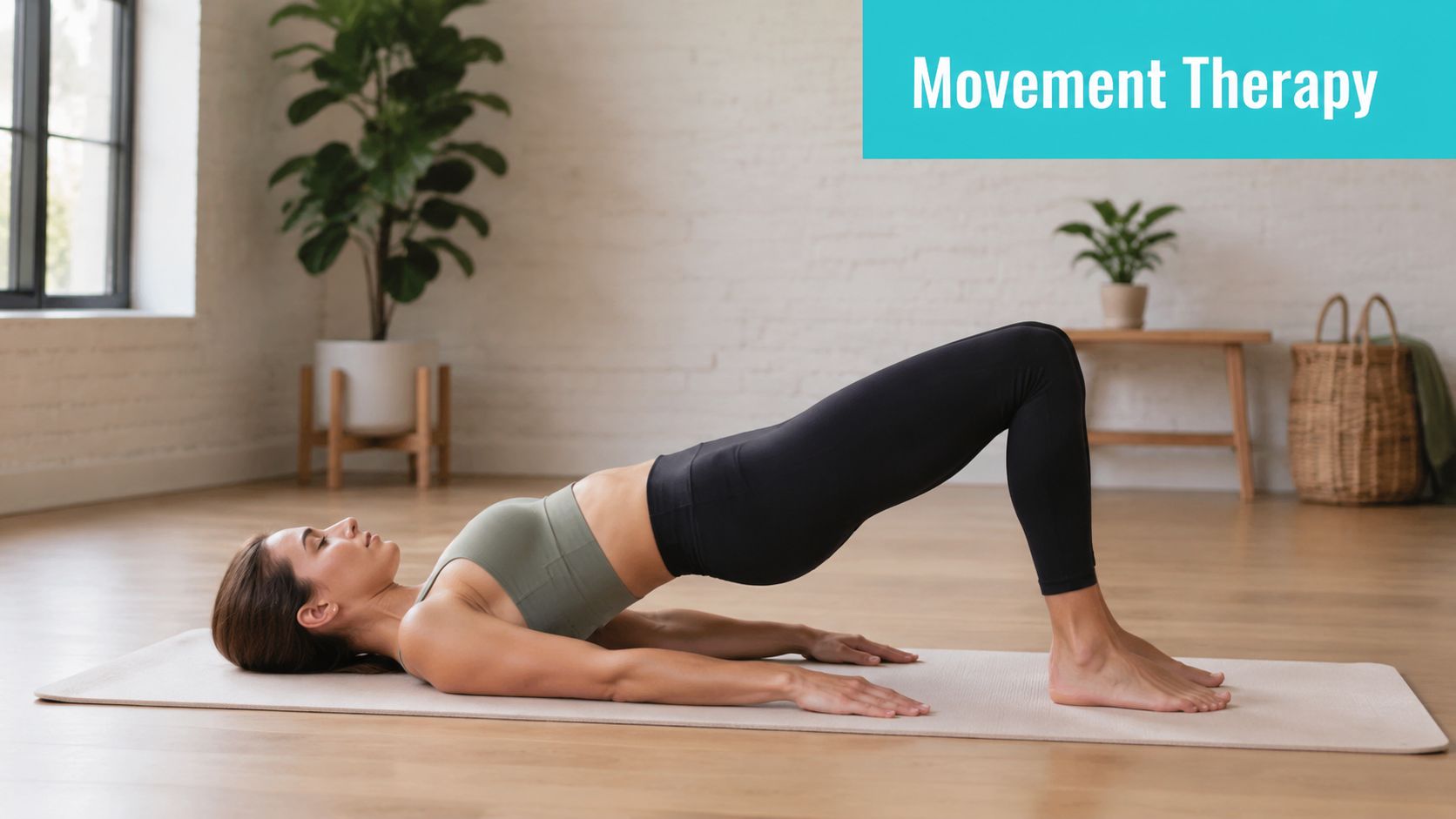
- bridges with easy breathing
- supported split squats
- side-lying hip work
- anti-rotation core work that doesn't trigger gripping
Many women benefit from a therapist-guided plan such as a six-step physical therapy approach for endometriosis care, especially if they've had surgery, painful sex, bowel symptoms, or persistent pelvic floor tension.
Here's a helpful demonstration of breathing and pelvic mobility principles that often support this phase:
Phase 3 with return to sport
Once your symptoms are more stable, you can test higher loads. But “can do” is different from “can recover from.”
Use this checklist:
| Sign you're ready to progress | Sign you need to hold |
|---|---|
| You can complete low-impact workouts without a symptom spike later | Pain ramps up the same day or next morning |
| Breathing stays relaxed during effort | You brace, grip, or hold your breath |
| Pelvic heaviness stays absent or mild | Pressure, urgency, or deep ache increases |
| Recovery is predictable | Flares feel random after harder sessions |
If running, dance, or lifting keeps triggering a flare, that doesn't mean your body is failing. It usually means the progression is too fast for your current tissue and nervous system tolerance.
Managing Stress and Sleep to Reduce Endo Flares
Stress management gets framed as soft advice. For persistent pelvic pain, it's a physical strategy.
When pain has been present for months or years, the nervous system can become more protective. That means stress, poor sleep, conflict, overtraining, and even rushing through the day can increase pain sensitivity. You're not imagining that connection. The body often reads overall overload as one more reason to guard.
Daily ways to lower nervous system reactivity
This doesn't require an hour of meditation. Most women do better with brief, repeatable practices.
A few that work well in real life:
- Use a two-minute downshift. Try Box Breathing, Insight Timer, or Calm for a short guided session after work or before bed.
- Write one line in a symptom journal. “What increased my pain today?” and “What helped even a little?” are enough.
- Set one boundary script. “I can't commit to that this week” is a complete sentence.
- Reduce stimulation during flares. Lower bright light, constant notifications, and the pressure to be productive when your body is asking for recovery.
Pain tends to climb when the body never gets proof that it's safe to come out of protection mode.
For some women, sensory cues help signal that transition. If scent is soothing for you, these calming aromatherapy rituals can be one low-effort addition to an evening routine.
Better sleep supports better pain control
Sleep doesn't fix endometriosis, but poor sleep makes everything harder. The next day usually brings lower frustration tolerance, more muscle tension, stronger cravings, and higher pain sensitivity.

Try tightening up the basics:
A simple wind-down routine
- Pick a shut-down time for email and social media
- Dim lights in the hour before bed
- Use heat intentionally if pelvic muscles tend to guard at night
- Keep the room cool and dark
- Aim for consistency more than perfection, especially with wake time
If pain wakes you up
Don't immediately start scrolling. Try a sequence instead:
- Shift positions and support the knees or abdomen with pillows.
- Take slow breaths with a longer exhale.
- Use a heating pad if that usually helps.
- If your mind is racing, jot one sentence on paper and return to bed.
The goal isn't to “sleep perfectly.” It's to reduce the number of things that keep your nervous system activated after bedtime.
Evidence-Based Complementary Therapies to Consider
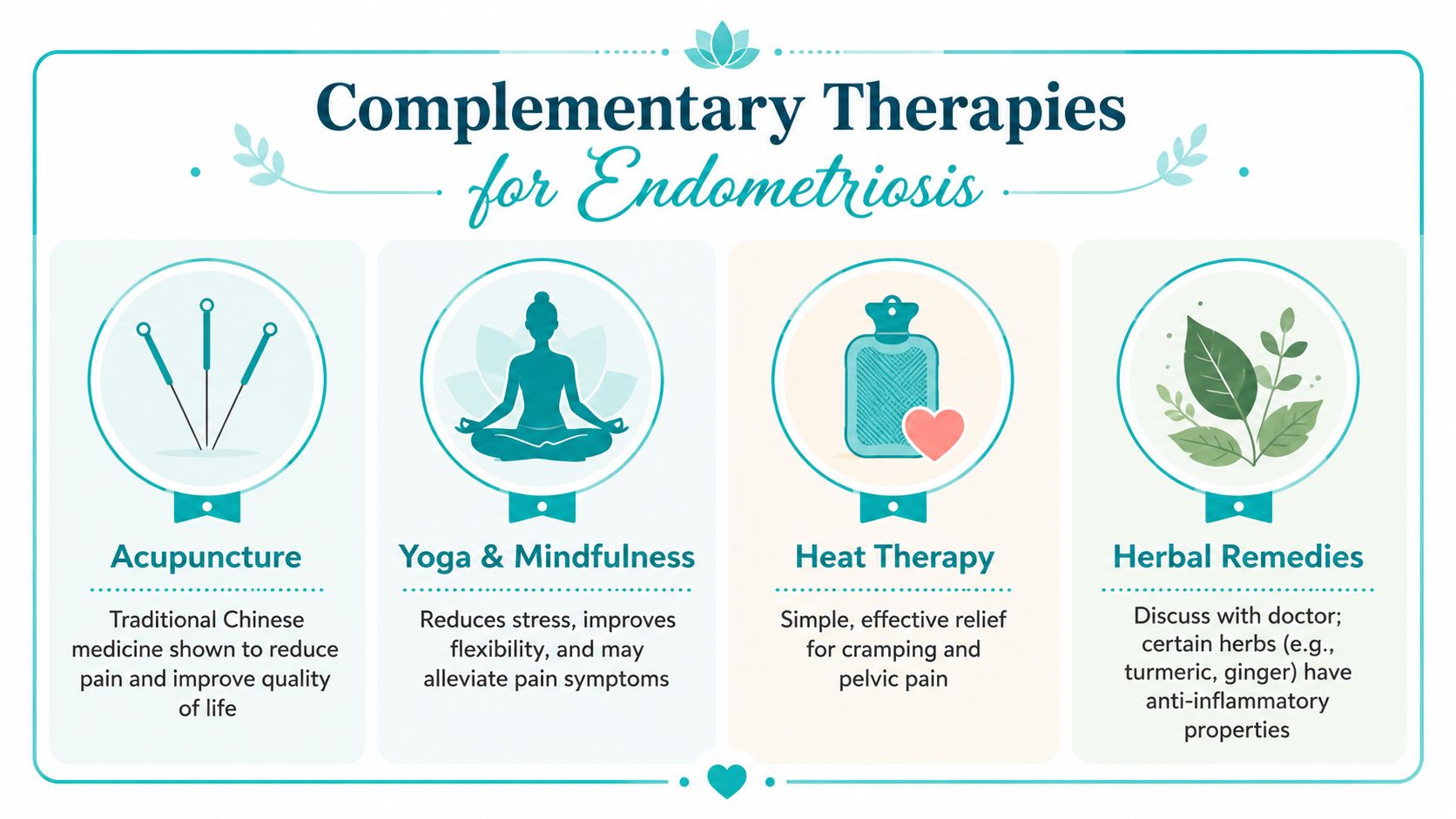
Complementary therapies can be worth adding when they fit into a larger plan. They tend to work best as support, not as a substitute for medical care, pelvic rehab, or nutrition changes.
Acupuncture has the strongest support
Among natural options, acupuncture has some of the better evidence for endometriosis-related pain. A meta-analysis of 11 randomized controlled trials found that acupuncture reduced pain scores by an average of 2.0 points more than control groups on a 10-point scale, and 55 to 65% of women receiving real acupuncture achieved clinically meaningful pain relief defined as at least 50% pain reduction.
That matters because it suggests more than a relaxation effect alone. It gives many women another option when medication side effects, pain flares, or cycle-related symptoms make daily life harder.
If you're considering acupuncture, ask:
- Does the practitioner treat pelvic pain regularly?
- Are treatment goals clear?
- Are they willing to coordinate with your physician or pelvic PT if needed?
Heat, TENS, and low-risk home options
Not every helpful tool needs a clinic visit.
A few simple options often fit well into home care:
- Heating pad or hot water bottle for cramping, pelvic guarding, or low back ache
- Warm bath when full-body relaxation feels better than local heat
- TENS unit if you want a non-drug option that may interrupt pain signaling during flares
- Gentle herbal self-care practices, as long as they don't irritate sensitive tissue
Some women also like supportive home options such as an herbal sitz bath routine for relaxation and comfort.
What to expect and what not to expect
Complementary care can reduce pain, make flares more manageable, and help the body settle. It usually does not cure endometriosis, and it's not a reason to ignore severe symptoms.
Use this lens when deciding whether something is worth trying:
| Worth considering | Be cautious if |
|---|---|
| It has a clear purpose in your plan | It's marketed as a cure |
| It's low risk and easy to track | It's expensive and vague |
| You can tell whether it helps within a reasonable period | It requires blind faith with no symptom tracking |
| It works alongside medical care | It asks you to replace appropriate evaluation |
A good complementary therapy should make your plan clearer, not more confusing.
Creating Your Personal Endometriosis Wellness Plan
The women who make progress usually don't overhaul everything at once. They choose a few changes, track the response, and adjust.
Start with one category that feels most urgent. If bloating and bowel irritation dominate, begin with food. If sex is painful and your pelvis always feels tight, start with down-training and pelvic floor evaluation. If your flares follow periods of poor sleep and overload, protect sleep first.
A simple way to start this week
Pick two actions only.
For example:
- Nutrition action. Add vegetables to lunch and dinner, plus one omega-3 source several times each week.
- Movement action. Do five minutes of diaphragmatic breathing and one short walk most days.
- Recovery action. Set a consistent bedtime window and use heat before sleep during flares.
- Support action. Book a visit with the right clinician instead of trying to solve everything alone.
Track patterns, not perfection
Use a notes app, paper journal, or cycle tracker. Keep it simple.
Write down:
- pain level trend
- bleeding days
- bowel or bladder symptoms
- exercise type
- sleep quality
- foods that clearly help or aggravate
- anything that reduces a flare, even modestly
That record helps you stop guessing. It also gives your OB-GYN, surgeon, pelvic floor physical therapist, or dietitian better information.
Know when natural care isn't enough by itself
Natural strategies are powerful, but they are not a replacement for proper medical care. If you have severe pain, rapid symptom escalation, vomiting, fainting, painful bowel movements, urinary symptoms, fertility concerns, or bleeding that worries you, get evaluated.
The most effective plan is often integrated. That might include medical management, imaging, surgery when appropriate, pelvic floor physical therapy, and the lifestyle tools that help you stay functional between appointments and after treatment.
Learning how to treat endometriosis naturally is really about building a body that feels less inflamed, less guarded, and more resilient. Start smaller than you think you need to. Consistency beats intensity.
If you're dealing with endometriosis-related pelvic pain, painful sex, pressure, or trouble returning to exercise, Lake City Physical Therapy offers specialized women's health and pelvic floor care designed to help you move with less pain and more confidence. Their team supports women through conservative treatment, post-surgical recovery, and return-to-activity planning with a compassionate, individualized approach.

