Radiation Fibrosis Treatment: A Practical Guide for Recovery
Eight weeks after radiation, many survivors hear the words “you're clear” and expect their body to feel finished too. Instead, the chest wall may pull with every overhead reach, the neck may feel fixed when turning, or the pelvis may make sitting, bowel movements, urination, or intimacy uncomfortable. That mismatch can be frightening, especially when nobody has explained why the treated tissue still feels hard, tight, numb, or painful.
Radiation fibrosis treatment works best when it addresses both tissue behavior and daily function. Medical management can support the process, but oncology rehabilitation, scar mobility work, progressive exercise, lymphedema care, and pelvic floor physical therapy often determine whether a survivor regains practical movement and comfort. The right plan depends on where the fibrosis is, how mature it has become, and whether the goal is prevention, symptom relief, tissue remodeling, or functional recovery.
When the Tissue Still Tells a Story After Cancer Treatment
Maria, a 58-year-old breast cancer survivor, had completed radiation eight weeks earlier. Her oncologist had cleared her, but she still couldn't lift her arm overhead without a deep pulling sensation along the chest wall. The skin no longer felt supple. A wooden, ropey band ran beneath it, and reaching into a cabinet created painful pulling between the ribs.
The restriction affected more than exercise. She guarded the shoulder while dressing, slept poorly on that side, and noticed discomfort during intimacy because the chest wall tightened when she extended her arm. Her cancer treatment was over, but her body hadn't caught up with that milestone.
That experience is common in the clinic. Survivors often describe a treated area that feels stuck, bound down, dense, or unlike the rest of the body. The changes may involve skin, surgical scars, fascia, muscle, lymphatic tissue, or deeper connective tissue. Radiation fibrosis can also appear gradually, so a person may initially feel well and then notice increasing tightness months later.
Clinical reality: “Cleared by oncology” means surveillance has not identified a reason to continue cancer treatment. It doesn't mean every movement restriction has resolved.
Early assessment matters because tissue that still has mobility can often be managed more easily than a mature contracture. Once dense bands limit the shoulder, jaw, hip, vagina, rectum, bladder, or pelvic floor, rehabilitation may require more sustained manual work and progressive loading. That doesn't make improvement impossible, but it can make the process longer and more demanding.
For people recovering from breast surgery as well as radiation, practical postoperative guidance such as recovering after mastectomy surgery can help clarify what belongs in routine healing and what deserves a targeted rehabilitation referral. A new or worsening restriction shouldn't be dismissed as an inevitable legacy of survivorship. It deserves examination, a measurable baseline, and a plan.
What Radiation Fibrosis Actually Is and Why It Happens
Radiation fibrosis is an abnormal buildup and organization of collagen and other extracellular matrix in tissue exposed to radiation. Ionizing radiation can create persistent oxidative stress, injure blood vessels, and maintain inflammatory signaling. Those processes activate fibroblasts, the cells responsible for producing connective tissue, and can promote excessive matrix deposition. This self-amplifying process is described in clinical reviews of radiation fibrosis in this overview of its biology and management.
A useful analogy is a security guard who stays on shift long after the emergency has ended. The original injury may have passed, but the repair response keeps receiving signals to reinforce the area. Instead of gradually restoring flexible tissue, the body lays down increasingly organized and restrictive scar-like material.
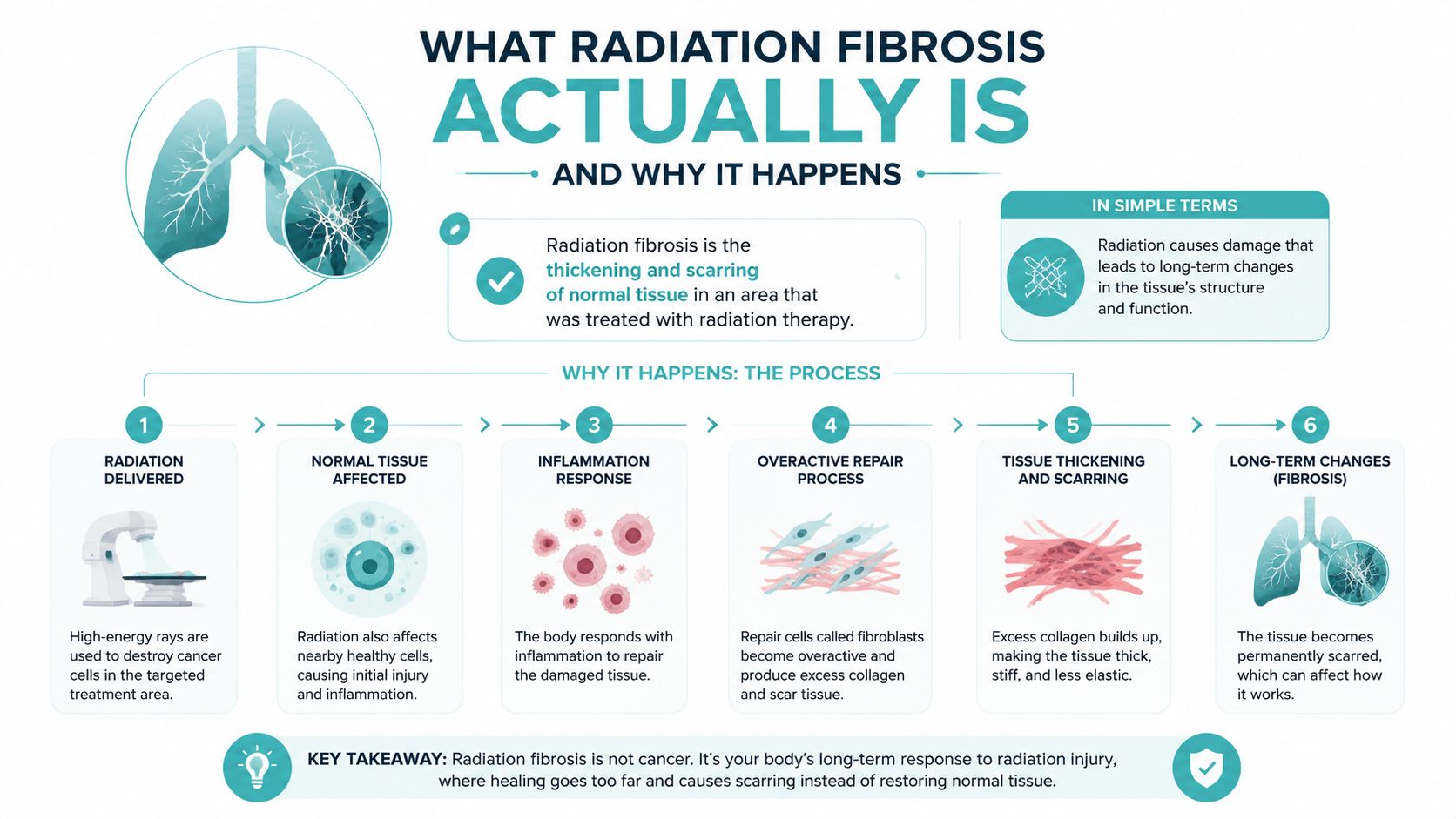
The terms you may hear
- Induration means tissue feels unusually firm or hardened when examined.
- A fibrotic band is a rope-like strip of restricted tissue that may pull across a scar, muscle, or joint.
- Tissue tethering describes skin or connective tissue that no longer glides normally over the layers beneath it.
- A contracture occurs when shortening and restriction reduce available movement.
Acute radiation dermatitis is different. Skin irritation, redness, peeling, and tenderness can occur during or soon after treatment and may settle as the acute reaction resolves. Fibrosis is a subacute or chronic process that can progress over months or years and may affect movement, strength, lymphatic drainage, swallowing, bowel function, bladder capacity, or sexual comfort.
Why timing changes the workload
Established fibrosis is difficult to reverse completely. Mature collagen forms dense, less extensible bands, so waiting for time alone usually doesn't provide the mechanical input needed to restore glide. Manual therapy, scar mobility work, stretching, and progressive strengthening give the tissue a controlled stimulus, while daily movement helps preserve the gains between visits.
That's why rehabilitation should begin when symptoms first appear, or earlier when the oncology team considers movement safe. A therapist must still screen for wound concerns, infection, active disease, fracture risk, blood clots, and other reasons to modify treatment.
How Common Radiation Fibrosis Really Is
Radiation fibrosis isn't a rare complication reserved for older treatment techniques. It remains a significant survivorship problem even with modern radiotherapy, although the risk varies by body site, treatment field, dose, surgery, chemotherapy, individual healing, and the way fibrosis is measured.
The body site changes the picture considerably. A breast or chest-wall restriction may first appear as shoulder tightness or a pulling scar. In the head and neck, fibrosis can affect the jaw, neck, tongue, swallowing muscles, and posture. In the pelvis, connective-tissue changes may contribute to painful sex, rectal tethering, bladder symptoms, bowel difficulty, hip restriction, or pelvic floor overactivity.
A 2024 review reports grade-2-or-higher neck fibrosis above 50% after surgical dissection, 34% after definitive chemoradiation, and as high as 30% even with IMRT. The same review notes that up to 30% of people receiving breast or chest-wall radiotherapy may develop severe fibrosis in its review of current radiation fibrosis treatment research00124-5/fulltext).
Radiation Fibrosis Prevalence by Body Site and Technique
| Body site | Older techniques | Modern IMRT or proton | Common functional impact |
|---|---|---|---|
| Breast and chest wall | Higher rates were reported with older planning approaches | Severe fibrosis may still occur, including in up to 30% of patients receiving breast or chest-wall radiotherapy | Shoulder restriction, chest-wall pulling, scar tethering, discomfort with reaching or intimacy |
| Head and neck | Fibrosis has remained substantial in complex, high-dose fields | Grade-2-or-higher fibrosis has still been reported at up to 30% with IMRT | Neck stiffness, reduced jaw opening, swallowing difficulty, posture changes |
| Pelvis | Risk varies by treated organs, surgery, and field | Modern planning can reduce exposure to some structures but doesn't eliminate tissue injury | Pelvic pain, dyspareunia, bowel or bladder limitations, hip and pelvic-floor restriction |
These figures don't predict an individual survivor's outcome. They do show why clinicians should treat fibrosis as a long-term functional condition, not a minor side effect that ends when radiation appointments stop. Surveillance and rehabilitation need to continue on different tracks. Oncology follow-up watches for disease status, while rehabilitation measures mobility, pain, strength, swelling, and participation in daily life.
Medical and Pharmacologic Options Worth Knowing About
Medication can be useful, but it rarely replaces rehabilitation. The most studied pharmacologic approach is pentoxifylline paired with tocopherol, or vitamin E. A randomized trial in people treated for postirradiation breast cancer evaluated six months of this combination and found a significant reduction in fibrosis measured by a tissue compliance meter. The treated group had a mean difference of 0.88 mm, with a median measurement of 1.0 mm compared with 2.4 mm in controls, and the reported significance value was P=.0478 in the PubMed-indexed trial. That study also reported no significant adverse impact on cancer outcomes, including five-year overall and disease-free survival outcomes.
A separate PubMed-indexed report described improved active and passive range of motion, muscle strength, and reduced limb edema and pain with pentoxifylline-based treatment in patients with radiation-induced fibrosis. Later reviews still describe the combination as one of the most studied options, while cautioning that definitive large randomized evidence remains limited. In practice, it's usually more sensible to view it as an adjunct to physical therapy than as a standalone reversal treatment.
Comparing the options
| Option | Best evidence use | Evidence strength | Key limitation |
|---|---|---|---|
| Pentoxifylline plus vitamin E | Selected established fibrosis and prevention strategies | Among the most studied medical approaches | Requires medical oversight and may not release dense bands by itself |
| Hyperbaric oxygen therapy | Carefully selected radiation tissue injuries, including some pelvic and head-and-neck problems | Useful in specific indications, not a universal fibrosis treatment | Access, suitability, and treatment goals vary |
| Antioxidant or topical approaches | Supportive or investigational use | Mixed or emerging | Limited proof of reversing established fibrosis |
| Pentoxifylline plus clodronate | Investigational antifibrotic strategy | Emerging | Not a routine answer for every survivor |
| Statins or pirfenidone | Research and selected specialist discussion | Emerging | Clinical role remains unsettled |
| Gabapentin or duloxetine | Neuropathic pain management | Symptom-focused | Helps pain, not collagen restriction |
| Hyaluronic acid or corticosteroid injections | Focal restrictions in selected cases | Case-dependent | Injection risks and limited generalizability |
Hyperbaric oxygen deserves individualized discussion rather than blanket approval. People investigating radiation-related bladder symptoms may find background on HBOT for bladder recovery, but bladder recovery and established fibrosis aren't identical treatment questions.
This video can provide additional visual context, but it shouldn't substitute for evaluation by the oncology team or a clinician familiar with radiation injury.
The central trade-off is straightforward. Medication may influence the biological environment, while manual therapy and graded loading address tissue mobility and function. Emerging options, topical antioxidants, and pain medicines may have a role, but survivors should be cautious about any promise of rapid reversal from a pill, cream, injection, or device alone.
How Physical Therapy Fits Into Radiation Fibrosis Treatment
A useful evaluation starts with the cancer timeline, not just the painful body part. The therapist needs to know the diagnosis, surgery, radiation field, treatment completion date, current medications, reconstruction or hormone therapy, complications, and the activities that have changed.
The physical examination then maps the problem. For chest or breast symptoms, that may include skin and scar mobility, shoulder range of motion, thoracic movement, strength, posture, arm swelling, and functional reaching. A head-and-neck assessment may include jaw opening, cervical motion, swallowing-related coordination, breathing, and posture. A pelvic evaluation may address pelvic floor muscle tone and coordination, vaginal or rectal tissue mobility when appropriate, bladder and bowel function, hip movement, sexual pain, and lymphedema.
What treatment often includes
- Prepare the tissue: Gentle skin work, breathing, positioning, and manual lymphatic techniques can reduce guarding and make later treatment more comfortable when swelling or sensitivity is present.
- Restore glide: Scar mobilization, skin rolling, myofascial release, and carefully directed stretching target tethered layers. Pressure should be adapted to irradiated skin, sensation, healing status, and pain response.
- Build capacity: Once movement improves, strengthening restores the ability to lift, reach, walk, climb, exercise, or tolerate sexual and bowel functions without returning to protective stiffness.
- Train the task: The final step is not a perfect range-of-motion number. It's being able to put on a shirt, turn the head while driving, sit comfortably, have sex, or complete a work and exercise routine.
Manual therapy provides a mechanical signal, but the home program drives consistency. Patients may use therapist-taught self-massage, comfortable mobility drills, breathing exercises, progressive resistance, and position changes. The program should never force sharp pain, bleeding, new swelling, or skin breakdown.
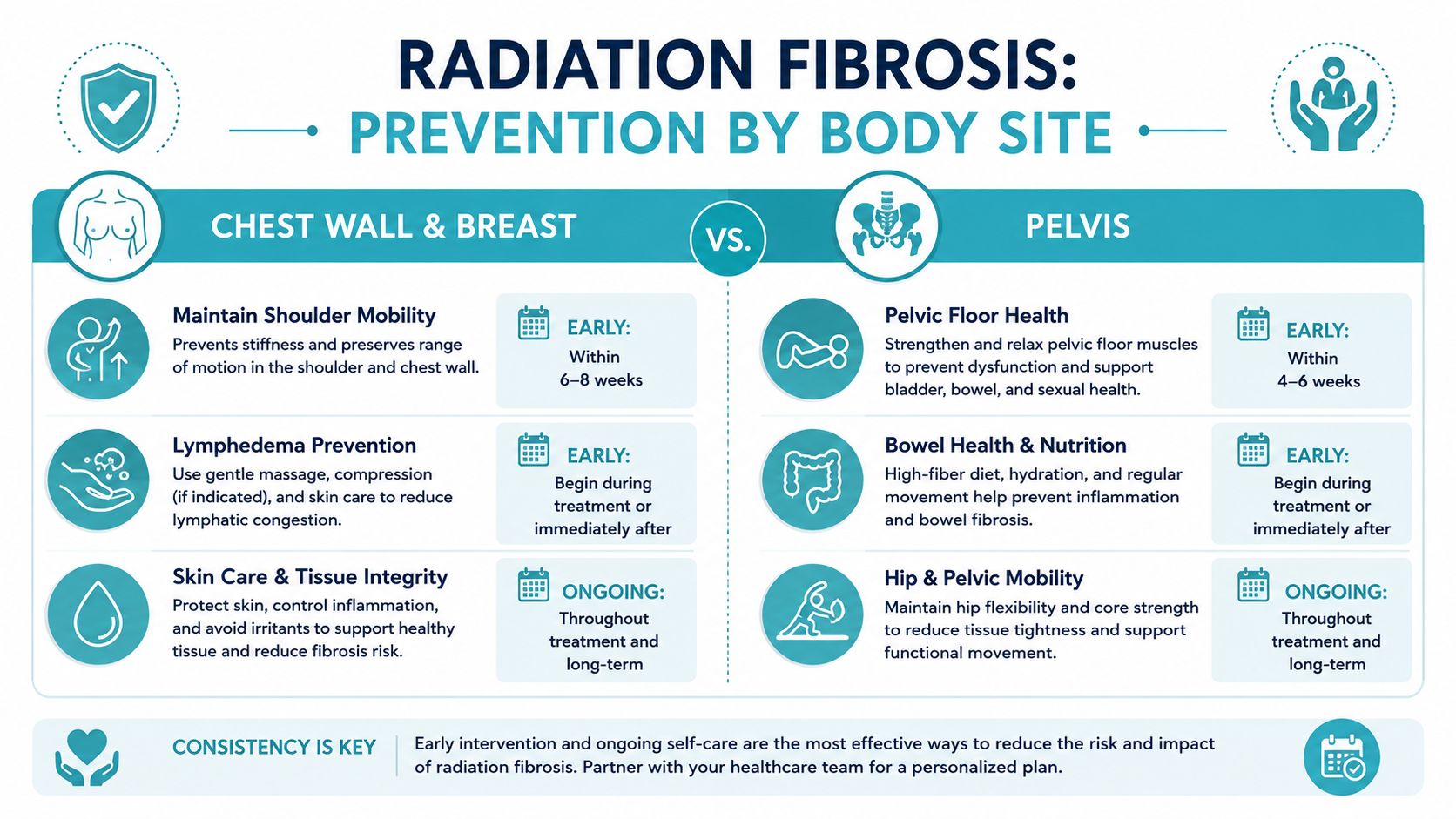
Where lymphedema care fits
Radiation fibrosis and lymphedema can reinforce functional limitation. When swelling is present, a trained clinician may use complete decongestive therapy, compression education, manual lymphatic drainage, exercise, and skin-care instruction. Pneumatic compression, low-level laser, and biofeedback may be considered when the assessment supports them, but they're not interchangeable and shouldn't be selected by marketing claims.
A realistic plan combines clinic work with daily home practice. Visit frequency depends on severity, insurance, travel, and response, but many programs are organized over several months rather than a handful of appointments. Oncology rehabilitation resources such as oncology and physical therapy can help survivors identify services that include scar mobility, lymphedema management, and return-to-activity planning.
Body Site and Timing Change Everything
The same fibrotic biology behaves differently in a chest wall, jaw, or pelvic floor. A treatment plan that helps a breast cancer survivor reach overhead won't automatically address trismus, swallowing restriction, vaginal tissue sensitivity, rectal tethering, or pelvic muscle guarding.
Breast and chest wall
Early shoulder mobility, scar assessment, posture work, and breathing mechanics can protect reaching and lifting. The therapist also watches for cording, chest-wall pulling, axillary restriction, and lymphedema. Survivors with reconstruction may need close coordination with the surgical team because tissue loading must respect the reconstruction and healing status. Specialized breast cancer rehabilitation can help organize those concerns into a functional plan.
Head and neck
Head-and-neck rehabilitation requires more than stretching the neck. Screening for jaw opening, swallowing coordination, tongue and cervical mobility, shoulder function, and posture can identify restrictions before they become entrenched. Later-stage limitations may require prolonged stretching, mandibular devices, swallowing therapy, and coordinated medical care.
Pelvis
Pelvic fibrosis can affect the vagina, rectum, bladder, hips, abdominal wall, and pelvic floor muscles. Pelvic floor physical therapy may include external scar work, internal tissue treatment when medically appropriate and consented to, down-training for overactive muscles, hip mobility, bowel mechanics, bladder strategies, dilator education, and graded return to sexual activity.
Prevention may outperform late treatment in some settings. A 2025 photobiomodulation scoping review found that most studies focused on prevention rather than treatment, and a mouse study reported benefit from prophylactic treatment but not post-irradiation treatment for knee contracture and fibrotic changes. Those findings don't prove the same result in humans, but they reinforce a practical principle: refer early, before a restriction becomes a fixed contracture as discussed in the clinical literature.
Realistic Goals, Red Flags, and What Reversal Actually Means
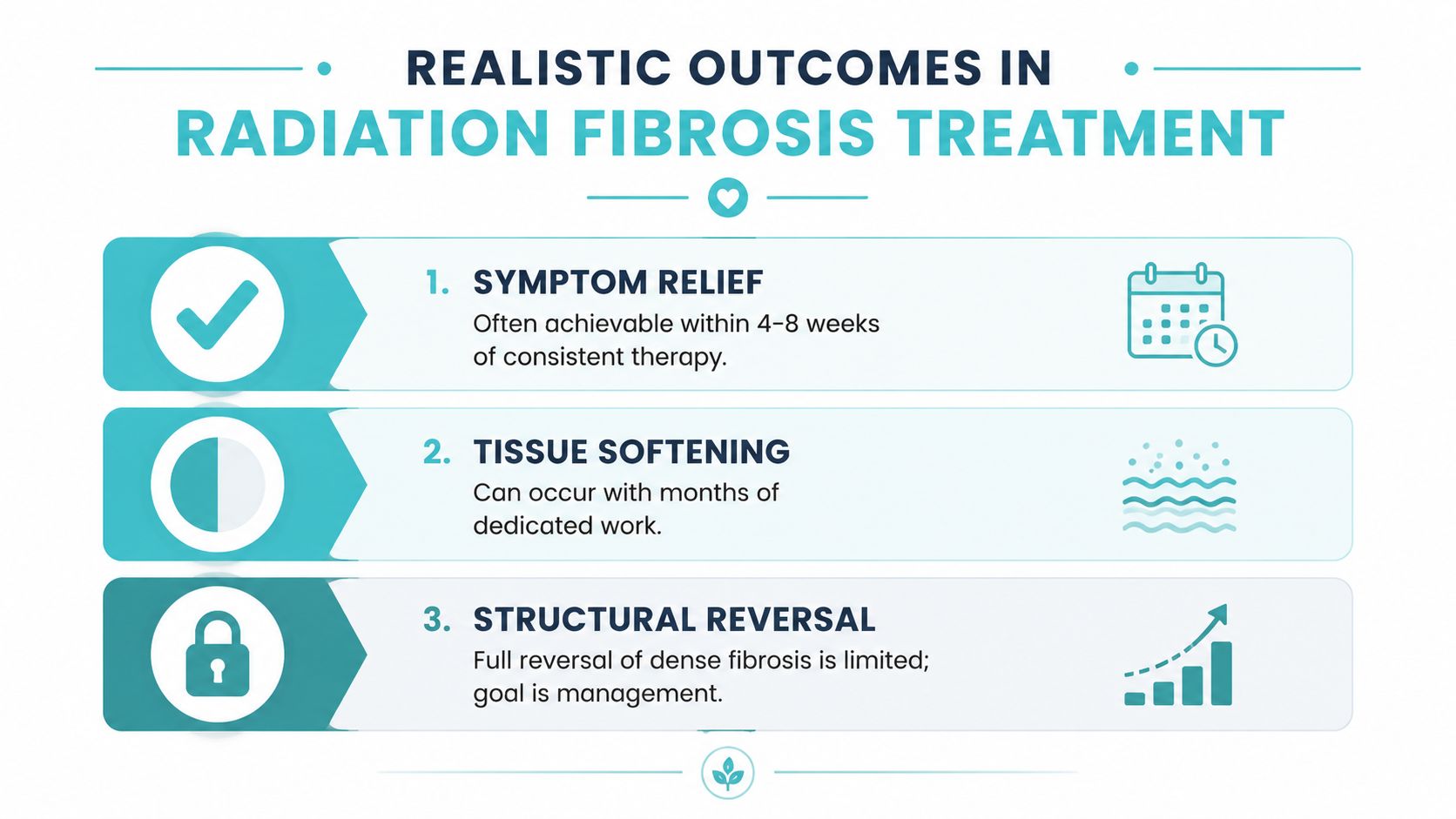
“Can radiation fibrosis be reversed?” is the right question, but it needs a precise answer. Current reviews conclude that no treatment reliably reverses established fibrosis in every patient, so the useful clinical target is often a combination of symptom reduction, improved tissue extensibility, and restored function. A 2025 review states that available approaches have limited efficacy and that no treatment is currently known to reverse radiation fibrosis; a separate review of photobiomodulation identified 26 total studies, with only 6 addressing treatment rather than prevention, and called for higher-quality clinical trials in its review of head-and-neck fibrosis and photobiomodulation.
Three outcomes worth tracking
- Symptom relief: Less pain, pulling, pressure, burning, or sensitivity. A therapist may use a Numeric Pain Rating and a symptom diary.
- Tissue remodeling: Softer tissue, better skin and scar glide, and increased extensibility over sustained rehabilitation. Examination findings and range-of-motion measures help document change.
- Functional return: Improved lifting, reaching, swallowing, bowel or bladder activity, sexual comfort, walking, or exercise tolerance. Patient-reported tools such as DASH or PROMIS can capture the practical impact.
A pelvic therapist may also track pelvic floor EMG resting tone, while a lymphedema clinician may monitor L-Dex ratios alongside circumference, symptoms, and function. These measures don't prove that fibrosis has disappeared. They show whether the person is moving, participating, and feeling better.
A good outcome isn't always normal tissue. It may be a shoulder that reaches the shelf, a jaw that supports eating, or a pelvic floor that allows intimacy without guarding.
Red flags that need medical review
Contact the oncology team promptly, or seek urgent care when appropriate, for:
- A new mass or expanding skin change in or near the treated field.
- Unexplained neurological changes, new weakness, numbness, or loss of coordination.
- New bowel or bladder loss of function, especially when sudden or progressive.
- Unexplained weight loss, fever, or redness over the treatment field.
- Sudden swelling, severe pain, or a rapidly changing area.
- Any concern for recurrence, infection, blood clot, fracture, or another condition beyond routine fibrosis.
A familiar, mild stretch after therapy may be expected. Progressive hardening, new systemic symptoms, rapid swelling, or a change that doesn't behave like your established pattern deserves reassessment before more aggressive manual work.
Your Next Steps and Where to Get Help Locally
Start with a referral pathway that puts safety before technique. Ask your oncologist, surgeon, primary care clinician, gynecologist, or urologist whether oncology or pelvic floor physical therapy is appropriate, or contact a clinic that accepts self-referrals and can coordinate records with your medical team.
Bring the information that lets the therapist design treatment rather than guess:
- Your oncology clearance or treatment update, including current surveillance status.
- The radiation summary, with the treated field, dose, fractionation, and completion date.
- Your surgical history, including mastectomy, reconstruction, lymph-node surgery, hysterectomy, prostatectomy, or colorectal procedures.
- Your medication list, including hormone therapy, pain medication, anticoagulants, and supplements.
- A 48-hour symptom log covering pain, bowel and bladder function, sexual symptoms, swelling, sleep, walking, lifting, reaching, and specific movement limits.
A first evaluation commonly includes a detailed history, skin and scar assessment, tissue mobility mapping, range-of-motion and strength testing, lymphedema screening, pelvic floor assessment when relevant, functional testing, and goal setting. You should leave with a written home program, not just general advice. A resource explaining whether physical therapy after cancer treatment may be appropriate can help you prepare questions for your provider.
For survivors in North Idaho and Eastern Washington, Lake City Physical Therapy offers oncology rehabilitation, pelvic floor therapy, lymphedema complete decongestive therapy, manual therapy, and post-mastectomy and post-prostatectomy programs. Clinics serve communities including Coeur d'Alene, Post Falls, Hayden, Sandpoint, Liberty Lake, and Spokane Valley, with telehealth options for some patients. Ask about insurance authorization, visit frequency, and whether your symptoms require coordination with oncology before scheduling hands-on care.
Lake City Physical Therapy provides oncology rehabilitation and pelvic floor therapy for survivors managing radiation-related tissue restriction, scar mobility problems, lymphedema, pain, and changes in sexual, bowel, bladder, or movement function. Visit Lake City Physical Therapy to request an evaluation and discuss the right local or telehealth pathway for your recovery.

