Pain on Labia During Pregnancy: Causes and Safe Relief
You notice it while getting dressed, walking to the bathroom, or settling into bed. The skin around your labia feels sore, heavy, swollen, or burning, and suddenly an ordinary pregnancy symptom feels alarming. Pain on labia during pregnancy deserves attention, even when the cause is a common, temporary change.
The safest approach isn't to assume every symptom is “just pregnancy.” First identify the likely source, whether it's vascular, swelling-related, muscular, skin-related, or connected to pre-existing vulvar pain. Then choose relief that matches the cause, while knowing which changes require prompt obstetric assessment.
Understanding Labial Pain During Pregnancy
A pregnant patient may describe the discomfort as pressure, tenderness when walking, or a pulling sensation when turning in bed. Another may notice one side looks fuller than the other. These experiences can feel embarrassing and isolating, but they're real physical symptoms, not an overreaction.
Pregnancy changes circulation, connective tissue, posture, and pelvic floor activity at the same time. As the uterus grows, the pelvic region carries more mechanical and vascular demand. Some people develop visible or tender vulvar veins, while others experience tissue swelling or pelvic floor muscles that stay too tense. Skin irritation, infection, and pre-existing vulvar pain can create similar sensations, which is why the pattern matters.

What the symptom pattern can tell you
Notice when the pain appears and what changes it. Vascular discomfort often feels heavier after standing or sitting, whereas muscle-related pain may be linked to clenching, pelvic pressure, hip movement, or intercourse. Burning, itching, unusual discharge, skin breaks, or a new odor points toward a dermatologic or infectious issue rather than a simple circulation problem.
A longitudinal study of 103 first-trimester pregnancies found reported vulvar pain rose from 5% in the first trimester to 13% in the second and 20% in the third, then fell to 8% by three months postpartum (longitudinal pregnancy study). That pattern supports two important conclusions: symptoms can increase as pregnancy progresses, and improvement after delivery is common, but persistent or severe pain still deserves evaluation.
For practical guidance on related vulvar changes, including swelling and discharge, review these vulvar swelling and discharge tips. If discomfort is spreading into the pelvis, guidance on pelvic-area discomfort during pregnancy can also help you decide what to discuss with your care team.
Common Physiological Causes of Vulvar Discomfort
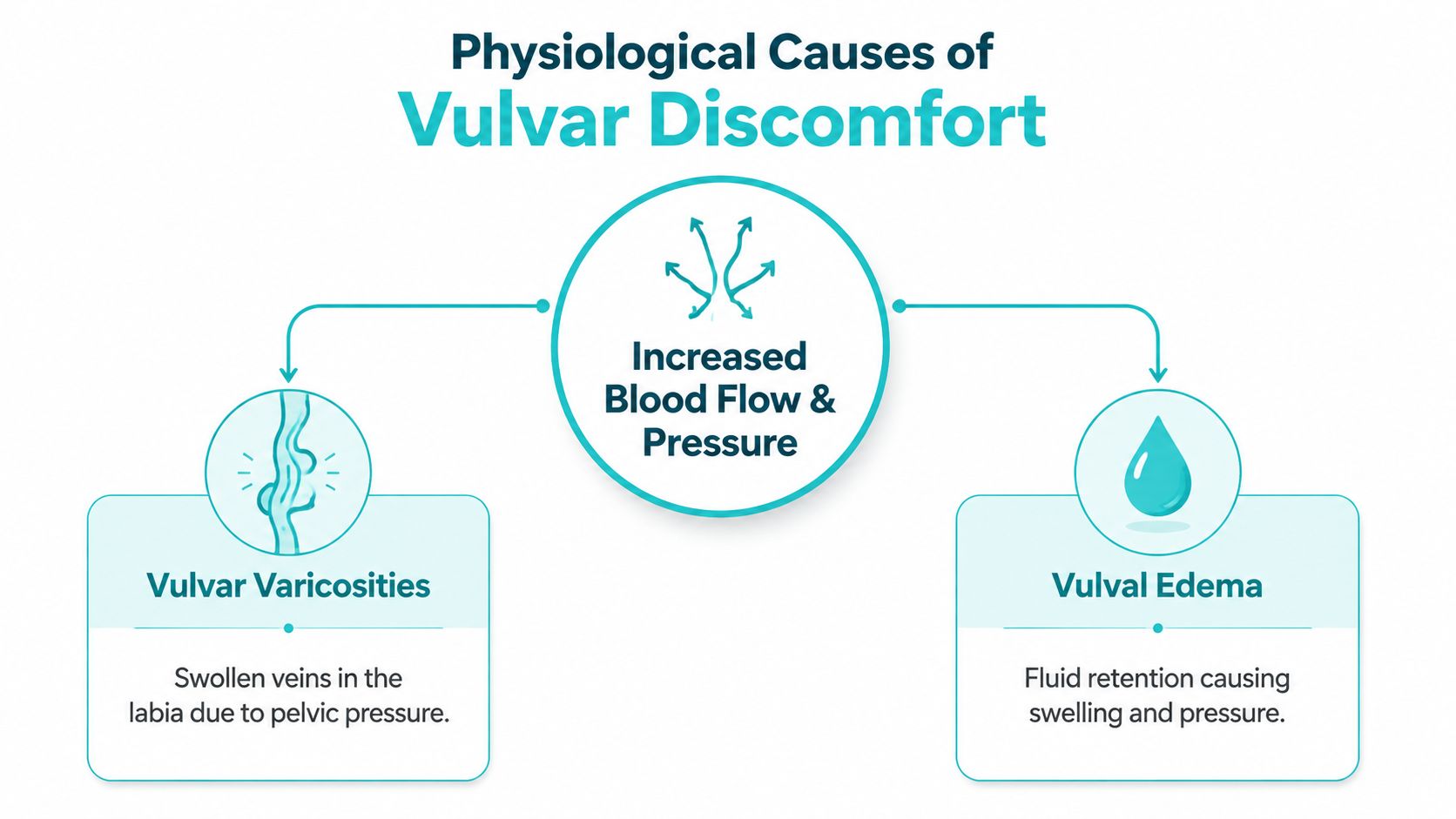
The most common biological explanation is increased pelvic blood flow combined with slower venous return. Pregnancy sends more blood through the pelvic circulation, while the enlarging uterus can make it harder for blood to travel back from the lower body. Pressure then builds in the vulvar venous network, especially during prolonged standing or sitting.
Vulvar varicosities
Vulvar varicosities are dilated veins in the labia majora or minora. A 2017 review estimated that they occur in 18% to 22% of pregnant women, while other literature reports lower estimates of 2% to 4%, depending on the population studied (vulvar varicosities review). The difference reflects varying study groups and definitions, not a reason to dismiss symptoms.
Typical signs include labial swelling, heaviness, aching, or burning that becomes more noticeable by the end of the day. One review noted that 91% of affected women had two or more full-term pregnancies, and 78% presented between 12 and 24 weeks of gestation (same review). Multiparity may increase susceptibility because pelvic veins experience repeated pregnancy-related strain.
Vulval edema
Vulval edema means fluid has accumulated in the vulvar tissues. The tissue tension itself can become painful, particularly when swelling develops quickly, affects one side more markedly, or makes walking and sitting difficult. Severe cases described in clinical literature have required treatment directed at the underlying cause, which may include medication, fluid management, or specialized pain control (case-based literature on vulval edema).
These conditions can look similar, but they aren't managed identically. Varicosities generally respond to measures that reduce venous congestion, while edema requires clinicians to consider infection, trauma, vascular problems, and other causes before selecting treatment.
Distinguishing Normal Changes from Concerning Symptoms
Normal pregnancy-related discomfort usually has a recognizable pattern. It may fluctuate with posture, worsen after a busy day, improve with rest or cold therapy, and occur without fever, spreading redness, or significant skin breakdown. Mild swelling can also be benign when it develops gradually and remains relatively symmetrical.
Concerning symptoms don't always mean a serious complication, but they do mean you shouldn't self-diagnose. A clinician may need to examine the skin and tissues, assess circulation, and determine whether testing is appropriate.
When to Seek Immediate Care
| Common Symptom | Concerning Sign | Action |
|---|---|---|
| Mild aching or heaviness that changes with position | Sudden, severe, or rapidly escalating pain | Contact your obstetric provider promptly |
| Gradual swelling after standing | Rapid swelling, marked asymmetry, or severe tenderness | Seek urgent obstetric assessment |
| Burning associated with pressure or visible veins | Fever, chills, feeling systemically unwell, or spreading redness | Seek same-day medical advice |
| Tenderness that improves with rest | A firm, unusually painful area or sudden change in appearance | Contact your provider urgently |
| Irritation after friction or a new product | Blisters, open sores, significant skin breakdown, or painful urination | Arrange prompt clinical evaluation |
| Discomfort during intercourse | Pain that persists, prevents intimacy, or appears with unusual discharge | Discuss it with your obstetric or gynecologic clinician |
Practical rule: If pain limits walking, sleep, urination, intimacy, or your ability to function, it has crossed the threshold for professional assessment, even if the vulva looks normal.
Don't insert products, use leftover prescription medication, or apply a medicated cream without checking that it's appropriate during pregnancy. The right treatment depends on whether the problem is vascular, muscular, infectious, inflammatory, or dermatologic.
Safe Self-Care Strategies for Pain Relief
Self-care works best when it matches the suspected mechanism. For venous heaviness or swelling, reduce pressure and support blood return. For tissue irritation, remove the trigger. For muscular guarding, focus on relaxation rather than repeatedly squeezing the pelvic floor.
Start with position
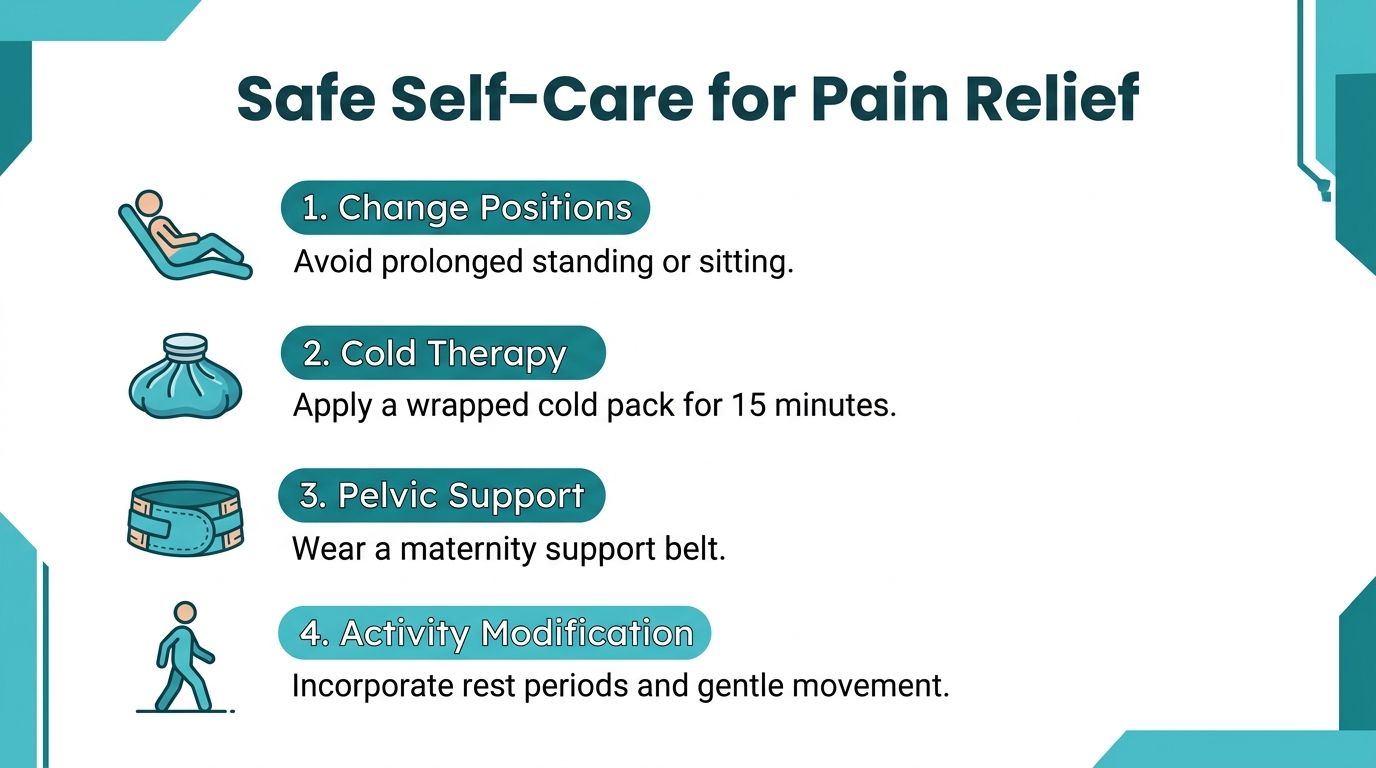
Rest on your left side when symptoms build, and use pillows to support your abdomen and upper leg. Change position regularly instead of remaining seated or standing for long periods. These adjustments can reduce pressure on pelvic veins and may ease the heavy, congested feeling associated with vulvar varicosities.
Use cold carefully
Apply a cold pack wrapped in a soft cloth to the external vulvar area for short periods. Never place ice directly on the skin, and stop if numbness or increased pain develops. Cold can temporarily reduce the sensation of pain and calm tissue swelling, but it won't identify or treat an infection.
Add support without compression that hurts
A properly fitted maternity pelvic support garment may reduce the sense of downward pressure. It should feel supportive, not restrictive, hot, or painful. Remove it if swelling, tingling, skin irritation, or discoloration increases, and ask your prenatal provider or physical therapist how to fit it safely.
Modify the load
Take rest breaks during errands, alternate light movement with recovery, and avoid activities that clearly intensify pressure. Gentle walking may feel better than standing still for long periods, but pain should guide the dose. Don't push through sharp pain, progressive swelling, or symptoms that continue after activity ends.
What often doesn't work: Repeatedly performing strong Kegels when the pelvic floor is already guarding can increase pressure and tenderness. A pelvic health clinician can help determine whether you need strengthening, lengthening, coordination work, or simple down-training.
For individualized movement guidance, explore prenatal pelvic floor exercises. You can also use the video below as general education, not as a substitute for assessment.
The Pelvic Floor Connection to Vulvar Pain
The pelvic floor is a group of muscles that supports the pelvic organs, responds to pressure, and contributes to sexual comfort. During pregnancy, these muscles may work harder to manage the changing load. Some become weak or poorly coordinated, while others remain partially contracted throughout the day.
A tense pelvic floor can refer pain toward the vulva and make light touch, sitting, walking, or intercourse feel surprisingly uncomfortable. The muscles may tighten in response to swelling or vein pressure, then remain protective even after the original irritation settles. That creates a feedback loop: discomfort increases guarding, and guarding increases sensitivity.
When vulvodynia is part of the history
Vulvodynia may predate pregnancy, recur during pregnancy, or begin for the first time during pregnancy. Specialty guidance notes that hormonal and connective-tissue changes can amplify symptoms, while also stating that vulvodynia doesn't necessarily worsen pregnancy outcomes or baby growth (pregnancy and vulvodynia guidance).
That distinction matters. A flare may feel like burning, rawness, or pain from light contact rather than the heaviness typical of swollen veins. It also changes the conversation around medication, intimacy, birth planning, and postpartum expectations. You shouldn't stop or start medication independently, but you should tell your obstetric clinician about the full pain history.
Why muscle treatment can change the outcome
A pelvic floor assessment looks beyond whether the muscles are “strong.” Coordination, resting tone, breathing, hip mechanics, abdominal pressure, and the way you move through daily tasks all influence vulvar comfort. Treatment may focus on releasing overactive muscles, improving relaxation during exhalation, and teaching the body to share load more efficiently.
How Pelvic Floor Physical Therapy Can Help
A pelvic floor physical therapy evaluation should begin with your story. The therapist will ask when the pain started, where you feel it, what aggravates it, whether swelling or skin changes are present, and how it affects walking, sleep, bowel movements, urination, intimacy, and birth planning.
The external assessment may include posture, breathing, hip movement, abdominal pressure management, and the appearance of swelling. An internal examination isn't automatically required, and you can discuss consent, timing, and comfort before any hands-on assessment. A skilled therapist will also refer you back to your obstetric or medical provider when the presentation suggests infection, significant edema, or a vascular concern outside physical therapy's scope.
Treatment depends on the source
For pelvic floor overactivity, treatment may include gentle external or internal soft-tissue work when appropriate, relaxation training, diaphragmatic breathing, and strategies to reduce unconscious clenching. For weakness or poor coordination, the plan may involve carefully selected strengthening and functional retraining. A patient with vulvar sensitivity may need graded exposure, pacing, and practical changes to clothing, hygiene, and intimacy.
Vascular symptoms call for a different emphasis. Positioning, support, activity modification, and communication with the prenatal team may be more useful than aggressive muscle exercises. Physical therapy won't replace medical evaluation for rapidly progressing swelling or systemic symptoms, and it shouldn't be presented as a universal answer.
If symptoms persist despite sensible self-care, pelvic floor physical therapy during pregnancy can help you understand which tissues are contributing and build a pregnancy-appropriate plan.
Taking the Next Step Toward Comfort
Pain on labia during pregnancy isn't something you have to minimize because pregnancy is uncomfortable. Gradual heaviness that responds to position changes may reflect venous congestion, while burning, asymmetry, skin changes, or severe tenderness deserves medical review. Pelvic floor dysfunction and vulvodynia can also contribute, especially when pain interferes with movement, rest, intimacy, or preparation for labor.
Contact your obstetric provider for new, severe, rapidly changing, or unexplained symptoms. If medical causes have been addressed and muscle tension or movement patterns remain part of the problem, a pelvic health physical therapist can offer a more precise route to relief than trial-and-error exercises.
Lake City Physical Therapy offers prenatal and postpartum pelvic floor rehabilitation, including pregnancy-focused guidance for pelvic pain and functional changes. Visit Lake City Physical Therapy to explore in-person or telehealth care and schedule support for your symptoms.