Master Core and Pelvic Floor Exercises
You may be here because a sneeze catches you off guard. Or because workouts that used to feel strong now feel disconnected, heavy, or strangely vulnerable. Maybe you’ve had a baby, gone through treatment, returned to running, or noticed that your body no longer responds the way it used to.
That experience is common. It is not something you need to shrug off.
Good core and pelvic floor exercises are not just a list of moves. They’re a way to rebuild pressure control, support, and confidence from the inside out. For some people that means getting stronger. For others it means learning how to relax muscles that are gripping too hard. Most need both.
Your Core and Pelvic Floor The Inner Team You Need to Know
If you’ve ever been told to “just do more Kegels” or “strengthen your abs,” you were given only part of the picture. The pelvic floor doesn’t work alone, and neither do your abdominal muscles. They function as a coordinated system.
Think of your core as an inner canister. At the top sits the diaphragm, your main breathing muscle. Around the sides wraps the transverse abdominis, often described as a natural corset. In back, the multifidus helps with deep spinal support. At the bottom, the pelvic floor forms a muscular base.

What these muscles actually do together
This system manages pressure every time you breathe, lift, cough, laugh, run, jump, or have a bowel movement. When the parts work together well, you feel supported rather than braced rigidly. You can transfer force without leaking, gripping, or bearing down.
That’s why isolated training often falls short. A randomized controlled trial found that 72% of women in a combined training group improved urinary incontinence after 12 weeks, compared with 28% in the group doing pelvic floor exercises alone in this published trial on combined core stabilization and pelvic floor training.
That difference matters in the clinic. It tells us that the goal isn’t just a stronger squeeze. The goal is better coordination.
Why crunches and isolated Kegels often miss the mark
Crunches mainly train surface abdominals. They don’t automatically teach pressure control. Kegels can improve symptoms for some people, but only if the contraction is correct, timed well, and paired with the rest of the system.
If the pelvic floor is weak, underactive, or poorly timed, you may notice leakage, heaviness, or lack of support. If it’s overactive, you may notice pain, constipation, difficulty relaxing, or a sense that nothing really “lets go.” Both patterns can show up as core dysfunction.
Clinical reality: The same symptom can come from different problems. Leakage can happen with weakness, but it can also happen when a tight pelvic floor can’t lengthen and respond to pressure well.
This is why pelvic health care starts with understanding function, not guessing.
A better mental model
Instead of asking, “Are my abs weak?” ask these questions:
- Can I breathe without lifting my shoulders and tightening my neck?
- Can my lower rib cage expand as I inhale?
- Can I gently contract and fully relax my pelvic floor?
- Can I move my arms, legs, and trunk without pushing pressure down?
Those questions tell you more than a plank time ever will.
For a deeper anatomical look at how these structures work, review the muscles of the pelvic floor. Understanding the map helps many people finally make sense of their symptoms.
What coordinated core function feels like
A well-coordinated system usually feels like this:
| Function | What you may feel |
|---|---|
| Breathing | Rib cage expands instead of chest-only breathing |
| Lifting | Gentle support through the trunk, not hard gripping |
| Pelvic floor contraction | A lift inward and upward, not a push down |
| Daily movement | Better control with less strain in the low back, hips, or pelvis |
When this team is out of sync, people often compensate. They squeeze glutes, hold breath, clench their stomach, tuck the pelvis, or bear down. Those strategies can create temporary effort, but not useful support.
The best core and pelvic floor exercises restore teamwork. That’s what builds lasting function.
How to Correctly Activate Your Core and Pelvic Floor
Before bridges, squats, or planks, you need to know how to find the right muscles. This is the part many people skip, and it’s a major reason generic routines disappoint.
Isolated Kegels can fail in 60 to 70% of cases without proper guidance, often due to bearing down or incomplete activation. Success rates rise to over 70% with supervised, pressure-managed training that teaches people to engage the transverse abdominis and pelvic floor together while exhaling, as described in this clinical guide to successful pelvic floor exercises.
Start with breath, not bracing
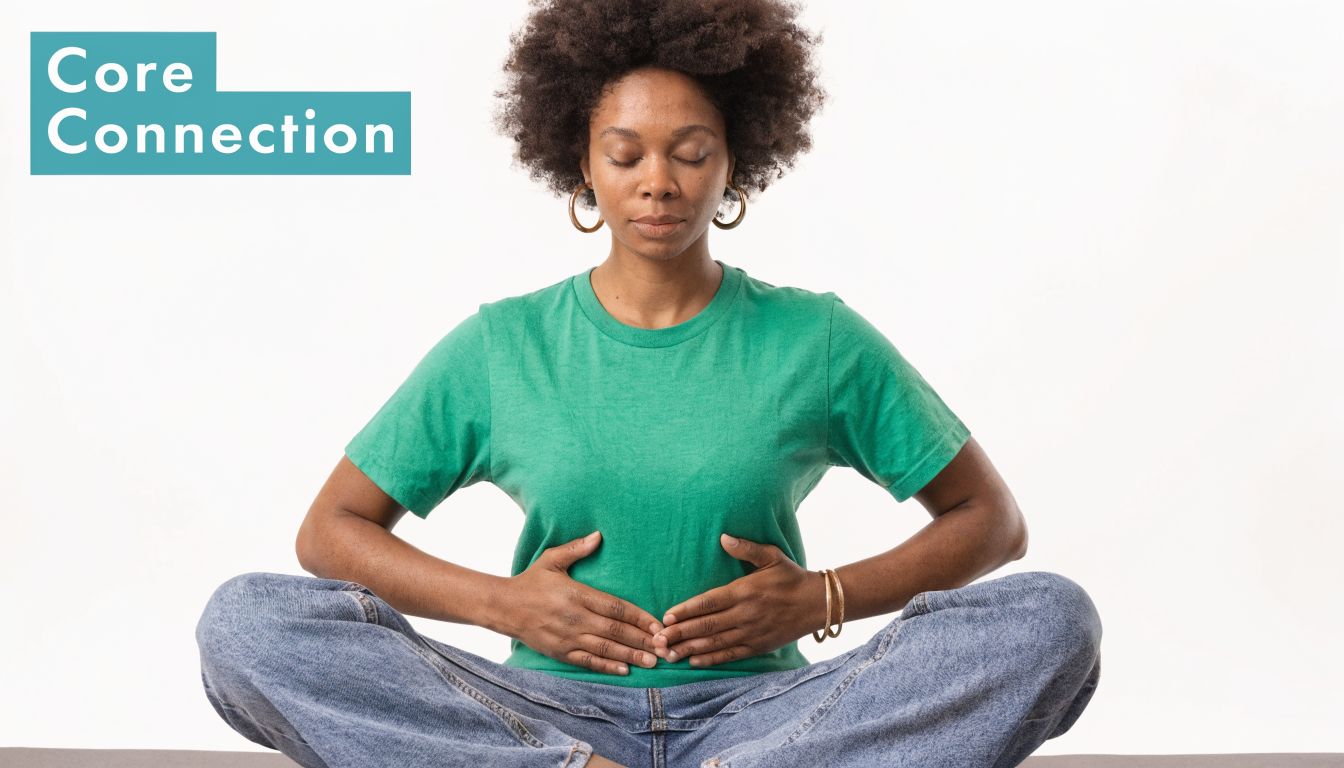
Lie on your back with knees bent, or sit comfortably with your feet supported. Rest one hand on your lower ribs and one on your lower abdomen.
As you inhale, let the rib cage widen in multiple directions. Think side ribs, back ribs, and lower belly softening. As you exhale, allow the body to gently recoil. Don’t force a hard abdominal pull.
You’re looking for 360-degree breathing, not a dramatic belly push and not a chest lift.
If your first instinct is to suck in your stomach, back off. That habit usually increases tension and makes the pelvic floor less responsive.
Practice cues
- Inhale and feel expansion around the rib cage.
- Exhale slowly through the mouth, like fogging up a mirror.
- Let the throat stay soft and the shoulders quiet.
- Repeat until the breath feels easy rather than effortful.
Find the pelvic floor contraction
Once the breath is calmer, try a pelvic floor contraction. A useful image is gently lifting the muscles around the vaginal and anal openings inward and upward. Some people respond to the cue “lift a blueberry” or “pick up a tissue with the pelvic floor.”
A correct contraction should be subtle. It is not a hard butt squeeze. It is not clenching your thighs. It is definitely not pushing down.
Try this in sitting first. Sitting gives many people better feedback because the pelvic floor contacts the chair.
Simple setup
- Sit tall on a firm chair.
- Inhale and let the pelvic floor soften.
- Exhale and gently lift inward and upward.
- Hold briefly, then fully let go.
The release matters as much as the lift. If you can contract but not relax, that is still a coordination problem.
Common mistake: Many people hold their breath or grip their glutes. If your buttocks are working harder than the area around the perineum, the contraction is off target.
Add the transverse abdominis
Now pair the pelvic floor with the deepest abdominal layer. The transverse abdominis, or TA, creates a gentle drawing-in feeling below the navel. This should feel supportive, not rigid.
Try it in a supported lying position.
- Position on your back with knees bent.
- Inhale and allow the rib cage to expand.
- Exhale and gently draw the lower abdomen inward.
- At the same time, add a light pelvic floor lift.
- Hold only as long as you can breathe normally.
- Fully relax before the next repetition.
The effort should be moderate. More isn’t better here. Over-bracing often creates the same pressure problems people are trying to solve.
For guided movement demos, these pelvic floor videos can help you connect the cues to actual body positions.
How hard should the contraction be
People often assume the strongest squeeze is the best squeeze. Usually it isn’t. A moderate contraction that you can coordinate with breathing is far more useful than a maximal effort that turns into breath-holding and abdominal gripping.
A few signs you’re on the right track:
- Your exhale stays smooth
- Your jaw and shoulders stay relaxed
- You feel lift, not downward pressure
- You can fully release after each repetition
A quick self-check table
| Cue | Usually helpful | Usually unhelpful |
|---|---|---|
| Breathing | Rib cage expansion | Chest lifting and neck tension |
| Pelvic floor | Lift inward and upward | Push down or bear down |
| Abdominal support | Gentle draw-in below navel | Hard stomach gripping |
| Effort level | Moderate and repeatable | Max effort with breath-holding |
If you don’t feel much at first
That’s normal. Some people need time to build awareness. Others are trying so hard that they override the subtle sensation they’re looking for.
Try changing positions. Sitting, side-lying, or hook-lying often works better than standing in the beginning. You can also place a hand on the lower abdomen to feel whether the muscles are bulging outward or drawing in gently as you exhale.
If every attempt feels confusing, painful, or like downward pressure, don’t keep guessing. The best next step is a personalized assessment.
Progressing Beyond Kegels with Integrated Exercises
Once you can coordinate breath, pelvic floor, and deep abdominal support, isolated practice needs to become functional. Daily life doesn’t happen lying on your back. You need control while rolling, reaching, squatting, carrying, and changing direction.
Poor alignment can interfere with that process. Posture and alignment are often overlooked as foundational exercises. Poor pelvic positioning can reduce pelvic floor efficacy by up to 40%, and correcting an anterior pelvic tilt, which is common in 60% of women with incontinence, matters for standing function, according to this discussion of posture and pelvic floor exercise mechanics.
Alignment before difficulty
You do not need perfect posture. You do need a position that lets the rib cage stack over the pelvis well enough that pressure can move efficiently.
That usually means:
- Ribs not flared forward
- Pelvis not dramatically tucked or tipped
- Weight balanced through the feet
- Breath still available during effort
A useful cue is “soften the front ribs and stand tall through the crown of the head.” If you feel jammed in the low back or locked in the glutes, reset before adding movement.
Four integrated exercises that actually carry over
Dead bug
This is one of the best early drills for pressure control.
Lie on your back with knees lifted one at a time into tabletop if comfortable. Exhale, gently connect the lower abdomen and pelvic floor, then slowly tap one heel down or lower one arm overhead without letting the ribs pop up.
What to watch
- Keep the movement small enough that your trunk stays quiet.
- Stop if your belly bulges upward.
- Return to the start and breathe in between reps.
Bird dog
Move to hands and knees. Start with a soft exhale and light deep core connection, then reach one leg back or one arm forward. Progress to opposite arm and leg only if you can keep the spine steady.
Bird dog is less about height and more about control. A long reach is better than a high kick.
Practical rule: If the movement makes you wobble, arch, or hold your breath, it’s too advanced right now.
Glute bridge
Lie on your back with knees bent and feet planted. Exhale and create a gentle deep core connection, then lift the hips into a bridge without thrusting the ribs up.
Bridges can be excellent, but they’re often done by overusing the back or clenching the glutes too hard. Think length through the knees and a smooth lift through the hips.
Bodyweight squat
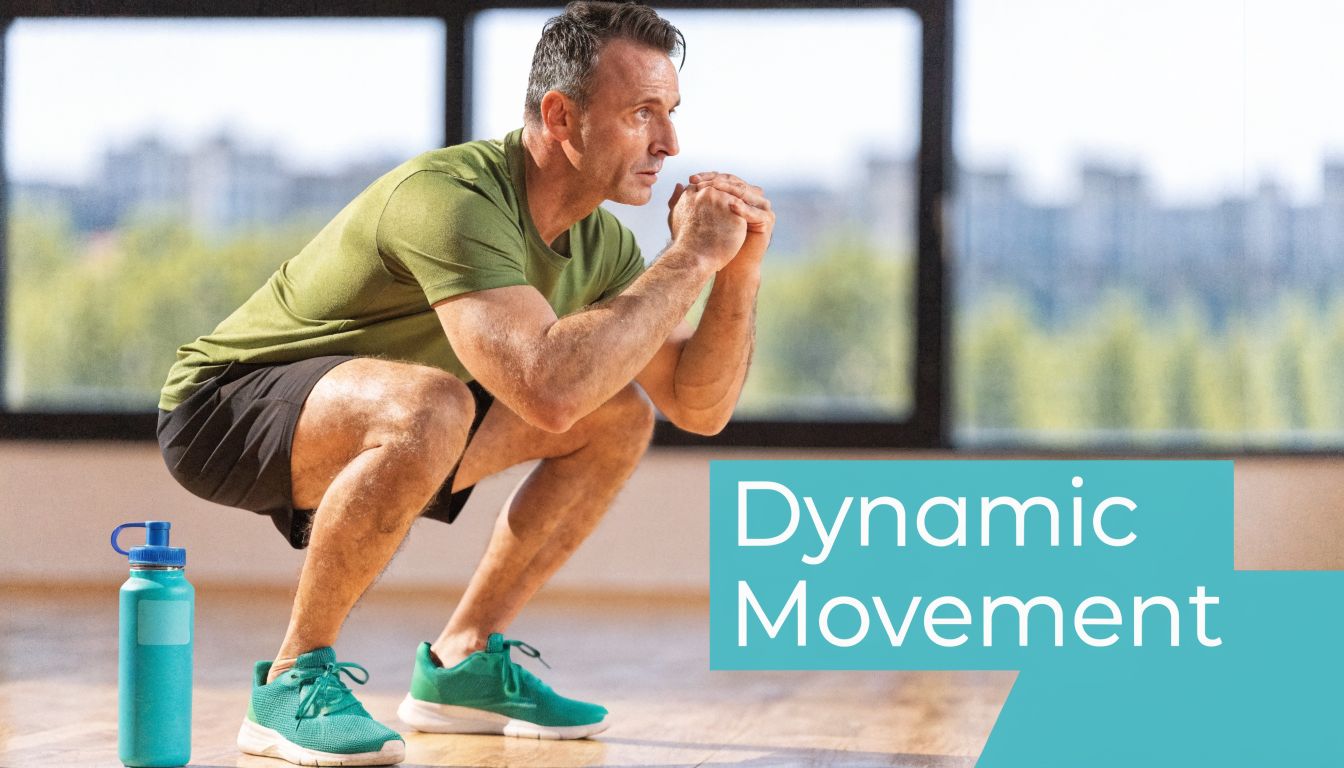
Stand with your feet set in a comfortable stance. Inhale to prepare. Exhale as you lower into the squat with your ribs stacked over your pelvis. Rise back up without pushing pressure downward.
The squat is where many people discover whether their gym form and pelvic floor function are coordinating.
Use the Knack in real life
One of the most practical tools in pelvic health is the Knack. That means a gentle pelvic floor brace just before a cough, sneeze, laugh, lift, or impact.
This isn’t a hard clench. It’s a timely pre-contraction.
Use it:
- Before sneezing
- Before lifting a laundry basket
- Before standing from a chair
- Before jumping or landing
This simple timing skill often helps people feel immediate control during daily tasks.
Here’s a visual walkthrough to pair with your practice.
When to progress and when to pause
Move forward when you can keep breath, alignment, and control through the whole motion. Do not progress just because an exercise looks easy.
A good progression might look like this:
| Stage | Focus |
|---|---|
| Foundational | Breath, pelvic floor awareness, TA connection |
| Controlled movement | Dead bug, bridge, bird dog |
| Standing strength | Squat, step-up, carry, split stance work |
| Impact readiness | Fast direction change, landing, running drills |
Pause and reassess if:
- You leak more during or after exercise
- You feel heaviness or bulging
- You develop pelvic, abdominal, or low back pain
- You can only complete reps by gripping or holding breath
The best core and pelvic floor exercises are the ones you can own with control. Fancy progressions don’t matter if the pressure strategy underneath them is poor.
Modifying Exercises for Pregnancy Postpartum Athletes and Oncology Recovery
The right exercise depends on what your body is handling right now. Pregnancy changes abdominal wall loading and breathing mechanics. Postpartum recovery changes tissue healing and pressure tolerance. Athletic training adds impact and force transfer. Oncology recovery can affect scars, energy, mobility, and how much strain tissues can tolerate.
That’s why one-size-fits-all programs frustrate so many people.
Many guides focus heavily on strengthening while overlooking tightness and poor coordination. That matters because isolated Kegels can worsen symptoms if the pelvic floor is already overactive, and 30 to 50% of female runners report pelvic floor dysfunction, as described in this discussion of pelvic floor dysfunction in active women and postpartum bodies.

During pregnancy
Pregnancy asks your core to adapt, not stay frozen in its pre-pregnancy state. As the uterus grows, the diaphragm, abdominal wall, and pelvic floor all have to respond to changing pressure.
For many pregnant patients, the best exercise modifications are simple:
- Use more incline and side-lying positions if flat-on-back work feels uncomfortable
- Shorten the lever length during dead bugs or leg lowers
- Exhale with effort during transitions, lifting, and strength work
- Choose roomier ranges of motion instead of forcing deep abdominal tension
Walking, supported squats, sit-to-stands, band rows, and controlled carries can be excellent. The key is avoiding a strategy where every effort turns into breath-holding and downward pressure.
If you feel heaviness, dragging, or pressure at the vaginal opening during a movement, that movement needs to be modified. That doesn’t mean stop all exercise. It means change the demand.
Postpartum bodies need rebuilding, not punishment
After delivery, many women feel pressure to “get their core back” quickly. That pressure often leads to exercises that are too aggressive too soon.
The early postpartum period usually benefits from:
- Breath retraining
- Gentle pelvic floor awareness
- Rolling, sit-to-stand, and walking mechanics
- Low-load core work without abdominal doming or coning
Coning is a sign that the abdominal wall is struggling with pressure management. If you see a ridge through the midline during an exercise, reduce the load, range, or complexity.
A practical progression often starts with exhale-based support during everyday tasks. Then it moves into heel slides, supported bridges, modified dead bugs, and controlled squats. If you’re looking for a more detailed recovery pathway, these postpartum core strengthening exercises offer helpful starting points.
If an exercise makes you feel weaker, heavier, or more disconnected later in the day, it wasn’t a good fit for your current stage.
Athletes need impact-specific training
Runners, CrossFit athletes, dancers, triathletes, and volleyball players don’t just need endurance. They need timing, elasticity, and force control.
The mistake I see most often is this: an athlete does basic core work well in a quiet position, then leaks or feels pressure during double-unders, sprinting, box jumps, or hard landings. That’s not because she failed rehab. It usually means rehab hasn’t yet matched the demands of sport.
A better return-to-sport progression includes:
- Single-leg balance with breath control
- Split squat and lateral loading
- Landing drills
- Tempo changes
- Sport-specific impact practice
Athletes also need screening for overactivity. A pelvic floor that stays switched on all day won’t absorb impact well. In those cases, downtraining, hip mobility work, and breathing-based release often need to come before more strengthening.
Oncology recovery requires gentler pacing and more nuance
After breast or gynecologic cancer treatment, exercise selection has to respect healing tissue, scar mobility, fatigue, and any movement restrictions. Some patients are also managing abdominal surgery recovery, lymphedema concerns, hormonal changes, or reduced tolerance for intra-abdominal pressure.
That doesn’t mean avoiding core and pelvic floor exercises. It means choosing them carefully.
Helpful options often include:
- Diaphragmatic breathing with rib expansion
- Gentle TA activation
- Short lever marching or heel slides
- Supported sit-to-stands
- Walking with posture awareness
- Light upper body work coordinated with breath
For this group, symptom response matters more than intensity. If swelling, scar pulling, pelvic pressure, or excessive fatigue increases after exercise, the program needs adjustment.
A side-by-side way to think about modifications
| Life stage or group | Helpful focus | Common mistake |
|---|---|---|
| Pregnancy | Pressure management and position changes | Forcing high-tension core work |
| Postpartum | Rebuilding coordination before intensity | Jumping into planks and crunches too soon |
| Athletes | Impact readiness and force transfer | Training only in low-load positions |
| Oncology recovery | Tissue-friendly progression and symptom monitoring | Equating gentle with ineffective |
A good program meets your body where it is. It should challenge you without making symptoms louder.
Recognizing Red Flags When to Seek Pelvic Health PT
Home practice can be a great starting point. It is not always enough.
Some symptoms tell you the issue is more complex than a simple strengthening problem. Others tell you that you may be doing the right exercise with the wrong strategy. In both cases, a pelvic health physical therapist can sort out what’s happening.
Signs to stop guessing
Seek professional evaluation if you notice any of the following:
- Pain during or after core and pelvic floor exercises
- Worsening urinary leakage or new bowel leakage
- Heaviness, pressure, or a bulging sensation in the vagina
- Pain with intercourse, tampon use, or pelvic exams
- Constipation or trouble relaxing during bowel movements
- A sense that you cannot feel the muscles working at all
- Abdominal coning or doming that persists despite modifications
- Low back, SI joint, tailbone, or hip pain that ramps up with exercise
These are not signs that you failed. They are signs that your body needs more precise input.
Why expert guidance matters
The original Kegel recommendations in the 1950s asked women to do hundreds of contractions per day, specifically 20 minutes of Kegels, 3 times per day, but modern guidance has changed substantially. Current evidence-based recommendations support 3 sets daily of 8 to 12 contractions held for 3 to 10 seconds, and proper technique still matters because incorrect practice can worsen symptoms, as outlined in this review of how Kegel prescription has changed over time.
That shift says something important. Pelvic rehab has evolved. More effort is not automatically better care.
A pelvic floor problem can involve weakness, poor timing, excess tension, scar restriction, breathing dysfunction, posture, or movement habits. You can’t reliably tell which one it is by searching symptoms online.
What a pelvic health PT can add
A thorough pelvic health assessment can identify whether your issue is primarily strength, coordination, relaxation, mobility, tissue healing, or pressure management. It can also show whether symptoms are coming from the pelvic floor alone or from hips, spine, abdominal wall, breathing mechanics, or training load.
Professional care may include:
- External movement assessment
- Pelvic floor coordination testing
- Breathing and pressure strategy coaching
- Scar and soft tissue work
- Biofeedback when appropriate
- A plan customized for your goals and stage of recovery
That matters whether your goal is to sneeze without leaking, return to sex without pain, complete a workout without pressure, or get back to running.
Common Questions About Core and Pelvic Floor Health
Is it ever too late to start core and pelvic floor exercises
No. People can improve pelvic floor function at many stages of life. The bigger question isn’t age. It’s whether you’re doing the right kind of work for your symptoms and goals.
How long does it take to notice changes
It depends on the issue, your consistency, and whether the main problem is weakness, coordination, or overactivity. In practice, people often notice early changes in body awareness before they notice full symptom relief. If you’ve been practicing regularly and symptoms aren’t shifting, the plan probably needs adjustment.
Can men benefit from this work too
Yes. Men also have pelvic floors and deep core systems. They can need this work after surgery, with leakage, pelvic pain, constipation, or performance issues. The coordination principles are similar, even though the symptoms and anatomy differ.
Should I keep doing Kegels if I’m not sure I’m doing them right
Not indefinitely. A few exploratory attempts are fine, but repeated guessing can reinforce the wrong pattern. If you’re pushing down, clenching everything, or feeling worse afterward, it’s time for skilled guidance.
What if I don’t feel anything when I try
That can happen with poor awareness, over-bracing, fatigue, or tension. Change positions first. Try sitting, side-lying, or using your breath as the starting point. If the muscles still feel absent, an exam can clarify whether the issue is activation, coordination, or sensation.
Are leaks during exercise normal after having a baby
They are common, but common does not mean normal. Leakage is a signal that pressure and support are not matching the demands being placed on your body. That can improve with the right rehab.
Can stretching help if my pelvic floor feels tight
Yes. Some people need downtraining before strengthening. Breathing, hip mobility, relaxation work, and reducing unnecessary abdominal gripping can be more useful than adding more contractions right away.
If you’re dealing with leakage, heaviness, pelvic pain, postpartum core weakness, or a return-to-sport problem that hasn’t improved with generic advice, Lake City Physical Therapy offers specialized pelvic health care for women across pregnancy, postpartum, oncology recovery, and athletics. A skilled evaluation can help you stop guessing and start working on the actual reason your symptoms are happening.