How Does a Pessary Work and When to Consider One
You may notice heaviness near the end of the day, pressure when you stand for a long time, or urine leaking when you cough, laugh, or exercise. Perhaps you've also felt a bulge, changed the way you use the bathroom, or started searching for answers after symptoms interrupted an ordinary walk. The question “how does a pessary work” usually comes from wanting practical relief without immediately choosing surgery.
A pessary is a removable vaginal support device, not a permanent repair. It can mechanically support pelvic organs while you wear it, and it may help manage pelvic organ prolapse or stress urinary incontinence. The most useful way to understand it is to think beyond the device itself. Its shape, fit, comfort, cleaning routine, follow-up, and your pelvic floor coordination all affect whether it works in daily life.
This guide starts with the physical mechanism, then explains why different shapes have different jobs. You'll also learn what fitting feels like, which symptoms deserve a clinical conversation, how self-care affects continuation, and what pelvic floor therapy adds. Lake City Physical Therapy provides pelvic floor rehabilitation and education for women managing prolapse, incontinence, and related pelvic health concerns.
Introduction to Life With Pelvic Support Challenges
Consider a woman who feels fine during breakfast but develops pelvic pressure while shopping. By afternoon, she may avoid lifting a basket, shorten her walk, or worry about leaking during a sneeze. Another woman may notice that bowel movements feel less complete or that a vaginal bulge appears after prolonged standing. These experiences can feel embarrassing, but they're common reasons to seek a pelvic health evaluation.
A pessary may offer a non-surgical way to manage symptoms. It doesn't rebuild weakened muscles or permanently reposition an organ after removal. Instead, it provides support while it's in place, which can make standing, walking, exercising, or managing bladder symptoms more comfortable for some people.
The device's history helps explain its role. Pessaries have been used for prolapse since before Hippocrates, with documentation in early Egyptian papyruses. Earlier devices used materials such as cork and brass, while modern pessaries commonly use non-reactive silicone and come in many shapes and sizes. The material has changed substantially, but the central principle remains mechanical support, as described in this historical and clinical review of pessaries.
A realistic expectation: A pessary can reduce pressure or leakage while you wear it, but it works best as part of a broader plan that includes an accurate fit, follow-up, and attention to how you move and manage pressure.
The rest of the decision is individual. Your symptoms, pelvic anatomy, activity goals, ability to manage the device, medical history, and willingness to attend follow-up all matter. Understanding the mechanics gives you better questions to ask, rather than leaving you to choose based on a device's appearance alone.
How a Pessary Provides Mechanical Support Inside the Vagina
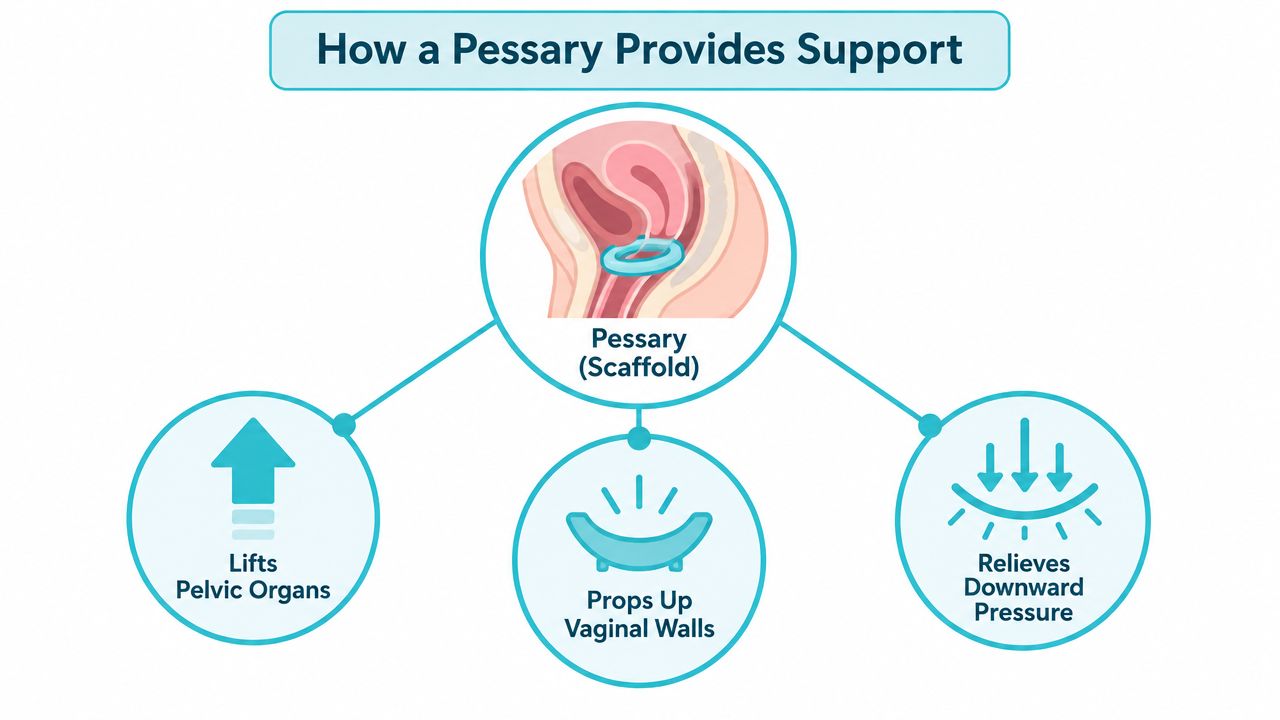
A pessary acts like a small internal scaffold. A scaffold doesn't heal a building's walls by itself. It gives those walls temporary structure so the building can remain more stable while people work around it. Inside the vagina, a pessary creates a similar physical support point for vaginal walls and nearby pelvic organs.
The mechanics happen in a sequence:
- The device is inserted into the vaginal canal.
- Its shape rests against selected vaginal walls or supportive structures.
- That contact helps keep the vaginal walls from collapsing inward or downward.
- The supported vaginal tissues help hold pelvic organs closer to a more anatomically appropriate position.
- Reduced downward pressure may ease sensations involving the bladder or bowel.
A pessary is therefore a passive intravaginal mechanical support device. It doesn't actively contract like a muscle, and it doesn't remodel stretched tissue simply because it's present. In a randomized study of a prolapse device compared with ring pessaries, researchers described the device as a mechanical intravaginal scaffold that produced an immediate lift of the vaginal apex and widened the lateral vaginal walls. That structural explanation is detailed in the Frontiers study of intravaginal prolapse support.
Why relief may feel immediate
If downward pressure is contributing to heaviness or a bulging sensation, changing the physical position of the vaginal walls can change the sensation quickly. That doesn't mean the underlying muscles or connective tissues have suddenly become stronger. It means the device is offering an external support point from inside the vaginal canal.
The distinction matters. Support and strengthening are different jobs:
- A pessary provides positioning and structural assistance while worn.
- Pelvic floor muscle training develops active control, coordination, and endurance.
- Movement and pressure strategies help you use that control during coughing, lifting, exercise, and bowel movements.
A correct fit must provide enough support without pressing painfully on the vaginal walls. If it's too small, it may shift or fall out. If it's too large or poorly shaped, it may create pressure, discomfort, or difficulty with removal. That's why the question isn't only “Does a pessary work?” It's also “Which mechanical design matches my anatomy and symptoms?”
Pessary Types and How Each Shape Works Differently
Pessary shapes aren't interchangeable. Each one uses a different mechanical strategy, such as resting behind the pubic bone, adding a central support, filling space, or supporting the urethra during pressure-producing activities. A clinician chooses and tests the device based on your anatomy, prolapse pattern, symptom goals, comfort, and ability to manage it.
A ring pessary is a relatively simple support design. It rests within the vaginal canal and may hook behind the pubic bone, helping support the vaginal walls. A ring with support adds a central membrane or additional structure, which can provide more lift when a basic ring doesn't adequately address prolapse.
A Gellhorn uses a broad base and stem to occupy space and support more pronounced prolapse. A cube also occupies space and uses contact with the vaginal walls to help maintain position. A donut has a thicker, space-filling profile that can provide more substantial support than a basic ring.
For stress urinary incontinence, an incontinence dish or knob design focuses on the area beneath the urethra. Its purpose is to provide support during activities that increase abdominal pressure, such as coughing, sneezing, or running. It isn't a smaller prolapse pessary. It has a different mechanical target.
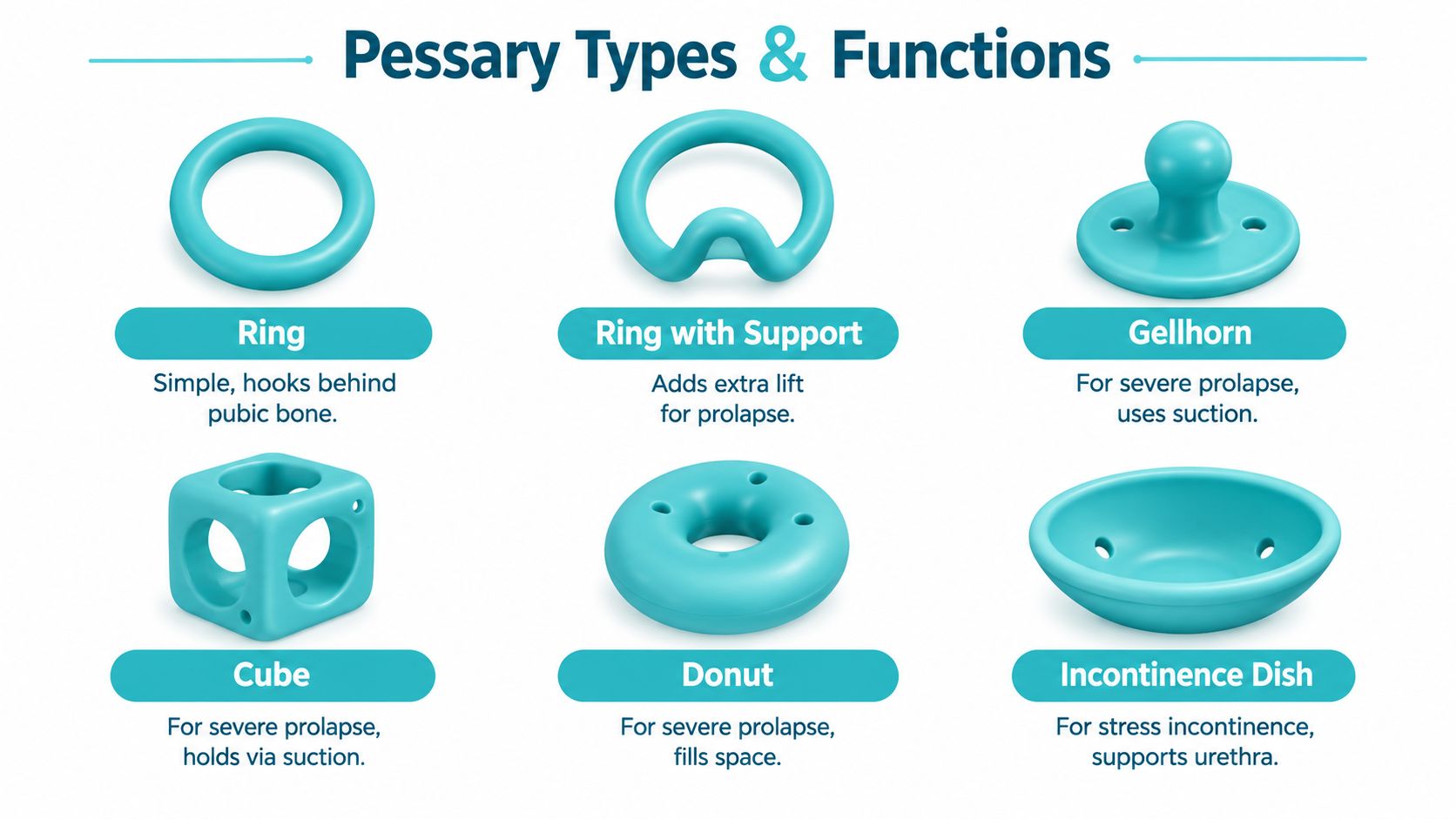
| Pessary Type | Mechanical Action | Best For |
|---|---|---|
| Ring | Rests within the vagina and supports vaginal walls | Mild to moderate support needs or an initial fitting option |
| Ring with support | Adds a central supporting structure to the ring | Prolapse needing more lift than a basic ring provides |
| Gellhorn | Uses a broad, space-occupying base and stem | More pronounced prolapse when a support design isn't sufficient |
| Cube | Occupies vaginal space and maintains contact with the walls | More advanced support needs, when clinically appropriate |
| Donut | Fills more space with a thicker circular profile | Prolapse requiring additional space-filling support |
| Incontinence dish | Supports tissues beneath the urethra during pressure | Stress urinary incontinence |
You can watch a visual overview of pessary designs in this pessary education video. The important takeaway is that one size and shape won't fit everyone. The right device must stay in place through ordinary movement while remaining comfortable enough for you to wear and manage.
Who Benefits Most and When a Pessary Is Not Advised
A pessary may be worth discussing if pelvic organ prolapse causes heaviness, pressure, a bulging sensation, or changes in bladder or bowel function. It may also be considered for stress urinary incontinence, especially when leakage occurs during coughing, sneezing, lifting, running, or other activities that raise abdominal pressure.
It can suit someone who wants to avoid surgery, delay surgery, manage symptoms while considering options, or use a conservative approach because surgery isn't currently appropriate. The device's benefit is practical and immediate for some people, but long-term continuation varies. A consultation review reported fitting success ranging from 41% to 96.6%, while continuation of successful use ranged from 21% to 97.7%. For stress urinary incontinence, multicenter studies reported 89% to 92% fitting success, and 59% of women were still using a pessary at 11 months with reduced or resolved incontinence, according to the International Urogynecological Consultation chapter on pessaries.

Reasons to pause before fitting
A provider may recommend treating another issue first, changing the fitting plan, or avoiding a pessary when you have:
- Active vaginal infection: Irritation or infection can worsen with an inserted device and needs appropriate evaluation.
- Severe vaginal ulceration: Tissue injury may require healing before regular pessary use.
- Material sensitivity: Tell the clinician about known allergies or reactions to medical materials.
- Limited follow-up access: Safe use depends on knowing when the device needs assessment, cleaning, or adjustment.
- Inability to manage the device: Some designs are difficult to remove, clean, or reinsert without assistance.
These aren't decisions to make from an online checklist. A pelvic examination helps determine whether symptoms reflect prolapse, incontinence, another pelvic health condition, or a combination. If you're unsure whether your symptoms fit prolapse, review these signs of pelvic organ prolapse before your appointment and write down what changes with standing, exercise, bowel movements, or the end of the day.
Ask your provider what improvement is realistic, how often follow-up is needed, whether you'll be taught self-management, and what symptoms should prompt removal or a call. Those answers can matter as much as the device selection.
What to Expect During Fitting and Follow Up Care
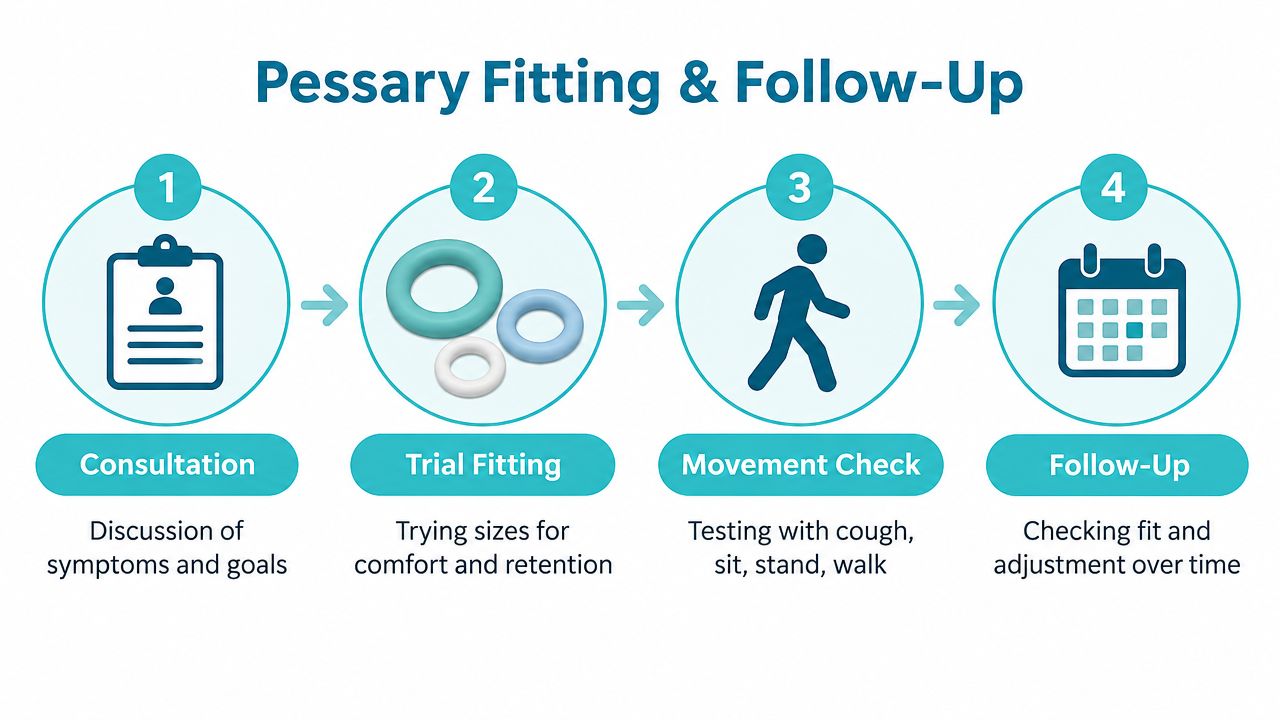
A pessary fitting is usually an individualized trial, not a one-time decision based only on your examination. The provider considers your symptoms and goals, performs an assessment, and tries a size and shape that appears mechanically appropriate. You may need adjustments before the device feels stable and comfortable.
The fitting commonly follows this pattern:
- Consultation: You describe pressure, bulging, leakage, bowel changes, sexual activity, exercise, and your priorities.
- Trial fitting: The provider inserts a pessary and checks whether it supports the intended area.
- Movement testing: You may cough, sit, stand, walk, or change position to see whether the device stays in place.
- Comfort review: You report pressure, pinching, rubbing, urinary changes, or difficulty emptying your bladder or bowel.
- Adjustment: The provider changes the size or shape if the first option doesn't meet both support and comfort needs.
What a good fit should accomplish
A well-fitted pessary should support your symptoms without becoming the main sensation you notice. You should be able to move through ordinary positions, and your provider should confirm that it remains retained during the activities tested. If you feel sharp pressure, persistent rubbing, new difficulty urinating, or a device that repeatedly shifts, tell the clinician rather than trying to tolerate it.
Early follow-up gives the provider a chance to inspect tissue, assess symptoms, and modify the plan. It also gives you an opportunity to ask about removal, cleaning, intercourse, exercise, bowel movements, and what to do if the device comes out. Some people manage removal and reinsertion independently, while others need office-based care.
A pelvic floor examination at Lake City Physical Therapy can help connect the device question with muscle function, breathing, pressure management, and movement patterns. Pessary care isn't successful because a device remains in place at any cost. It's successful when the support is useful, the tissue stays healthy, and the routine fits your life.
Daily Self Care Hygiene and Troubleshooting Tips
Daily life with a pessary becomes easier when care follows a repeatable routine. Your provider should tell you how often your specific device needs removal, cleaning, and reinsertion. The schedule depends on the design, your tissue health, whether you can manage removal, and whether your clinician plans regular office care.
A practical care checklist
- Wash your hands first: Clean hands reduce unnecessary transfer of bacteria during removal or insertion.
- Use gentle cleaning: Unless your provider gives different instructions, clean the device with warm water and mild, unscented soap, then rinse it well.
- Dry it completely: A dry device is easier to handle and avoids leaving excess moisture against vaginal tissue.
- Follow your assigned schedule: Don't assume every pessary should be removed at the same interval. Ask specifically about your model.
- Inspect the device: Look for cracks, changes in texture, or damage that could irritate tissue.
- Track symptoms: Note pressure, leakage, odor, discharge, spotting, bowel changes, and whether the pessary shifts with activity.
Some vaginal discharge can occur because the body is responding to a foreign object. A strong or foul odor, persistent bleeding, increasing pain, tissue irritation, or unusual discharge deserves clinical advice, especially if symptoms continue after removal.
Common situations that cause concern
A pessary may move during a bowel movement, particularly if you strain or bear down forcefully. It may also feel different when you sit, stand, exercise, or change the way you empty your bowels. Don't repeatedly push it back into place without discussing the pattern with your provider. The size, shape, placement, or your pressure strategy may need review.
Sexual activity also requires individualized guidance. Some devices can remain in place for certain activities, while others need removal, so ask before relying on assumptions. If the pessary causes pain, falls out, interferes with urination or bowel movements, or feels like it's pressing in one spot, stop and contact the fitting clinician.
Your routine is part of the treatment. A device that fits well but isn't cleaned, checked, or followed up appropriately may not remain comfortable or safe.
Getting More From Your Pessary With Pelvic Floor Therapy
A pessary supplies passive support. Pelvic floor therapy addresses the active work around that support, including how you contract, relax, breathe, lift, walk, run, and respond to changes in pressure. That combination matters because symptom relief during quiet standing doesn't automatically translate to comfort during exercise or bowel movements.
A pelvic floor physical therapist may assess:
- Muscle coordination: Whether the pelvic floor can contract when support is needed and relax when it shouldn't be gripping.
- Breathing and pressure control: How you manage coughing, lifting, transfers, and exertion.
- Hip and trunk movement: Whether surrounding movement patterns add unnecessary load to the pelvic floor.
- Functional goals: How to return to walking, running, CrossFit, dance, volleyball, or other activities.
- Device use: Whether the pessary supports your goals without creating new symptoms.
The pelvic floor therapy process may include education, targeted exercises, relaxation training, coordination practice, and activity-specific strategies. Therapy can't turn a pessary into a tissue-healing device, and a pessary can't replace motor control training. Each addresses a different part of the problem.
Research priorities still include questions about how pessaries affect physical activity, psychological well-being, long-term effectiveness, complications, estrogen use, and training quality, as summarized in this NIHR James Lind Alliance priority-setting report. Emerging designs include self-removable pessaries, custom 3D-printed devices, hormone-releasing designs, and disposable self-inserted models, but the practical essentials remain the same: appropriate selection, comfort, tissue monitoring, and a care plan you can follow.
Track what changes with and without the device. Record pressure, leakage, activity tolerance, bowel symptoms, comfort, and removal difficulty. Bring that information to your provider or therapist so decisions reflect your actual day, not just how the pessary feels during a brief appointment.
Lake City Physical Therapy offers pelvic floor evaluations and rehabilitation for prolapse, incontinence, pregnancy and postpartum recovery, and women's sports goals, with in-person and telehealth options. If you're considering a pessary or struggling with comfort, movement, or pressure management, visit Lake City Physical Therapy to explore scheduling and pelvic health support.

