Lymphedema Treatment Arm: A Patient’s Guide to Care
You finish cancer treatment, start getting back to ordinary life, and then your arm doesn't feel like your arm. A sleeve feels tighter. Your watch sits differently. There's a heavy, full sensation that's hard to describe to anyone who hasn't felt it.
That moment is unsettling. It also leaves many people wondering whether they waited too long, whether the swelling will keep getting worse, and what treatment looks like in real life.
Arm lymphedema can feel confusing at first, but the path forward is usually much clearer once you understand what's happening and what a structured therapy plan involves. The goal isn't to hand you a list of medical terms. It's to help you know what to expect, what helps, what doesn't help enough on its own, and how to take the next step with confidence.
Understanding Arm Lymphedema After Cancer Treatment
A common story goes like this. Someone has breast cancer surgery or radiation, gets through the hardest parts of treatment, and then notices one arm feels puffy, achy, or unusually tired by the end of the day. Sometimes the swelling is obvious. Sometimes it starts as tightness in the forearm, a ring that won't slide on as easily, or skin that feels stretched.
Arm lymphedema happens when the body's drainage system can't move lymph fluid efficiently after lymph nodes or vessels have been damaged or removed. The simplest way to picture it is a traffic jam. Fluid is still trying to move through the system, but part of the route has narrowed or been blocked, so fluid backs up in the arm, hand, chest, or nearby tissues.
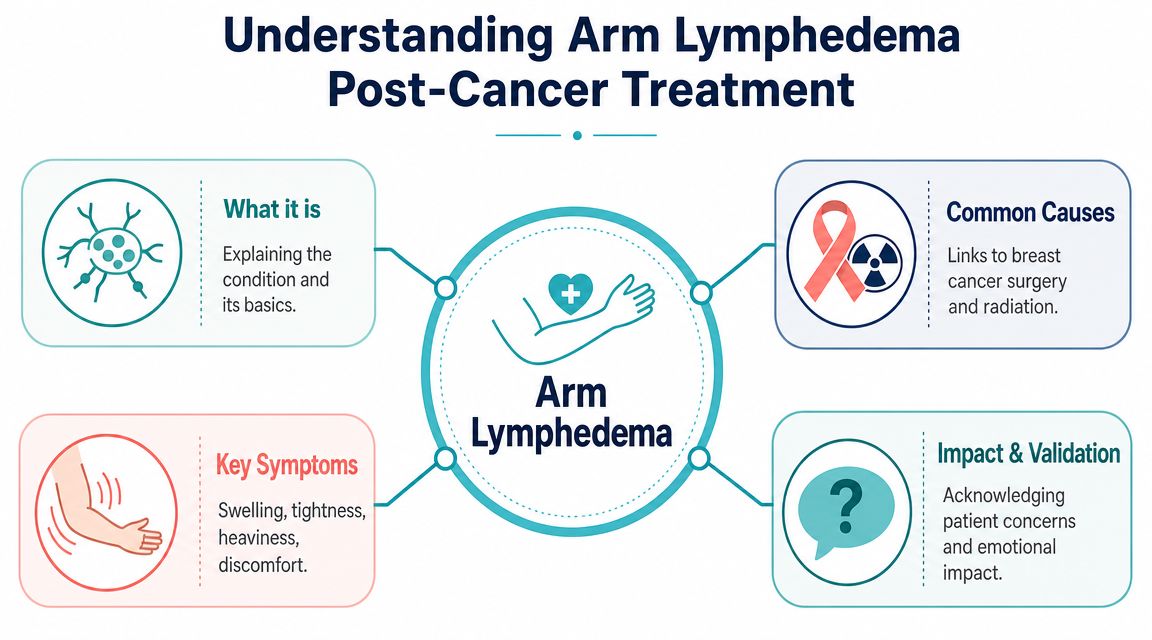
Breast cancer treatment is one of the most recognized causes. According to Mayo Clinic's overview of lymphedema causes and symptoms, the risk can be as high as 20% to 53% for patients who have 10 or more axillary lymph nodes removed. The same source notes that severe cases can limit mobility and raise the risk of skin infections.
Signs people often notice first
Early symptoms aren't always dramatic. Many patients describe:
- A feeling of heaviness rather than obvious swelling
- Tight skin or clothing changes, especially sleeves, bras, rings, or watches
- Aching or fullness in the arm, hand, or underarm
- Less flexibility when reaching overhead or bending the elbow
- Changes in skin texture that make the arm feel firmer or less soft
For many people, the emotional part hits just as hard as the physical symptoms. After cancer treatment, any new body change can feel alarming.
You're not overreacting if your arm feels different even before it looks dramatically swollen.
If you want a clearer picture of how this drainage network works, this simple guide on what the lymph system is can help connect the anatomy to what you're feeling.
How Arm Lymphedema Is Diagnosed and Staged
A lymphedema diagnosis shouldn't feel like guesswork. A skilled evaluation looks at your history, your symptoms, your skin, and how fluid is behaving in the limb.
During an assessment, a therapist usually asks about cancer treatment, lymph node removal, radiation, infections, changes in activity, and when the symptoms started. Then comes the physical exam. That often includes looking at skin quality, checking whether swelling leaves an indentation when pressed, comparing one arm to the other, and taking limb measurements at specific points.
What happens during an evaluation
A thorough visit often includes:
- Health history review so the clinician understands what treatments may have affected lymphatic flow
- Visual inspection of the arm, hand, chest wall, and nearby tissues
- Circumference measurements to track changes over time
- Palpation to assess softness, firmness, and pitting
- Functional discussion about reach, lifting, dressing, exercise, and daily tasks
That staging matters because treatment choices are tied to how the swelling behaves. Johns Hopkins Medicine's lymphedema treatment guidance notes that nonsurgical management is the first-line treatment for arm lymphedema, especially in stages 1-2, and that durable results depend on early intervention and consistent self-management because the condition is chronic and has no definitive cure.
The stages of Arm Lymphedema
| Stage | Key Characteristics |
|---|---|
| Stage 0 | The lymphatic system has been affected, but swelling may not be visible yet. People often notice heaviness, tightness, or a strange fullness before measurement changes become obvious. |
| Stage 1 | Swelling is present and may improve with elevation or early treatment. The tissue is often softer at this point, and the condition is usually more responsive to conservative care. |
| Stage 2 | Swelling becomes more persistent and doesn't reliably reduce with simple rest or elevation. Tissue may feel firmer, and self-management becomes more important. |
| Stage 3 | The limb may show more significant size change, skin thickening, and more advanced tissue changes. Daily function and skin health can become harder to manage without intensive support. |
A plain-language explanation helps here. Pitting edema means the tissue leaves a dent when pressed. Non-pitting edema feels firmer and springs back less. That change can tell your therapist something about how long the swelling has been present and how the tissue is changing.
For a closer look at how rehab fits into this process, Lake City's article on lymphedema and the role of physical therapy is a helpful companion.
The Gold Standard Lymphedema Treatment for Arms
You finish cancer treatment, expect life to settle down, and then notice your sleeve feels tighter by late afternoon. That is often the point where people start searching for answers. In clinic, the treatment path I explain most often is Complete Decongestive Therapy, or CDT. It is the standard approach for lymphedema treatment for the arm because it addresses the problem from several directions at once: fluid movement, tissue pressure, skin protection, daily function, and long-term control.
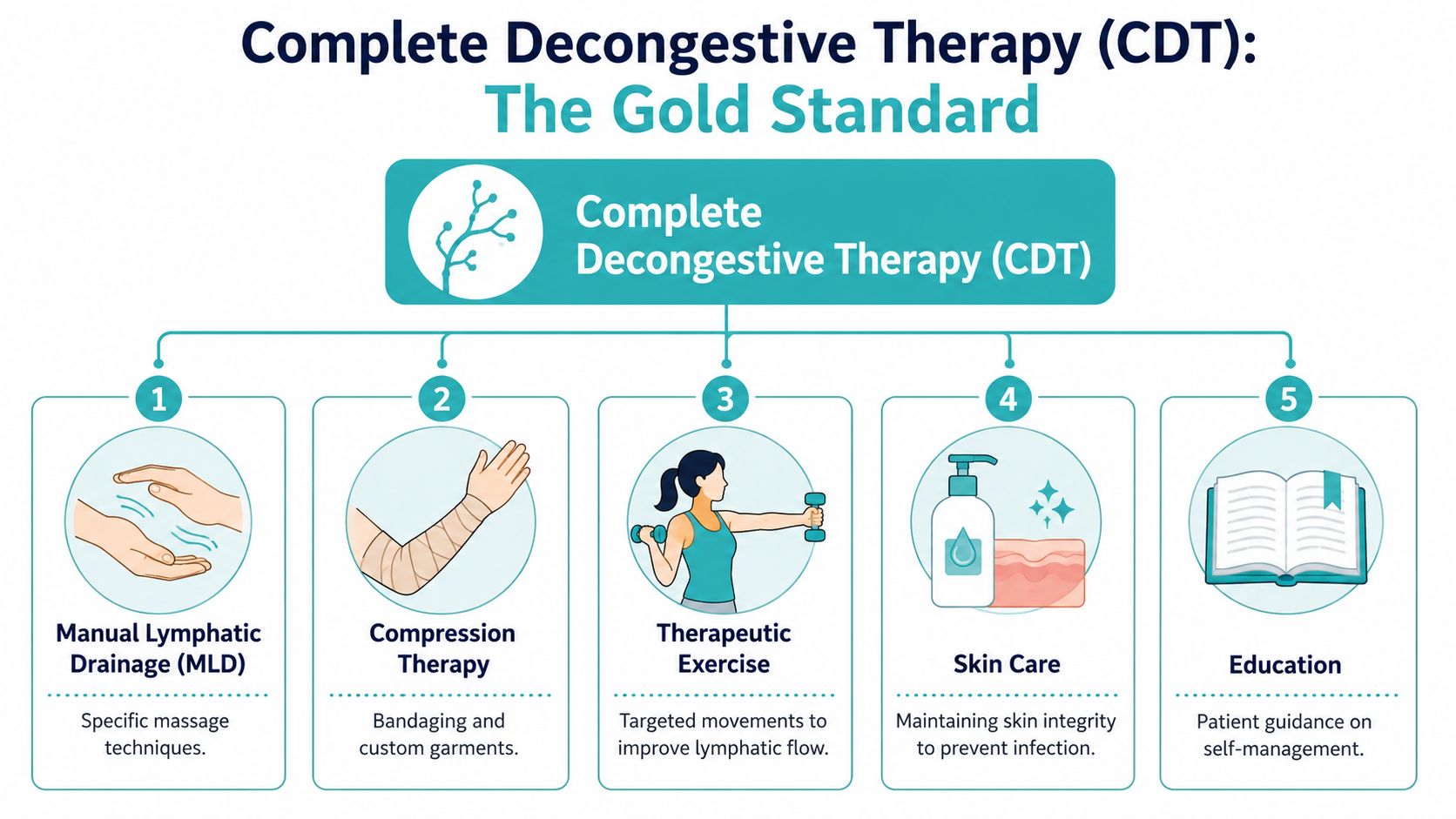
CDT has two parts. First comes an active reduction phase, where treatment focuses on bringing swelling down and softening congested tissue. Then comes maintenance, where the goal is to keep those gains with the right home routine, compression, and follow-up care. A JAMA Surgery report on extremity lymphedema treatment found meaningful volume reduction during the intensive phase, with better long-term results in patients who stayed consistent with the plan.
Manual lymphatic drainage
Manual Lymphatic Drainage, or MLD, is a gentle hands-on treatment that helps direct lymph fluid toward working drainage areas. The pressure is light and specific. Good MLD should feel calm and controlled, not forceful.
That surprises many patients at the first visit.
If someone is pressing hard, trying to knead the arm, or leaving you sore, that approach misses the point. Swollen tissue usually responds better to precision than pressure. In practice, MLD is one part of the session, not the whole session, and it works best when it is paired with compression and the rest of the plan.
Compression keeps swelling from returning
After fluid starts to move, the arm needs support to keep it from collecting again. That is the job of compression therapy.
Early on, many patients use low-stretch bandaging between visits or after treatment sessions. Later, care usually shifts to a fitted compression sleeve and sometimes a glove or gauntlet if the hand is involved. The trade-off is simple. Compression works, but only if it fits well enough to wear regularly. A sleeve that bunches at the elbow, cuts into the wrist, or slides down during the day will not give reliable control.
At Lake City PT, patients often understand the process better once they see how each step fits together in this 4-step lymphedema care plan.
Exercise and skin care support the results
Exercise is part of treatment, not an afterthought. Targeted movement helps the arm use muscle activity to assist lymph flow, improve mobility, and reduce the stiffness that often follows surgery or radiation. The key is progression. The best exercise program is matched to the stage of swelling, shoulder function, fatigue level, and whether compression is being worn.
More exercise is not always better. If an activity causes heaviness, aching, or visible swelling that lasts, the program needs adjustment.
Skin care matters for a practical reason. The skin is the body's barrier against infection, and lymphedema makes that barrier more important. Dry cracks, hangnails, burns, bug bites, and small cuts can turn into bigger setbacks if the arm is vulnerable. Daily moisturizing, nail care, and quick attention to skin irritation are part of treatment, not separate from it.
This short video gives a useful visual overview of treatment concepts patients often hear about in clinic.
Advanced and Surgical Lymphedema Treatments
Many patients ask the same question after learning about compression, exercise, and manual treatment. What happens if that isn't enough?
That's a fair question. Some people do well with standard conservative care. Others need an added tool, a change in strategy, or a surgical consultation because swelling remains stubborn or the tissue has progressed.
Where home pumps fit
Intermittent pneumatic compression, often called IPC, uses a pump attached to a sleeve that inflates in cycles. In arm care, it is generally used as an adjunct, not a replacement for compression garments or therapist-guided CDT. Clinical review data describe upper-extremity pneumatic compression as commonly applied at about 30 mm Hg, with typical sessions of 1 to 2 hours per day, because pressure that is too high can collapse lymphatic vessels.
That sounds straightforward, but the decision is not automatic. Some patients like having a home device. Others don't get enough benefit from it to justify the time, cost, or routine.
The trade-off with adjunctive options
The evidence for these add-on tools isn't as settled as many marketing materials make it sound. A review of treatment options noted that evidence for adjuncts like IPC and newer modalities is mixed, and there is no final conclusion on IPC, with only limited evidence for some home maintenance uses, as discussed in this review of interventions for breast cancer-related lymphedema.
That doesn't mean IPC never helps. It means it should be chosen thoughtfully, based on the person in front of you, not used as a generic upgrade.
When surgery enters the conversation
Surgical options may be considered when lymphedema is more advanced or persistent. Procedures such as lymphaticovenous anastomosis and vascularized lymph node transfer are designed to improve lymphatic transport, not erase the condition overnight.
The most important point is this. Surgery doesn't make conservative care irrelevant. In most cases, the people who are evaluated for surgery still need careful compression, exercise, skin protection, and long-term follow-through.
Your Lymphedema Therapy Plan at Lake City PT
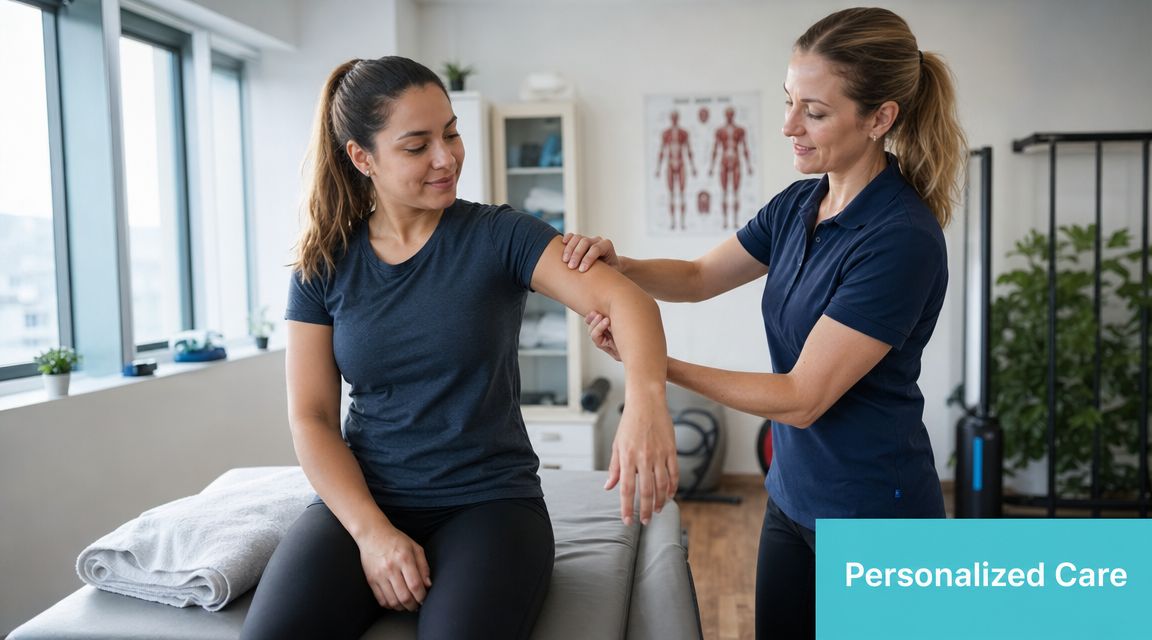
The first visit usually feels less intimidating once you know what it looks like. You won't walk in and be handed a sleeve with vague instructions to “wear this and see what happens.” A proper therapy plan is more personal and more specific than that.
At Lake City Physical Therapy, lymphedema care includes manual lymphatic drainage, compression therapy, and therapeutic exercise for patients managing swelling after cancer treatment. That means your plan is built around both reducing fluid and teaching you how to maintain progress outside the clinic.
The first appointment
Most patients arrive with a mix of questions and worry. They want to know whether what they're feeling is “bad enough,” whether it can improve, and how much therapy will take over their lives.
A solid first session usually includes:
- A detailed conversation about surgery, radiation, symptoms, and daily limitations
- Measurements and tissue assessment to create a baseline
- Skin inspection to look for irritation, dryness, or signs that need medical attention
- Goal setting focused on real tasks such as dressing, sleeping comfortably, cooking, exercise, travel, or returning to work
Those goals matter. “Reduce swelling” is too vague to guide care well. “Get my sleeve on without help” or “reach overhead without that pulling feeling” gives treatment a direction.
The intensive phase
When swelling is active, treatment tends to be more hands-on and more structured. The therapist may use manual lymphatic drainage, then apply or teach low-stretch bandaging to help maintain the fluid reduction between sessions.
This is the phase where patients often realize lymphedema treatment arm care is not passive. You're learning skills. You may be practicing how to wrap, how to do specific arm movements, how to watch your skin, and how to judge whether a garment is helping or creating a problem.
A good plan doesn't just reduce swelling in the clinic. It makes you more capable at home.
The educational side matters more than many people expect. Clinics across healthcare are paying more attention to enhancing patient engagement in PT because outcomes improve when patients understand the reasoning behind the plan and can actively participate in it. Lymphedema care is a clear example of that. The more clearly you understand your compression routine, exercise plan, and warning signs, the more control you have day to day.
The maintenance phase
As swelling stabilizes, care shifts. The focus moves from reduction to maintenance.
That usually includes a fitted compression garment, a home exercise routine, skin care guidance, and a practical plan for flare-ups. This is also where people learn the difference between realistic management and false reassurance. If the arm feels a little fuller after travel, heat, yard work, or a long day, that doesn't mean treatment failed. It means you need the right response.
That response might include:
- Putting compression back on consistently
- Using your exercise sequence
- Resting with the arm supported
- Checking the skin carefully
- Contacting your therapist if changes don't settle
Many patients also ask about next-step tools during this phase. That's where specialized guidance matters most. As noted earlier, evidence for adjuncts like home pumps is mixed, so treatment escalation should be individualized rather than automatic.
Essential Self-Management for Long-Term Success
A lot of patients reach this stage and ask a fair question: “What do I need to do at home so this does not keep taking over my life?” The answer is a routine you can follow, even on busy days, travel days, and the days when your arm feels almost normal.
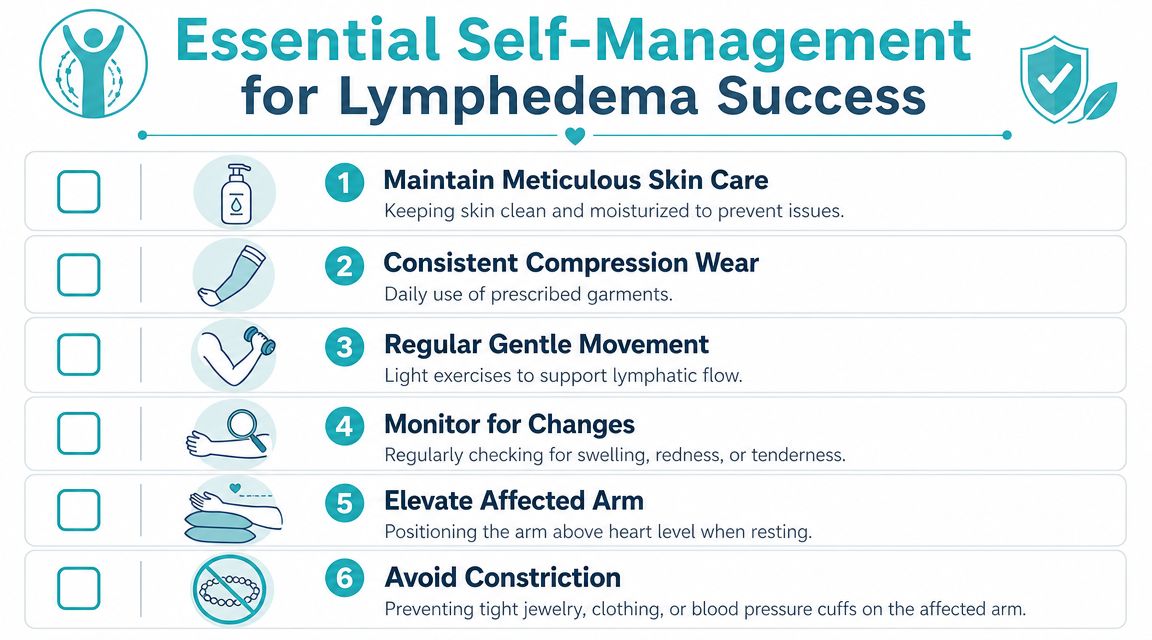
At this point in care, the goal is consistency. Good self-management keeps swelling quieter, helps the arm stay comfortable, and gives you a clear plan for the days symptoms start to creep up again. At Lake City PT, this is the part of treatment where patients usually gain the most confidence, because they know what to do instead of guessing.
Daily habits that matter most
-
Wear compression the way it was prescribed. A sleeve works best when the fit is right and the schedule matches your symptoms, activity level, and stage of swelling. Some patients need daytime wear only. Others need more support during travel, exercise, or heavier arm use.
-
Take care of the skin every day. Clean skin, regular moisturizing, and quick attention to small cuts or hangnails lower the chance of irritation and infection. In an arm affected by lymphedema, skin problems can become bigger problems faster than people expect.
-
Keep the arm moving. Gentle exercise, stretching, and normal use of the arm usually help more than protecting it too much. The key is progression. Do enough to support circulation and function, but not so much that you trigger a flare and spend two days recovering.
What to watch and what to avoid
Early changes are often subtle. The arm may feel heavier before it looks bigger. A watch band may leave a mark. A shirt sleeve may feel snug on one side. Patients who notice those small shifts early usually have an easier time settling things down.
A few practical adjustments also help. Avoid anything that digs into the arm for long periods, including tight jewelry, narrow bra straps, or bags that press into one spot. Use elevation as a support tool after activity or before sleep, but do not expect it to replace compression, exercise, or your full home program.
A good home plan is specific. You should know what to do on a stable day, what to do after a flare, and when your usual routine is no longer enough.
Garment care and follow-through
Compression garments do not last forever. Fabric stretches out, the sleeve can start rolling, and body changes can alter the fit. If a garment leaves deep marks, slides, bunches, or suddenly feels less effective, bring it to your therapy visit. Sometimes the problem is not your arm. It is the garment.
Follow-through matters here. Patients do best when self-care is simple enough to repeat. That may mean keeping a second sleeve for washing, linking exercises to an existing habit like a morning walk, or setting a reminder to check the skin and hand as part of the evening routine.
If your routine stops working, do not assume you failed. It usually means the plan needs to be adjusted. That is a normal part of long-term lymphedema care.
When to Seek Help and How to Get Started
Some changes need prompt medical attention. If you develop sudden swelling, redness, increasing pain, warmth, fever, or skin breakdown, contact your medical team right away. Those symptoms can signal infection or another problem that shouldn't be managed as a simple home flare.
Other situations are less urgent but still worth addressing early. If your arm feels progressively heavier, your sleeve no longer fits, your hand starts swelling, or daily activities are getting harder, that's the right time to schedule an evaluation instead of waiting for symptoms to become unmistakable.
A simple next-step checklist
- Talk with your oncology team, surgeon, or primary care provider if you need a referral
- Schedule a lymphedema evaluation with a therapist who treats cancer-related swelling regularly
- Bring your current garments or bandages to the first appointment if you already have them
- Write down your symptom pattern so you can describe when swelling is better, worse, or more noticeable
You don't need to have severe swelling to deserve care. Early treatment is often easier than trying to reverse more established tissue changes later.
Lake City Physical Therapy offers women's health and oncology rehabilitation across Coeur d'Alene, Hayden, Post Falls, Rathdrum, Liberty Lake, Spokane South Hill, Eagle, and Boise, with telehealth options available as well. If you're unsure whether what you're feeling is lymphedema, that uncertainty itself is enough reason to ask for an assessment.
If your arm feels heavier, tighter, or more swollen after cancer treatment, getting answers early can make daily life much easier. Lake City Physical Therapy provides evaluation and treatment for lymphedema, including hands-on care, compression guidance, exercise, and long-term self-management support.