Postpartum Recovery Belt: A PT’s Guide to Safe Use
You've had the baby. Everyone tells you to rest, but you still need to stand up, feed a newborn, shift in bed, get to the bathroom, and somehow carry your own body through a day that suddenly feels unfamiliar. Your abdomen feels loose or heavy. Your back complains when you lean over the bassinet. If you had a C-section, even rolling over can feel like a project.
Then someone mentions a postpartum recovery belt.
That usually brings two reactions at once. Relief, because support sounds good. Suspicion, because the internet loves to market “bounce back” tools that promise more than they deliver.
Interest in these belts is common, and not just because of social media. In a 2021 study of women who had vaginal deliveries, 82% planned to wear an abdominal binder postpartum, and among those with a plan, 71% intended to start within the first two days after birth (PubMed study on postpartum binder use). New moms clearly want support early, when their bodies feel most vulnerable.
That interest makes sense. So does the confusion.
A postpartum recovery belt can help, but it isn't a magic fix. It's one tool. If you're also dealing with back pain, practical guidance like Axelrad Clinic's guide for postpartum mothers can help you think beyond the belt and look at positioning, lifting, and daily movement too.
Your Postpartum Body and The Promise of a Recovery Belt
A new mom usually doesn't ask for a belt because she wants a flatter stomach by next week. She asks because she wants to cough without bracing with both hands. She wants to get out of bed without feeling like her middle is lagging behind the rest of her body. She wants to walk, feed, bend, and carry with less strain.
That's the benefit of a postpartum recovery belt. Support, not transformation.
Why this tool gets so much attention
After pregnancy, your abdominal wall has been stretched, your posture has adapted for months, and your pelvis has handled a major load. After birth, your body starts recovering right away, but that doesn't mean it feels stable right away. A belt can create a sense of containment during a period that often feels physically messy.
A good postpartum support tool should make normal movement feel easier, not make you feel squeezed into a different body.
That difference matters. If a product is marketed like a shortcut back to your pre-pregnancy shape, be cautious. If it's described as temporary support while your tissues heal and your muscles re-engage, that's a more realistic use.
The question worth asking
The better question isn't “Should every mom wear one?” It's “What problem am I trying to solve?”
- If your abdomen feels unsupported, a soft binder may help.
- If your incision hurts with movement, external support can make transfers and walking feel less jarring.
- If your pain sits low in the pelvis or around the SI joints, a pelvic belt may be a better match than a broad abdominal wrap.
- If you're leaking, feeling pressure, or worsening with compression, you need more than product advice.
A belt can reduce strain during healing. It can also hide a problem if you use it to push through symptoms your body wants you to notice. That's why I treat it as a helpful aid, not the main event.
What Postpartum Belts Are Designed to Do
A postpartum recovery belt is best understood as a gentle external hug for a healing core. It doesn't rebuild muscle for you. It doesn't close every abdominal gap. It doesn't fix pelvic floor dysfunction on its own. What it does is provide outside support while your body does inside work.

Abdominal support
The first job is compression across the abdomen. During pregnancy, the abdominal wall lengthens to make room for your baby. After birth, many women describe their midsection as weak, disconnected, or unsupported. A belt can reduce that “sloshy” or unstable feeling, especially when changing positions, walking, or coughing.
Some systems are built in layers. Modern 3-in-1 designs often include a stomach belt to aid uterine involution, a waist belt for core stability and posture, and a pelvis belt to stabilize the pelvic girdle and help with symphysis pubis dysfunction, with breathable mesh and adjustable closures for customized compression (overview of 3-in-1 postpartum systems).
Back relief and postural support
The second job is helping your trunk manage load. New moms spend a lot of time rounded forward. Feeding, rocking, diaper changes, lifting from a crib, and looking down at a baby all add up. When your core isn't contributing much, your low back often picks up the slack.
A belt can give you a little more awareness and support through the trunk. It won't teach your ribs, diaphragm, and abdominals to coordinate well, but it may make daily tasks less irritating while you work on that.
Practical rule: If a belt helps you stand and move with less pain, that's useful. If it becomes the only way you can function, you need a broader rehab plan.
Pelvic stability
The third job is stabilizing the pelvis. Some women don't need broad abdominal compression at all. They need support lower down, especially if they feel aching at the pubic bone, SI joints, or through the back of the pelvis.
That's where pelvic support belts differ from belly wraps. They sit lower and aim to reduce unwanted motion at the pelvic girdle. For the right person, that can make walking, stairs, and rolling in bed feel more manageable.
In practical terms, belts are designed to support three things:
- Contain the abdomen when the core feels stretched and weak
- Reduce mechanical strain during routine movement
- Improve stability cues so posture and load transfer feel more controlled
Useful goals. Limited tool. That's the right mindset.
The Clinical Evidence on Postpartum Belt Benefits
Clinical evidence supports some postpartum belt uses more strongly than others. The clearest area is post-cesarean recovery.
A reported NIH trial found that belly wraps after a cesarean section significantly improved maternal mobility while reducing pain and psychological distress, and OB/GYNs have long prescribed binders for abdominal surgeries to improve posture and abdominal support, a practice that has extended into both C-section and vaginal birth recovery (review summarizing postpartum wrap benefits).
What the evidence supports most clearly
After a C-section, movement hurts for understandable reasons. Standing up, laughing, getting out of a chair, and carrying your baby all create stress through healing tissues. External support can make those tasks feel less abrupt. That doesn't mean the belt heals the incision directly. It means it can reduce the feeling of pulling and improve comfort enough that you move more normally.
That matters. Early mobility is part of recovery.
The psychological side matters too. Many women feel more secure when their abdomen is supported. In clinic, that sense of security often changes how someone moves. She guards less. She breathes more normally. She's less hesitant to stand up or walk.
What evidence does not prove
A postpartum recovery belt is not a cure for diastasis recti. It doesn't restore deep core coordination by itself. It doesn't fix pelvic organ prolapse. And it doesn't undo poor lifting mechanics or breath-holding habits.
Those distinctions matter because belts are often sold with appearance-driven promises. That's where expectations drift away from physiology.
Here's what tends to work in real life:
- Short-term support for movement: Helpful, especially when pain or weakness makes routine tasks harder
- Confidence during the early healing window: Often helpful
- Passive treatment for abdominal separation: Not enough on its own
- Long-term substitute for rehab: Doesn't work
Relief while wearing a belt doesn't automatically mean healing is happening underneath it.
The PT interpretation
I think of belts the way I think of a wrist brace. Sometimes useful. Rarely the whole answer.
If a woman feels clearly better with a belt and can move with less pain, that's a good sign the support is matching a current need. But if she still can't exhale well, still bears down every time she lifts the baby, or still has pelvic pressure by the end of the day, the underlying system needs attention.
The strongest evidence-backed use is support during recovery, especially after cesarean birth. The weakest use is treating the belt like a stand-alone fix for every postpartum symptom. That's where marketing gets ahead of medicine.
Comparing Abdominal Binders Pelvic Belts and Wraps
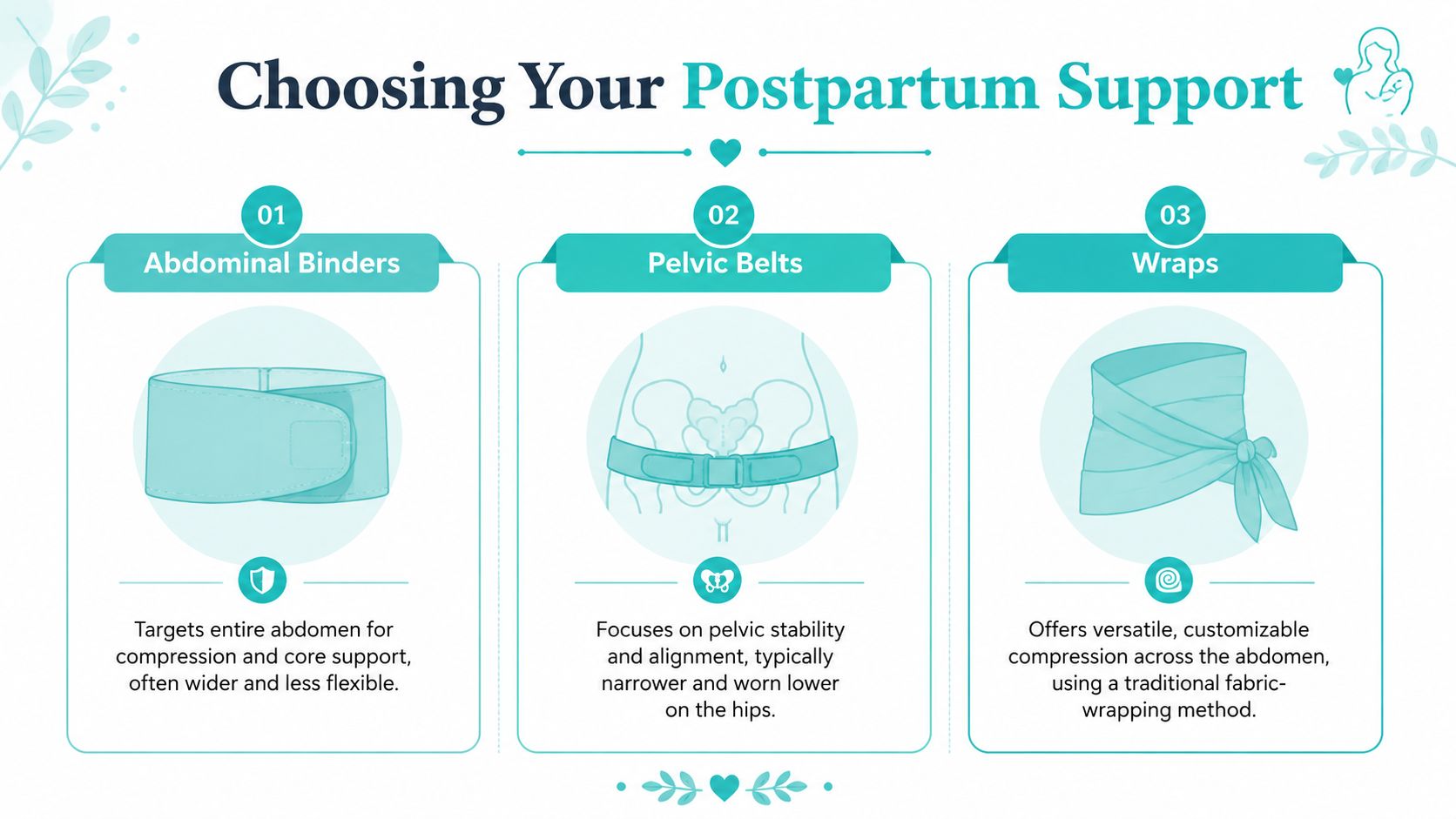
The best support garment depends on where you feel unstable. “Postpartum belt” gets used as a catch-all term, but the products in that category do different jobs.
The quick distinction
An abdominal binder usually wraps the midsection and offers broad compression. A pelvic belt sits much lower, around the pelvis, to improve stability there. A wrap often refers to a fabric-based option with more customizable tension and positioning.
If you're looking at a layered system, some products combine all three concepts. That's the appeal of 3-in-1 designs: one component supports the abdomen, another the waist and posture, and another the pelvis.
For readers who want a visual example of how abdominal support products are marketed and built, this postpartum abdominal support binder shows the kind of wider wrap-style support many women consider early on. If you want a more detailed discussion of traditional wrapping methods and fit considerations, this guide on belly binding after childbirth is useful.
Postpartum Belt Types Compared
| Belt Type | Primary Function | Best For |
|---|---|---|
| Abdominal binder | Broad compression around the abdomen and trunk | General abdominal support, early movement, incision tenderness |
| Pelvic belt | Stability around the pelvic girdle | SI joint pain, pubic symphysis pain, pelvic instability |
| Wrap | Adjustable compression with flexible positioning | Women who want customizable support and softer fabric feel |
Which one fits which problem
Abdominal binders
These are often the first thing people picture. They're usually wider and cover more of the abdomen. For a woman who says, “I just want my middle to feel held together,” this is often the most intuitive option.
They can be especially useful when:
- Rolling in bed hurts
- Standing upright feels vulnerable
- Coughing or laughing feels rough on the abdomen
- A C-section incision makes movement feel guarded
The trade-off is that a broad binder may not do much for low pelvic pain if the underlying issue is instability at the pelvis.
Pelvic belts
These are narrower and worn lower, usually across the pelvic bones rather than the waist. They're a better match for women who say the pain is at the pubic bone, back dimples, or deep in the hips rather than across the whole abdomen.
A pelvic belt often works better than a belly wrap when walking, climbing stairs, or single-leg tasks are the main aggravators. If your symptoms are lower, your support should usually be lower too.
The right belt should match the location of your symptoms. More coverage isn't always better coverage.
Wraps and multi-part systems
Wraps appeal to women who want more control over placement and pressure. Some are simpler fabric styles. Others are structured systems with separate sections for stomach, waist, and pelvis.
These can be helpful when symptoms change during the day. You may want more abdominal support in the morning and more pelvic support during walking or errands. The downside is complexity. A tired postpartum brain doesn't always want a garment with multiple panels and decisions.
What doesn't work well
The wrong product is often obvious after a few days.
- A belt that rides up usually won't support well
- A garment that makes you hold your breath is too restrictive
- A pelvic belt worn too high won't stabilize the pelvis
- A stiff, shapewear-style product may prioritize appearance over movement
Simple and wearable beats impressive-looking every time.
A Physical Therapist's Guide to Safe Belt Use
The safest belt is the one that supports healing without taking over the job your body needs to relearn. Fit matters more than brand. Timing matters more than trend. And your symptoms matter more than any instructions printed on the package.
Research on pelvic compression shows the effect is “highly individualised,” meaning a personalized approach is necessary for the best results (pelvic compression research summary). That lines up with what physical therapists see every day. One woman feels immediate relief. Another feels more pressure, more discomfort, or no benefit at all.
How a belt should feel
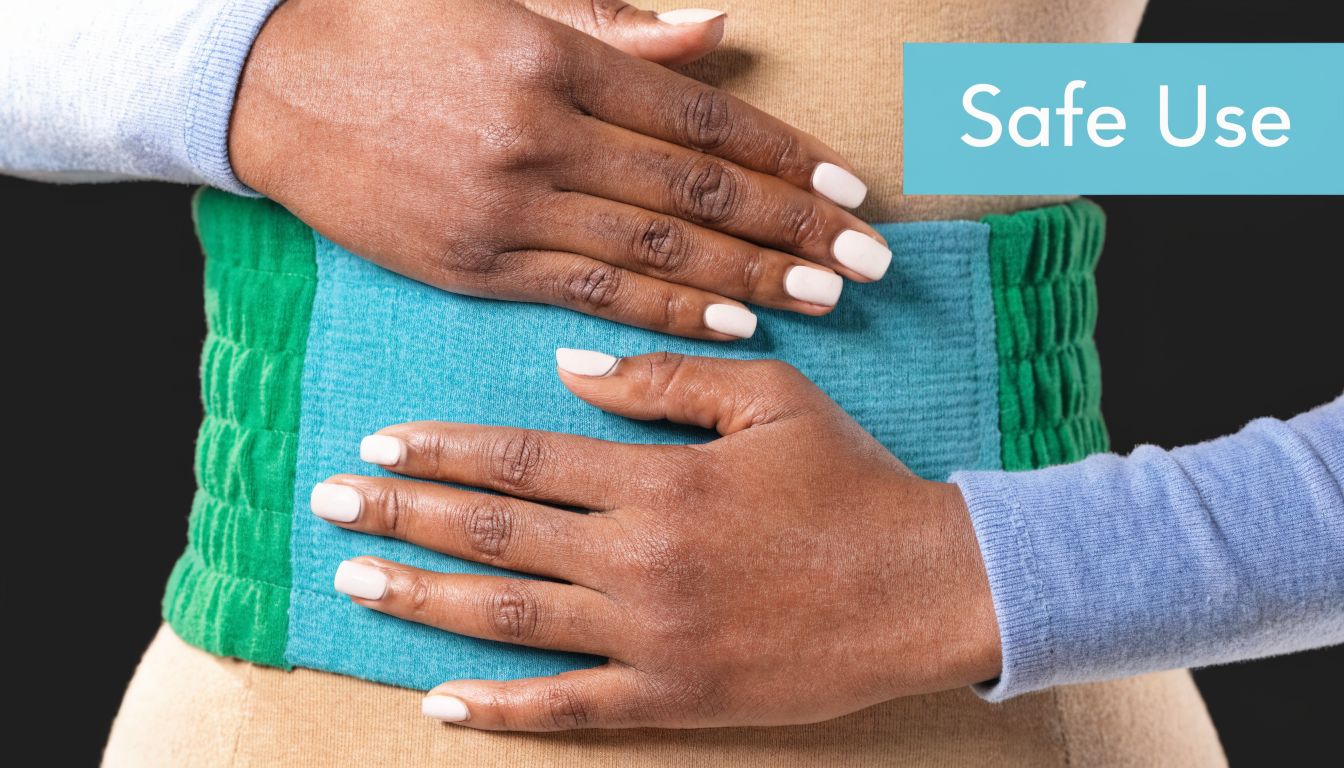
A postpartum recovery belt should feel snug, supportive, and easy to breathe in. You should be able to sit, stand, and walk without fighting it. It should reduce the feeling of strain, not create a new one.
Use these checks:
- Breath test: Take a full inhale into your ribs. If the belt blocks that, loosen it.
- Pressure test: Notice your pelvis. If you feel more heaviness, bulging, or downward pressure, the fit may be wrong.
- Movement test: Walk across the room, sit down, stand up, and lift the baby from a safe height. Support should feel smoother, not stiffer.
If you need help with symptom-specific rehab while using support garments, a postpartum-focused program like pelvic floor physical therapy after birth is often the missing piece.
Red flags that mean stop and reassess
Belts are not harmless just because they're common. Pause use and reassess if you notice:
- Restricted breathing
- Increased pelvic pressure
- More incision irritation
- Skin rubbing or rash
- Numbness, tingling, or obvious discomfort
- A sense that your muscles are “switching off” whenever the belt is on
These signs don't always mean belts are bad for you. They mean this fit, this style, or this wearing pattern isn't helping.
Here's a quick visual on fit and body mechanics:
What works better than all-day wear
I rarely like an all-day, every-day approach. A belt tends to work best when it supports specific windows of demand. Think walks, chores, outings, or the busiest part of the day. Then take it off and let your body practice doing some of the work.
That balance matters because external support is passive. Recovery is active.
Wear the belt for the task. Don't let the belt become the task.
A belt is often a good adjunct when you're also rebuilding:
- Breathing mechanics
- Gentle deep abdominal engagement
- Pelvic floor coordination
- Rolling, lifting, and feeding positions that don't overload healing tissues
When PT guidance is essential
You need more than generic product advice if the belt leaves you wondering whether support is helping or hiding a problem.
Seek individualized guidance if you have:
- persistent low back or pelvic pain
- leaking that doesn't improve
- heaviness or bulging in the vagina
- abdominal doming with basic movement
- trouble returning to walking, exercise, or daily activity
- symptoms that worsen every time you tighten the belt
Those are clinical questions, not shopping questions.
Beyond the Belt Your Complete Postpartum Recovery Plan
A postpartum recovery belt can be a smart temporary tool. It can reduce strain, improve comfort, and help you move through the early weeks with more confidence. But long-term recovery depends on what happens when the belt comes off.
Your body needs active input. That usually includes breathing work, core coordination, pelvic floor rehab when needed, gradual walking, lifting strategies, and positions that lower stress on healing tissues. If you want a broader list of practical tools for postpartum recovery, it can help to think of support garments as one item in a larger toolkit, not the whole plan.
What a complete plan usually includes
Some moms mainly need time and a little support. Others need a structured progression.
A good recovery plan often includes:
- Symptom-guided support: Use the belt when it improves function, not just because someone online said you should.
- Core retraining: Reconnect with the abdominal wall without gripping or breath-holding.
- Pelvic floor attention: Especially if you have leaking, pressure, or pain.
- Load management: Adjust feeding posture, baby carrying, transfers, and daily tasks.
- Progression: Build toward less dependence on external support over time.
For women who need help reconnecting with the abdominal wall, these postpartum core strengthening exercises are part of the bigger picture.
Signs you shouldn't just wait it out
It's time to get professional help if symptoms keep hanging around or seem to be getting louder. That includes persistent pain, pressure, incontinence, difficulty tolerating walking or exercise, or an abdomen that still feels disconnected in a way that isn't improving.
Support is useful. Assessment is better when symptoms are complex.
If you're dealing with postpartum pain, pelvic floor symptoms, abdominal weakness, or uncertainty about whether a postpartum recovery belt is right for you, Lake City Physical Therapy can help you build a personalized recovery plan that fits your birth experience, your symptoms, and your goals.