Urinary Incontinence During Pregnancy: Causes and Relief
At 32 weeks pregnant, you sneeze while lifting a grocery bag and feel a small leak. It's easy to wonder whether something is wrong, whether you should have done more Kegels, or whether the problem will follow you after delivery.
Urinary incontinence during pregnancy means urine escapes unintentionally. A cough, sneeze, laugh, lift, or change of position points toward stress incontinence. A sudden, difficult-to-delay urge, frequent trips to the bathroom, or leakage before you reach the toilet suggests urge incontinence. Some people have both patterns.
Pregnancy-related leakage is common, but you shouldn't dismiss symptoms that are persistent, painful, sudden, or worsening. The useful questions are what triggers the leak, how often it happens, and whether your pelvic floor is weak, poorly coordinated, or overly tense. Most pregnant patients can reduce symptoms with a staged plan that starts with accurate self-management and adds pelvic floor physical therapy when home strategies aren't enough.
Why Bladder Leaks During Pregnancy Are More Common Than You Think
The small leak after a sneeze usually reflects a pressure problem, not a personal failure. Your abdomen generates force when you sneeze, laugh, lift, or stand, and the pelvic floor must respond quickly by supporting the bladder neck and urethra. Pregnancy changes the workload on that system, so an action that never caused leakage before may do so temporarily.
A second pattern feels different. You may experience an intense urge that arrives with little warning, followed by leakage before you can sit down or reach the bathroom. That pattern involves bladder urgency and muscle activity rather than only a failure to brace against pressure. Urinary frequency can occur without incontinence, but urgency paired with leakage deserves a different management strategy from a cough-related leak.
Start by identifying the pattern
Ask yourself three practical questions:
- What happened immediately before the leak? Coughing, sneezing, lifting, laughing, or rising suggests stress leakage. A sudden urge suggests urge leakage.
- Could you delay urination? If you had no meaningful warning, note that clearly. If you had several minutes of escalating urgency, record that instead.
- Was the amount small or substantial? A few drops during a sneeze differs from repeated accidents that soak clothing.
A bladder diary can make these distinctions easier. Record drinks, bathroom trips, urgency, leakage, activity, and bowel symptoms for several days, then bring the pattern to your prenatal clinician.
Practical rule: Don't treat every pregnancy leak as pelvic floor weakness. The trigger tells you which system needs attention.
The experience can feel embarrassing, especially if it happens during exercise or in public. Clinically, though, it gives useful information. A pelvic floor that doesn't contract quickly enough needs different coaching from a pelvic floor that stays clenched and cannot relax during urgency or voiding. If symptoms interfere with movement, sleep, intimacy, work, or confidence, mention them at a prenatal visit rather than waiting for delivery.
What Causes Urinary Incontinence During Pregnancy
Pregnancy incontinence usually has more than one cause. The bladder, urethra, pelvic floor, bowel, breathing mechanics, and changing body position all influence continence, and pregnancy alters each of them at the same time.
The growing uterus occupies space above the bladder. As the fetus grows, bladder capacity may feel reduced and pressure inside the abdomen can rise with ordinary movements. You may also carry more body mass in front of you, shifting your center of gravity and changing how your trunk and pelvic floor absorb force.
Hormonal changes add another layer. Progesterone and pregnancy-related tissue changes affect connective tissue, joint mobility, and the support system around the urethra and pelvic organs. The pelvic floor must manage greater downward pressure while adapting to a body that is moving differently. That doesn't mean the muscles are “weak.” They may be underactive, poorly timed, overactive, or unable to coordinate with the diaphragm and abdominal wall.
For a broader overview of contributing factors, see this guide to what causes urinary incontinence in women.
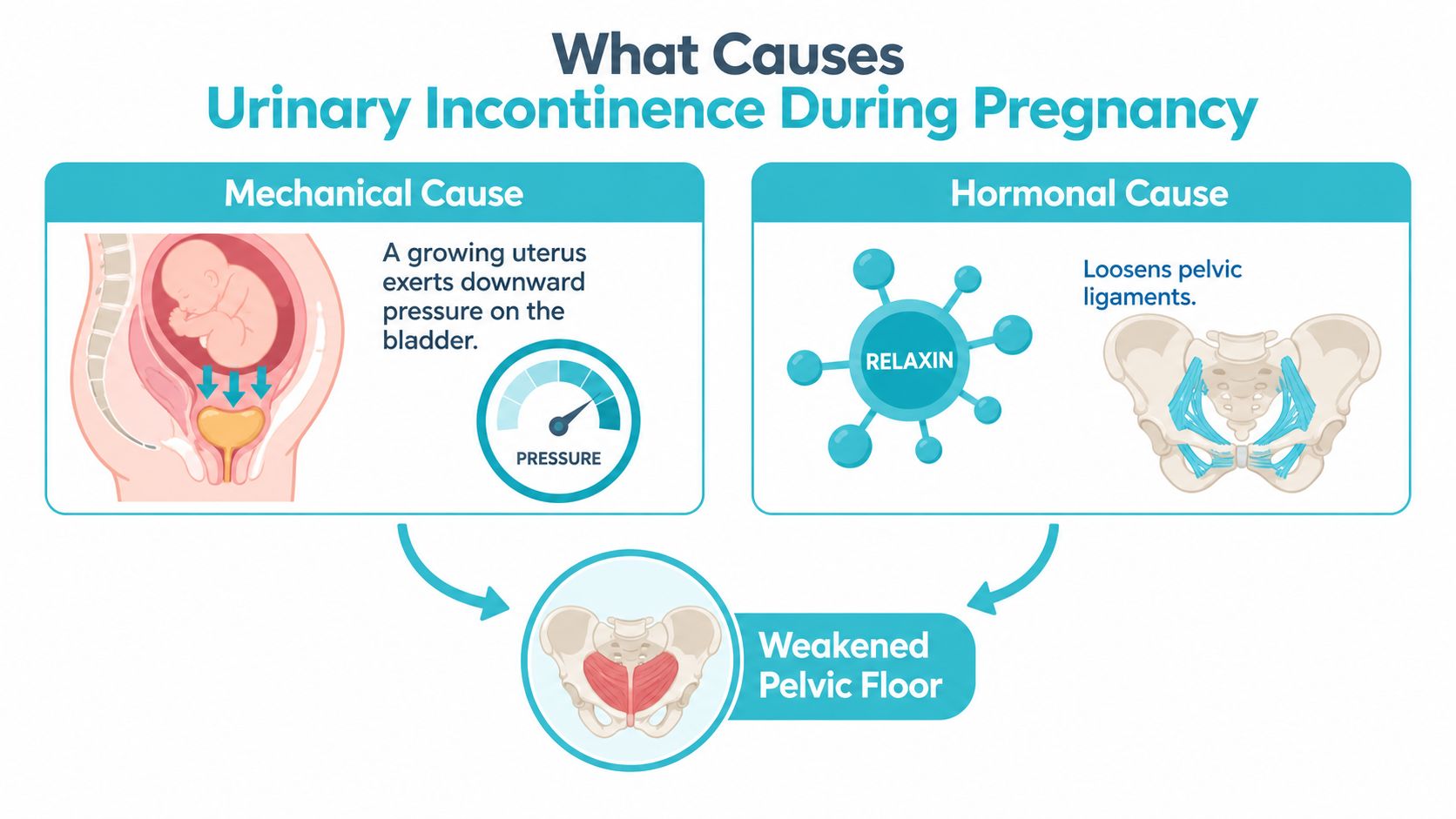
Two pathways can produce leakage
Stress incontinence occurs when a pressure spike exceeds the support available at that moment. Common triggers include:
- Coughing, sneezing, laughing, or shouting
- Lifting a child, grocery bag, or exercise weight
- Running, jumping, or changing direction
- Standing from a chair or getting out of bed
Urge incontinence involves a sudden need to urinate that may be accompanied by bladder muscle overactivity. Pregnancy can increase urgency through changing pelvic support, altered bladder sensations, and more frequent urine production. Gestational diabetes may also contribute to increased urination and urgency, so new or marked urinary changes should be discussed with your obstetric team.
Previous pregnancies, a higher body mass index, and constipation can increase the forces placed on the pelvic floor. Straining during bowel movements raises abdominal pressure, while hard stool can irritate the pelvic and bladder systems. The result is often mixed: a person may leak with a sneeze and also rush to the toilet several times a day.
How Often Pregnancy Incontinence Happens and When It Peaks
A sneeze that causes a small leak early in pregnancy can become a more regular problem later, while sudden urgency may appear at a different point. Leakage is common, but its timing and trigger still matter for deciding what kind of support is appropriate.
A 2020 systematic review and meta-analysis pooled 44 studies involving 88,305 pregnant women and found a weighted average urinary incontinence prevalence of 41.0%, with individual study estimates ranging from 9% to 75%. The same analysis found prevalence of about 9% during the first trimester, increasing to 34% in the third trimester (systematic review and meta-analysis in International Urogynecology Journal). This trend helps explain why someone may have no leakage early on and develop stress symptoms as pregnancy progresses.
Those figures describe groups, not an individual prognosis. Pelvic floor training is most useful as prevention and skill-building before leakage is established. Once symptoms are present, repeated contractions alone may not resolve them, particularly if the problem involves poor relaxation, movement coordination, bladder urgency, or pain.
Your symptom pattern matters more than a single percentage
Track whether leakage is occasional or frequent, which activity triggers it, and whether urgency is becoming harder to control. A small stress leak with a cough or sneeze points toward pressure management and coordination. Repeated urge accidents call for bladder-focused assessment. Mixed symptoms may require both approaches.
Research in nulliparous women also shows that leakage can begin before pregnancy and change during it. A 2018 study found leakage increased from 34.8% before pregnancy to 38.7% during pregnancy, while monthly leakage increased from 7.2% to 17.7% (nulliparous-women study). These findings do not predict your outcome, but they explain why clinicians ask about pre-pregnancy symptoms.
Parity, body size, and other characteristics affect risk across populations. They guide screening, not your chances of improvement. Feeling embarrassed doesn't make you unusual, and having common symptoms doesn't mean you must tolerate them.
Safe Ways to Manage and Prevent Leaks During Pregnancy
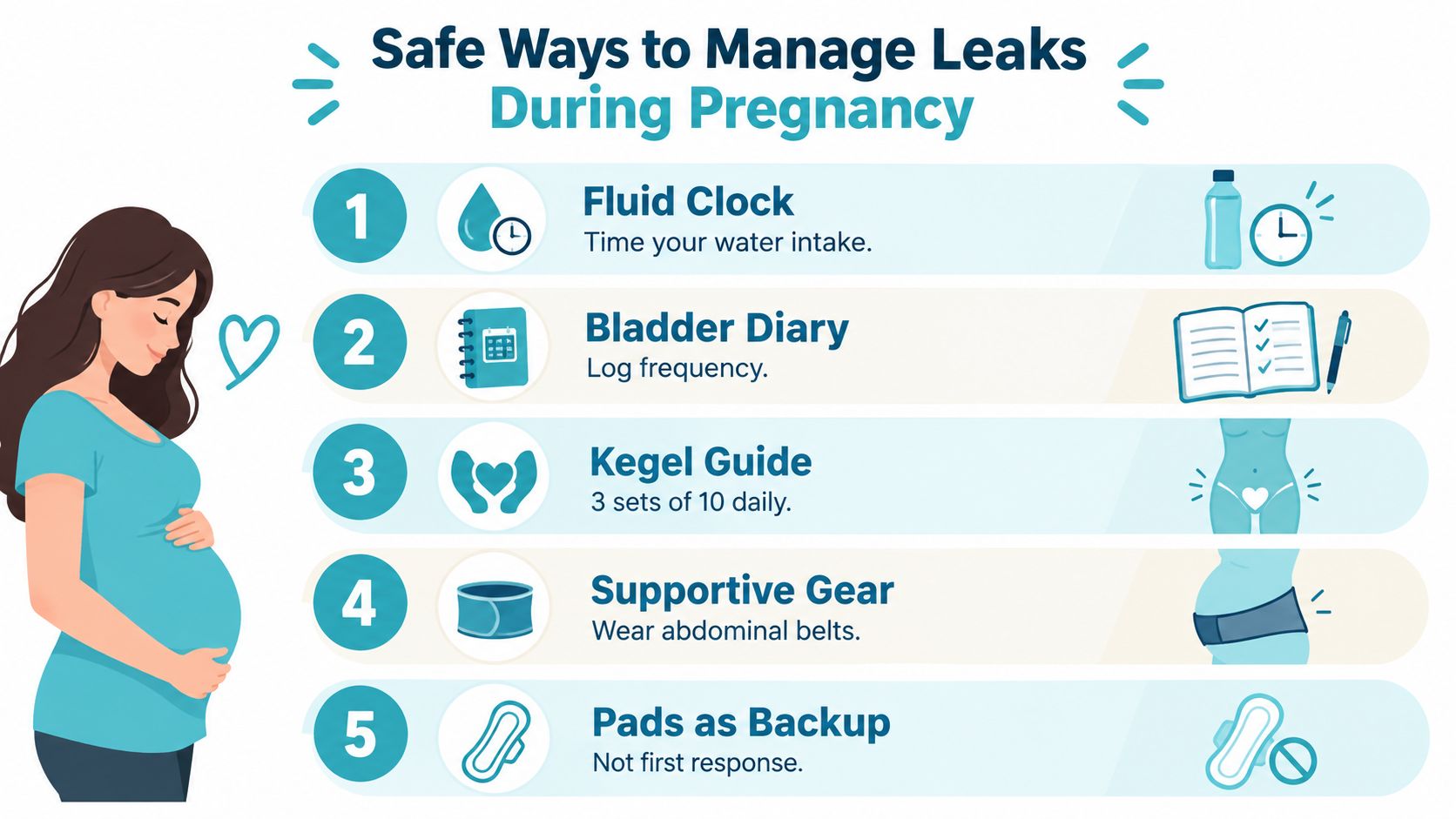
Start with habits that reduce bladder and bowel stress. Aggressively restricting fluids can lead to concentrated urine, constipation, and bladder irritation. Spread drinks across the day, and ask your prenatal clinician whether a medical condition requires a specific fluid plan.
A brief bladder diary can turn a vague problem into a usable pattern. Record drinks, urgency, bathroom trips, leakage, and constipation. If urgency follows a particular drink or becomes worse after delaying urination, you have a specific behavior to discuss rather than a blanket instruction to “drink less.”
Build pelvic floor skill, not just strength
A correct pelvic floor contraction feels like a gentle lift around the urethra, vagina, and anus, followed by full release. Keep your buttocks relaxed, breathe normally, and avoid bearing down or clenching throughout the day. If you cannot feel a lift, cannot relax afterward, or develop pelvic pain, stop repeating the exercise and seek individual instruction with prenatal pelvic floor exercises designed for pregnancy.
Pelvic floor muscle training has its clearest role before leakage becomes established. An evidence summary reported that early training prevented later-onset urge incontinence with a number needed to treat of 4. A meta-analysis of 15 randomized controlled trials involving 2,764 participants found prenatal training, with or without aerobic exercise, reduced the odds of urinary incontinence during pregnancy by about half, OR 0.50 with a 95% confidence interval of 0.37 to 0.68 (evidence summary from the American Academy of Family Physicians). These results support prevention and skill-building, not a promise that repeated contractions will correct established leakage.
Add pressure and bowel strategies
Use these changes as practical trials rather than rigid rules:
- Brace before pressure: Before coughing or sneezing, gently exhale and bring your legs together if comfortable. Stop if this causes pain or breath-holding.
- Reduce straining: Combine fluids, fiber, and movement to make stools easier to pass. Ask your prenatal clinician before taking a laxative or supplement.
- Modify impact: If running or jumping causes leakage, temporarily choose walking, cycling, swimming, or another approved activity while you improve coordination.
- Plan bathroom access: Scheduled voiding may help if you regularly wait until urgency is extreme. Repeatedly urinating “just in case” can reinforce very small bladder volumes.
- Use pads as backup: Pads protect clothing during outings, but they do not address pressure, muscle timing, urgency, or constipation.
Prevention evidence is stronger than treatment evidence. A Cochrane review of PFMT found that exercise was not clearly therapeutic for women already incontinent during pregnancy, and uncertainty remains about treatment during pregnancy and after birth. Pelvic floor training still has value, but established symptoms call for assessment of pressure control, relaxation, coordination, urgency, and pain rather than endless unsupervised squeezing.
Stress Incontinence vs Urge Incontinence in Pregnancy
Stress and urge leakage can look similar in the laundry basket but feel very different in the body. Stress leakage follows a forceful event, often with little or no warning. Urge leakage begins with an urgent bladder sensation that can escalate rapidly, sometimes while you're reaching for the bathroom door or hearing running water.
Stress symptoms often appear during coughing, sneezing, lifting, running, or rising from a chair. Urge symptoms may include frequent urination, strong urgency, leakage on the way to the bathroom, and disrupted sleep. Gestational diabetes, prior urinary symptoms, age, parity, and body mass index may influence urge-related risk, according to a 2025 systematic review of urge urinary incontinence during and after pregnancy.
| Feature | Stress Incontinence | Urge Incontinence |
|---|---|---|
| Main trigger | Cough, sneeze, laugh, lift, jump, or position change | Sudden, difficult-to-delay need to urinate |
| Warning | Often little warning | Noticeable urgency before leakage |
| Typical focus | Pressure management and pelvic floor timing | Urgency strategies, bladder habits, and trigger review |
| Common aggravators | Prior pregnancies, impact activity, constipation, poor coordination | Frequency, night-time urination, metabolic factors, and bladder irritants |
| Helpful record | Activity, pressure event, and leak amount | Drink, urgency level, delay time, and bathroom access |
Both patterns can coexist. A person may leak with a sneeze and also experience urgency, particularly as pregnancy progresses. Don't try to diagnose yourself from one symptom. Track the trigger and volume, then share the record with your midwife, obstetrician, primary care clinician, or pelvic floor therapist.
If urgency is new, intense, or paired with burning, fever, blood in the urine, or feeling unwell, contact your medical team promptly. Pregnancy can change how urinary problems present, and a bladder infection needs medical assessment rather than exercise alone.
The distinction matters because repeatedly tightening the pelvic floor may aggravate an already overactive system. Conversely, avoiding all activity won't retrain poor pressure response. A pattern-based plan is safer and more efficient than treating every leak as the same condition.
When Pelvic Floor Physical Therapy Becomes the Right Next Step
Pelvic floor physical therapy becomes appropriate when symptoms persist, interfere with daily life, or don't match the advice you've been given. A proper evaluation isn't a generic biofeedback session. The therapist reviews your pregnancy history, bladder and bowel habits, pain, movement, breathing, pressure strategy, and goals, then assesses external movement and, when appropriate and consented to, internal muscle coordination, tone, strength, endurance, and relaxation.
Use a staged decision
For mild symptoms or prevention, a clinician may begin with education, breathing coordination, gentle contractions, complete relaxation, and activity modifications. If leakage is established, supervised training can identify whether the issue is timing, endurance, strength, urgency, or pressure management. If the pelvic floor is too tight, more squeezing may be the wrong treatment. Down-training, relaxation, manual techniques, and coordination work may come first.
Consider referral when:
- Leakage continues after several weeks of correctly performed practice.
- You have pelvic, vulvar, bladder, or intercourse-related pain.
- A pelvic examination or vaginal penetration is painful.
- You notice vaginal pressure, bulging, or heaviness.
- You have a history of pelvic surgery or previous pelvic floor treatment.
- Symptoms are worsening, limiting exercise, disrupting sleep, or causing repeated accidents.
- You aren't sure whether the leak is urine, discharge, or another pregnancy-related fluid.
The appropriate visit schedule depends on the findings, pregnancy stage, goals, and access. Some people need education and a home plan, while others benefit from a supervised course with regular progression. Prenatal therapy generally aims for symptom control, improved coordination, confidence with movement, and preparation for birth. It can't promise an immediate cure, especially when symptoms are already established.
A prenatal-trained therapist should explain every assessment, obtain consent before internal work, adapt positions as pregnancy changes, and communicate with your OB or midwife when medical coordination is needed. You can review how pelvic floor physical therapy during pregnancy may be structured before scheduling an evaluation.
Your Practical Roadmap for Confidence During Pregnancy and Beyond
Leakage during pregnancy deserves attention, not shame. The right plan starts by identifying the pattern, matching the response to the cause, and escalating care when home strategies do not improve symptoms.
Follow four stages
1. Build daily awareness. Note whether leakage follows coughing, lifting, or exercise, or whether urgency comes first. Practice a gentle pelvic floor lift followed by a complete release, without holding your breath. If you cannot tell whether you are contracting or bearing down, get guidance before adding more repetitions.
2. Add practical habits. Drink fluids consistently unless your prenatal clinician has advised otherwise, prevent constipation-related straining, and reduce high-impact activity when it triggers leaks. A bladder diary can reveal urgency patterns. These steps support pelvic floor training, but they do not replace assessment for infection, diabetes, fluid concerns, or other pregnancy complications.
3. Use a structured program. A clinician can create a gradual plan that builds pelvic floor control and endurance while preserving relaxation. Measure progress by fewer leaks, more warning time, greater confidence, or improved tolerance for a specific activity. More contractions are not automatically better, especially when the problem involves tension or poor coordination.
4. Choose the next level of care. Consider pelvic floor physical therapy when accurate practice has not helped, pain or pelvic heaviness develops, or stress and urge symptoms overlap. Assessment can prevent months of repeating exercises that do not match the problem.
Pelvic floor muscle training also has a postpartum role. A 2026 meta-analysis found PFMT lowered postpartum urinary incontinence risk at three and six months, with no meaningful difference based on starting in mid-to-late pregnancy versus postpartum or on shorter versus longer training duration (postpartum PFMT meta-analysis). Training is mainly preventive and supportive. Once leakage is established, it may require individualized evaluation rather than a routine copied from someone else.
Contact your prenatal clinician sooner for sudden leakage, painful urination, blood in the urine, repeated urinary tract infections, worsening leakage beyond six weeks postpartum, or pelvic heaviness that may suggest prolapse.
Lake City Physical Therapy provides women's health and prenatal pelvic floor care focused on pressure management, comfort, symptom control, and individualized training. Visit Lake City Physical Therapy to review clinic and telehealth options and schedule an assessment. Before booking, you can also review pelvic floor physical therapy during pregnancy.

