What Is Pelvic Girdle Pain in Pregnancy?
Pelvic girdle pain in pregnancy affects the pelvic joints or nearby supporting tissues, and objective prospective studies have reported prevalence of 16% to 25%.Research reviews describe pain at the front or back of the pelvis that may spread toward the hips or thighs.
You may be discovering it while climbing stairs one careful step at a time, rolling over in bed, or standing on one leg to put on underwear. The pain can feel alarming, especially when someone tells you it's a normal part of pregnancy. It's common, but disabling or persistent pain deserves assessment. The most useful question isn't only how much it hurts. It's where the pain starts, which movements provoke it, and what your body can no longer do comfortably.
Recognizing Pelvic Girdle Pain During Pregnancy
A pregnant patient might describe a familiar morning: she wakes when turning in bed, braces herself before standing, and notices a sharp pull across the front of her pelvis. By the time she reaches the stairs, each step feels uneven. Later, getting out of the car requires keeping both knees close together because separating the legs produces a deep ache near the pubic bone.
Pelvic girdle pain, or PGP, is pain arising from the pelvic joints and the structures that support them. It's commonly felt at the front of the pelvis near the pubic symphysis, at one or both sacroiliac joints near the lower buttocks, or deep in the hips. Some people feel symptoms in the groin, inner thighs, or upper legs. The condition is distinct from ordinary muscle soreness, although muscles around the pelvis can become tense and painful as they try to protect the area.
Descriptions vary. Pain may be aching, sharp, burning, throbbing, or catching, and it may be constant, intermittent, or triggered only by certain movements. Walking farther than usual, climbing stairs, shifting weight onto one leg, getting into a car, and rolling from one side to the other can all expose the problem.
Everyday clues worth noticing
Pay attention to patterns rather than trying to assign yourself a diagnosis:
- Asymmetrical loading: Standing on one leg to dress or stepping into trousers may reproduce pain.
- Bed mobility: Rolling, lifting one leg, or getting out of bed may be more difficult than lying still.
- Walking tolerance: Longer walks may produce symptoms that settle after rest.
- Location: Pain near the pubic bone, sacroiliac joints, groin, or inner thigh points toward the pelvic girdle, although locations can overlap.
- Functional change: A previously easy task may become slow, guarded, or impossible.
A large review found reported incidence ranging from 4% to 76.4%, while more strictly designed prospective studies with objective verification reported 16% to 25%.The review in PMC explains why the numbers differ. Definitions, examination methods, timing during pregnancy, and whether researchers count mild discomfort or clinically significant pain all affect the result.
Early recognition matters because the right plan may involve reducing shearing movements, retraining load transfer, strengthening selected muscles, or treating a lumbar problem instead. Naming the pattern accurately helps you stay active without repeatedly provoking the same painful movement.
Understanding the Pelvic Girdle
Think of the pelvic girdle as the connection between your spine and legs. It has to transfer load when you walk, climb, stand, turn, or lift. A small amount of movement is normal, but the joints depend on ligaments and coordinated muscles to keep that movement controlled.
The back and front joints
At the back of the pelvis, the triangular sacrum sits between the two iliac bones. The sacroiliac joints connect these structures and are located roughly in the dimples or upper buttock area, although pain can feel deeper or spread into the hip and thigh.
At the front, the left and right pubic bones meet at the pubic symphysis. Pain here is often described as central, low in the pelvis, or close to the pubic bone. It may also be felt in the groin or inner thighs.
These locations help organize your observations, but pain doesn't always respect anatomical boundaries. Someone may have front and back symptoms, or may experience pain in the hip while the main issue involves pelvic load transfer.
Why pregnancy can change the experience
Pregnancy changes body weight distribution, posture, movement strategies, and the demands placed on the pelvis. Hormonal changes also affect connective tissue flexibility. These changes don't mean the pelvis is “out of place,” and they don't prove that a joint is damaged. Instead, the muscles and ligaments may have more difficulty controlling force during certain tasks.
A useful example is walking up stairs. Each leg has to accept load separately, and the pelvis must control rotation as the opposite leg moves. If that transition exceeds your current tolerance, you may feel pain near the pubic symphysis, sacroiliac joint, groin, or hip.
Practical rule: The painful movement often tells us more than the pain score alone. Notice whether the problem appears during single-leg loading, turning, bending, sitting, or a combination.
Clinicians use your history, movement assessment, and symptom response to understand which structures and movement demands are involved. PGP isn't diagnosed solely from a pain location, and a scan isn't automatically necessary. The purpose of assessment is to match the rehabilitation strategy to the way your symptoms behave.
Causes and Risk Factors
PGP rarely has one simple cause. Pregnancy can alter ligament flexibility, spinal and pelvic posture, muscle coordination, and the way force moves through the lower body. Those changes may combine with previous injuries, work demands, sleep loss, and understandable concern about making pain worse.
Hormonal influences are part of the picture, but they shouldn't be used as a complete explanation. Changes involving relaxin and progesterone can affect connective tissue behavior, while the growing uterus and shifting center of gravity change how you stand and walk. Muscles around the abdomen, hips, back, and pelvic floor may then work differently to maintain control.
Associations clinicians take seriously
A systematic review identified several clinical predictors, including previous pelvic girdle pain, prior low back pain, higher gestational age, multiparity, obesity, physically demanding work, and trauma history.The systematic review found that a history of pelvic girdle pain was associated with an odds ratio of 11.53, while previous low back pain had an odds ratio of 2.18. These findings support careful history-taking, but they don't determine what will happen in an individual pregnancy.
A previous painful pregnancy may increase concern about recurrence, yet it doesn't mean recurrence is inevitable. Likewise, higher body weight or demanding work may increase mechanical demands without making either factor the sole cause. Your symptoms still need individual assessment.
Caregiving can add repeated lifting, carrying, stair use, and awkward transitions. A job involving prolonged standing, walking, pushing, or frequent transfers may expose symptoms sooner than a more sedentary routine. Fear of movement can then lead to guarding and deconditioning, while poor sleep can make the same physical task feel harder the next day.
If pain is concentrated at the front of the pelvis, you may encounter the older term symphysis pubis dysfunction. It's often used to describe pubic symphysis-related symptoms within the broader PGP pattern. The symphysis pubis dysfunction resource can help you understand that terminology, but a clinician should still evaluate your specific presentation.
The practical conclusion is reassuring without minimizing the problem: PGP is usually multifactorial. You don't need to identify a single faulty joint before seeking help. A good assessment considers your pregnancy stage, previous history, work, sleep, movement habits, and goals.
Pelvic Girdle Pain vs Low Back Pain
Pelvic girdle pain and pregnancy-related low back pain can occur together, but they aren't identical. A major review describes them as distinct conditions even though symptoms can overlap.The clinical review also notes that lumbopelvic pain is common during pregnancy and may persist after childbirth for some patients. The distinction matters because a plan designed only for lumbar stiffness may not address pain provoked by asymmetrical pelvic loading.
| Feature | Pelvic Girdle Pain | Low Back Pain |
|---|---|---|
| Typical location | Pubic symphysis, sacroiliac area, groin, inner thigh, or deep hip | Across the lower back, often near the beltline |
| Common triggers | Stairs, standing on one leg, walking, getting into a car, rolling in bed | Forward bending, prolonged sitting, lifting, or sustained lumbar positions |
| Movement pattern | Symptoms often increase when the legs work unevenly or the pelvis rotates under load | Symptoms may relate more directly to lumbar bending, extension, or sustained posture |
| Useful observation | Keeping movements controlled and the legs closer together may reduce irritation during transitions | Changing sitting or bending technique may reduce strain on the lower back |
| Overlap | Back discomfort may accompany pelvic symptoms | Pelvic or buttock discomfort may accompany lumbar symptoms |
Use the pattern as a conversation starter
Suppose stairs and dressing are difficult, but sitting is comfortable. That pattern raises a different set of questions than pain that builds during a long car ride and eases when you stand. Neither pattern proves a diagnosis, but each helps a clinician decide what to examine.
Some patients have both PGP and low back pain. Pregnancy changes the entire kinetic chain, and one irritated region can cause nearby muscles to work harder. A detailed history should include the exact location, the first movement that triggers symptoms, whether pain travels below the knee, and whether you notice altered sensation or weakness.
Don't force your symptoms into one label. The purpose of the distinction is better decision-making, not self-diagnosis.
Pain radiating past the knee, numbness, weakness, or changes in bowel or bladder control warrant prompt reassessment. Those features may indicate nerve involvement or another problem that requires medical evaluation rather than routine activity modification. Severe or rapidly worsening symptoms also deserve timely attention.
How Pelvic Girdle Pain Affects Daily Life
PGP often becomes obvious through ordinary tasks, not through a formal exercise test. A short walk to a store may require more frequent pauses. A staircase may feel manageable one day and provoke sharp groin pain the next. Getting out of a car can be especially challenging when one leg has to swing out while the other remains planted.
At home, turning in bed may interrupt sleep repeatedly. Dressing while standing can become uncomfortable because balancing on one leg loads the pelvis unevenly. A parent may avoid lifting a toddler from a car seat, pushing a stroller uphill, or carrying laundry because the preparation and recovery afterward feel disproportionate to the task.
Function is the measure that matters
A patient who can tolerate gentle walking but can't stand through a work shift needs a different plan from someone who hurts only when rolling in bed. Useful questions include:
- How far can you walk before symptoms change?
- Can you climb stairs using a controlled strategy?
- Which work duties require standing, lifting, or repeated turning?
- Can you sleep, dress, shop, and care for children without a major flare?
- Which activity would you most like to regain?
Pain can shorten your stride and reduce walking speed. Fear of provoking another sharp catch may lead you to avoid exercise you previously enjoyed. Reduced activity can then affect stamina, confidence, sleep, and mood. That cycle doesn't mean the pain is psychological. It means physical symptoms, stress, and recovery interact.
Practical changes can preserve participation while you build capacity. Sit down to dress, divide household tasks into smaller blocks, alternate demanding and lighter activities, and ask for help with lifting or carrying. A temporary adjustment is not the same as giving up movement. The goal is to reduce repeated aggravation while keeping the body active in ways it can tolerate.
Conservative Care and Self-Care
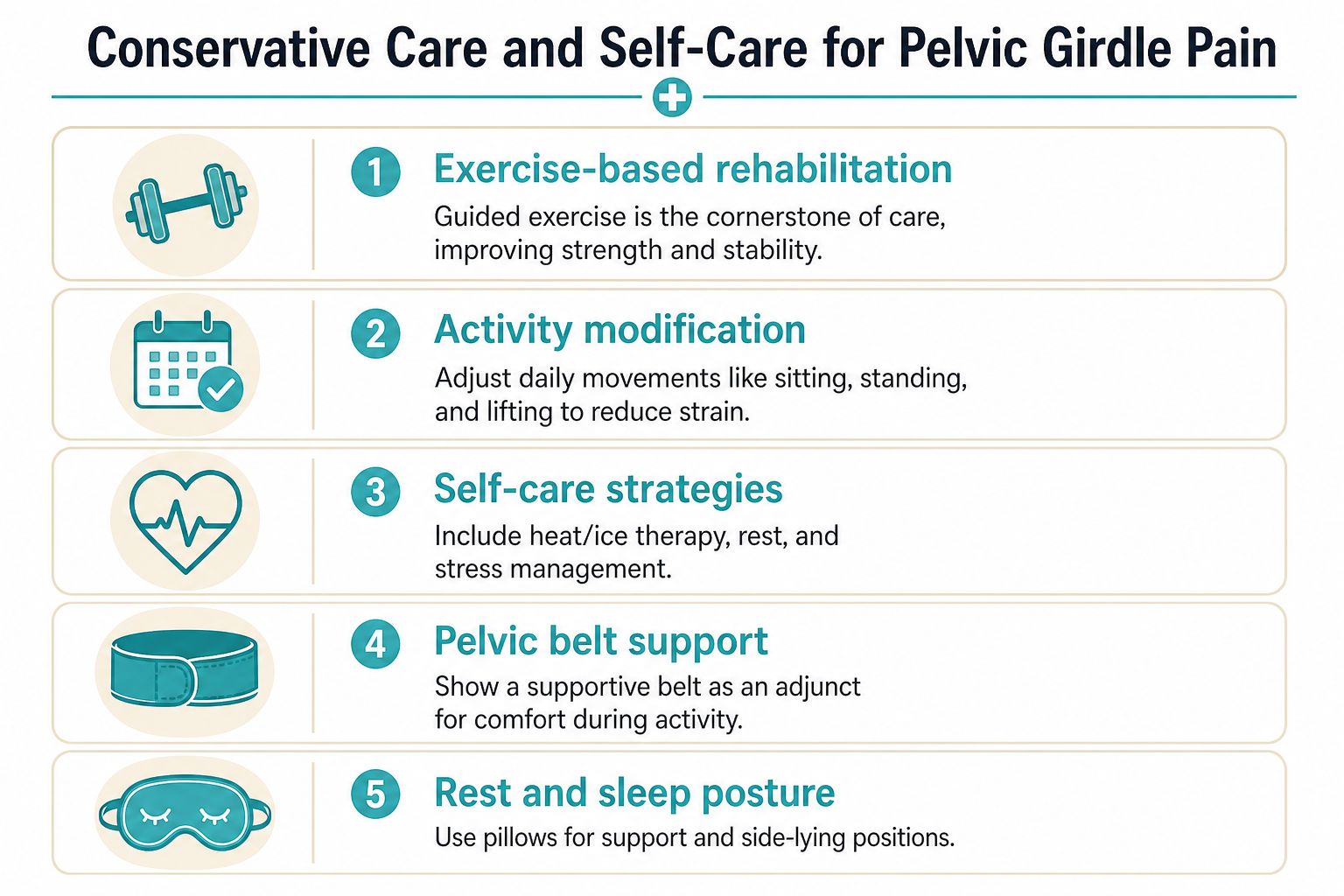
A practical plan usually combines exercise-based rehabilitation, movement adjustments, and comfort measures. The meta-analysis found that exercise reduced pain and improved function with moderate certainty, while supervised abdominopelvic core exercise may have stronger effects. The evidence remains limited and varied, so the findings support an individualized program rather than one routine for every pregnancy.
A pelvic health clinician may start with gentle pelvic tilts, deep abdominal activation, gluteal strengthening, hip control, and functional movements. The starting point should match your symptoms, pregnancy stage, and the tasks that provoke pain. Exercise should remain tolerable during and after the session. A flare that repeatedly limits walking, sleep, or caregiving is a reason to adjust the dose, not a test of endurance.
Build support into daily movements
Use these options as experiments, then keep the changes that reduce aggravation:
- Reduce asymmetry: Sit to dress, limit unnecessary single-leg standing, and keep your legs closer together when getting in and out of a car or turning in bed.
- Pace demanding tasks: Divide cleaning, shopping, and caregiving into shorter periods, with recovery time between them.
- Support sleep: Side-lying with a pillow between your knees may keep your hips and pelvis more comfortable.
- Choose stable footwear: Supportive shoes may make walking and standing feel more controlled.
- Try temperature for comfort: Heat or cold may provide short-term relief. Protect your skin and stop if symptoms worsen.
- Use water-based movement: Gentle aquatic exercise can reduce the load of standing tasks for some people.
Work changes may include alternating sitting and standing, reducing repeated stairs, changing lifting height, or storing frequently used items within easy reach. If sleep remains difficult, discuss pregnancy-safe options with your obstetric provider. Information about magnesium for pregnancy sleep may be useful, but review supplements with your own clinician before taking them.
A pelvic belt can provide support during a specific aggravating task, but it does not replace rehabilitation. The evidence suggests modest pain reduction and little improvement in disability, with low to very low certainty. A clinician can help you choose its fit, placement, and wearing time. You can also review external support options in this guide to wrapping a pregnant belly.
Stop any movement that causes new sharp pain, leaking, dizziness, or a substantial increase in symptoms, and contact a qualified clinician for guidance.
Pelvic Floor and Physical Therapy
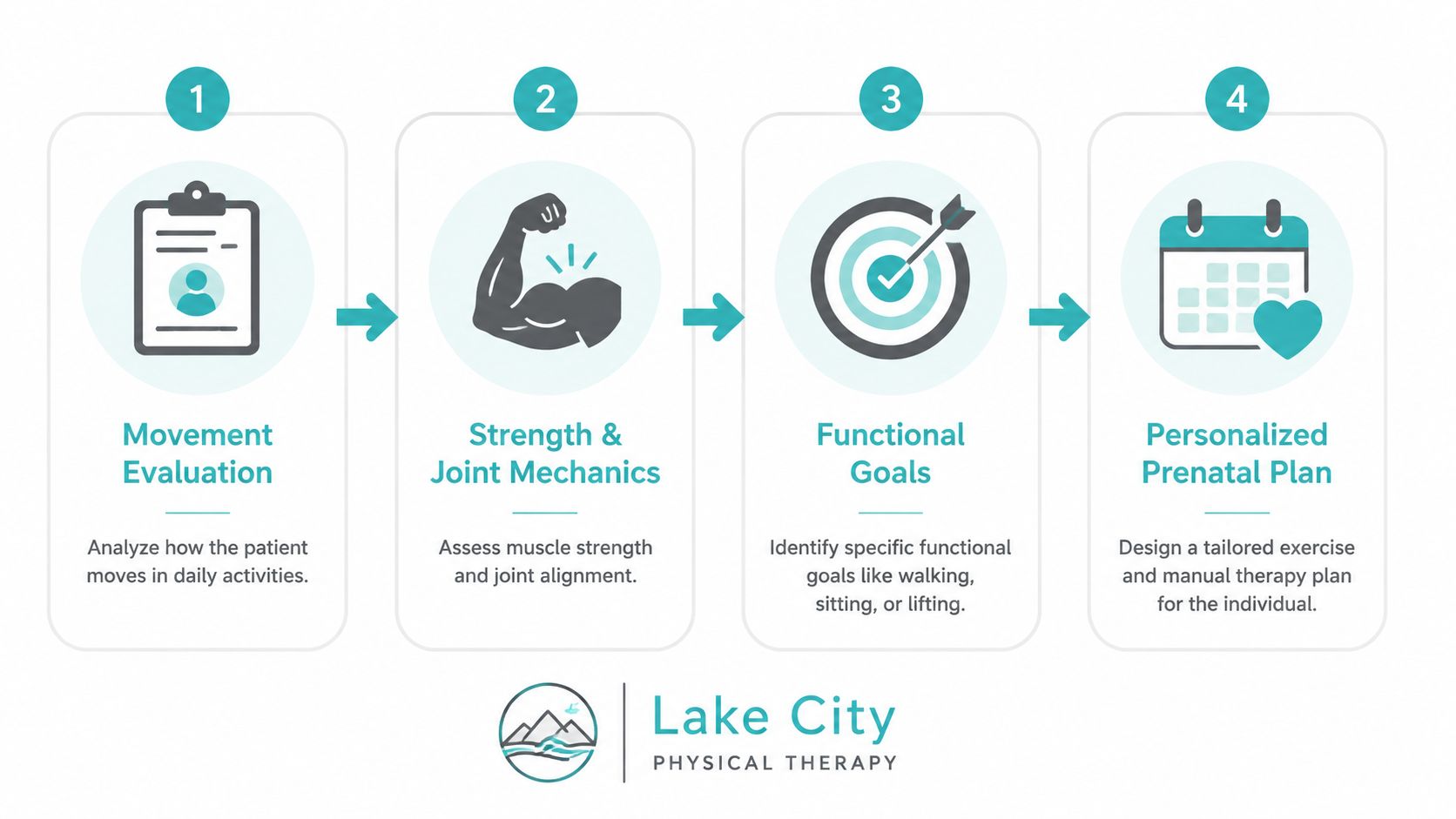
Pelvic girdle pain often changes with weight transfer, single-leg loading, and tasks that require the pelvis to stabilize. Physical therapy can identify those patterns instead of treating the painful area in isolation. An assessment at Lake City Physical Therapy may review pain location, walking and movement habits, strength, joint mechanics, breathing, pelvic floor function, pregnancy stage, and the activities you need to manage.
What an assessment can reveal
A clinician may observe walking, turning, sitting, standing, climbing stairs, or a work and caregiving task. They may assess hip and trunk control, how you shift weight, whether muscles are overworking, and how breathing coordinates with the abdominal and pelvic floor muscles. These findings also help distinguish pelvic girdle pain from lumbar, hip, or mixed pain, which affects exercise selection and activity modification.
Treatment may include manual therapy for surrounding soft tissue or selected pelvic and sacroiliac regions, targeted gluteal and deep-core strengthening, pelvic floor coordination, and education about load management. You may learn less provocative ways to roll in bed, rise from a chair, enter a car, or lift. Exercise should be adjusted to your symptoms and movement pattern, rather than prescribed as a fixed routine.
Treatment should serve a real goal
A home program is easier to apply when it supports a specific task. You may want to walk around the neighborhood, complete a work shift with fewer breaks, sleep for longer stretches, or lift your child safely. Those goals guide exercise choice, movement practice, and progression. A flare does not automatically indicate injury, but it may mean that volume, resistance, positioning, or daily demands need adjustment.
Care works best when your obstetric provider and therapist share relevant information about symptoms, pregnancy stage, medical history, and activity restrictions. Progress can be gradual, and the plan should preserve reasonable activity rather than asking you to stop everything.
Watch the following video for an overview of pregnancy-related pelvic health concepts:
You do not need to wait until walking is severely limited. Early referral can clarify whether the main pattern is pelvic girdle, lumbar, hip, or mixed pain, then provide practical strategies before avoidance and deconditioning develop. Details about pelvic floor physical therapy during pregnancy can help you choose an appropriate evaluation.
When to Seek Care
Mild, activity-related pelvic discomfort may respond to pacing and modified movement, but persistent or worsening symptoms deserve professional input. Contact your obstetric provider or a qualified physical therapist when pain affects walking, sleep, work, dressing, stairs, or caregiving. You shouldn't have to wait until daily life has narrowed dramatically before asking for help.
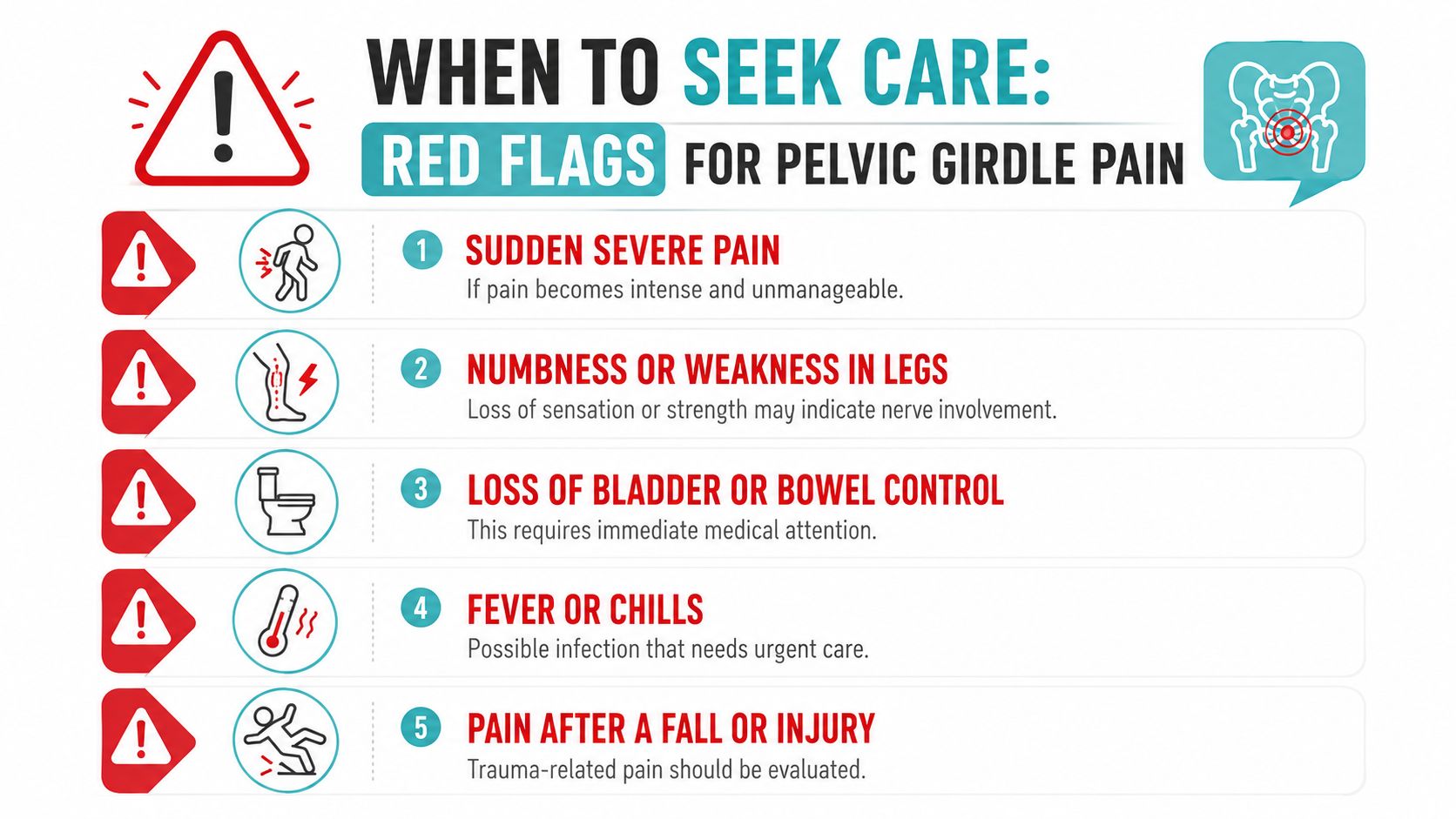
Seek prompt medical evaluation for:
- Sudden severe pain: Especially when it becomes intense, unmanageable, or different from your usual pattern.
- Numbness or weakness: New loss of sensation or strength in either leg needs assessment.
- Bowel or bladder changes: Loss of bladder or bowel control requires immediate medical attention.
- Fever, chills, or feeling unwell: These symptoms may indicate a problem beyond routine musculoskeletal pain.
- Bleeding or concerning pregnancy symptoms: Contact your obstetric provider promptly.
- Pain after a fall or injury: Trauma-related pelvic pain should be evaluated rather than managed only at home.
If symptoms are not improving with rest and reasonable activity changes, arrange an assessment. Ask your obstetric provider about referral to pelvic floor or orthopedic physical therapy, and describe the tasks you want to regain. Treatment decisions should account for your pregnancy stage, work demands, prior pain or trauma, sleep, and personal goals.
Pelvic girdle pain is a real musculoskeletal condition that can continue after childbirth for some patients. Large prospective cohorts have reported clinically persistent pain from the postpartum stage to two years after birth in 5% to 8.5% of women.The evidence review That possibility is one reason to address symptoms early, while also recognizing that pregnancy-related pain patterns differ widely.
Lake City Physical Therapy offers prenatal and postpartum pelvic floor physical therapy that can assess pelvic girdle pain, movement control, strength, and daily function. Visit Lake City Physical Therapy to explore an individualized evaluation and rehabilitation plan for walking, sleeping, working, and caring for your family more comfortably.