Recovery After Bladder Prolapse Surgery: A Practical Guide
You're home after bladder prolapse surgery, still moving carefully, with a folder of instructions on the counter and several questions no one answered clearly. Is the pressure normal? Should you walk or stay in bed? When can you lift a laundry basket, drive, exercise, or have sex without harming the repair?
Recovery after bladder prolapse surgery is rarely a single, fixed timeline. The safest plan combines your surgeon's restrictions with your symptoms, wound healing, bladder and bowel function, and gradually returning strength. Traditional advice often centers on a six-week limit, but newer evidence suggests that many women regain everyday function sooner, while higher-load activity may still need a slower, individualized progression.
The First Days After Bladder Prolapse Surgery
The ride home often feels longer than expected. You may be sore from sitting, tired from anesthesia, and unsure whether the pelvic pressure is part of healing or a warning sign. During the first 48 to 72 hours, fatigue, mild vaginal spotting, pelvic soreness, and intermittent urinary urgency can occur after cystocele or vaginal vault repair. They should gradually settle rather than intensify.
Your immediate job isn't to test the repair. It's to create conditions that let your body heal.
- Change position regularly: Rest on your side with a pillow between your knees, or recline with support under your knees. Avoid staying in one position for long periods.
- Walk briefly and often: A slow trip to the bathroom or around the room is more useful than one ambitious walk. Early ambulation is commonly encouraged after prolapse surgery, while high-load activity remains restricted.
- Use cold carefully: A wrapped ice pack over the vulvar or perineal area can reduce swelling. Keep sessions short, and never place ice directly on skin.
- Sip and go: Take small sips of fluid, then give yourself time to urinate without pushing. Don't strain to empty your bladder.
- Protect bowel function: Start the bowel regimen prescribed by your surgical team. Constipation and straining place avoidable pressure on a healing repair.
- Save the contact number: Put the surgeon's office and after-hours line in your phone before you become uncomfortable or tired.
Catheter questions deserve a clear answer
Catheter removal depends on the procedure and on how well your bladder empties afterward. An anterior colporrhaphy may have a different plan from a repair combined with a sling, and some patients need temporary catheter use. Before leaving the surgical center, ask when the catheter should come out, how much urine is acceptable on a bladder scan, and whom to call if you can't urinate.
The first few days establish more than comfort. They influence sleep, bowel regularity, confidence with movement, and whether you learn to respond to symptoms without panicking. A quiet, organized start usually serves you better than either complete bed rest or trying to prove you're recovering quickly.
Week-by-Week Recovery Timeline You Can Plan Around
A calendar can provide structure, but it shouldn't overrule your symptoms or surgical findings. In a 2023 randomized clinical trial, women reached 90% of baseline activity in a median of 9 days, with an interquartile range of 4 to 20 days, and the timing didn't differ between standard restrictions and expedited activity guidance. More than half had returned to baseline activity by one week, and 93.6% had done so by 12 weeks. The trial report offers a useful benchmark for ordinary function, not permission to ignore your surgeon's instructions.
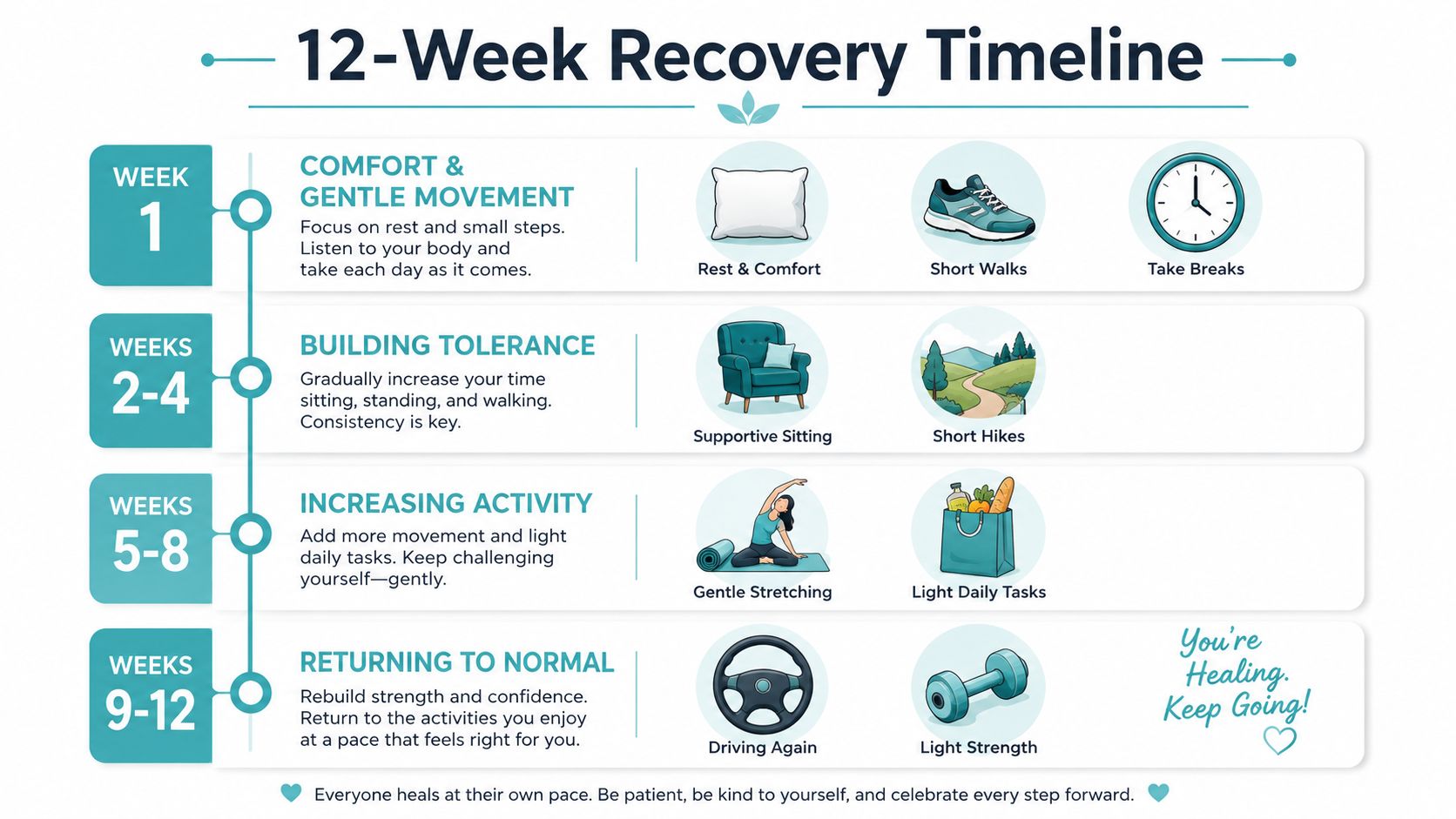
A practical twelve-week arc
Week 1 is about comfort and gentle movement. Take short walks during waking hours, rest between activities, and arrange your sleep position around comfort. Keep lifting, straining, and exercise that increases pelvic pressure out of the picture.
During weeks 2 and 3, many patients begin light household tasks in small doses. You may be ready for a short drive once you're no longer taking opioid medication, can turn comfortably, and can brake without hesitation. If an activity increases pressure, bleeding, or aching, reduce the dose rather than pushing through.
Weeks 4 to 6 often mark a transition for uncomplicated native-tissue repairs. Typical discharge guidance still restricts heavy lifting, high-impact exercise, and intercourse for about six weeks, with some protocols extending functional limits to 8 to 12 weeks depending on the repair and surgeon preference. Common postoperative instructions may specify avoiding loads over 8 to 10 pounds for six weeks, avoiding straining, and treating constipation promptly.
By weeks 7 to 9, a symptom-free patient may begin carefully supervised strengthening, such as bodyweight movements and pelvic floor loading. Weeks 10 to 12 can be used to prepare for more demanding work or exercise when the vaginal walls are healed and your surgeon has cleared progression. Mesh-based or complex repairs may follow a slower lifting plan. For broader advice on organizing the early transition home, these guides for post-hospital recovery can help you plan meals, support, medication, and rest.
Managing Pain, Wounds, and Bowel Care
Pain after prolapse surgery usually comes from several sources at once: vaginal and pelvic tissues, abdominal or laparoscopic incisions, muscle guarding, and bowel pressure. Treating those contributors early can make movement easier and reduce the temptation to brace or strain.
Use a layered comfort plan
Follow your surgeon's prescription rather than creating your own dosing schedule. Many patients transition from scheduled acetaminophen and ibuprofen, when medically appropriate, toward less frequent medication as soreness improves. Opioids may be useful briefly, but they can worsen constipation, drowsiness, and nausea, so ask when an opioid-sparing plan is appropriate.
For external swelling, place a wrapped cold pack over the vulvar area for a short interval, then remove it and check your skin. A sitz bath may be appropriate starting around the second day, but confirm the timing with your surgical team, especially if you have specific wound or infection instructions.
After urinating, use a peri-bottle with lukewarm water, then pat dry rather than wiping. Light spotting and discharge can occur during healing, while foul odor, increasing bleeding, worsening pain, or drainage requires clinical advice. Dissolving suture material may appear as small threads or fragments, but don't pull at it.
Make bowel movements boring
Begin the bowel plan recommended at discharge, often with a stool softener on the night of surgery. Add fluids as tolerated and daily soluble fiber. If you use psyllium, introduce it with adequate fluid and review medication timing with a pharmacist. This general guide to psyllium for heart wellness discusses how to use the fiber, but your postoperative team should determine whether it suits you.
Try a fixed morning bathroom attempt. Place a small footstool under your feet, lean forward, relax your abdomen, and exhale instead of holding your breath. Reserve an osmotic laxative for the backup plan your clinician gave you, particularly if opioids are slowing your bowel.
Log-roll out of bed, support your abdomen or pelvis with a pillow when coughing, and use side-lying support during the first fortnight. If pain remains difficult to control, postoperative pelvic pain guidance can help you identify questions to bring to your surgeon or therapist.
Rebuilding Your Pelvic Floor and Core
The early goal isn't maximum contraction. It's learning to coordinate breathing, abdominal support, and pelvic floor activity without bearing down into the repair.
Start with awareness, not force
In the first week, practice relaxed diaphragmatic breathing in a comfortable position. Let the ribs and abdomen expand as you inhale, then gently exhale without tightening your buttocks or holding your breath. If your surgeon has cleared movement, small supine pelvic tilts and very easy toe-tapping marches can follow.
Stop an exercise that reproduces vaginal heaviness, pressure, sharp pain, or new bleeding. A pelvic floor contraction should feel like a subtle lift, not a downward push. If you're unsure whether you're lifting or bearing down, don't add more repetitions. Have a trained clinician assess the pattern.
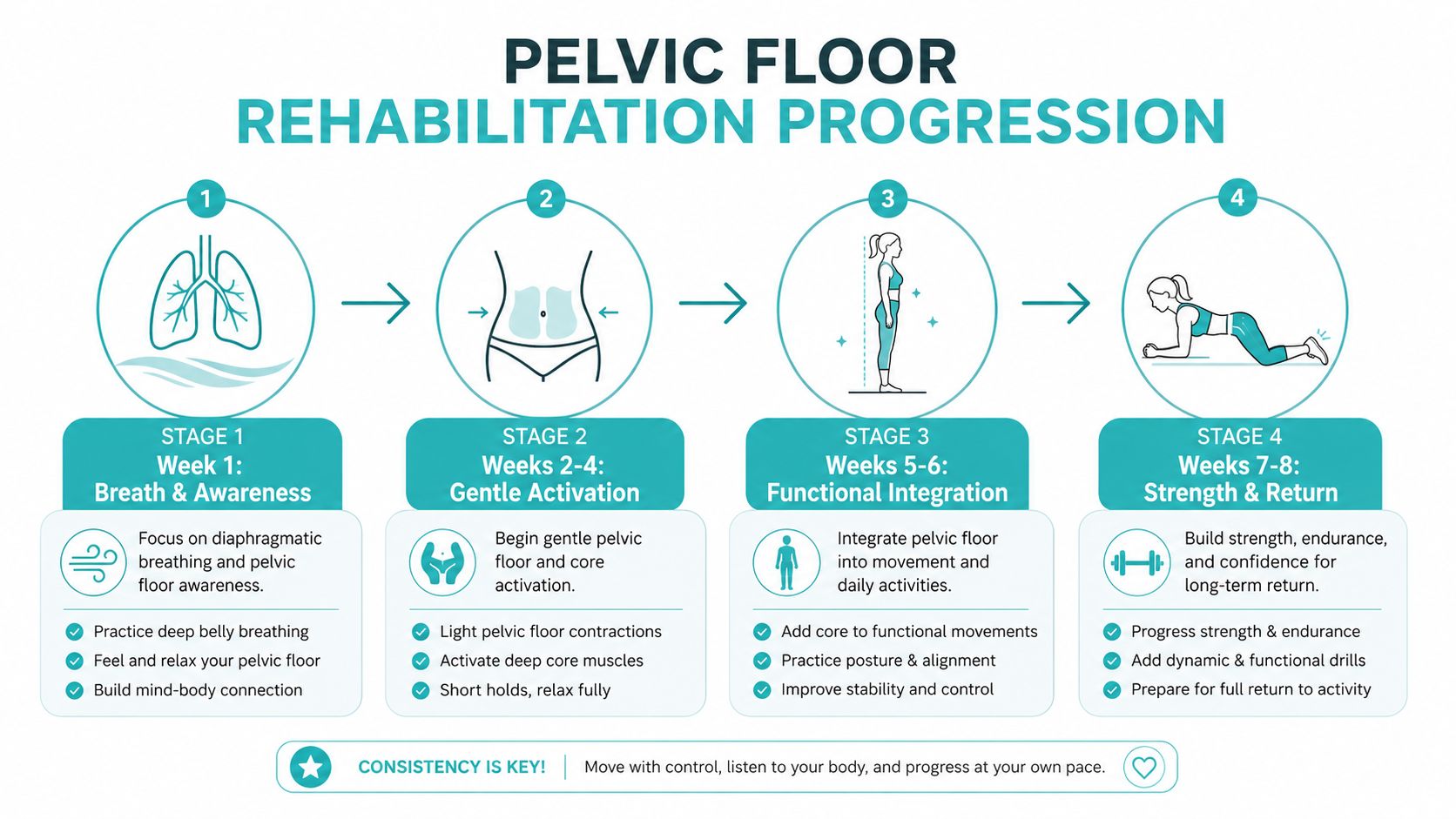
During weeks 2 to 4, progression may include side-lying clamshells, seated heel slides, and modified quadruped bird-dog movements. The emphasis is co-activation. Your deep abdominal muscles and pelvic floor should support movement together, rather than relying on isolated, forceful Kegel repetitions.
Add function before intensity
Around weeks 5 to 6, if symptoms remain settled and healing is confirmed, you may work toward standing glute bridges, supported squats, sit-to-stand practice, and step-ups. Later, resisted carries and modified plank variations can prepare you for lifting and daily tasks. Exhale through effort, keep the ribs stacked over the pelvis, and stop before fatigue changes your strategy.
Advance only when the current stage is comfortable. Useful markers include pain-free contractions confirmed by an internal examination when warranted, tolerance of 10 slow repetitions without obvious fatigue, and the ability to exhale through exertion without pelvic descent. These are clinical decision points, not guarantees that every patient should follow the same calendar.
Movement rule: A smaller, coordinated contraction is more useful than a powerful squeeze that increases pressure downward.
Pelvic floor exercises aren't a universal cure for prolapse. If you're deciding whether they fit your symptoms, this discussion of whether pelvic floor exercises can reverse prolapse can help you frame realistic expectations.
Returning to Lifting, Exercise, and Daily Life
A blanket six-week ban is simple to print, but it doesn't describe how recovery unfolds. Some women feel ready for ordinary activity earlier, while others need more time because of pain, fatigue, wound healing, a complex repair, or poor pressure control. Cleveland Clinic guidance supports early walking and stair use while emphasizing individualized decisions about lifting and high-impact exercise. Its sacrocolpopexy recovery guidance is a useful reminder that symptoms and function matter.
The 2023 randomized trial linked above found that expedited activity guidance didn't delay functional recovery, but it didn't mean every patient should immediately lift, run, or have intercourse. Use your surgeon's examination and your response over the following day to decide whether an activity dose was appropriate.
| Activity | Typical timeframe | Clearance marker |
|---|---|---|
| Short driving trips | After early recovery | Off opioid medication, comfortable braking and turning |
| Light household tasks | Often during weeks 2 to 3 | No increased pressure, bleeding, or lingering ache |
| Low-impact cardio | Often after early wound review | Healed incisions and symptom-neutral walking |
| Bodyweight strengthening | Commonly later in recovery | Coordinated breathing and no bulge sensation |
| Heavier lifting or running | Often toward weeks 8 to 12 | Surgeon clearance, healed vaginal walls, stable symptoms |
Before progressing, aim to perform a controlled standing pelvic floor contraction for 10 repetitions, coordinate each effort with an exhale, and remain free of bulging at rest and with effort. Start running with brisk walking, then short jog intervals. For lifting, begin with bodyweight squats, progress to a light load, and only later approach a proportion of your previous training load. Don't use a numeric load target until your surgeon or therapist has assessed you.
Sex, swimming, baths, and heavy household work each require separate clearance. Vaginal penetration generally waits until the surgeon confirms healing and discharge has settled. Swimming and soaking should wait until wounds are healed. Pause progression for pelvic pressure, urinary leakage, or aching that lasts beyond the next day.
If you're researching muscle-building supplements while planning a later return to training, read this overview of peptide stacks for hypertrophy separately from your surgical plan. Supplements won't replace tissue healing, pressure management, or medical clearance.
Where Pelvic Floor Physical Therapy Helps
A patient may leave surgery with the prolapse repair healing well but still struggle with leakage, constipation-related straining, guarded movement, or uncertainty about how much activity is safe. Pelvic floor PT can address those functional problems without promising that therapy prevents recurrence. Its clearest practical role is restoring coordination: contracting without bearing down, breathing during effort, managing pressure, and rebuilding confidence with movement.
A therapist can distinguish stress incontinence from urgency or a combination of both. Treatment may also address painful intercourse, pelvic muscle guarding, scar mobility, and a graded return to lifting or impact. These goals matter even when surgery provides the primary structural support. For a broader explanation of available treatment, see this guide to pelvic floor therapy benefits.
The evidence has limits
A 2026 randomized trial found no significant long-term differences in quality of life, body image, sexual function, or pelvic floor strength at 24 months between bowel muscle or pelvic floor training and usual care. Older randomized trials also found no clear symptom benefit from perioperative physiotherapy after prolapse surgery. The trial report supports a measured conclusion: PT may help selected patients manage symptoms and plan activity, while broad claims that it prevents recurrence remain unsupported.
Long-term follow-up also puts recurrence in context. One large study reported 11% re-operation at five years and an additional 4% by ten years, while a University of Utah clinical review reports that about 80% of prolapse surgeries remain successful after ten years and that only 2% to 3% ultimately need repeat surgery. The long-term review indicates that rehabilitation supports follow-up but does not replace medical review.
At Lake City Physical Therapy, a postoperative plan may include a 60-minute initial evaluation, weekly visits over six to eight weeks, in-person or telehealth follow-up, and a home program adjusted to symptoms and function. Internal assessment or biofeedback may be used when appropriate, with consent and comfort guiding that choice. Ask your physician about referral and insurance coverage, or schedule through the practice website before starting care.
Red Flags and When to Call Your Surgeon
Most recovery problems are manageable when addressed early. The important distinction is whether symptoms are mild and improving, new and concerning, or severe enough to require emergency care.
Heavy bleeding is not the same as light spotting. Fever, foul-smelling discharge, wound drainage, escalating pain, urinary retention, and increasing pelvic pressure deserve prompt contact with the surgical team. After catheter removal, inability to urinate or a feeling that the bladder never empties should be reported rather than managed by repeatedly straining.
Use the symptom and trend together
A calf that becomes painful, swollen, or tender may signal a clot. Chest pain or shortness of breath is an emergency. Vomiting with severe abdominal distention and no passage of gas can indicate bowel obstruction and shouldn't wait for a routine appointment.
New or worsening leakage can have several causes. Stress leakage with coughing differs from strong urgency, burning, or inability to empty, so describe exactly what happens and when. A visible or felt area of mesh at the vaginal wall also needs surgeon assessment rather than self-treatment.
| Symptom | Likely concern | Action tier |
|---|---|---|
| Heavy bleeding, large clots, or rapidly soaked pads | Hemorrhage or postoperative bleeding | Same-day call, emergency care if severe or accompanied by weakness |
| Fever, foul discharge, or draining wound | Infection | Same-day call |
| Pain that escalates despite prescribed medication | Hematoma, infection, or another complication | Same-day call |
| Calf swelling or tenderness | Possible deep-vein thrombosis | Same-day urgent assessment |
| Chest pain or shortness of breath | Possible pulmonary embolism or cardiopulmonary emergency | Call 911 |
| Inability to urinate after catheter removal | Urinary retention | Same-day call |
| Vomiting, severe distention, and no gas | Possible bowel obstruction | Emergency care |
| New bulge, mesh exposure, or worsening pelvic pressure | Repair or healing concern | Call the clinic within 24 hours, sooner if severe |
Emergency rule: Chest pain, significant breathing difficulty, fainting, uncontrolled bleeding, or severe rapidly worsening pain is a reason to seek emergency care, not to wait for a portal reply.
Keep a simple record of the symptom, when it began, what makes it worse, and whether it improves with rest. That information helps your surgeon distinguish ordinary healing from a complication and gives you a clear reason to call.
Lake City Physical Therapy provides individualized pelvic floor assessments, symptom-based exercise progression, and support for incontinence, prolapse recovery, and painful sex. Visit Lake City Physical Therapy to request a postoperative evaluation and discuss in-person or telehealth options with a women's health physical therapist.