Urinary Incontinence Signs and Symptoms: A Real-World Guide
A laugh catches you off guard, and you feel a small leak. Maybe it happens again during a sneeze, a run, or while lifting your child. You buy liners, choose darker clothing, locate bathrooms before leaving home, and stop doing activities that used to feel easy.
Many women live with this pattern for years because they assume a small leak isn't important enough to mention. But urinary incontinence signs and symptoms form a pattern, and that pattern gives useful information about what your bladder, urethra, and pelvic floor are doing. Recognizing the pattern can help you choose the right next step instead of relying only on pads or avoiding activities.
When a Small Leak Tells a Bigger Story
A woman might first notice leakage while laughing at dinner with friends. The amount seems minor, so she says nothing. Later, she starts crossing her legs before a sneeze, skips the trampoline with her children, and plans exercise around bathroom access. The leak may be small, but the decisions built around preventing it can become much larger.
That quiet adjustment is common. Public-health information from the National Institute of Diabetes and Digestive and Kidney Diseases shows that urinary leakage and other lower urinary tract symptoms are widespread among women, while many affected people don't seek treatment. A symptom can feel embarrassing, inconvenient, or too ordinary to discuss, especially after childbirth or as the body changes with age.
The most helpful shift is to stop asking only, “How much did I leak?” Start asking:
- What was I doing immediately before the leak?
- Did I feel a sudden, difficult-to-delay urge?
- Did the urine loss happen at the same time as the trigger or afterward?
- Was my stream weak, interrupted, or followed by a feeling that my bladder hadn't emptied?
- Did I wake at night, feel pain, or notice blood in my urine?
These questions turn an isolated event into useful information. The timing of the leak often tells us more than the volume.
Four patterns create a practical map
Clinicians commonly sort symptoms into four broad patterns:
- Stress urinary incontinence, leakage with coughing, sneezing, laughing, lifting, running, or other exertion.
- Urgency urinary incontinence, leakage preceded or accompanied by a sudden compelling need to urinate.
- Mixed urinary incontinence, a combination of stress and urgency leakage.
- Overflow incontinence, frequent dribbling associated with incomplete emptying, a weak stream, or difficulty emptying the bladder.
These labels aren't meant to define your identity or predict your future. They're a working map. The map helps a clinician decide whether to focus first on pressure management, pelvic-floor coordination, bladder retraining, medical evaluation, or a combination of approaches.
Practical rule: A leak is worth discussing when it changes what you do, where you go, how you exercise, how you sleep, or how confident you feel.
You don't need to wait until symptoms become severe. Recognizing your own triggers, sensations, and timing is the first move toward a plan that addresses the reason for the leakage rather than only managing its consequences.
What Clinicians Mean by Incontinence
A few drops during a cough and a rush of urine before reaching the toilet are both leaks, but they may point to different bladder patterns. The International Continence Society definition of urinary incontinence is clear: urinary incontinence is any involuntary leakage of urine. Urine loss does not need to soak your clothes or happen daily to belong in a clinical conversation. If urine escapes without your intention, record what was happening, what you felt, and when it occurred.
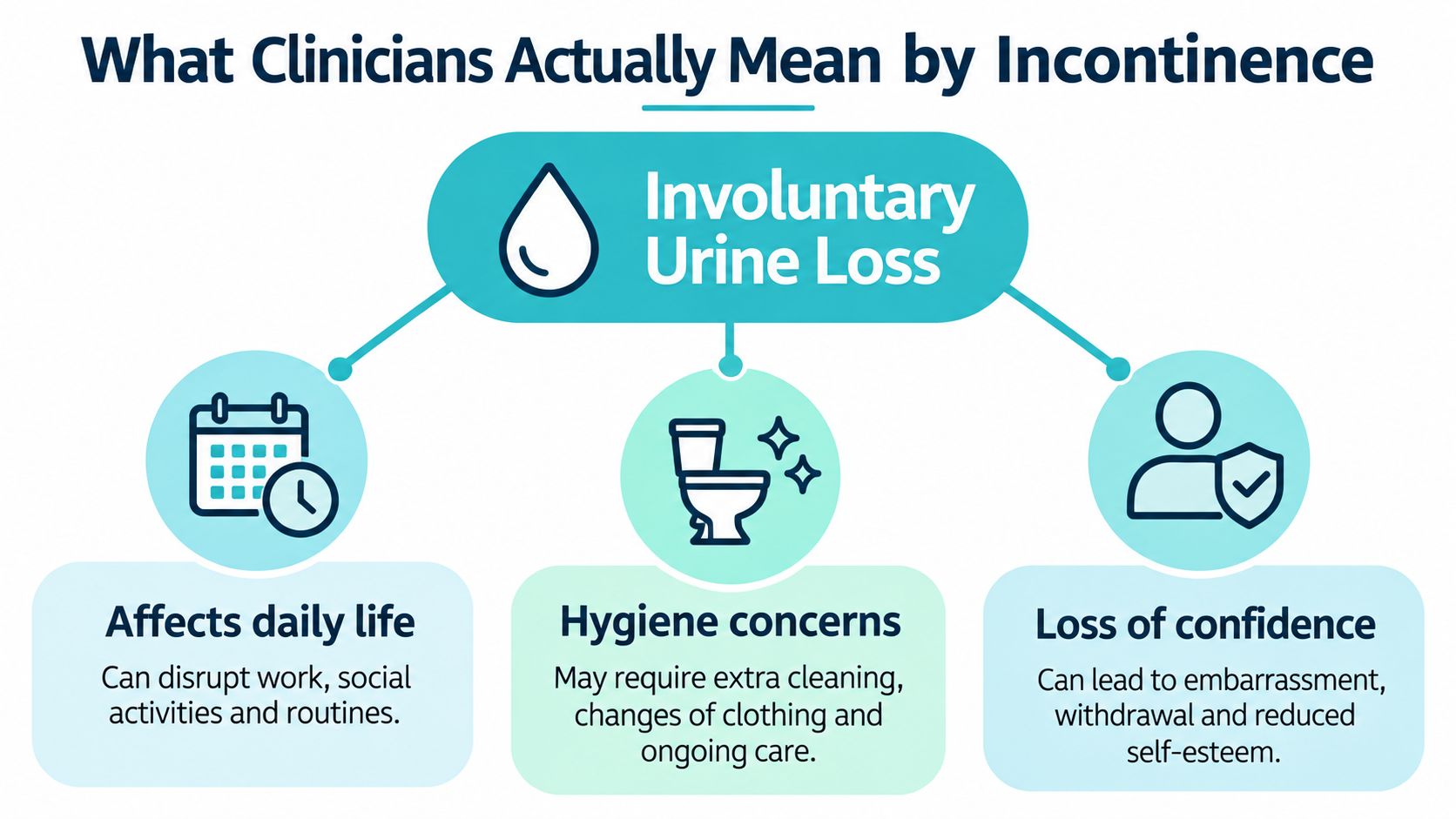
“Incontinence” is an umbrella term, not a finished diagnosis. Clinicians look for the mechanism and context behind the leak, much like matching a key to the lock it fits. A cough-related leak suggests a different starting point from leakage that follows a sudden, hard-to-delay urge. The amount may be similar, while the useful next step is different.
Two systems help explain the difference
The bladder stores urine as it fills. The urethra and its supporting tissues help keep it closed until the appropriate time. During a cough, jump, or lift, pressure inside the abdomen rises. Stress leakage can happen when that pressure exceeds the urethra's ability to close and remain supported. The NIDDK overview of bladder-control symptoms and causes explains this exertional pattern and the contribution of pelvic-floor and sphincter support.
For a broader explanation of the possible drivers, see this guide to what causes urinary incontinence in women.
Urgency leakage follows a different sequence. The bladder sends an intense signal to empty, the sensation feels difficult to postpone, and urine may escape before you reach the toilet. Bladder muscle activity and communication with the nervous system can contribute. This response is not a discipline problem, and it is not the same as stress caused by emotional strain.
Look beyond leakage
Urinary symptoms may also include:
- Frequency, urinating more often than usual.
- Nocturia, waking during the night to urinate.
- Hesitancy, difficulty starting the stream.
- Weak or intermittent flow, a stream that lacks strength or stops and starts.
- Straining, needing to push to urinate.
- Incomplete emptying, feeling that urine remains in the bladder.
- Painful urination, burning or discomfort while passing urine.
Pain, difficulty emptying, and stream changes do not fit neatly into a simple cough-leak explanation. They may call for assessment of infection, obstruction, medication effects, pelvic-organ prolapse, bladder conditions, or neurological causes. You do not need to diagnose yourself. Describe the complete pattern so your clinician can match the symptom to the right evaluation.
The Four Patterns Your Bladder May Be Showing
A useful self-check starts with four questions: What triggers the leak? What do you feel? When does urine escape? What happens afterward? The answers often point toward a dominant pattern, even when more than one pattern is present.
Stress urinary incontinence
Trigger: Coughing, sneezing, laughing, lifting, bending, running, jumping, or another physical effort.
Sensation: Often little or no warning urge. You may feel pressure or impact, then notice a small leak at the same moment.
Timing: Leakage is synchronized with the activity. A cough stress test may reproduce immediate leakage during coughing, particularly when performed with a comfortably full bladder while standing.
Who may experience it: Stress leakage can occur after pregnancy and childbirth, with pelvic-floor or urethral support changes, or when sphincter function is reduced. Athletes may notice it during impact activities, while another woman may first recognize it when lifting a laundry basket.
The key distinction is pressure-related timing. If you can predict the leak by the movement you're about to make, stress incontinence deserves consideration. Leakage during sex also belongs in the history and shouldn't be normalized or left unmentioned.
Urgency urinary incontinence
Trigger: A sudden, compelling urge to urinate, sometimes triggered by arriving home, hearing running water, or seeing the bathroom.
Sensation: The need feels immediate and difficult to defer. You may rush, cross your legs, or tense your entire body to try to stay dry.
Timing: Urine escapes with the urge or before you reach the toilet. Frequency, nighttime urination, and difficulty postponing a bathroom trip may occur alongside it.
Urgency is about the relationship between the bladder signal and your ability to wait. A person can have urgency without leakage, leakage without urgency, or both. That distinction helps determine whether bladder retraining and coordination work should be part of the plan.
Mixed urinary incontinence
Trigger: Both physical effort and sudden urgency.
Sensation: You might leak with a sneeze during the day and also lose urine while sprinting to the toilet. One symptom doesn't cancel out the other.
Timing: Episodes may alternate. A woman may have stress leakage during exercise but urgency leakage after delaying a bathroom break.
Mixed incontinence requires a layered assessment. Treating only the cough leak may leave the bathroom urgency untouched, while focusing only on bladder sensations may miss the pressure-management problem.
Overflow incontinence
Trigger: The bladder doesn't empty effectively, rather than a specific cough or urge causing the leak.
Sensation: Frequent dribbling, a weak or intermittent stream, difficulty starting, straining, or a persistent feeling of incomplete emptying.
Timing: Leakage may occur as small amounts over time. You may also feel that you need to urinate again soon after going.
Who may experience it: Poor bladder contraction, outlet obstruction, medication effects, or other medical conditions can contribute. Overflow symptoms need clinical evaluation rather than an assumption that more pelvic-floor squeezing will solve the problem.
| Pattern | Main Trigger | Typical Sensation | Most Common In |
|---|---|---|---|
| Stress | Cough, sneeze, lifting, exercise, or impact | Little warning, leakage with effort | People with reduced pelvic-floor or urethral support |
| Urgency | Sudden compelling need to urinate | “I have to go now,” with difficulty delaying | People with urgency, frequency, or overactive bladder symptoms |
| Mixed | Effort plus sudden urge | Both pressure-related and urgency-related leakage | People with overlapping bladder and support symptoms |
| Overflow | Incomplete emptying or impaired outflow | Dribbling, weak stream, or residual fullness | People needing assessment for retention, obstruction, or other causes |
Before moving on, write down which pattern sounds most familiar. Then note any symptom that doesn't fit. The mismatch can be just as clinically useful as the obvious leak.
Why These Patterns Overlap in Real Life
A woman may sneeze and leak, then find herself sprinting to the bathroom ten minutes later. The first event resembles stress incontinence. The second resembles urgency incontinence. Together, they suggest a mixed pattern, even if one type feels more disruptive.
Real bodies rarely follow one clean category. Pelvic-floor muscles support the bladder and urethra, but they also need to relax and coordinate during bladder filling, bowel movements, breathing, and movement. A muscle system can be weak, overactive, poorly timed, or some combination of these. Strength alone doesn't explain every symptom.
Postpartum changes can add several influences at once. Healing tissues, altered pressure through the abdomen and pelvis, changes in sensation, and a gradual return to lifting or impact exercise may all affect how leakage appears. A woman may initially notice stress leakage and later recognize urgency as sleep, hydration, activity, or recovery patterns change.
Hormonal transitions can also alter the symptom picture. Around perimenopause and menopause, a previously manageable pattern may become more noticeable, or urgency and nighttime urination may join exertional leakage. The ACOG guidance on urinary incontinence emphasizes that overlapping symptoms are relevant to assessment, especially when women report both stress and urgency features.
Cancer care can introduce another layer. Pelvic radiation, surgery, changes in nerve function, and treatment-related tissue changes may affect bladder storage, emptying, or pelvic-floor coordination. Someone recovering from oncology treatment shouldn't assume a new leak is just a fitness issue or an unavoidable treatment consequence.

Overlapping signs don't mean there's no clear path forward. They mean the assessment should ask more than, “Do you leak?” It should identify which activity, sensation, tissue change, or emptying problem appears first, and which symptom most limits your life.
Tracking Your Own Signs Before the Appointment
A bladder diary turns a vague complaint into a sequence of observable events. Use paper, a notes app, or a dedicated health-tracking tool. A simple three-day record is often enough to reveal whether your symptoms cluster around exertion, urgency, delayed bathroom trips, nighttime waking, or incomplete emptying.
Record the following each day:
- Fluid intake timing: Note when you drink water, coffee, tea, alcohol, or other beverages. You don't need to judge the choices while recording them.
- Voiding intervals: Write down when you urinate and whether the trip felt planned, routine, or urgent.
- Leakage episodes: Record the activity, the presence of urgency, the approximate amount, and whether the leak happened during or after the trigger.
- Pad or liner changes: Note when you change protection and whether it was damp, wet, or used as a precaution.
- Nighttime symptoms: Record whether you wake to urinate and whether urgency or leakage occurs during the night.
- Associated symptoms: Include pain, burning, blood in the urine, difficulty starting, weak flow, straining, or incomplete emptying.
The purpose isn't to create a perfect medical record. It's to capture the details your memory may blur during an appointment.
Ask yourself:
- Does leakage happen with coughing, lifting, laughing, sneezing, or exercise?
- Does a sudden urge come first?
- Do I leak during sex or while changing position?
- Do I wake at night to urinate, and does that interrupt sleep?
- Do I feel fully empty after urinating?
- Has the pattern changed after childbirth, menopause, surgery, radiation, or a new medication?
- Which activity, social situation, or exercise have I stopped because of symptoms?
Bring the diary even if the pattern seems inconsistent. Inconsistency can indicate mixed symptoms, changing bladder habits, or a trigger that isn't obvious yet.

A short video can also help you visualize how bladder habits and pelvic-floor function connect before an evaluation.
What Changes With Postpartum, Menopause, and Cancer Care
Leakage after childbirth isn't a personal failure, and leakage during menopause isn't a requirement of getting older. Both life stages can change tissue support, muscle coordination, bladder sensation, and the way pressure moves through the abdomen and pelvis. Those changes deserve interpretation, not dismissal.
After pregnancy and delivery, some women notice stress leakage with coughing, lifting, or impact. Others develop urgency, difficulty emptying, pelvic heaviness, or a combination. The timing matters. Symptoms that persist, worsen, or interfere with caring for yourself, exercising, sleeping, or returning to sex deserve a targeted postpartum assessment, such as the guidance available on postpartum bladder control.
During perimenopause and menopause, changes in the genitourinary tissues may coincide with urgency, frequency, nocturia, discomfort, or recurrent urinary infections. If you're looking for broader, non-urinary context around managing menopause-related changes, this guide to natural menopause symptom relief may be a useful starting resource. It shouldn't replace evaluation of new urinary symptoms.
Cancer treatment calls for particularly careful timing. Pelvic radiation, hormone therapy, and surgery can affect tissue quality, nerve signaling, bladder storage, or emptying. New or progressive leakage after treatment should be discussed with the oncology team, primary-care clinician, gynecologist, urologist, or pelvic-health specialist rather than managed indefinitely at home.
| Life Stage or Treatment | Typical Symptom Pattern | Key Contributing Factors |
|---|---|---|
| Postpartum recovery | Stress leakage, urgency, heaviness, or overlapping symptoms | Tissue healing, pelvic-floor load, altered pressure management, and nerve or muscle changes |
| Perimenopause and menopause | Urgency, frequency, nocturia, infections, or a change in a previous stress pattern | Genitourinary tissue changes, shifting bladder sensation, and pelvic-floor changes |
| Pelvic radiation | New urgency, frequency, leakage, discomfort, or altered emptying | Treatment-related tissue and nerve effects |
| Pelvic surgery or hormone treatment | Progressive or sudden changes in storage, control, or emptying | Surgical disruption, treatment effects, and changes in pelvic support |
Seek prompt medical assessment for blood in the urine, painful urination, recurrent infections, urinary retention, sudden neurological changes, or new severe pelvic pain. These signs need more than a routine strengthening program.
When Pelvic Floor Therapy Is the Right Next Step
Pelvic-floor therapy can be a sensible starting point when stress leakage, urgency, pelvic pressure, or movement-related symptoms interfere with daily life. The right program isn't a generic list of squeezes. It begins by identifying whether the muscles are underactive, overactive, poorly coordinated, or responding to pressure in the wrong way.
An evaluation usually includes a detailed history and a movement assessment. When appropriate and with your consent, the clinician may assess external and internal muscle recruitment, resting tone, relaxation, coordination, tenderness, and the way your pelvic floor responds to breathing or loading. You should be able to ask questions, pause, or decline any part of the examination.
Treatment follows the pattern
A plan may include:
- Down-training, learning to relax muscles that stay tense or react too strongly.
- Targeted strengthening, improving force and endurance when the muscles don't provide enough support.
- Bladder-behavior retraining, practicing more workable responses to urgency and scheduled voiding.
- Breath and pressure coordination, exhaling and organizing the trunk and pelvic floor during lifting, coughing, or exercise.
- Manual techniques or biofeedback, when they help you sense and control the muscles more accurately.
- Home practice, matched to your symptoms rather than copied from someone else's routine.
Some people attend sessions regularly while practicing a short home program between visits. Progress is typically reviewed at a six-to-eight-week checkpoint, when you and the therapist can decide whether the plan is helping, needs adjustment, or should be combined with medical care.
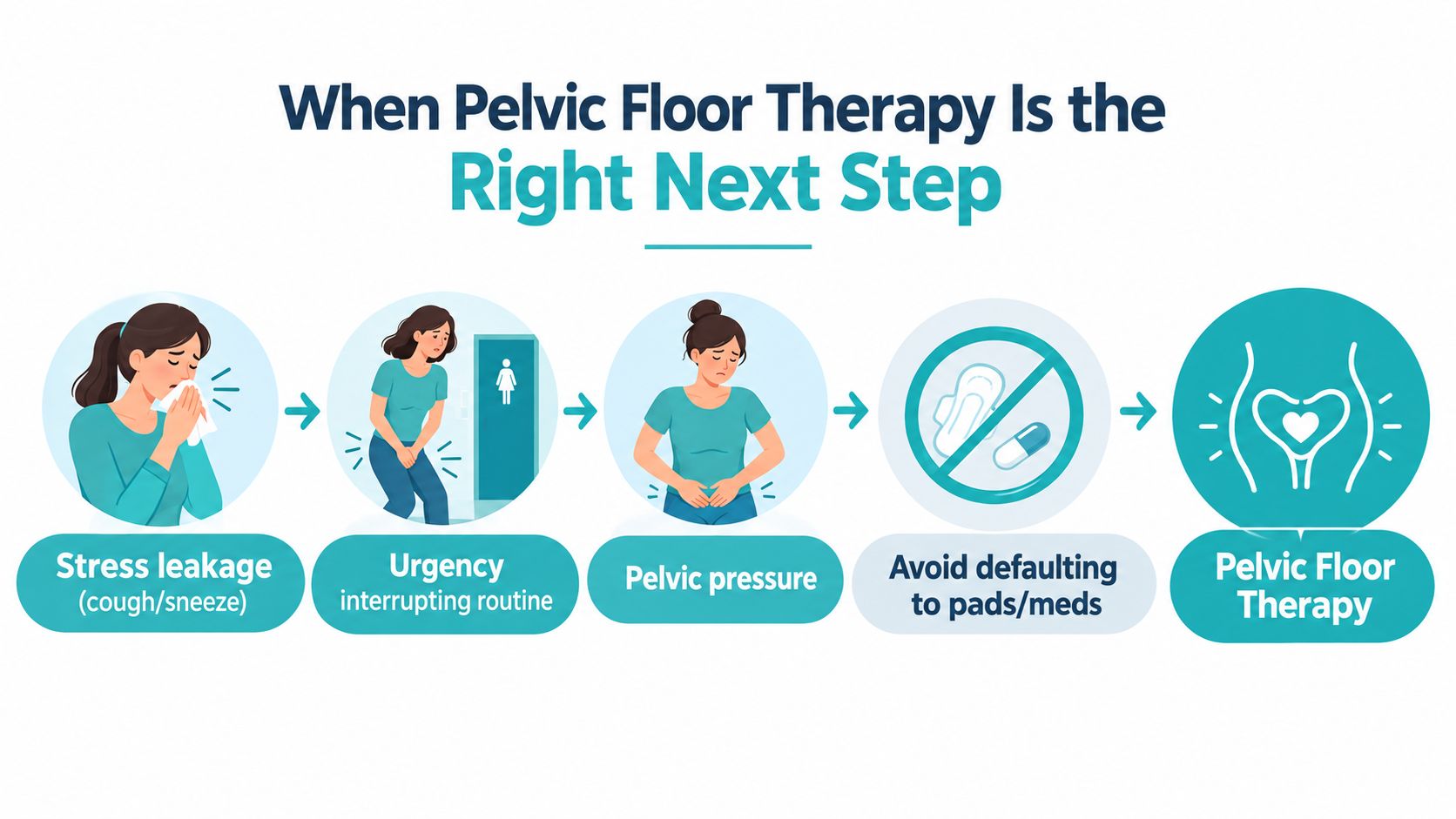
Pelvic-floor therapy isn't the right first step for every symptom. Suspected infection, unexplained blood in the urine, unresolved pelvic pain, significant retention, post-surgical complications, or red-flag neurological symptoms require medical assessment. A therapist can coordinate with your physician, but those concerns shouldn't be delayed while you try exercises on your own.
For women who want a conservative, individualized approach, pelvic-floor physical therapy for incontinence can connect the symptom pattern to practical rehabilitation. The aim is not just to hold urine harder. It's to improve the timing, strength, relaxation, and movement strategy that your particular symptoms require.
Your First Week Toward Better Answers
Use the next week to replace guesswork with observations.
Day one: Choose a notebook or phone note and begin a bladder diary. Continue recording fluid timing, bathroom trips, leakage, urgency, nighttime symptoms, and emptying concerns for three consecutive days.
Day two: Practice diaphragmatic breathing twice during the day. Let your ribs expand as you inhale, then make the exhale slow and easy. The exercise is about reducing unnecessary gripping and noticing how your pelvic floor responds to breath.
Day three: Review the diary and mark the pattern that appears most often: stress, urgency, mixed, or overflow. Circle symptoms that don't fit the dominant category.
Day four: Write three questions for a provider. Include how long symptoms have been present, how often you use pads or liners, and whether leakage affects sleep, exercise, work, or sex.
Day five: Research two pelvic-floor therapists in your area. Check their credentials, insurance information, pelvic-health focus, and patient reviews.
Day six: Book an evaluation or schedule a consultation call. Bring your diary and medication list.
Day seven: Write a short paragraph describing what happens before, during, and after a leak. Include your most disruptive symptom and what you want to do again.
Small observations become useful change when they identify the underlying pattern. You don't have to solve the diagnosis alone, but you can bring the information that helps a clinician start in the right place.
Lake City Physical Therapy offers pelvic-health evaluations, bladder retraining, and individualized pelvic-floor rehabilitation for stress, urgency, mixed, and postpartum incontinence patterns. Visit Lake City Physical Therapy to learn about available care options and schedule an evaluation for your urinary incontinence signs and symptoms.

