Yellow Discharge After Hysterectomy: What It Means
You're two weeks out from surgery, the bright spotting has faded, and now there's a pale yellow smear on the pad. It doesn't look like blood, it doesn't quite smell like anything, and you can't tell whether you're watching normal healing or missing an early warning sign. That uncertainty is exactly why color alone isn't enough to judge what's happening.
Why Yellow Discharge Can Feel Confusing After Surgery
A patient I guided through recovery described the same moment many women describe. She'd expected bleeding to stop. Instead, around week two, pink gave way to light yellow discharge, and she spent an evening deciding whether to wait for her follow-up or call the on-call nurse.
Her hesitation made sense. Most discharge instructions mention spotting, but they rarely explain that fluid from healing tissue can look yellow as sutures dissolve. Without that context, yellow gets read as pus, and pus gets read as infection.
The visual below maps the main possibilities that sit behind one symptom.
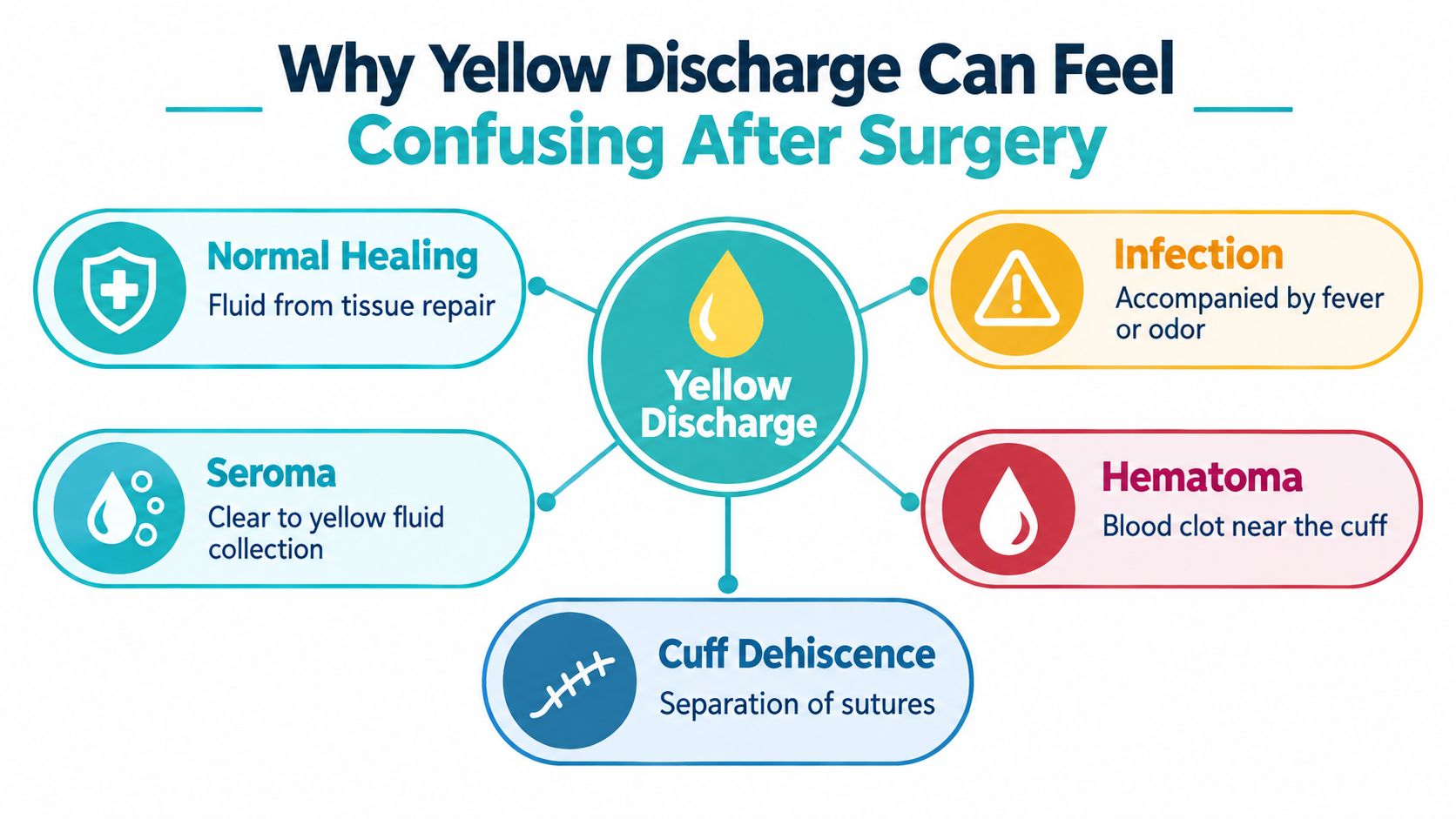
What Actually Decides the Answer
Light vaginal bleeding or discharge is a common part of recovery, not an automatic sign of infection. The National Health Service guidance on hysterectomy recovery notes that discharge is usually lighter than a menstrual period, may continue for up to 6 weeks, and can shift from bloody or pink to yellowish as healing progresses.
That baseline still leaves a middle ground. A small amount of pale, mild-smelling fluid that's slowly decreasing fits healing. A sudden increase, a strong odor, or new pain changes the picture entirely, even if the color hasn't changed at all.
Yellow by itself is rarely the deciding factor. Odor, volume, timing, pain, and temperature tell you far more than shade.
Two questions organize everything that follows. First, does this discharge match what a healing surgical closure normally produces? Second, has anything about the pattern moved in the wrong direction? Yellow discharge after hysterectomy becomes much less confusing once you judge the trend, not a single pad check.
In practice, I ask women to note four things before they call or worry.
- Amount: Is it less than yesterday, about the same, or clearly more?
- Odor: Is it mild and familiar, or sharp, sour, or foul?
- Body signals: Do you have fever, pelvic pressure, or worsening pain?
- Timing: Did it start early and fade, or appear after a quiet stretch?
Those four answers usually place you in one of three zones, routine healing, watch closely, or call today.
How the Vaginal Cuff Heals and Why Fluid Appears
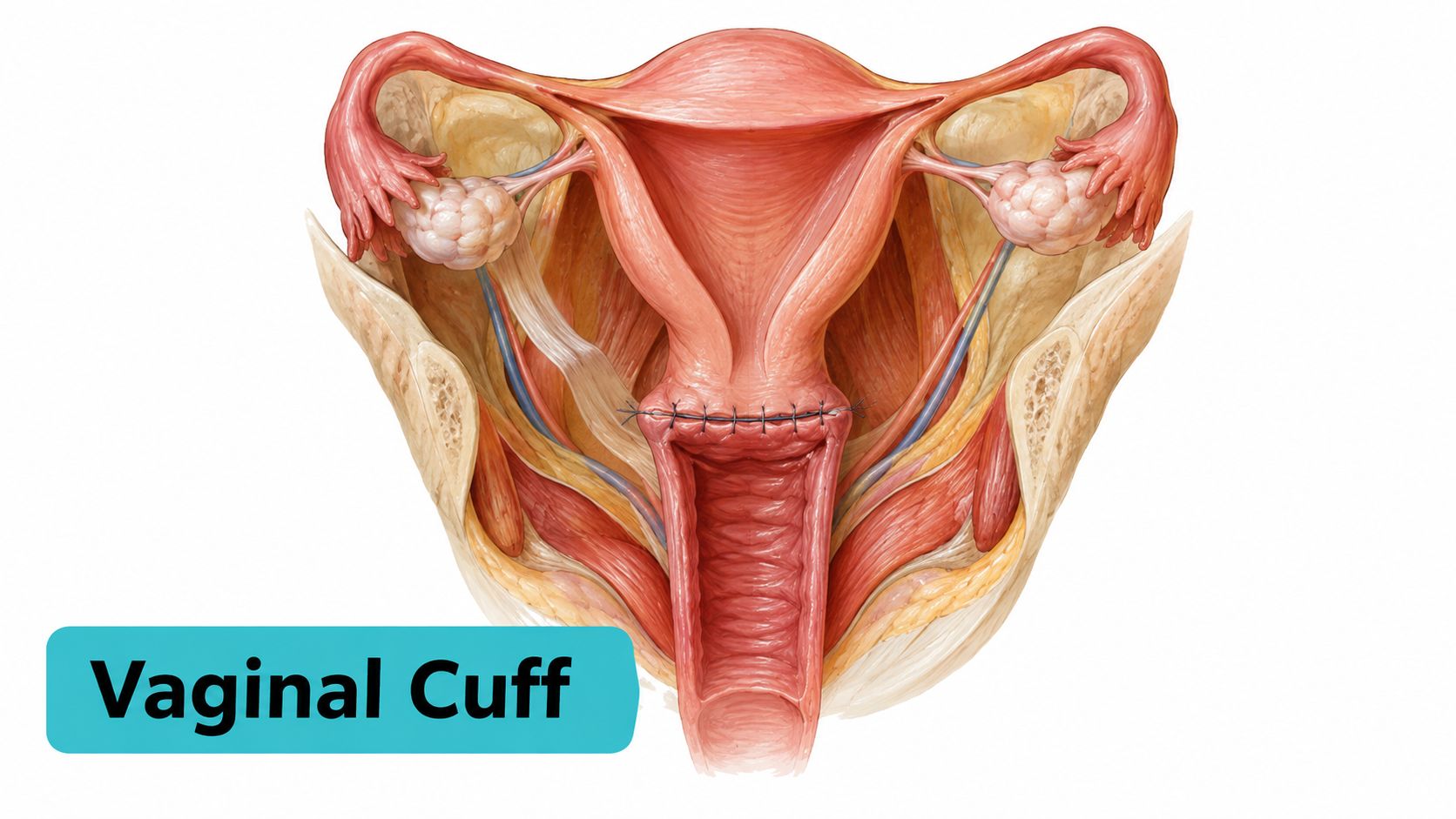
When the uterus is removed, the surgeon closes the top of the vagina with sutures. That closure is the vaginal cuff, and it's an internal wound even though you can't see it. Like any wound, it produces fluid while it seals.
The illustration below shows where that closure sits after surgery.
Three Stages You Can Actually See
Early on, inflammation brings blood flow and immune cells to the cuff. Discharge tends to look red or pink because it carries fresh blood mixed with surgical fluid. That's expected in the first days.
Next, new tissue forms across the closure. Old blood oxidizes and turns brown, then the fluid thins and lightens. Many women notice cream or pale yellow at this point. That color often reflects healing tissue fluid, white blood cells doing cleanup work, and tiny fragments of dissolving suture material working loose.
Finally, remodeling strengthens the tissue. Output should taper to occasional spotting, then stop. A brief uptick can happen when a suture dissolves, but the overall direction stays downward.
Why Your Friend's Recovery Looked Different
Surgical approach changes the details. A vaginal procedure works through the cuff area directly. Laparoscopic and robotic approaches use small abdominal incisions and internal suturing, while an open abdominal surgery adds a larger skin incision that heals on its own track.
Those differences affect how much fluid drains vaginally, how quickly sutures dissolve, and how soreness feels. Two women can both heal normally and describe very different discharge. What should stay consistent is the pattern, light, non-foul, and gradually decreasing over the early weeks.
Practical rule: Healing fluid follows a fading curve. If volume and discomfort are both trending down week by week, the cuff is usually doing its job.
Think of the cuff like a stitched seam inside a warm, moist space. It can't form a dry scab the way skin does, so fluid is how it clears debris while it knits together.
Reading the Clues in Color, Amount, and Smell
Color gives you a starting point, not a diagnosis. Pale yellow or cream fluid in the first weeks often means tissue fluid and dissolving sutures. Bright yellow that's thick like mucus deserves closer attention, and greenish discharge moves out of the routine range.
Texture matters as much as shade. Thin, watery, or slightly creamy discharge that stays light on a panty liner fits healing. Thick, cloudy, or clumpy drainage suggests concentrated cellular material, which is what you'd expect if infection were building rather than resolving.
Comparing the Combinations
| Characteristic | Usually Normal | Call Your Provider |
|---|---|---|
| Color | Pink fading to pale yellow or cream | Dark yellow, green, or gray |
| Amount | Light, slowly decreasing | Increasing, soaking pads, or sudden gush |
| Odor | Mild, not noticeably unpleasant | Strong, sour, or foul smell |
| Pain | Steady, gradually improving soreness | Worsening pelvic or abdominal pain |
| Temperature | Feeling well, no chills | Fever, chills, or flu-like malaise |
| Bleeding | Spotting that's tapering off | Bleeding as heavy as a period or heavier |
Smell Is the Clue Women Underreport
Many patients apologize for mentioning odor, but clinicians rely on it. Healing discharge shouldn't have a strong or unpleasant odor. A sour, fishy, or rotten smell points toward bacterial activity, especially when it arrives with thicker fluid.
Don't mask it before an appointment. Scented washes and douches hide a useful diagnostic clue and can irritate healing tissue. Note when the smell started and whether it's getting stronger.
Volume tells a similar story. Needing a liner you change for freshness is different from soaking pads or feeling fluid leak when you stand. A sudden heavy watery discharge after a dry stretch isn't a wait and see pattern.
Vaginal Fluid Versus Incision Drainage
Keep the source straight. Discharge from an abdominal incision follows stricter rules than vaginal fluid. Thick yellow or green drainage from a skin incision, spreading redness, warmth, or opening edges should prompt a call, particularly with fever.
If you can't tell where fluid is coming from, say so when you phone. That detail changes what the surgical team asks next and whether they want to see you the same day.
Infection, Seroma, Hematoma, and Cuff Dehiscence
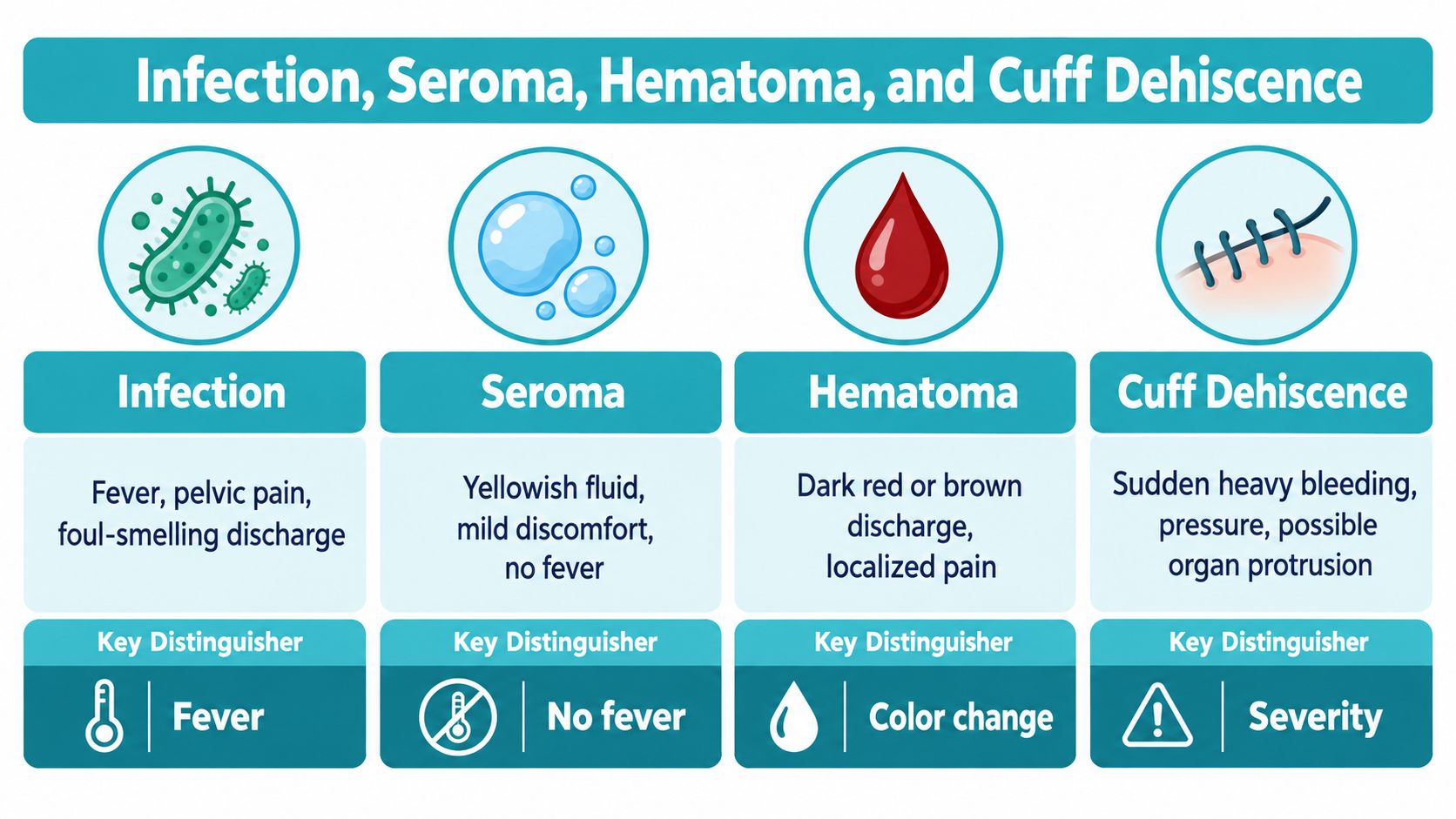
Four problems account for most concerning discharge, and they don't look alike once you know their signatures. Lumping them together as possible infection is where many articles leave patients stranded.
The comparison below separates them by their most telling features.
Cuff Infection
Infection at the cuff usually announces itself with a cluster, not a single symptom. Expect foul-smelling or cloudy discharge plus fever, pelvic tenderness, and pain that's worsening instead of easing. On exam, a clinician may find cuff inflammation and may take swab cultures to guide antibiotics.
Published rates vary widely by population and approach. In a 2017 study of 887 hysterectomy patients reporting 16 cuff infections, a rate of 1.80%, all diagnoses were supported by positive cultures, while a separate multicenter surveillance study from 2017 through 2019 reported 12.6% prevalence. That spread is the point. Yellow discharge alone can't establish infection, and self-treating with leftover antibiotics can mask cultures without clearing the source.
Seroma and Hematoma
A seroma is a pocket of clear serous fluid that collects near healing tissue. If it drains through the cuff, discharge may look pale yellow and watery, often with pelvic pressure but no foul odor and no fever. A hematoma is collected blood. When it breaks down and drains, fluid tends to look dark red, brown, or rusty yellow, sometimes after a spell of localized aching.
Both can resolve, but both can also become infected. New odor or fever in either pattern changes the management, so report the change rather than assuming the collection is still sterile.
Cuff Dehiscence
Dehiscence means the cuff closure separates. It's rare, but it's the highest consequence item on this list. Warning signs include sudden watery or bloody discharge, severe pelvic pain or pressure, and tissue felt or seen at the vaginal opening, sometimes after intercourse, lifting, or straining before clearance.
That's an emergency assessment, not a home remedy situation. It's also distinct from longer term support problems such as vaginal cuff prolapse after hysterectomy, which develops through weakened support rather than an acute opening of fresh sutures.
If discharge arrives with sudden pain, pressure, or anything protruding, skip the waiting period and seek urgent surgical review.
Recovery Timeline and the Red Flags That Break the Pattern
Timing turns a confusing symptom into a readable one. The same pale yellow fluid that fits week two can mean something different when it appears fresh at week seven.
The timeline below shows the usual arc and the warnings that interrupt it.
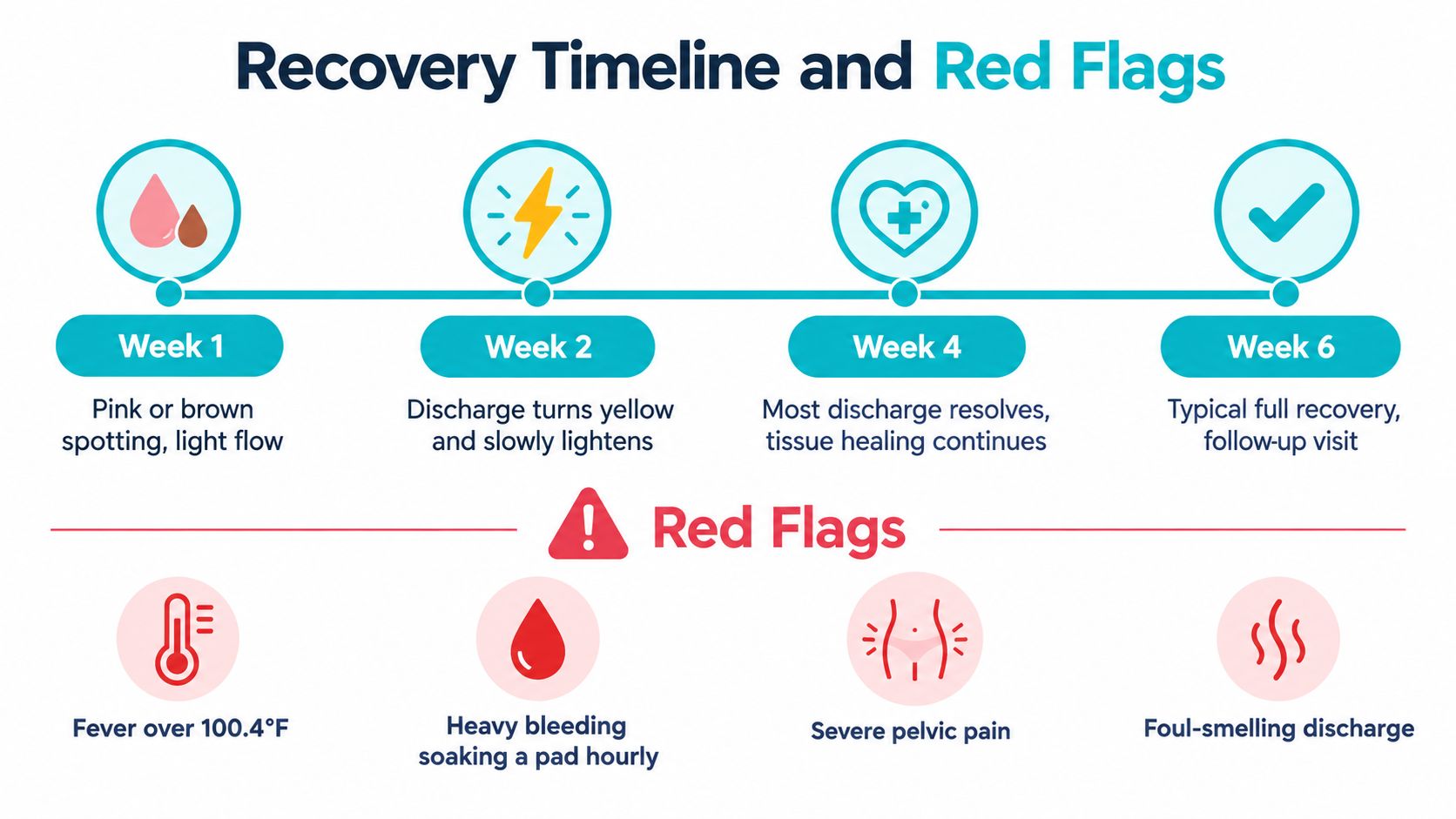
In weeks one and two, spotting typically moves from red to pink to brown, then lightens toward yellow. Soreness should ease gradually, and daily walking usually gets easier. Small fluctuations after a more active day are common.
From weeks three through six, most women see only minor cream or yellow discharge as sutures finish dissolving. Many are fully clear around their follow-up visit. A useful companion for planning activity during this window is a week by week hysterectomy recovery timeline guide, paired with your surgeon's own restrictions.
If you're arranging help at home during these weeks, structured Life Primary Care home recovery support can make it easier to rest, track symptoms, and get reviewed promptly instead of pushing through warning signs alone.
This short video walks through what recovery typically looks like as healing progresses.
Red Flags at Any Point
Yellow discharge becomes clinically concerning when it's thick, greenish, or foul-smelling, or when it comes with worsening pelvic pain, tenderness, malaise, or increasing bleeding. The MedlinePlus guidance on hysterectomy discharge care supports a practical threshold for prompt medical review at a temperature of at least 38.0°C (100.4°F).
Call the same day for these pattern breaks.
- Fever or chills: Especially with malodorous discharge or feeling unwell.
- Increasing volume: Heavier flow after days of improvement, or bleeding like a period.
- Worsening pain: Pelvic or abdominal pain moving the wrong direction, or calf pain and swelling.
- Pressure or tissue: A bulging sensation or anything visible at the vaginal opening.
Severe pain, heavy bleeding, confusion, breathlessness, or a racing flu-like illness warrants urgent or emergency care rather than a portal message.
Self-Care at Home and What to Avoid
Good home care is mostly about protecting the cuff from bacteria and pressure while it seals. You're not trying to clean the discharge away. You're giving tissue a quiet environment to close.
Habits That Support Healing
- Use pads, not tampons: Pads let fluid drain and let you monitor amount and color accurately.
- Choose breathable cotton underwear: Change it daily, or sooner if it gets damp.
- Clean gently: Wash the vulva with warm water and mild unscented soap, wipe front to back, and pat dry.
- Track, don't test: Note pad changes, odor, and temperature if you feel feverish, instead of probing the area.
Wait for surgical clearance, generally at the four to six week visit and after discharge has stopped, before resuming intercourse. That restriction protects a closure that can look fine externally while it's still gaining strength. If penetration later feels painful, guidance on pain with intercourse after hysterectomy can help you separate scar sensitivity from pelvic floor guarding.
What Doesn't Help
Skip douches, vaginal washes, steaming, and leftover antibiotics. Each one either irritates healing tissue, disrupts normal flora, or hides symptoms your clinician needs to assess. Avoid pools, hot tubs, and heavy lifting or straining until your team clears you, since water exposure and pressure both work against an unsealed cuff.
Don't push through worsening pain to prove you're recovering well. Pain that escalates after activity is information, and it's worth reporting before your next scheduled visit.
Once your surgeon confirms the cuff has healed, pelvic floor physical therapy at Lake City Physical Therapy can address scar mobility, gentle lymphatic drainage for lingering swelling, core coordination, and a graded return to exercise. Timing is the trade-off that matters. Started after clearance, therapy supports recovery. Started to manage suspicious discharge, it delays the surgical review you need.
Your Personal Decision Checklist for the Next Few Weeks
Keep this on your phone and run through it whenever discharge changes. It works because it combines the clues instead of reacting to color in isolation.
Ask These Six Questions
- Color and texture: Is it pale and thin, or dark yellow, green, thick, or cloudy?
- Odor: Could you describe it as mild, or has it turned foul?
- Amount: Is it decreasing across days, or soaking more pads than yesterday?
- Temperature: Do you feel feverish, chilled, or generally unwell?
- Pain and pressure: Is soreness easing, or do you feel worsening pain, pressure, or protrusion?
- Trigger and timing: Did this start after sex, lifting, straining, or after a quiet, dry stretch?
A pattern of light, mild-smelling yellow discharge that's steadily decreasing, with improving pain and no fever, is reasonable to keep monitoring. Write down what you see so your follow-up conversation is based on dates, not memory.
Any yes on foul odor, fever, worsening pain, heavy bleeding, sudden watery flow, pelvic pressure, or tissue protrusion means contact your surgical team the same day. Severe versions of those symptoms mean urgent care.
Escalation principle: New or worsening symptoms after initial improvement deserve review, even weeks later.
That timing point matters more than most discharge sheets admit. Discharge that starts or changes after activity, or after you've already turned a corner, can relate to the cuff rather than routine healing, which is why a 2025 systematic review of vaginal cuff dehiscence frames late changes as a reason for surgical review rather than self-treatment or pelvic floor exercise first.
Bring your notes to the four to six week visit and ask directly whether the cuff has fully healed before resuming intercourse, baths, swimming, or heavier exercise. Recovery keeps going for months after discharge stops, and rebuilding pelvic floor strength, scar mobility, and confidence with activity is a sensible next phase once healing is confirmed.
If you're past surgical clearance and still dealing with pelvic pressure, scar sensitivity, leaking, or uncertainty about returning to exercise and intimacy, the pelvic health team at Lake City Physical Therapy offers individualized post-hysterectomy rehabilitation including scar mobility work, pelvic floor retraining, and graded return to activity plans. Visit us online to find a location across North Idaho and Eastern Washington or to book an evaluation and get a recovery plan matched to your stage of healing.

