Bladder Pain During Pregnancy: Causes, Red Flags and Relief
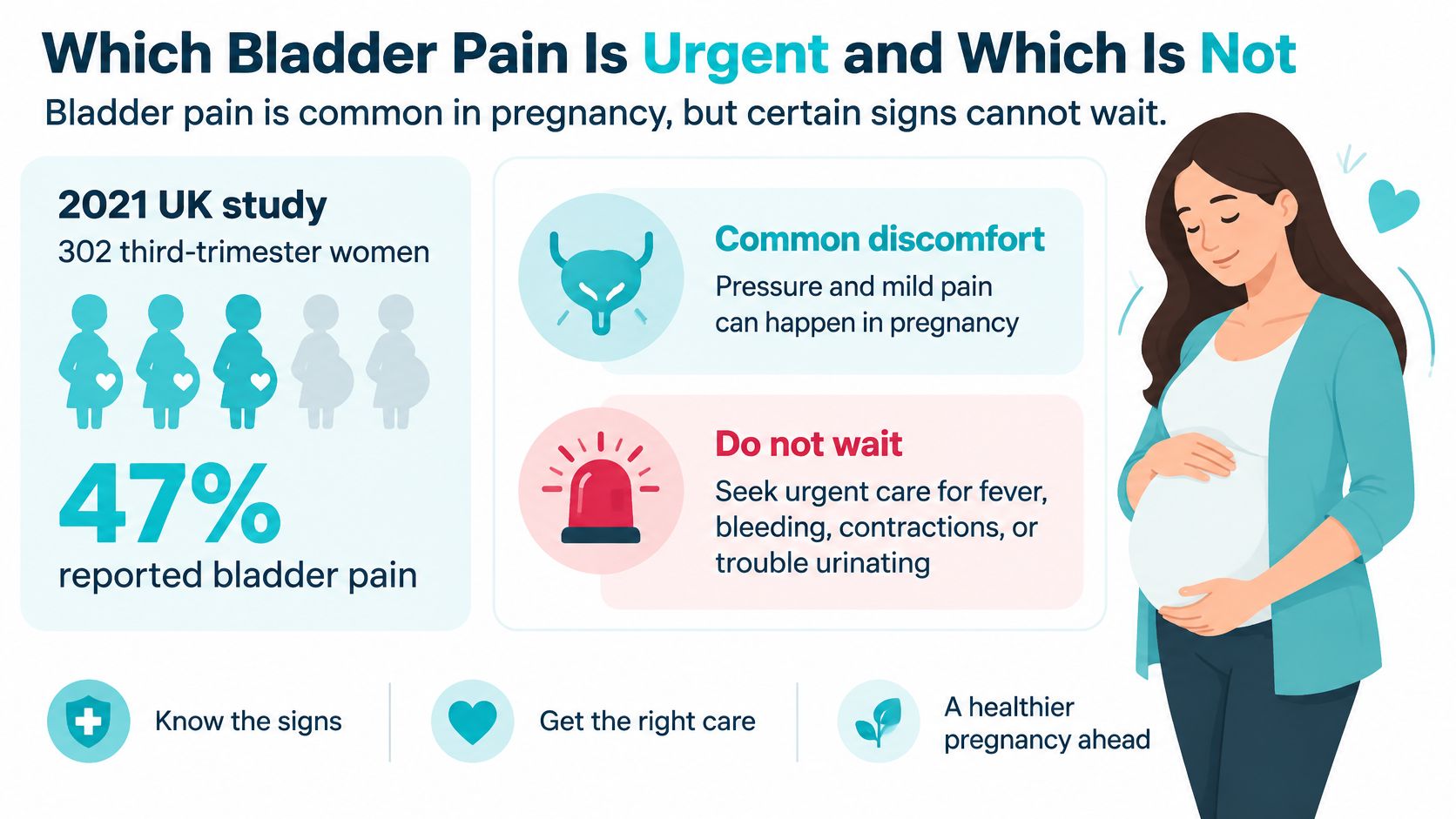
Bladder pain is common in late pregnancy, but common doesn't mean harmless. In a 2021 United Kingdom study of 302 third-trimester women, 47% reported bladder pain. That single-center finding isn't a worldwide prevalence estimate, but it challenges the idea that bladder discomfort happens only when you have an infection.
The practical question is what's causing your pain and how quickly you need help. Pregnancy pressure, a urinary tract infection, and pelvic muscle tension can feel surprisingly similar. Knowing which symptoms need testing, and what to do when testing is negative, helps you avoid both unnecessary treatment and unsafe reassurance.
Which Bladder Pain Is Urgent and Which Is Not
Mild bladder pressure can accompany pregnancy changes without signaling an emergency. Burning, persistent pain, or feeling unwell deserves a different response, even if you've also been urinating frequently throughout pregnancy.
Use the symptom pattern, rather than pain intensity alone, to decide what to do. A kidney infection can begin with urinary symptoms, while lower abdominal discomfort with bleeding or leaking fluid needs obstetric assessment rather than a bladder remedy.
Match your symptoms to an action
Bladder pain symptoms and the action for each
| Symptom | Possible meaning | What to do |
|---|---|---|
| Mild pressure, frequent urination, no burning | Common pregnancy pressure | Track it and mention it at your next prenatal visit |
| Burning or pain when urinating | Possible urinary tract infection | Contact your clinician the same day for urine testing |
| Cloudy urine or blood in urine | Possible infection or other cause | Contact your clinician promptly |
| Fever, chills or shaking | Possible kidney infection | Seek urgent care now |
| Back or flank pain with nausea or vomiting | Possible pyelonephritis | Seek urgent care now |
| Lower belly pain with bleeding or fluid leaking | Possible obstetric emergency | Seek emergency care now |
| Constant pain that worsens over several days | Cause unclear, needs assessment | Book a visit and do not self-treat |
For mild, intermittent pressure, tracking is reasonable only when you otherwise feel well and have no warning signs. New discomfort that doesn't settle, interferes with activity, or becomes painful rather than merely noticeable should be discussed sooner.
Burning, cloudy urine, or visible blood warrants a same-day call. Cloudiness alone doesn't prove infection, but pregnancy isn't the time to decide that a new urinary change is harmless without advice.
Fever, chills, flank pain, or vomiting needs urgent evaluation. Flank pain means pain along your side or back near the lower ribs, not an ache across your hips.
This visual summarizes the distinction between common discomfort and symptoms that shouldn't wait.
Have these details ready when you call
- Onset and location: Note when pain started and whether it's above the pubic bone, in your side, or elsewhere.
- Temperature: Give the actual reading if you've taken it.
- Urine changes: Describe burning, color, cloudiness, blood, or difficulty passing urine.
- Pregnancy symptoms: Report bleeding, fluid leaking, or contractions immediately.
An inability to urinate, severe pain, or concerning contractions also calls for urgent assessment. Don't wait for every warning sign to appear.
Why Bladder Pain Changes Across the Trimesters
The bladder sits close to the uterus and rests above the pelvic floor muscles. As pregnancy progresses, changes in space, muscle coordination, and bowel function can produce discomfort in the same general area.
Frequent urination may start early, but increasing uterine pressure becomes a more obvious contributor as pregnancy advances. The timing offers clues, not a diagnosis: infection and noninfectious discomfort can occur together.
Use the pattern as a clue
Common causes of bladder pain by trimester
| Cause | Usual trimester | Typical pattern | Clue that points to it |
|---|---|---|---|
| Uterine pressure on the bladder | Second and third | Pressure and frequent small voids | May feel worse lying down or later in the day |
| Reduced bladder capacity | Late third | Urgency and nighttime urination | Repeated waking to urinate |
| Pelvic floor overactivity or strain | Second and third | Pelvic pressure, worse with a full bladder | May ease with rest or position change |
| Pelvic girdle pain | Second and third | Pain over the pubic area or hips | Worse when walking or turning in bed |
| Constipation | Any trimester | Pressure and straining | Hard stools or bloating |
| Urinary tract infection | Any trimester | Burning, urgency, cloudy urine | Urine testing interpreted with symptoms supports infection |
Uterine pressure and reduced bladder space can make a smaller amount of urine feel uncomfortable. Nighttime trips may become more disruptive late in pregnancy, but pressure alone shouldn't be assumed to explain persistent pain.
The pelvic floor can also become tense or guard against discomfort. Pain that changes with movement, rest, or bladder fullness may involve these muscles, though those clues don't rule out infection.
Pelvic girdle pain is more closely linked to loading and movement. Turning in bed, climbing stairs, or walking may provoke pain over the pubic area that you could mistake for bladder pain.
Constipation adds another source of pressure. Hard stools, bloating, and straining are worth mentioning even if your main concern feels urinary.
Why symptoms alone aren't enough
Urinary tract infections affect approximately 8% of pregnancies, according to the American College of Obstetricians and Gynecologists. That's why a change in urinary symptoms deserves attention rather than an automatic explanation of pregnancy pressure.
Leakage is a separate symptom from pain, although they can coexist. This guide to urinary incontinence during pregnancy explains that distinction.
Record whether discomfort changes with position, activity, bladder filling, drinks, or bowel movements. Bring the pattern to your appointment, but don't use it to diagnose yourself.
Telling Infection From Pelvic Pain When the Test Is Clear
If your bladder hurts but your urine test is negative, could infection still be the cause? Sometimes further testing is needed, particularly if the initial test was a dipstick rather than a urine culture. A negative result is useful information, but it doesn't explain ongoing pain by itself.
Frequency, urgency, and nocturia, meaning waking at night to urinate, can occur without infection during pregnancy. The Merck Manual's guidance on urinary tract infection in pregnancy supports urine testing and early prenatal culture screening, with results interpreted alongside symptoms and clinical context.
Know which test you had
A dipstick gives a rapid indication of certain urine changes. A urine culture checks whether bacteria grow and can help guide antibiotic selection when treatment is needed.
A positive dipstick alone doesn't establish infection, and a negative dipstick shouldn't end the discussion when symptoms remain concerning. Ask whether your sample was sent for culture and how you'll receive the result.
Practical rule: A clear test should lead to a clearer plan, not dismissal of persistent pain.
Suppose you're in your third trimester, have frequent discomfort above the pubic bone, and your dipstick is negative. You don't have burning or fever, but sitting through work has become uncomfortable. The next step is to describe that persistent pain to your prenatal clinician, not assume that a negative screening test proves it's muscular.
Different symptoms call for different follow-up
- Negative test with suprapubic pain: Suprapubic means just above the pubic bone. Persistent tenderness or aching needs clinician assessment for urinary, pelvic, bowel, and pregnancy-related causes.
- Frequency without burning or pain: Track trips and associated symptoms, then review them at your prenatal visit if you otherwise feel well. A sudden change or developing discomfort justifies an earlier call.
- Burning with a negative dipstick: Contact your clinician about culture or repeat testing. Don't start leftover antibiotics or rely on another home dipstick to settle the question.
The European Association of Urology guidelines describe a study in which pyelonephritis occurred in 2.4% of untreated or placebo-treated bacteriuria-positive pregnant women, compared with 0.6% of bacteriuria-negative women. The guideline also notes that much of the supporting evidence is old and rates its pregnancy screening-and-treatment recommendation as weak.
That uncertainty doesn't make screening unimportant or justify ignoring a positive culture. It supports clinician-directed testing and treatment, rather than assuming every episode of urgency needs antibiotics.
Build a plan for pain that persists
When symptoms continue after treatment or cultures don't support infection, ask your clinician what should happen next. A useful plan includes:
- Reassessment when symptoms change: New burning, worsening pain, or illness may require another sample and examination.
- Medication review: Bring prescription medicines, supplements, and any urinary symptom products you've taken.
- Obstetric review for new or severe pain: Don't route unexplained pregnancy pain straight to rehabilitation.
- Pelvic health assessment after medical evaluation: Persistent urgency, pelvic pain, or painful intercourse may justify examining muscle tension and coordination.
A hypertonic pelvic floor is one possible contributor when muscles remain overly tense or struggle to relax. Constipation, pelvic girdle dysfunction, and bladder-pain conditions may also need consideration; a negative culture doesn't establish any of these diagnoses.
Pelvic floor rehabilitation never replaces infection evaluation. If fever, chills, flank pain, vomiting, or feeling systemically unwell develops while you're waiting for follow-up, seek urgent assessment rather than continuing the nonurgent plan.
Safe Self-Care Steps for Bladder Pressure at Home
Home care is appropriate for mild pressure without warning signs, or alongside a plan your prenatal clinician has recommended. It isn't a treatment for a suspected infection or unexplained worsening pain.
Make bathroom trips less strained
-
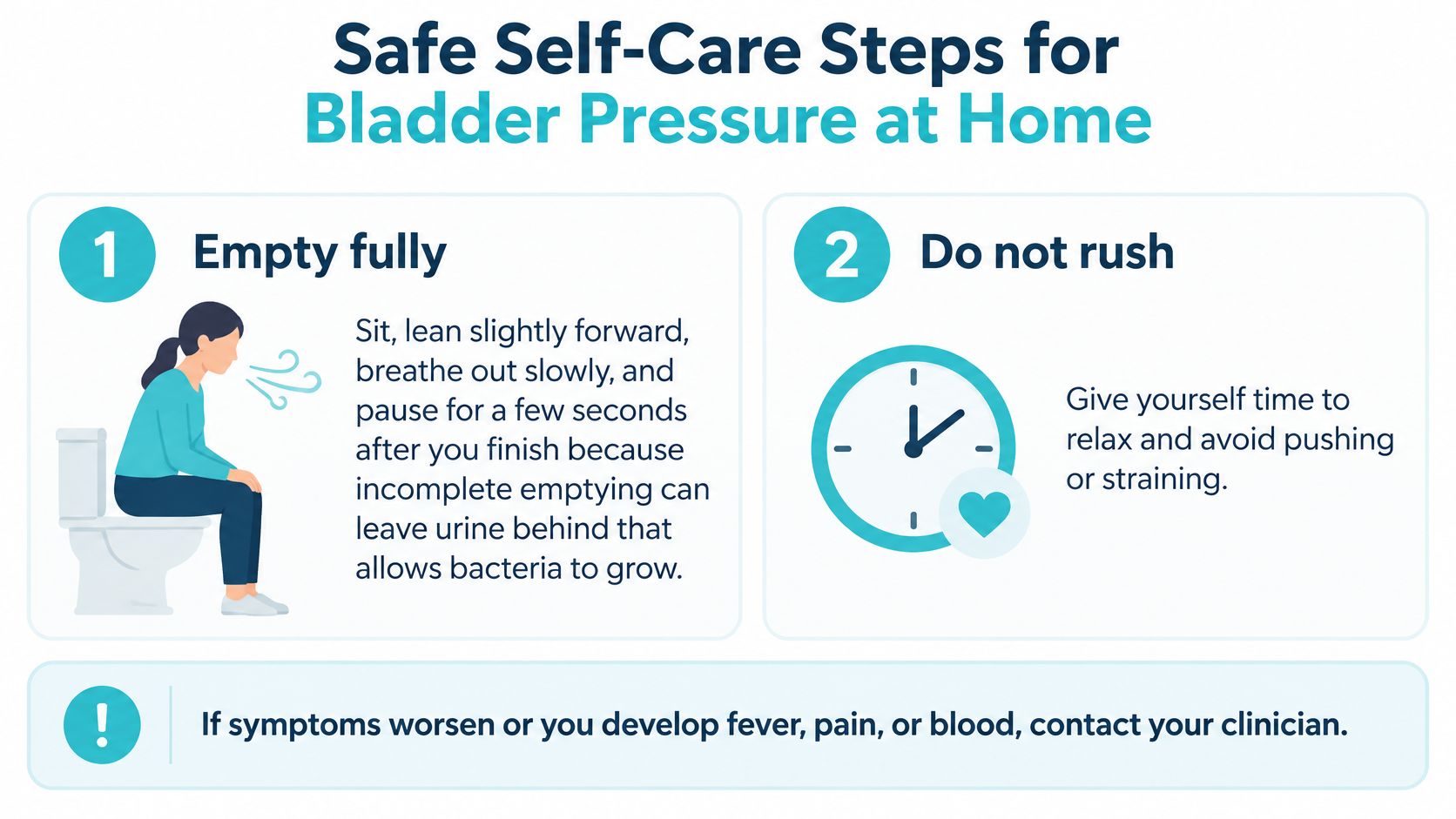
Sit and allow your bladder to empty. Keep your feet supported, lean slightly forward, and breathe out gently rather than hovering over the toilet. Pause after the stream stops, but don't push to force out more urine.
-
Don't hold urine through discomfort. Take a bathroom break when you need one instead of repeatedly delaying it during work, travel, or errands. At the same time, avoid forcing yourself to urinate constantly just in case.
These positions can make it easier to relax during a bathroom visit.
Adjust fluids, bowel habits, and positioning
-
Drink steadily rather than restricting fluids. Follow your prenatal clinician's hydration advice, especially if you've been given a fluid limit. If large evening drinks worsen night waking, shift more of your intake earlier without cutting overall hydration excessively.
-
Notice drink-related irritation. Caffeine and carbonated drinks worsen urgency or discomfort for some people. Try reducing a suspected trigger rather than eliminating many foods and drinks at once.
-
Address constipation gently. Include fiber-containing foods, maintain fluids, and walk as your pregnancy care team allows. Avoid bearing down, and ask about pregnancy-appropriate constipation treatment if hard stools continue.
-
Change position before pressure builds. Try side-lying with a pillow between your knees or take a break from prolonged sitting. Choose the position that feels better rather than insisting on a particular posture.
-
Practice relaxed belly breathing. Let your lower ribs and abdomen expand comfortably as you inhale, then exhale without clenching your buttocks or pulling your pelvic floor upward. Stop if the exercise makes you dizzy or increases discomfort.
-
Keep hygiene simple. Wipe front to back and urinate after intercourse if you need to. These habits don't guarantee infection prevention, and painful intercourse deserves assessment rather than being pushed through.
Comfort measures should make symptoms easier to manage, not give you a reason to postpone needed testing.
Keep a simple log of pain timing, bladder fullness, drinks, bowel movements, and what brings relief. If your clinician agrees that observation is appropriate, use these adjustments over the coming week and review whether they help; don't wait out that period if symptoms worsen.
Avoid leftover antibiotics and unsupervised urinary symptom medicines. Check before taking any over-the-counter pain reliever, because suitable choices depend on pregnancy stage, medical history, and the reason for your pain.
How Prenatal Pelvic Floor Therapy Eases Bladder Pain
Pelvic floor therapy may help when a medical evaluation suggests that muscles, movement, or pressure management contribute to bladder-area discomfort. It doesn't treat a bacterial infection, and not every person with bladder pain needs strengthening exercises.
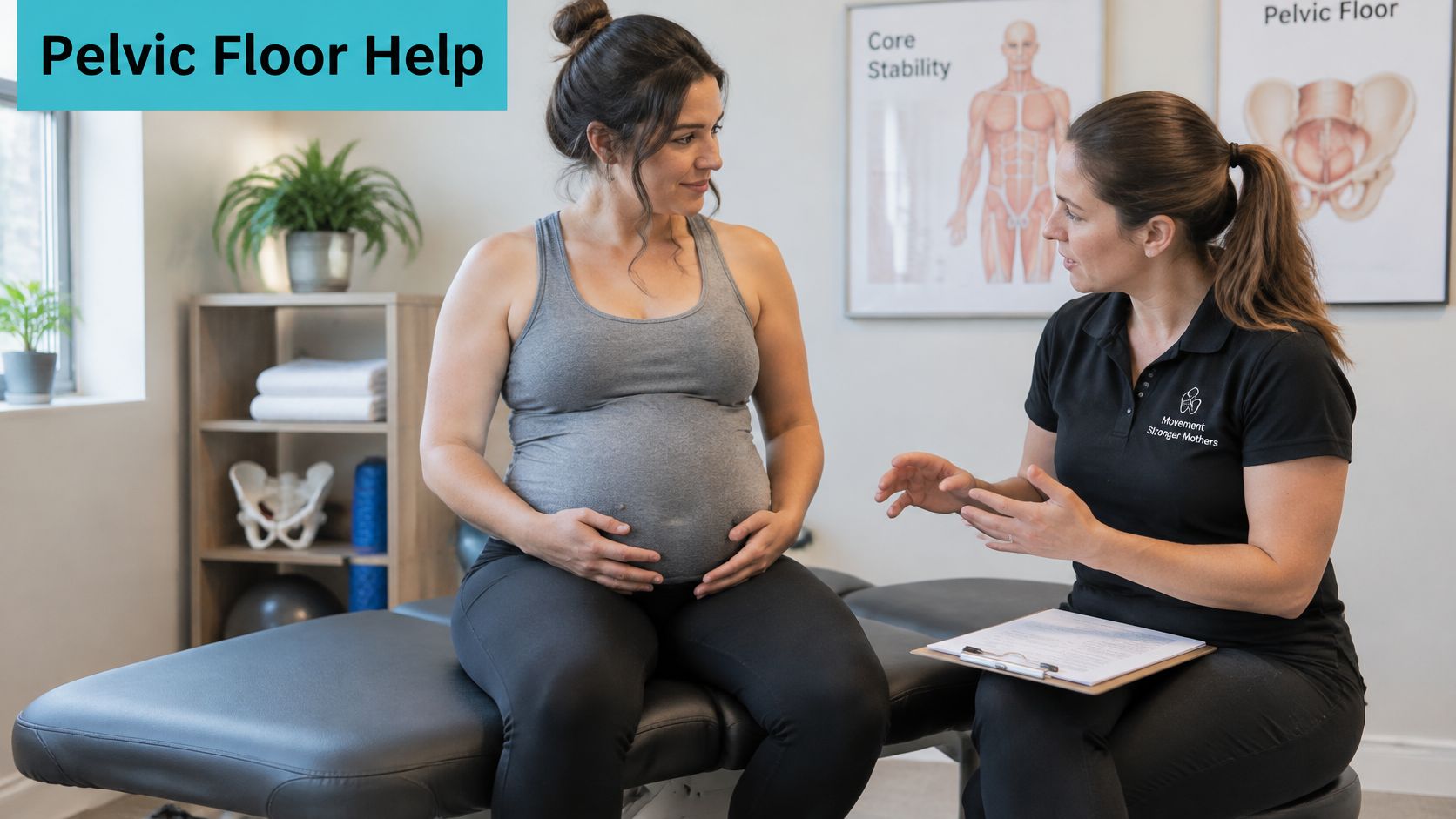
A prenatal assessment starts with your symptoms and comfort, not an automatic internal examination.
What an appointment can involve
A therapist typically asks about bladder and bowel habits, pain triggers, sleep, intercourse, and daily movement. They may assess breathing, posture, hip movement, and how you coordinate muscle contraction and release.
An external or internal pelvic floor assessment may be discussed only when appropriate and with your consent. You can ask what the examination would clarify, decline it, or stop at any point.
Symptom pattern and the pelvic floor focus
| Symptom pattern | Likely pelvic floor pattern | Usual therapy focus |
|---|---|---|
| Urgency and frequent small voids | Overactive or slow to relax | Relaxation breathing and downtraining |
| Pressure or pain with a full bladder | Tight or guarding | Release, gentle stretching and positioning |
| Leaking with cough or sneeze | Weak or poorly coordinated | Strength, coordination and lifting mechanics |
| Pain with intercourse | Tender or tight | Relaxation and graded desensitization |
These are possible patterns, not diagnoses based on symptoms alone. Downtraining means learning to reduce unnecessary muscle activity; it isn't the same as bearing down.
Why relaxation may come before strengthening
Consider someone with nighttime urgency, discomfort as the bladder fills, and muscle tenderness on assessment. Their therapist might begin with breathing coordination, comfortable resting positions, and gentle movement rather than repeated Kegels.
If walking or turning in bed also hurts, treatment may address hip support, pelvic girdle loading, and movement strategies. The home program should fit the examination findings and change if an exercise increases pain.
For additional educational context, the video below can accompany a discussion with your treating clinician.
Therapy can begin during pregnancy when appropriate and continue after birth as your needs change. For broader preparation discussions, The Axelrad Clinic's resource on gentle birth preparation for expectant mothers offers a separate topic to review with your maternity team, not a substitute for evaluating bladder pain.
Progress might mean less discomfort with bladder filling, easier walking, or less disruptive urgency. There's no guaranteed timeline or cure, and continuing pain should prompt reassessment rather than just adding more exercises.
Confirm Your Next Step With a Prenatal Pelvic Health Provider
Seek urgent maternity or emergency assessment first if you have warning signs. Don't book a routine therapy visit instead of getting help for fever, flank pain, vomiting, inability to urinate, bleeding, or leaking fluid.
For new burning or persistent bladder pain without those emergency signs, contact your obstetric or primary care clinician. They handle urine testing, medical examination, medication decisions, and referrals.
Ask for a specific medical plan
If you haven't had urine testing, say that you're pregnant, describe the pain, and ask whether you need urinalysis and a urine culture. If you've already been tested, ask which test was performed, whether results are final, and what should happen if discomfort continues.
When calling, give your symptom start date, temperature if measured, urine changes, and any bleeding or fluid leakage. State clearly whether the pain is getting worse or preventing sleep and normal activity.
Prepare for a pelvic health appointment
Once infection and other medical concerns have been addressed, a pelvic health physical therapist can assess persistent pressure, urgency, movement-related pain, or painful intercourse. We offer prenatal and postpartum physical therapy, pelvic floor physical therapy, and individualized pelvic floor exercises at Lake City Physical Therapy.
Bring the following so the appointment focuses on your actual pattern:
- Symptom log: Include timing, location, triggers, and what eases discomfort.
- Bladder and bowel details: Note fluids, urgency, leakage, constipation, and straining.
- Medical information: Bring available urine results and a current medication list.
- Your priorities: Explain whether sleep, walking, work, or intercourse is most affected.
Learning what a pelvic floor exam can involve may help you prepare questions about consent and assessment options. You don't need to arrive knowing whether your muscles are tight, weak, or poorly coordinated.
Use the urgency table to choose the right care setting, and keep your symptom log available for follow-up. Before ending any appointment, confirm whom to contact if symptoms change and what the next step will be if pain persists.
Lake City Physical Therapy offers prenatal and postpartum rehabilitation and pelvic floor physical therapy for symptoms that may continue after medical causes have been evaluated. Visit Lake City Physical Therapy to explore care for persistent pelvic pressure, urinary symptoms, or painful pelvic floor muscles and discuss an individualized assessment.

