Can I Take Progesterone Without Estrogen? a Practical Guide
Can I take progesterone without estrogen, or is that only safe in a very specific set of circumstances? The honest answer is yes, but the question is whether progesterone alone matches the problem you're trying to solve. A woman who still has a uterus, a woman without a uterus, and a woman avoiding estrogen for a medical reason can all end up with different answers.
The Short Answer and Why It Depends on Your Body
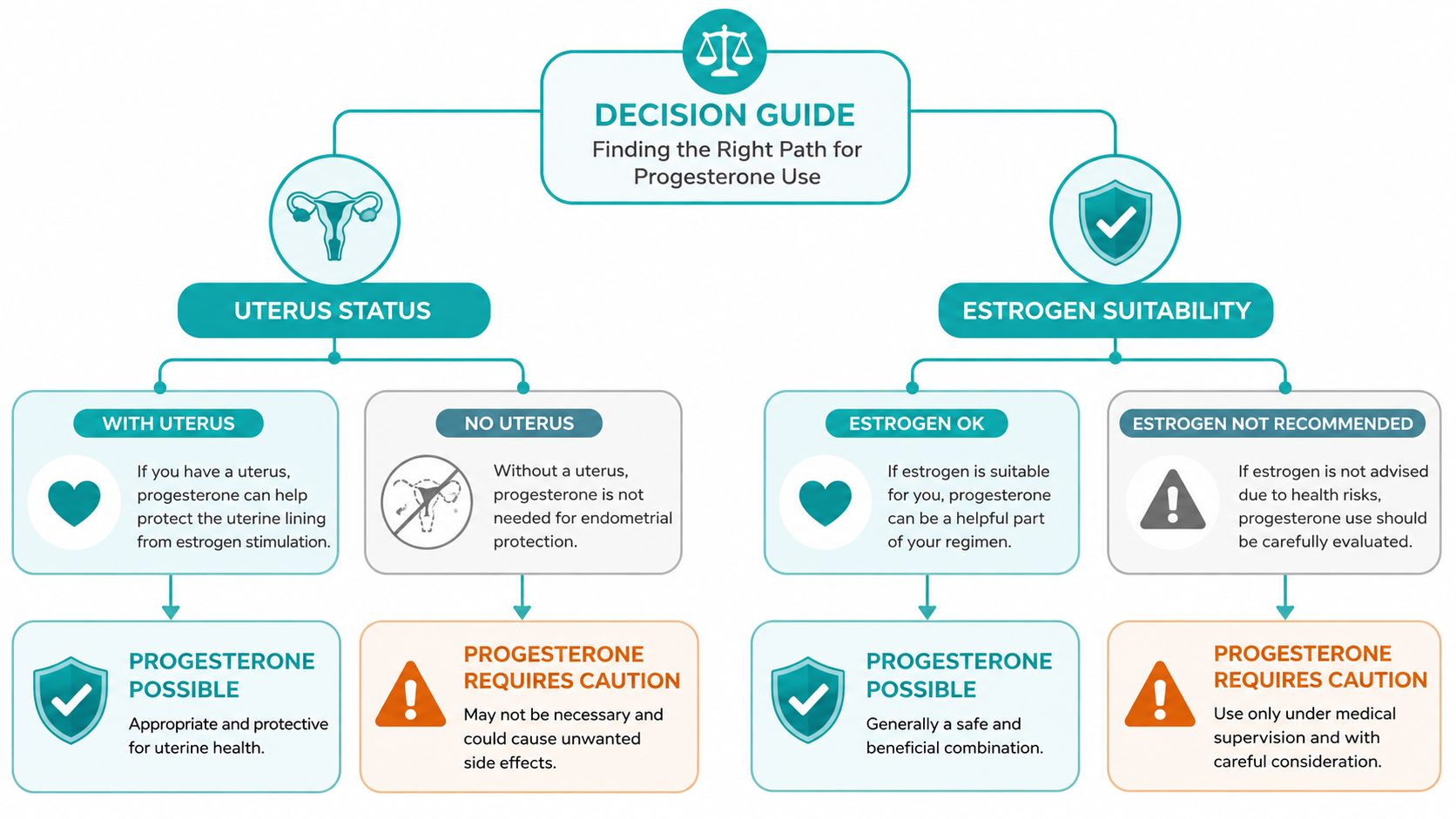
Yes, progesterone can be taken without estrogen, but that doesn't mean it's the right choice for everyone. The main fork in the road is simple, do you still have a uterus, and do you have a reason to avoid estrogen? Those two questions shape almost every decision that follows.
If you have a uterus and you're also using estrogen, progesterone is usually there to protect the uterine lining. A clinical summary in the provided search results notes that adding progesterone or another progestogen can reduce the estrogen-driven risk of endometrial cancer by about 90% when it's given for at least 10 to 12 days per cycle. If you don't have a uterus, that same source notes there's no medical need for progesterone solely for endometrial protection, which is why some people can take progesterone alone while others need it only as part of combined therapy. The clinical distinction is explained clearly in this uterus and progesterone overview.
A simple way to think about it
A patient in perimenopause might ask for “hormones” because sleep is worse, periods are erratic, and moods feel harder to manage. If she still has a uterus, the plan depends on whether estrogen is part of treatment, whether bleeding is already irregular, and whether progesterone is being used to calm symptoms or to protect the lining.
Practical rule: progesterone alone can make sense, but only when the symptom target and the anatomy match the prescription.
For people wondering whether low estrogen might be contributing to joint discomfort, this discussion often overlaps with other menopause symptoms. A separate resource on low estrogen and joint pain can help connect the dots when aches, sleep, and cycle changes are all showing up together.
The easiest way to avoid a bad guess is to separate two questions. First, are you trying to protect the uterus? Second, are you trying to treat a symptom that progesterone can improve on its own?
How Progesterone Works When Estrogen Is Not in the Picture
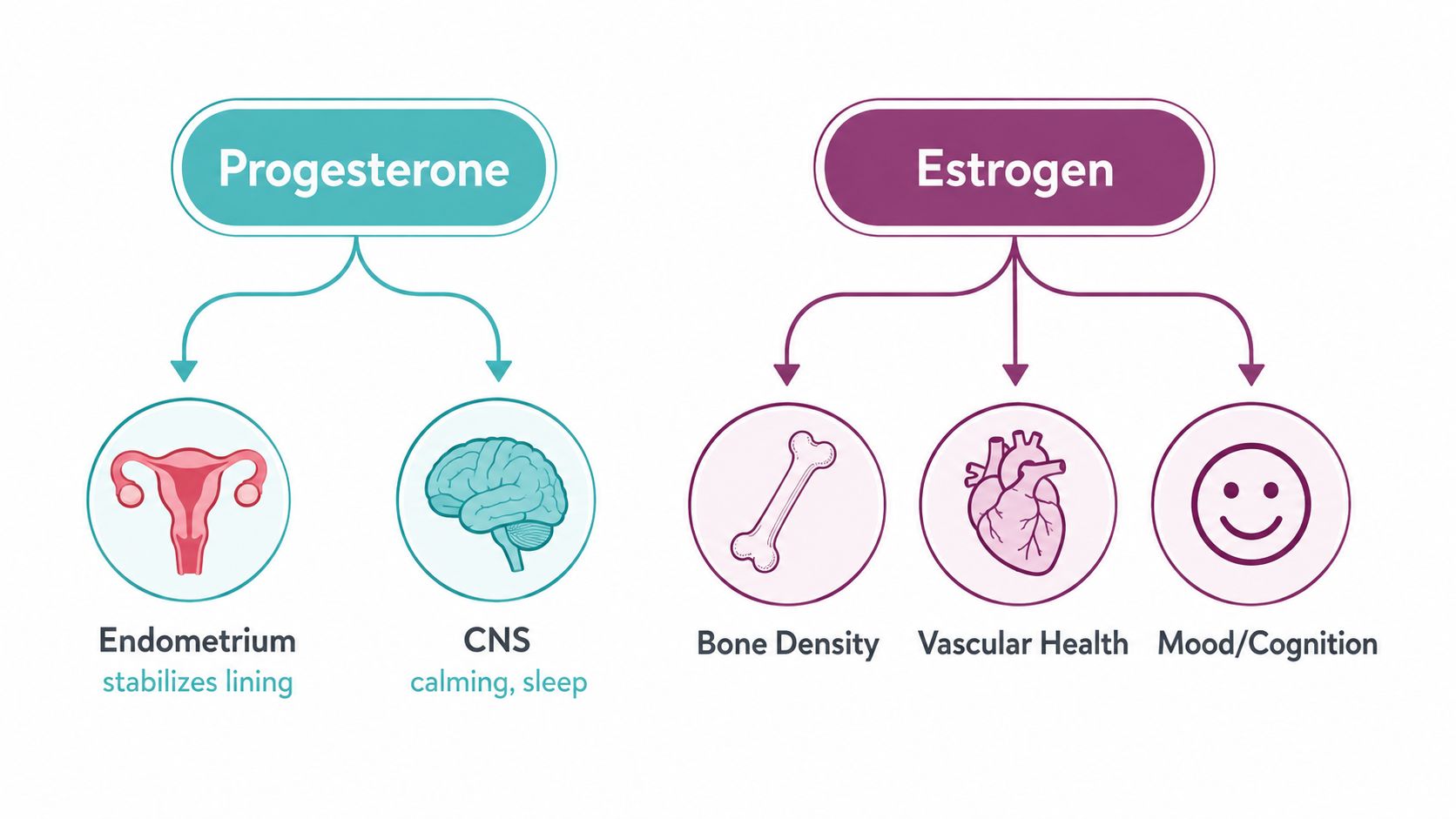
Progesterone has a different job when estrogen isn't part of the plan. It primarily acts on the endometrium and the central nervous system, while estrogen remains the main hormone for vasomotor symptoms, vaginal tissue health, and bone-related effects. That means progesterone alone may feel helpful for some complaints, but it won't behave like a substitute for estrogen.
A useful mental model is this, progesterone is the thermostat, estrogen is the furnace. Progesterone can help steady the system, especially when sleep, nervous-system arousal, or bleeding patterns are the problem. Estrogen is what directly maintains moisture, elasticity, and some of the tissue support that disappears when levels fall.
If you want a straightforward look at dosing patterns and common clinical uses, this progesterone dosing guide is a practical place to compare how clinicians think about the hormone in real treatment plans.
What progesterone can and can't do
In everyday terms, progesterone-alone therapy may be discussed for sleep disturbance, night sweats, and a sense of nervous-system calming. It can also be used when the goal is to stabilize a lining that's already fluctuating during the menopausal transition. That's a different promise from estrogen therapy, which is why the conversation has to stay symptom-specific.
Progesterone does not restore estrogen-deficiency effects such as vaginal dryness. The tissue that keeps the vaginal lining elastic and moist needs estrogen, not progesterone, so taking progesterone by itself won't fix every menopause complaint. That's the piece many readers miss when they hear that progesterone is “natural” or “safer.”
Progesterone can change how you feel, but it doesn't replace every function estrogen performs.
That difference matters most when a person's main concern is hot flashes, dryness, or long-term tissue support. In those cases, progesterone may be a partial answer or the wrong answer entirely, even if it's perfectly reasonable for someone whose main issue is sleep or cycle disruption.
Progesterone vs Progestins and Why the Formulation Matters
People say “progesterone” when they may mean several different hormone products. That's a problem, because micronized progesterone and synthetic progestins are not interchangeable in how they're made or how they're used. The route also matters, since oral, vaginal, and device-based options do very different jobs.
The simplest distinction is this. Progesterone is the hormone your body naturally makes, while progestins are synthetic compounds designed to act like progesterone in some ways. They may be used for cycle control, bleeding suppression, contraception, or lining protection, but they don't all deliver the same experience in the body.
| Common Progesterone and Progestin Formulations | Type | Common Route | Typical Use |
|---|---|---|---|
| Micronized progesterone | Progesterone | Oral | Sleep support, perimenopause, lining support |
| Progesterone cream | Progesterone | Topical | Often marketed for symptom relief, less standardized |
| Vaginal progesterone | Progesterone | Vaginal | Fertility support, local uterine effects |
| Levonorgestrel IUD | Progestin | Intrauterine | Contraception, bleeding control, lining protection |
| Medroxyprogesterone acetate | Progestin | Oral or injectable | Bleeding control, hormone regimens |
| Norethindrone | Progestin | Oral | Bleeding control, contraception, hormone regimens |
What this means in plain English is that “progesterone without estrogen” can describe more than one prescription. One person may be taking oral micronized progesterone at bedtime for sleep, while another has a progestin IUD that works mainly in the uterus. Those are very different treatments even though they both sit in the same hormone family.
A prescription choice usually comes down to the symptom being targeted, whether a systemic effect is needed, and how the person's body tolerates the product. Someone with insomnia may want an oral form that reaches the brain. Someone with bleeding control needs may benefit from a local or uterine-focused option. The label alone won't tell you enough.
When Clinicians Prescribe Progesterone Without Estrogen
The people who benefit most from progesterone-alone therapy usually have a very specific problem. A patient in perimenopause with irregular ovulation may be one of them, because progesterone can drop earlier and more erratically than estrogen. Another patient may not have a uterus, so progesterone is no longer being used for lining protection at all.
A common scenario is the woman whose periods have become unpredictable, sleep is worse, and she feels more wired at night. If her clinician thinks progesterone is the missing piece, it may be used on its own rather than paired with estrogen. That's especially true when the goal is symptom control rather than replacing every lost hormone effect.
When estrogen is the wrong fit
Progesterone alone also comes up when estrogen isn't a good option. That includes some people with estrogen-sensitive cancer risk or clotting concerns, where the treatment plan has to stay more cautious. A useful place to understand receptor-driven cancer language is Hirschfeld Oncology's explanation of ER, PR, and HER2 explained, especially if you've been told that hormone receptors matter in your cancer history.
Another group is people without a uterus. They don't need progesterone for endometrial protection, so the question becomes whether progesterone is being used for another purpose, like sleep or nervous-system calming. That's a completely different decision than combined hormone therapy.
Some clinicians also use progesterone-alone in carefully selected menopause scenarios where estrogen isn't appropriate or isn't desired. The key point is that the prescription is matched to a clearly defined goal, not to a vague idea that “any hormone is better than none.”
If estrogen is off the table, progesterone may still have a job, but only if the symptom target fits progesterone's biology.
That's why the same medication can look sensible in one chart and unnecessary in another. The right question isn't whether progesterone is allowed without estrogen. It's whether it's the best tool for the symptom in front of you.
What to Watch For on Bleeding Patterns and Side Effects
Bleeding changes are the most common reason people call their clinician after starting progesterone alone. In patients with a uterus, progesterone without estrogen can create thin, fragile, unstable endometrial tissue that may bleed unpredictably. Expert sources note breakthrough bleeding and spotting as the most frequent adverse effect, and one technical review reports prolonged bleeding in about one-third to one-half of progesterone-only pill users, with up to 70% reporting spotting or breakthrough bleeding in at least one cycle. Those figures are summarized in the provided review of progesterone-only bleeding patterns.
What is expected, and what isn't
Light spotting early on can happen, especially while the body is adjusting. That can be annoying, but it's not the same as heavy bleeding or bleeding that comes back after a long stretch without any periods. The red flags are the things that keep repeating, get heavier, or arrive at the wrong time in the menopause timeline.
New bleeding after menopause always deserves attention, even if you're taking a hormone that seems “gentle.”
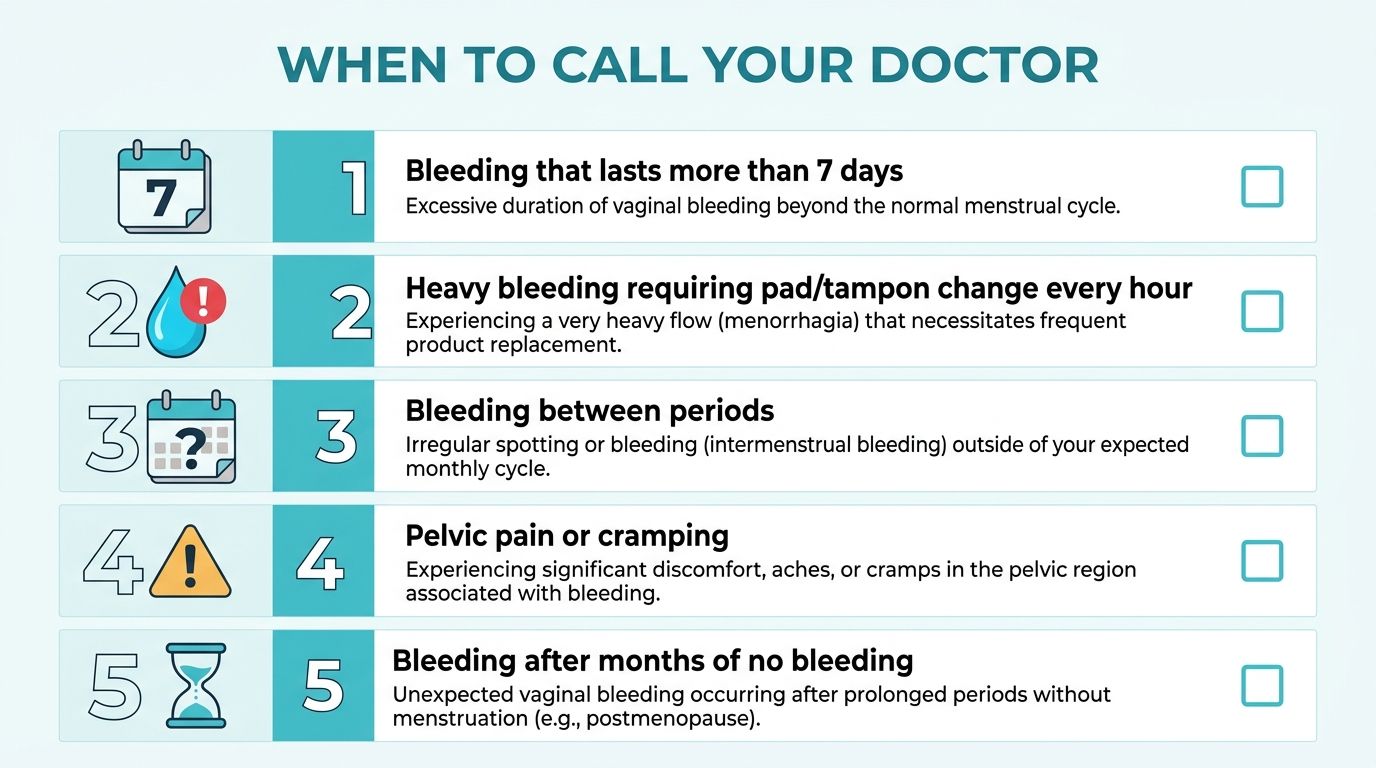
Here are the patterns that deserve a call:
- Bleeding that keeps going: if it lasts longer than your clinician considers typical for your pattern.
- Heavy flow: if you're soaking through products quickly or passing large clots.
- Bleeding between expected cycles: especially if it's new for you.
- Pelvic pain or cramping: when it appears with bleeding rather than separately.
- Bleeding after months of no bleeding: particularly after menopause, when any new bleeding needs evaluation.
Other side effects are more about how progesterone feels in the body. Some people get drowsy, which is why bedtime dosing is common. Others notice breast tenderness, mood shifts, or a sense of heaviness or bloating. Those effects don't always mean the medication is wrong, but they do matter if they're disrupting daily life.
A practical rule is to separate nuisance from warning sign. Mild sleepiness may be managed by taking the dose at night. Heavy or unexplained bleeding, especially after menopause, should be reviewed rather than watched indefinitely.
The Symptoms Progesterone Will Not Fix on Its Own
Progesterone gets a reputation for being the “safer hormone,” and that's where people can get misled. Safety doesn't mean it treats every menopause symptom, and it definitely doesn't mean it replaces estrogen. The biggest misses are usually hot flashes, vaginal dryness, painful sex, urinary symptoms, and bone-loss prevention.
Hot flashes and night sweats are classic estrogen-deficiency symptoms. Progesterone may help some people sleep through the night better, but that's not the same as treating the underlying vasomotor problem. Vaginal dryness and discomfort during sex also point more directly to estrogen's role in maintaining tissue moisture and elasticity.
Symptoms that point away from progesterone alone
If your main complaint is vaginal dryness, progesterone-only therapy is unlikely to solve it. If your main complaint is urinary urgency or irritation, you may need a different tissue-specific approach rather than systemic progesterone. The same goes for bone protection, where estrogen plays the more direct role.
For readers dealing with bladder, pelvic, or sexual pain changes during menopause, this overview on menopause and pelvic floor dysfunction can help connect hormonal change with pelvic tissue symptoms. Those problems often overlap, but they don't respond to the same treatment.
A useful way to sort this out is to ask whether the symptom is mostly driven by progesterone decline, estrogen decline, or both. If the answer is estrogen decline, progesterone alone will probably underperform. If the answer is sleep or cycle instability, it may fit much better.
| Symptoms Progesterone Helps | Symptoms That Need Estrogen |
|---|---|
| Sleep | Hot flashes |
| Anxiety-like nervous-system arousal | Night sweats |
| Heavy bleeding or cycle irregularity | Vaginal dryness |
| Some PMS-pattern symptoms | Bone loss concerns |
That's why many menopause clinicians still think in combined-regimen terms when estrogen is appropriate. Progesterone alone has a place, but it's a targeted tool, not a universal replacement.
Talking With Your Clinician and Building a Decision Plan
The cleanest hormone plan starts with a few direct questions. Do you still have a uterus. Are you trying to treat sleep, bleeding, hot flashes, vaginal dryness, or something else. Do you have a history of cancer, clots, migraine with aura, or unexplained bleeding. Those answers usually matter more than the label on the prescription bottle.
A typical visit often begins with symptom review, a recent well-woman exam, and a check on bleeding history. If bleeding doesn't have a clear explanation, your clinician may consider further workup, and sometimes that includes ultrasound. If you're deciding between local and systemic treatment, a focused discussion of where the symptoms live in the body can save you from taking the wrong hormone for the right complaint.
Questions worth bringing to the appointment
- What symptom am I trying to treat? Sleep, bleeding, hot flashes, dryness, or pain.
- Do I still have a uterus? That changes the endometrial discussion immediately.
- Is estrogen off-limits for me? If so, why.
- What bleeding changes should make me call you? Get the threshold before you start.
- Have I already tried a local option or a nonhormonal strategy? That can change the plan.
If vaginal dryness is part of the picture, some people need local treatment rather than systemic hormones. A clinician can also walk you through how vaginal estrogen cream is used when that's the more appropriate route.
The best decision is specific. “Progesterone sounds safer” is not a treatment plan.
For women receiving care alongside cancer recovery, postpartum rehab, or pelvic-floor symptoms, hormone questions often overlap with pain, leakage, or tissue sensitivity. That's where a coordinated plan matters most. If you remember only one thing, remember this, progesterone without estrogen can be appropriate, but it's not a universal menopause solution and it should always match a clear indication.
If you're sorting through hormone symptoms, pelvic pain, bladder changes, or recovery after childbirth or cancer treatment, Lake City Physical Therapy can help you build a plan that fits the whole picture, not just one symptom. Visit Lake City Physical Therapy to learn how their women's health team supports pelvic floor rehab, oncology recovery, and individualized care that can work alongside your medical treatment decisions.

