Deep Abs Workout: A PT’s Guide for Women
You’ve probably tried some version of this already. Crunches on the floor. A few planks from social media. Maybe “core” videos that left your neck sore, your back tight, or your lower belly still feeling disconnected.
For many women, that frustration gets sharper after pregnancy, during perimenopause, after surgery, or when returning to running, lifting, or high-impact workouts. You work hard, but your body doesn’t feel stronger where it matters most. You may even notice leaking, pressure, doming through the midline, or a sense that your abs “switch off” under load.
A good deep abs workout isn’t about chasing burn in the six-pack. It’s about restoring pressure control, spinal support, pelvic floor coordination, and confidence in movement. That changes how you lift your child, carry groceries, run hills, get through a workout class, or recover from treatment.
Why Your Crunches Arent Working
A common pattern in clinic goes like this. A woman has been doing ab work consistently, sometimes for months, but still has low back discomfort, a persistent “mummy tummy,” or leaking during exercise. She assumes she needs more discipline, harder workouts, or better willpower.
Usually, the problem isn’t effort. It’s strategy.
Traditional crunches mainly train the more visible abdominal muscles. Those muscles matter, but they aren’t the whole core. If the deeper system isn’t coordinating well, surface work often becomes compensation. The neck grips. The ribs flare. The pelvis tucks aggressively. Pressure pushes outward and downward instead of being managed well through the trunk.
When more ab work makes symptoms worse
This is especially important postpartum. Research shows 33 to 66% of postpartum women have pelvic floor disorders, and workouts that increase intra-abdominal pressure without proper pelvic floor co-activation can worsen stress incontinence or prolapse symptoms, as discussed in this pelvic floor dysfunction overview.
That means the wrong “deep core” cues can backfire too. Bracing hard, sucking your stomach in, or bearing down during effort may look like strong core activation, but they often create the exact pressure pattern your body is struggling to control.
Practical rule: If an ab exercise leaves you leaking, bulging through the midline, gripping your glutes, or holding your breath, it’s not a good exercise for you right now.
What strong core function actually looks like
A functional core helps you do ordinary things well. Stand tall. Roll in bed. Lift laundry. Push a stroller uphill. Return to deadlifts. Run without pelvic heaviness. Cough without leaking. That kind of strength starts below the surface.
The shift is simple but important. Stop asking, “Can I feel my abs burn?” Start asking, “Can I control pressure, breathe, and move without symptoms?”
Once that changes, a deep abs workout becomes less about flattening your stomach and more about building support from the inside out. That’s where lasting improvement happens.
Meet Your True Core The Four Deep Muscles You Need to Know
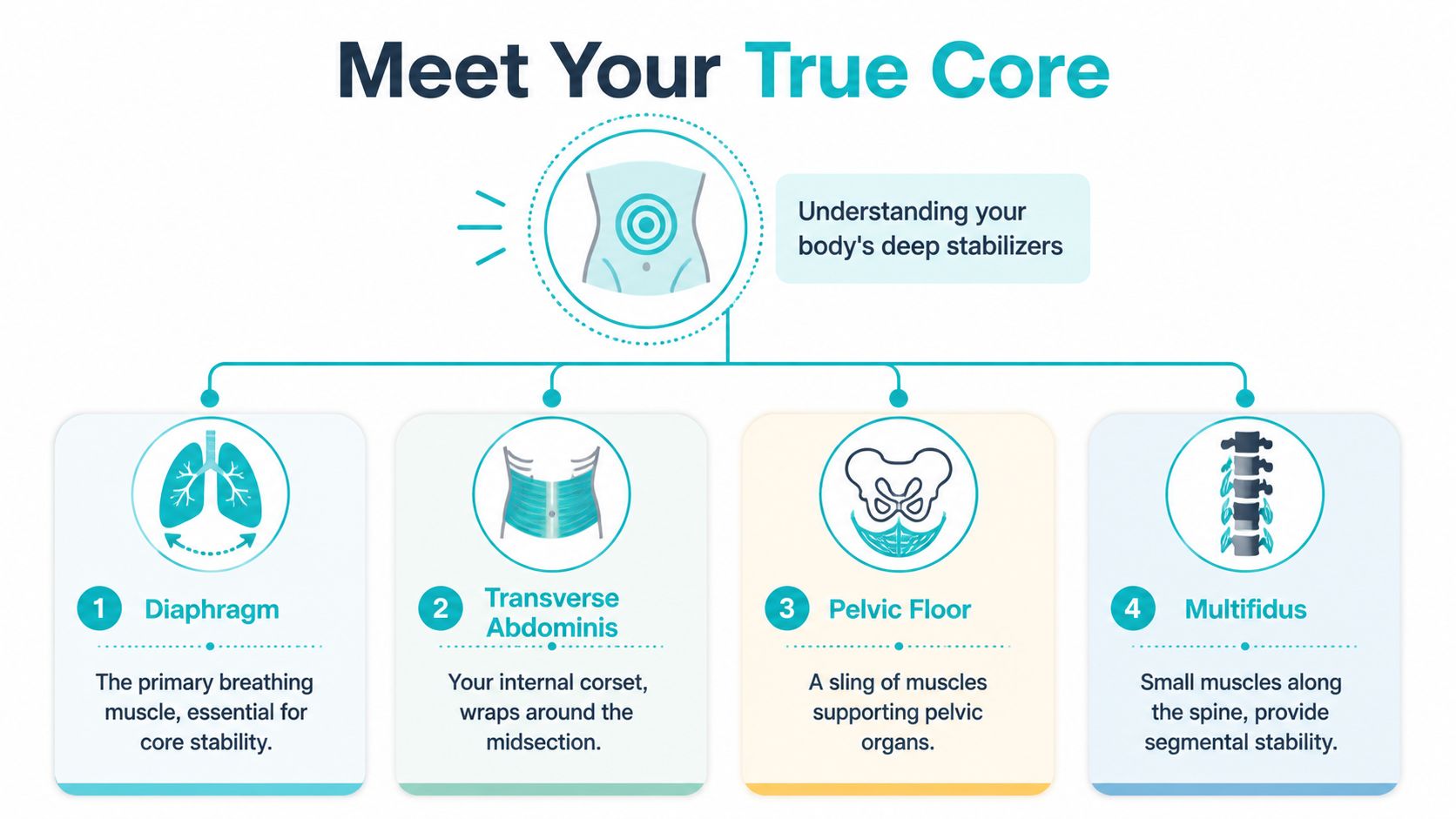
Your deep core works more like a canister than a single muscle. Think of a pressurized container that needs all sides working together. The top, front, bottom, and back each have a role.
The diaphragm at the top
The diaphragm is your main breathing muscle. When it moves well, you get a fuller breath and better pressure regulation through the trunk. If you breathe shallowly into the upper chest, the rest of the core system often has to compensate.
In practice, that’s why breath isn’t a side note in rehab. It’s the entry point.
The transverse abdominis around the middle
The transverse abdominis, often shortened to TrA, wraps around your abdomen like a built-in corset. It doesn’t create the six-pack look. Its job is support, tensioning, and stability.
This muscle responds best to specific training, not random ab fatigue. Research found that Pilates-trained individuals had significantly thicker transverse abdominis muscles during stabilization exercises than both resistance-trained and control groups, showing that targeted training changes deep core muscle architecture in measurable ways, as reported in this study on abdominal muscle thickness and stabilization training.
The pelvic floor at the bottom
The pelvic floor forms the base of the canister. It supports the pelvic organs and helps manage pressure during coughing, lifting, running, and jumping. It also contributes to continence and sexual function.
This is why a deep abs workout should never ignore the pelvic floor. If the base isn’t responding well, pressure has nowhere useful to go.
The multifidus at the back
The multifidus is a group of small stabilizing muscles along the spine. These muscles help control segmental motion, especially in the low back. They don’t need flashy exercises. They need good timing and steady coordination with the rest of the system.
Why these muscles need to work as a team
You can’t train this system well by obsessing over one muscle and ignoring movement quality. A healthy core canister expands, recoils, and adjusts with breath and effort. That’s what gives you support without rigidity.
A few signs that this system is working better:
- Breathing stays smooth: You can exhale during effort instead of holding tension in your throat or chest.
- Your abdomen responds evenly: No sharp doming, pushing out, or gripping through the upper abs.
- Your pelvic floor keeps up: You feel support rather than heaviness, leakage, or pressure.
- Your back feels quieter: The low back stops doing all the stabilization work on its own.
Deep core strength is less about force and more about timing, pressure control, and coordination.
If you want a practical way to start connecting these muscles, this guide to core and pelvic floor exercises is a useful companion to the movement cues below.
The Foundational Breath How to Engage Your Deep Abs
Before you do heel slides, bridges, bird dogs, or planks, you need to know how deep core engagement feels. Most women I see have been told to “pull your belly button to your spine” or “brace harder.” Those cues often create stiffness, not support.
A better starting point is breath-driven connection.

Start with 360 breathing
Lie on your back with knees bent, or sit supported if lying down feels uncomfortable. Place one hand on your lower ribs and one around the lower abdomen.
On the inhale, let the breath widen your rib cage gently. Think side ribs and back ribs expanding, not just the chest lifting. Your belly may soften slightly. That’s fine.
On the exhale, let the ribs settle. Then add a gentle lower abdominal connection, as if a scarf is snugging around your waist. Not a hard cinch. Not a hollowing maneuver. Just a subtle lift and wrap.
Try this for several breaths before adding any limb movement.
Add the pelvic floor without clenching
As you exhale, think of the pelvic floor lifting lightly from below. A cue many women like is “pick up a blueberry without squashing it.” The effort should feel small and precise.
If you feel your glutes squeeze hard, thighs grip, or butt tuck under, you’ve gone too far. Pelvic floor activation is often more delicate than people expect.
A few cues that usually help:
- For the lower abs: “Zip up from the pubic bone toward the low belly.”
- For the rib cage: “Let the front ribs melt down as you exhale.”
- For the pelvic floor: “Gently lift, then fully let go on the inhale.”
- For your jaw and shoulders: “Soften them. They’re not part of this job.”
What proper engagement should feel like
It should feel quiet. Stable. Sustainable. You should still be able to talk.
You may notice a sense of support across the lower abdomen, a small lift through the pelvic floor, and less pressure pushing into the belly or perineum. You should not feel shaking from strain, aggressive flattening, or breath-holding.
If you can’t breathe normally, you’re not training deep core control. You’re training a pressure strategy your body may already overuse.
What to stop doing
Many deep abs workout mistakes come from trying too hard. Watch for these common compensations:
- Sucking in the stomach: This often pulls the upper abs inward without creating useful lower abdominal support.
- Bearing down: If you feel downward pressure into the pelvis, reset immediately.
- Flattening the back aggressively: A slight rib and abdominal connection is enough. You don’t need to jam your spine into the floor.
- Holding the breath on effort: Exhale through the hard part instead.
- Using max effort pelvic floor contraction: More is not better. Over-gripping can be just as unhelpful as under-recruiting.
A simple activation drill
Try this sequence:
- Set your position: Back, side-lying, or supported sitting.
- Inhale through the nose: Expand ribs and trunk gently.
- Exhale through pursed lips: Let ribs soften.
- Add the wrap: Feel the low abdomen narrow slightly.
- Add the lift: Gentle pelvic floor support joins the exhale.
- Relax fully on the next inhale: The system needs both activation and release.
If you want a visual walkthrough, this video is a good place to practice the timing of breath and deep abdominal connection:
When you need extra pelvic floor support
If you’re leaking, feeling heaviness, or unsure whether you’re lifting or bearing down, spend some time with more pelvic-floor-specific retraining before progressing your ab work. These pelvic floor strengthening strategies can help you build that awareness safely.
The quality check is simple. You should finish these drills feeling more connected, not more tense.
The Ultimate Deep Abs Workout From Beginner to Advanced
A deep abs program should match what your body can control today. If the challenge jumps ahead of your current capacity, the body often shifts load into the neck, hip flexors, low back, or pelvic floor. In clinic, I see this often in postpartum patients, women returning after abdominal or pelvic surgery, and people rebuilding after cancer treatment. Good progression protects healing tissue while still building strength.
A gradual approach also matters for recovery. In women with diastasis recti, a program that combined deep core stability work with traditional abdominal exercise improved separation and quality of life more than traditional abdominal work alone, as shown in this clinical study on deep core stability and diastasis recti.
Beginner level for connection and control
Start here if you are postpartum, dealing with low back irritability, noticing pelvic floor symptoms, or struggling to feel the lower abdominal wall work without bracing.
Heel slides
Lie on your back with knees bent. Exhale and let the lower abdomen gently narrow as one heel slides away. Return before the ribs pop up or the pelvis starts to tip.
Small range is often the better choice.
Pelvic floor safe modification: If you feel heaviness, pressure, or bulging through the midline, shorten the slide and reduce effort. You may also do this with your foot on a towel to decrease friction.
Bent-knee fallout
From the same position, let one knee open slightly to the side while the pelvis stays quiet. Bring it back with control.
This challenges rotational control without a big pressure demand. It is often a useful first step for women who are not ready for marching or tabletop work.
Glute bridge with exhale
Press through your feet and lift the hips as you exhale. Keep the ribs soft and the abdominal wall responsive, not rigid.
A lower bridge is completely acceptable. If you feel hamstring cramping, low back compression, or pelvic floor pressure, reduce the height and reset.
Marching in tabletop prep
Lift one foot a few inches, set it down, then switch sides. The pelvis should stay level and the breath should keep moving.
There is no prize for bringing both legs to tabletop too soon. For many postpartum bodies, that jump increases pressure before control is ready.
Clinical cue: Stay at this level until you can breathe through the reps, keep the abdomen from pushing outward, and finish without increased symptoms later in the day.
A beginner session usually includes a few breath-led warm-up reps, two or three movements, and enough rest to keep form clean.
Intermediate level for dynamic stability
Now the trunk has to stay organized while the arms or legs move farther from center. This is usually the point where hidden compensation shows up.
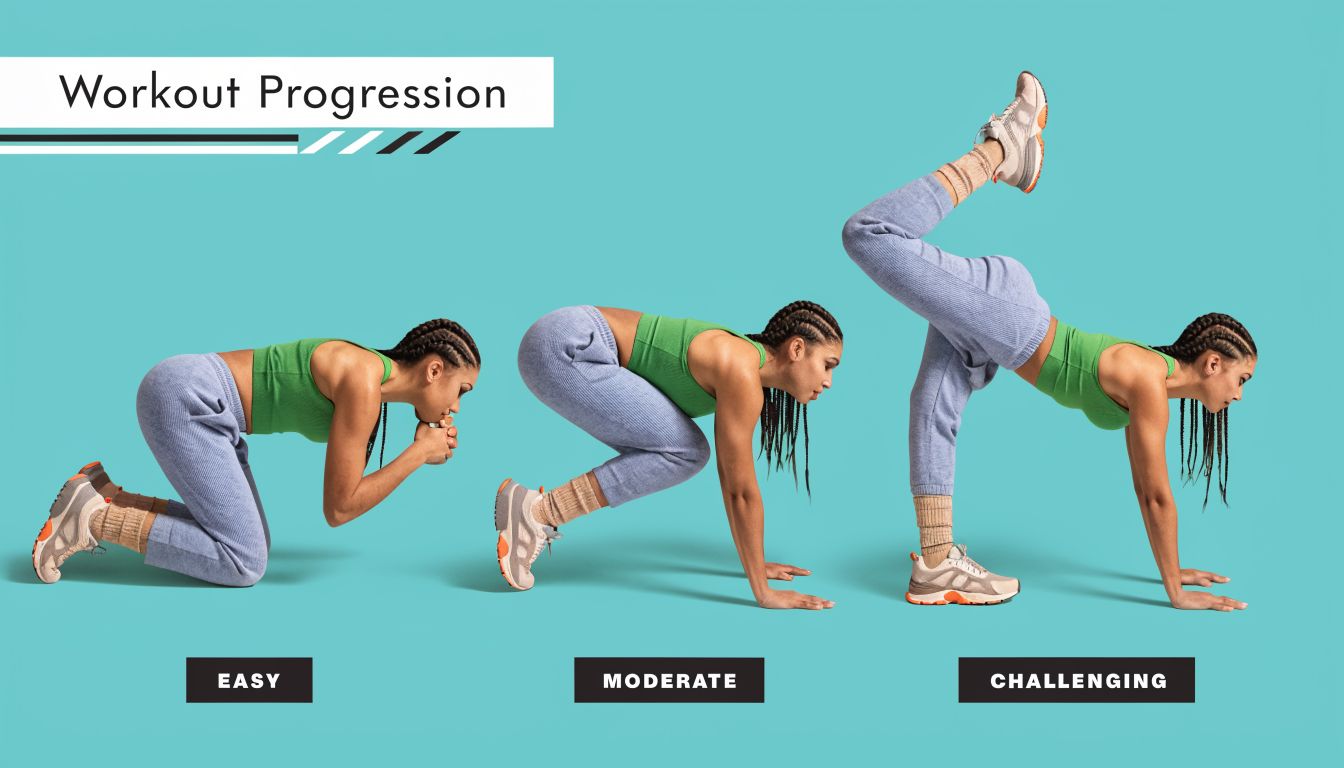
Bird dog
Start on hands and knees. Reach one leg back on the exhale. Add the opposite arm only if your trunk stays steady and your weight does not shift side to side.
Aim for length through the heel and fingertips. Height is not the goal.
Modification: Keep the toes on the floor behind you for support, or perform only the arm reach if weight bearing through the abdomen feels too demanding.
Dead bug
Use tabletop only if you can keep the ribs from flaring and the abdominal wall from bulging. Lower one heel, or lower the opposite arm and leg, then return.
This is a strong exercise for pressure control when it matches your current level. It is also one of the quickest ways to spot whether someone is substituting with breath-holding.
Side plank from knees
Set up on your forearm and knees, then lift into a straight line from shoulder to knee. This trains lateral core control, which supports walking, carrying, and returning to impact.
Pelvic floor modification: Use shorter holds or do repeated lifts instead of one long hold. That is often better tolerated for women with heaviness or prolapse symptoms.
Bear hover
From hands and knees, tuck the toes and float the knees just off the floor. Keep breathing.
This is demanding. If your upper traps grip, your back rounds, or you cannot maintain a quiet abdomen, raise your hands on a bench or stay with bird dog.
Advanced level for function and sport
At this stage, the goal is carryover. Your core should support lifting, pushing, walking, and rotational control without creating pelvic floor strain or midline bulging.
Pallof press
Stand or half-kneel with a band anchored to your side. Press the band forward while keeping the trunk steady.
This is one of my favorite options for women returning to loaded movement because it challenges anti-rotation control without putting you flat on the floor under high pressure.
Farmer’s carry
Hold a weight and walk with steady posture and relaxed breathing. The job is to resist leaning, gripping, or bracing too hard.
Carries are practical. They reflect real life, especially for mothers lifting children, women returning to gym training, and anyone rebuilding tolerance for day-to-day load.
High plank with shoulder tap
Use this only if you can control pressure well. Start with your hands raised on a bench, countertop, or wall if floor planks create doming, breath-holding, or pelvic floor symptoms.
A wider foot position helps reduce trunk sway. Slow taps are usually better than more reps.
Bicycle crunch, if appropriate
This can fit later in rehab or performance training, but only after you can manage pressure, avoid neck strain, and keep the abdominal wall from bulging. For many women, especially early postpartum or after abdominal surgery, other advanced drills are a better first choice.
What progression should actually look like
Use symptom response and movement quality to guide the next step.
| Sign | Stay at current level | Progress to next level |
|---|---|---|
| Breathing | Breath gets choppy or you brace hard | Breath stays smooth through reps |
| Abdomen | Doming, bulging, or pushing outward appears | Abdomen stays responsive and controlled |
| Pelvic floor | Leaking, heaviness, or dragging shows up | No symptom increase during or after |
| Form | Pelvis shifts, ribs flare, or neck grips | Trunk stays steady without extra tension |
A few trade-offs that matter
Some women need several weeks of lower-level work before advanced exercises feel right. That is common after birth, after hysterectomy or C-section, and during oncology recovery when fatigue changes pressure control quickly.
The opposite problem shows up too. Some women stay with activation drills for months and never build enough strength for real life. Deep core work should lead into squats, carries, step-ups, reaching, and other whole-body tasks once the foundation is there.
Progress counts when your body feels more supported, not just more tired.
How to Structure Your Weekly Deep Core Routine
You don’t need to train your abs every day to make progress. You do need consistency, good symptom checks, and enough recovery that your body can learn the pattern.
The simplest rule is this. Build your week around your current goal, not around guilt.
Sample weekly deep core workout plan
Below is a straightforward Sample Weekly Deep Core Workout Plan (General Strength) you can adapt.
| Day | Focus | Exercises |
|---|---|---|
| Monday | Deep core activation and beginner strength | 360 breathing, heel slides, bent-knee fallout, bridge |
| Tuesday | Walking or general strength | Brisk walk, upper body or lower body strength with exhale on effort |
| Wednesday | Dynamic trunk control | Bird dog, dead bug variation, side plank from knees |
| Thursday | Recovery and mobility | Gentle mobility, relaxed breathing, light stretching |
| Friday | Integrated core strength | Bear hover, Pallof press, carry variation |
| Saturday | Full-body movement | Hike, resistance training, dance, or low-impact cardio |
| Sunday | Rest or reset session | Breathing drill, short activation sequence, symptom check |
Three ways to tailor the week
Postpartum healing
Use shorter sessions and more rest between exercises. Focus on breath, pressure control, walking, and beginner movements. If symptoms rise later in the day, the session was too much.
A good postpartum week often alternates training days with easier recovery days. Keep impact low until your body handles load without heaviness, leaking, or abdominal bulging.
Core strength and pain prevention
Use two to three focused core sessions each week, then fold your breathing and pressure strategy into squats, hinges, carries, and daily lifting. Many women start to notice their back feels steadier and their workouts feel less chaotic during these integrated movements.
Return to sport
Athletes need the deep core to work under speed, fatigue, and force. Add rotational control, carries, anti-rotation work, and eventually impact preparation. Don’t judge readiness by motivation alone. Judge it by symptom response and movement quality.
How to know when to progress
Use these benchmarks:
- Your form stays consistent: No rib flare, pelvic rocking, or neck strain
- Your symptoms stay quiet: No leaking, pressure, pain, or increased doming
- Your breath stays available: You can exhale through effort without bracing hard
- Your recovery is good: You don’t feel worse later that day or the next morning
Progression should feel earned, not forced.
If one exercise repeatedly creates symptoms, don’t push through it. Regress it, shorten the lever, reduce the range, or switch the position. The best program is the one your body can adapt to.
Workout Modifications for Post-Surgery and Oncology Recovery
Women recovering from breast cancer treatment, gynecologic surgery, reconstruction, or abdominal procedures often get generic advice about “core strength” that misses the most important issue. Healing tissues don’t respond well to aggressive pressure strategies.
A forceful deep abs workout can create pulling across scars, breath-holding, guarding through the chest, and unwanted strain around the trunk. For breast cancer survivors, this can be even more complex when lymphedema risk or existing swelling is part of the picture.

What needs to change after treatment
High-intensity core moves aren’t always the right starting place. According to a summary of emerging evidence, therapist-guided deep core protocols with modifications reduced lymphedema volume by 28% and improved return to activity, while high-intensity core work can increase lymph fluid buildup in some survivors, as discussed in this deep core exercise article for special populations.
That’s why recovery programming should emphasize:
- Breath first: Diaphragmatic breathing before loading
- Scar respect: Avoid positions that create pulling or guarding
- Graduated load: Start with supported positions before floor planks or hollow holds
- Swelling awareness: Monitor heaviness, fullness, or visible change after exercise
Signs your current routine is too aggressive
Not every red flag is pain. Watch for these responses:
- Chest or neck tension: Often a sign you’re substituting for true trunk support
- Scar pulling or burning: A cue to reduce range or change position
- Heaviness in the arm, chest, or trunk: This may need lymphedema-aware modification
- Pelvic symptoms: Even in oncology rehab, pressure management still matters
Some women also need continence-specific screening because bladder changes, pelvic floor symptoms, and pressure issues can overlap with recovery. If you’re sorting through lower urinary tract symptoms and want a plain-language overview, this NDIS continence assessment resource gives helpful background.
Recovery work should leave you feeling more supported and more mobile, not swollen, braced, or wiped out.
If you’re rebuilding after cancer treatment, individualized rehab matters. This guide on physical therapy after cancer treatment explains why individualized progression is often the safest path back to strength.
Your Questions on Deep Core Training Answered
Why do I feel my neck or back more than my abs
I see this often in clinic, especially postpartum and after abdominal or breast cancer treatment. Your body is trying to create stability with bigger, less efficient helpers because the deep system is not coordinating well yet.
Start by making the exercise smaller. Exhale sooner. Let your ribs soften instead of lifting, and keep your jaw, neck, and glutes quiet. If you still feel strain in your back or neck, the current version is too demanding for your pressure control.
Is a deep abs workout enough on its own
Usually, no. Deep core training gives you the base for pressure management, spinal support, and pelvic floor coordination, but daily function also depends on strength through the hips, back, and larger abdominal muscles.
A good program builds from control to load. That may mean starting with breath work and supported leg movements, then adding carries, rows, squats, and other whole-body patterns once you can keep good form without doming, breath-holding, or pelvic symptoms. As noted earlier, exercise comparisons consistently show that no single ab move does everything well.
Can I do this if I have prolapse or incontinence
Often, yes. The right starting point matters.
Choose positions where you can exhale during effort and keep the pelvic floor responsive, not clenched. Supported heel slides, bent-knee fallout, wall-based loading, and modified side-lying work are often better tolerated than aggressive planks, sit-ups, or double-leg lowers early on. Stop and reassess if you notice leaking, heaviness, vaginal pressure, bulging, or a strong bearing-down feeling.
If symptoms appear quickly, or if they linger after the session, you need a lower starting dose or more individualized guidance.
How long does it take to notice a difference
Most women notice better awareness before visible muscle change. The first wins are usually functional. Getting out of bed feels easier. Walking feels more supported. Lifting a child, groceries, or laundry creates less pressure through the abdomen and pelvic floor.
After diastasis recti, surgery, or oncology treatment, progress is rarely linear. Fatigue, scar sensitivity, and tissue healing all affect tolerance, so consistency matters more than pushing hard.
What if my abdomen domes during exercise
Doming means the demand is higher than your system can currently manage well. It is a useful cue, not a reason to panic.
Reduce the range, shorten the lever, or return to an easier position where you can exhale and keep the abdominal wall more evenly tensioned. For postpartum recovery, I also want you to watch what happens afterward. If the area feels more fatigued, pressured, or harder to control later in the day, that session was too much.
Are planks the best deep core exercise
Planks are one option. They are not automatically the best choice.
For a woman early postpartum, someone with pelvic organ prolapse, or someone returning to exercise after surgery or cancer treatment, a plank may create more pressure than benefit. A better exercise is one you can perform with steady breathing, controlled rib position, and no symptom flare during or after the workout. Sometimes that is a wall plank. Sometimes it is a dead bug variation. Sometimes it is an exhale with leg loading done well.
If you’re dealing with postpartum core weakness, leaking, prolapse symptoms, cancer recovery, or a return to sport that doesn’t feel right, Lake City Physical Therapy offers women’s health physical therapy focused on pelvic floor function, deep core rehab, oncology recovery, and safe performance progression. Personalized care can help you rebuild strength without guessing.