Does Perineal Massage Work: Evidence-Based Guide
Antenatal perineal massage may reduce trauma requiring suturing by about 9% and episiotomy by about 16%, but the benefits are modest. It can't guarantee prevention of every tear, severe injury, pain, or pelvic-floor disorder.
That answer becomes clearer when you separate when the massage happens from what outcome researchers measure. Massage practiced during late pregnancy, often called antenatal massage, has a more established but limited evidence base. Massage applied during pushing or crowning, called intrapartum massage, may help in some circumstances, yet the evidence is less consistent.
Perineal massage also isn't a test you can pass or fail. Some people practice regularly and still tear, while others don't massage and recover without significant injury. Birth position, tissue characteristics, baby's size and position, assisted delivery, prior birth history, pelvic-floor muscle behavior, and the care provided during pushing all influence the outcome.
What the Evidence Actually Shows About Perineal Massage
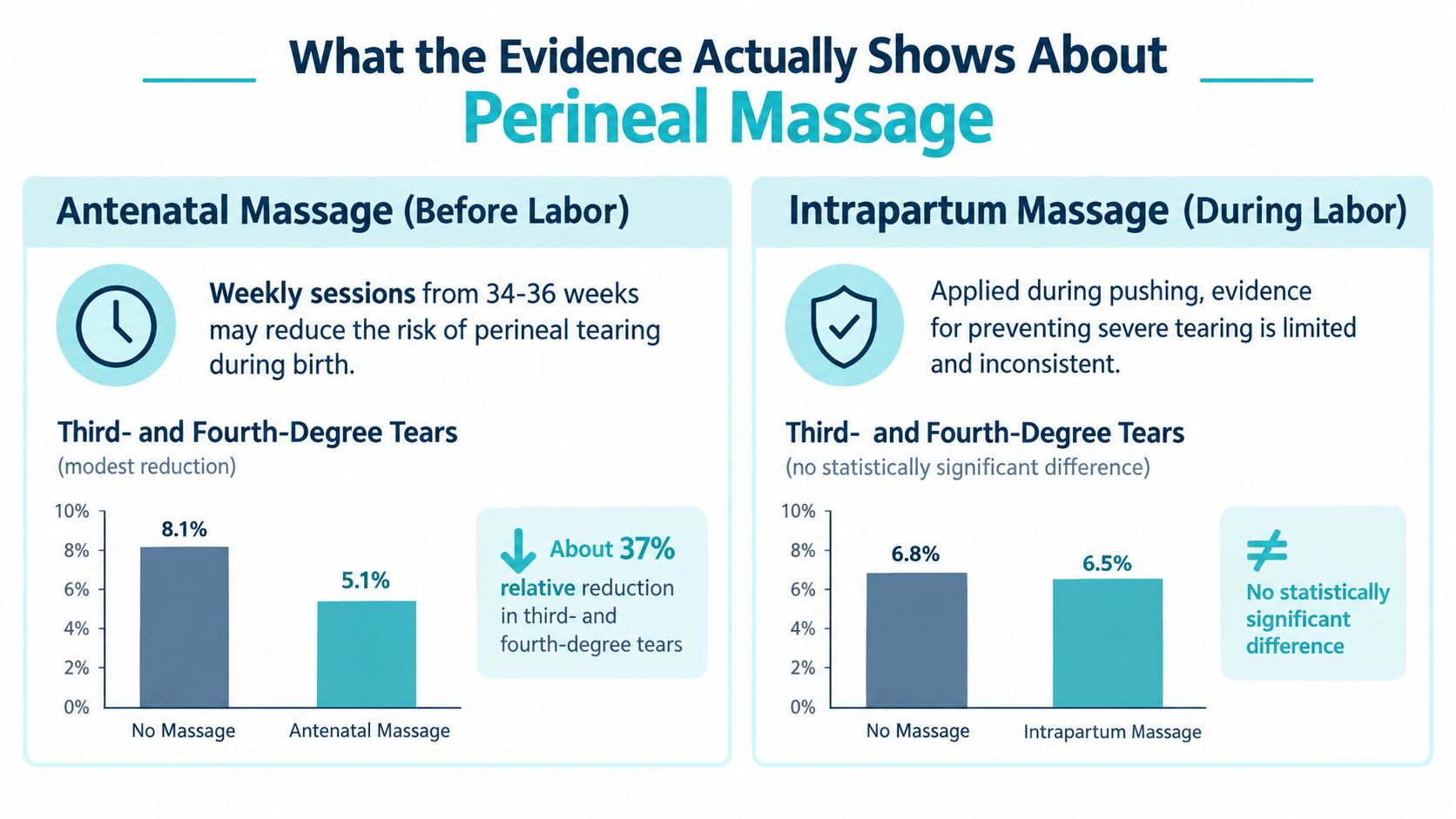
The most useful answer to does perineal massage work is, “Sometimes, for specific outcomes.” A Cochrane review covering 2,497 women found that antenatal digital perineal massage reduced trauma requiring suturing by 9% in relative terms and episiotomy by 16%. The number needed to treat was 15 for one additional woman to avoid repair-requiring trauma and 21 for one additional woman to avoid an episiotomy. These findings come from the Cochrane evidence review on antenatal perineal massage.
Those numbers describe a modest shift in odds, not a protective shield. The same review found no significant reduction in first- or second-degree tears, severe third- or fourth-degree trauma, use of forceps or vacuum assistance, or urinary, fecal, or flatus incontinence. Among women who had previously given birth vaginally, pain at three months postpartum was reduced, but the overall pattern remains more limited than many online summaries suggest.
Antenatal and intrapartum massage are different interventions
Antenatal massage is usually practiced during the final weeks of pregnancy. It aims to help the perineal tissues become familiar with gentle stretching before they need to stretch during birth. The strongest evidence supports fewer episiotomies and fewer injuries requiring stitches, particularly among people having a first vaginal birth.
Intrapartum massage happens during the second stage of labor, often while the baby's head is descending or crowning. A systematic review found possible reductions in severe trauma and a greater likelihood of an intact perineum, but the certainty of evidence for many routine outcomes was low or very low. That means the result may change when better studies become available.
A practical evidence-based approach is to ask four questions: When was the massage performed? Which outcome improved? How certain is the evidence? Does the finding apply to this person's birth history? The five-step EBP process offers a useful way to turn those questions into a clinical decision rather than accepting a broad claim at face value.
Massage also shouldn't replace education about recovery after birth. People healing from a tear, episiotomy, or persistent symptoms may benefit from individualized guidance about tissue healing, scar sensitivity, bowel function, and return to sex, including information in this guide to perineum tear healing.
Understanding Timing and Expected Outcomes
Timing changes the question entirely. Antenatal massage is generally introduced around 34 to 35 weeks of pregnancy, while intrapartum massage is applied during pushing. Results from one intervention can't automatically be transferred to the other.
A 1997 randomized controlled trial found that 75.1% of participants who didn't receive antenatal massage experienced a second- or third-degree tear or episiotomy, compared with 69.0% in the massage group. That 6.1-percentage-point difference wasn't statistically significant before adjustment, but it became significant after accounting for maternal age and infant birth weight. Delivery by forceps or vacuum extractor also declined from 40.9% without massage to 34.6% with massage after adjustment, as reported in the original trial record.
Those findings illustrate why researchers examine baseline characteristics. The apparent benefit was stronger among women aged 30 or older, and the broader evidence has been more consistent for people having their first vaginal birth than for those with a previous vaginal birth. It doesn't mean age determines your outcome, or that massage is unhelpful after a prior birth. It means the same practice may produce different results in different populations.
What timing can and cannot change
A short, consistent antenatal routine may improve tissue comfort and may modestly reduce clinically significant trauma. It doesn't make the perineum immune to stretching, and it can't control factors that arise during labor.
Intrapartum massage has a different proposed role. Lubricant-assisted pressure during crowning may distribute tension across the tissue and help the birth attendant notice when the perineum is becoming taut. The clinician may then support a slower, more controlled emergence of the head. This approach works as one element of care alongside communication, maternal positioning, appropriate pushing guidance, and warm compresses.
Clinical perspective: A practice can be worthwhile even when its effect is modest, but its limits should be part of the consent conversation.
The quality of evidence matters as much as the direction of the result. Antenatal massage has randomized-trial support for selected outcomes, while intrapartum massage has more uncertainty because studies are smaller and methods vary. A patient shouldn't have to choose between optimism and skepticism. The reasonable position is that antenatal massage may help with some outcomes, while no massage technique guarantees a particular birth injury result.
Safe Technique and Practical Application
Perineal massage should feel like gentle pressure or stretching, not sharp pain, burning, pinching, or a demand to tolerate discomfort. Many people perform it themselves, while others ask a partner or clinician to help. Partner-assisted massage can be appropriate when the pregnant person remains in control, communicates clearly, and can stop the pressure immediately.

The basic principles
A typical approach uses clean hands, a comfortable supported position, and a suitable lubricant to reduce friction. The fingers contact the lower vaginal opening and perineal tissue, then apply slow, gentle pressure in the direction that feels like a mild stretch. A clinician or pelvic-floor physical therapist can demonstrate the location and pressure because anatomy, sensitivity, previous injury, and muscle tone vary.
Short sessions are generally preferred. Guidance from Cambridge University Hospitals recommends sessions of roughly three to five minutes, and evidence cited in that guidance reports no added benefit from performing massage more than about 3.5 times weekly. That doesn't make a specific schedule right for everyone, so discuss the timing with your obstetric clinician if you're unsure.
Stop and seek clinical advice if you experience bleeding, persistent pain, burning, unusual discharge, guarding, or worsening symptoms. Don't continue if you suspect your waters have broken. People with vaginal thrush or genital herpes should avoid perineal massage according to NHS clinical guidance on antenatal perineal massage.
A demonstration can answer practical questions that written instructions often miss. The following video may help you understand the general concept, but it shouldn't override advice from your own maternity or pelvic-health team.
Massage is also different from postpartum comfort measures. After birth, a person may need evaluation for swelling, wound healing, scar sensitivity, or pain with sitting and sex. A resource about what perineal spray is may address comfort care, but it isn't a substitute for assessment when symptoms persist or worsen.
Common Misconceptions and Contraindications
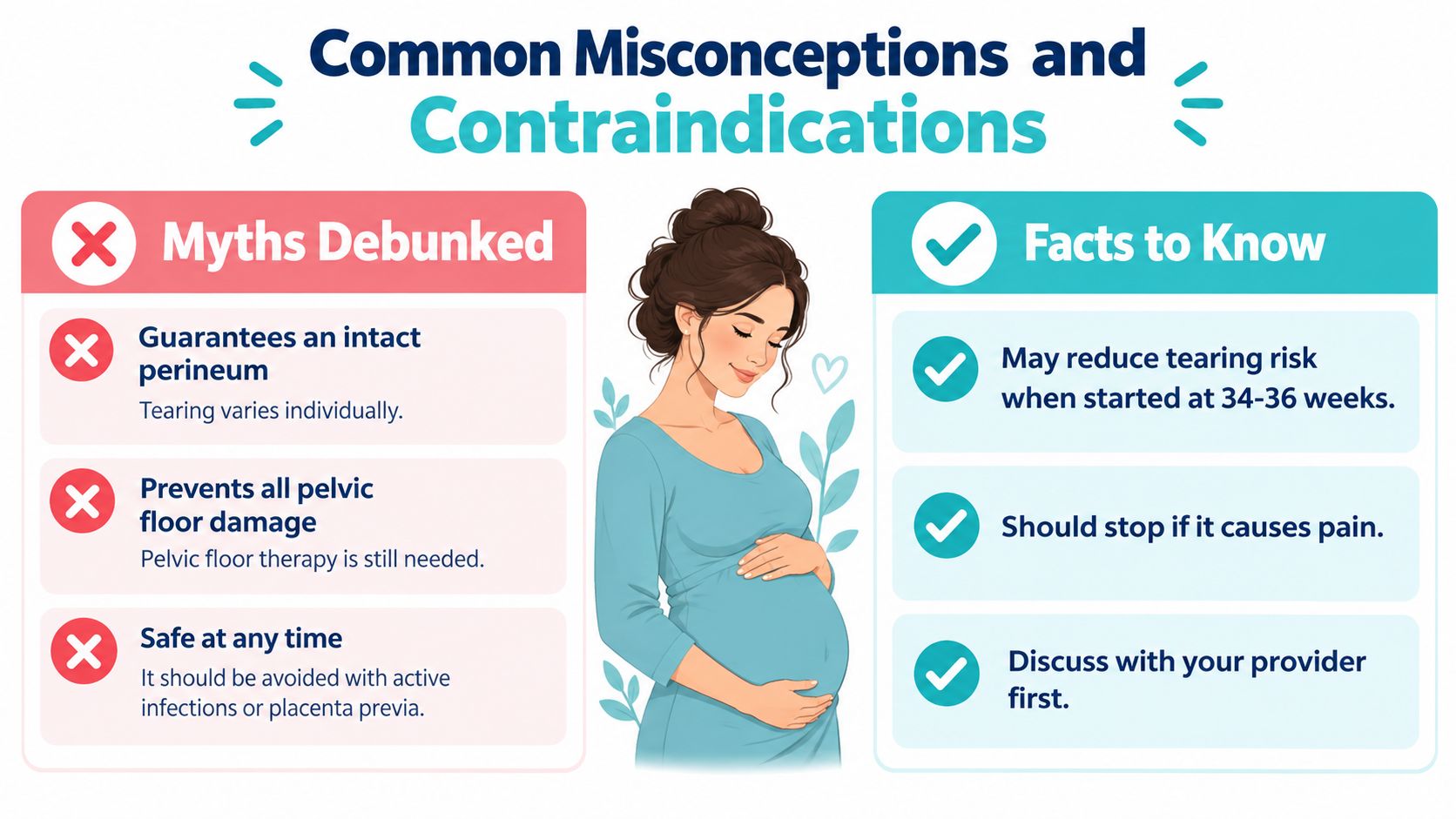
The most damaging misconception is that perineal massage guarantees an intact perineum. It doesn't. The evidence supports a modest reduction in selected outcomes, particularly suturing and episiotomy, but it doesn't reliably prevent every degree of tear or eliminate pelvic-floor symptoms.
A second misconception is that more massage produces more protection. Available guidance reports no additional benefit beyond about 3.5 sessions per week, with short sessions preferred. Increasing frequency despite pain or anxiety can turn a potentially useful preparation strategy into an unpleasant obligation.
When to pause or avoid it
Do not treat massage as a routine to complete regardless of symptoms. Discuss it with your maternity clinician first if you have:
- A vaginal infection: Thrush and genital herpes are reasons to avoid massage until a clinician confirms it's appropriate.
- Possible ruptured membranes: Massage should be avoided when your waters may have broken.
- Active bleeding or unexplained pain: These symptoms need assessment rather than additional stretching.
- Trauma-related concerns: Internal touch can trigger distress for people with sexual trauma, pelvic pain, or a history of painful examinations. Consent and control matter more than following a standard routine.
- A complex obstetric history: Placental concerns, prior severe tears, or other pregnancy complications require individualized advice rather than a generic internet protocol.
Massage also doesn't prevent pelvic-floor disorders by itself. Continence, prolapse symptoms, sexual pain, and difficulty relaxing the pelvic floor involve muscles, connective tissue, nerves, breathing, pressure management, and behavior. Those concerns deserve assessment even if the perineal skin and vaginal opening feel comfortable.
Massage should never hurt because someone believes discomfort proves it is working.
A partner should ask permission before each session, use gentle pressure, and stop as soon as the pregnant person says to stop. If the practice creates fear, guarding, or pain, a pelvic-health clinician can offer alternatives that support birth preparation without forcing direct tissue stretching.
When Pelvic Floor Physical Therapy Adds Value
Perineal massage and pelvic-floor physical therapy address overlapping but different needs. Massage focuses mainly on the mobility and tolerance of the perineal tissues. Physical therapy evaluates how the entire pelvic-floor system contracts, relaxes, coordinates with breathing, responds to pressure, and functions during movement and intimacy.
That distinction matters because some people don't need more stretching. They may need help learning to release an overactive pelvic floor, reduce pain, coordinate bearing down, or understand how prior scar tissue affects movement. Others may need strength, endurance, bladder strategies, bowel support, or a gradual return to activity after birth.
Who may benefit from an individualized assessment
Professional input is especially reasonable for people with:
- A prior obstetric anal sphincter injury
- Vulvodynia or persistent vulvar pain
- Pelvic-floor hypertonicity
- A cesarean birth followed by a planned vaginal birth
- Genital cutting or altered perineal anatomy
- A history of sexual trauma
- Pain with penetration or pelvic examinations
- Significant scar sensitivity from a prior tear or procedure
These populations remain underexplored in the massage research, which has concentrated heavily on first-time mothers. A standard home routine may therefore be less appropriate than an assessment that accounts for medical history, consent, tissue sensitivity, and functional goals.
The evidence for massage during labor also needs careful interpretation. A systematic review found lower severe perineal trauma with intrapartum massage, but the evidence for several routine outcomes, including episiotomy and first- or second-degree tears, was low or very low certainty because studies were limited and methodologically weak. The systematic review of perineal techniques during labor supports using massage as one possible component of care, not as a replacement for skilled labor support.
A pelvic-floor physical therapist can also coordinate with an obstetric clinician or midwife. Guidance may include practicing pelvic-floor relaxation, finding comfortable birth positions, preparing for pressure, addressing constipation, and planning postpartum follow-up. Information about pelvic-floor physical therapy during pregnancy can help you decide whether an evaluation fits your needs.
Making an Informed Decision About Your Birth Preparation
A sensible decision starts with your goal. If you're hoping to modestly reduce the chance of an episiotomy or repair-requiring trauma during a first vaginal birth, antenatal massage may be a reasonable option after your clinician confirms that it's safe. If your main concern is pelvic pain, difficulty relaxing, prior severe injury, incontinence, or fear related to internal touch, massage alone may not address the problem you're trying to solve.
Use these questions to guide the conversation:
- What outcome matters most to me? Avoiding an episiotomy, reducing fear, preparing for stretching, improving comfort, or preventing postpartum symptoms may require different strategies.
- Is massage medically appropriate right now? Infection, bleeding, possible ruptured membranes, unexplained pain, and trauma-related distress all justify pausing for individualized advice.
- Do I know how to relax as well as contract? Birth preparation isn't only about tissue flexibility. Pelvic-floor coordination and the ability to release unnecessary tension can matter.
- Do I have a history that changes the plan? Prior anal sphincter injury, vulvodynia, hypertonicity, genital cutting, or painful sex deserves professional assessment.
- What support will I have during labor and afterward? Communication, positioning, controlled pushing when appropriate, warm compresses, and postpartum rehabilitation remain important regardless of whether you massage.
The honest conclusion is that antenatal perineal massage may improve the odds of avoiding selected clinically significant injuries, especially for some first vaginal births, but it can't promise an intact perineum or prevent pelvic-floor disorders. Intrapartum massage may have a role, yet its evidence is less certain. Your choice should fit your symptoms, history, values, and access to qualified care.
If you're pregnant or postpartum and want individualized guidance, Lake City Physical Therapy can assess pelvic-floor function, provide prenatal or postpartum rehabilitation, and help you decide whether perineal massage fits your situation. Visit Lake City Physical Therapy to explore women's health services and schedule care.

