Endometriosis and Physical Therapy: A Practical Guide
You've made it through another month by planning your schedule around pain. Work meetings, exercise, intimacy, and even errands may all depend on whether your pelvis decides to cooperate. Perhaps you've tried hormonal birth control, heating pads, pain medication, or just pushing through, only to hear that severe period pain is “normal.”
Endometriosis can create pain that reaches far beyond menstruation. Pelvic health physical therapy can address the muscle guarding, movement limitations, and pain sensitivity that develop around the disease. It doesn't remove endometriosis lesions, replace gynecologic care, or guarantee that every pain episode will disappear. It can, however, become a practical part of a coordinated treatment plan.
When Cramps Aren't Just Cramps
At 32, a woman we'll call Maya has spent years hearing that her pelvic pain is just part of having “bad periods.” She's tried hormonal birth control and heating pads. The heat sometimes takes the edge off, but it doesn't stop the pain from interrupting work, making intercourse painful, or leaving her exhausted around her cycle.
Maya has also learned to explain away symptoms that don't fit neatly into a period calendar. Sitting through a meeting hurts. Bowel movements become more uncomfortable during flares. Her lower abdomen feels tense, and she catches herself clenching without realizing it. Each appointment seems to focus on the next medication or procedure, while the way pain has changed her daily movement receives less attention.
That experience is common enough to shape how many people understand their own symptoms. Yet endometriosis is a major global health condition. The World Health Organization's endometriosis fact sheet estimates that it affects 10% of reproductive-age women worldwide, or about 190 million people. The same source describes symptoms including chronic pelvic pain, painful sex, and bowel or bladder problems, all of which can overlap with pelvic floor dysfunction.
Some people also explore supportive self-care for menstrual discomfort, including learning about how CBD helps period discomfort. That type of resource may help you evaluate symptom-management options, but it shouldn't take the place of medical assessment or pelvic health rehabilitation when pain is persistent.
A useful reframing: Physical therapy isn't a last resort for people who have “failed” medical treatment. It's one way to treat the muscles, connective tissues, movement patterns, and nervous-system responses that can keep pain going.
Maya's symptoms deserve investigation, not dismissal. Endometriosis and physical therapy belong in the same conversation because conservative care can target the physical consequences of living with pelvic pain.
What Endometriosis Really Does in the Body
Endometriosis occurs when tissue similar to the uterine lining grows outside the uterus. This tissue responds to hormonal changes, and the resulting inflammatory process can irritate nearby structures, contribute to adhesions, and affect nerves.
A simple analogy helps. Think of the pelvis as a house with connected rooms. The uterus, bladder, bowel, hips, abdominal wall, and pelvic floor share limited space and movement. Endometriosis can act like weeds growing through the shared walls. Even if the weeds begin in one room, they can restrict movement, irritate neighboring structures, and make the entire house harder to move through.
The pelvic floor is a group of muscles at the base of the pelvis. These muscles help support pelvic organs, coordinate urination and bowel movements, and contribute to sexual function. They also respond to threat. If movement, penetration, bowel activity, or menstruation repeatedly causes pain, the muscles may tighten automatically to protect the area.
That protective response can become its own source of symptoms. A constantly clenched pelvic floor may develop tender trigger points, reduced ability to relax, and poor coordination during bladder or bowel emptying. It may also refer pain into the vagina, rectum, bladder region, hips, or lower back. This is one reason pain can continue even when the original inflammatory trigger has been medically treated.
A cross-sectional study of 92 patients found a pattern directly relevant to pelvic rehabilitation. 93.3% reported pain, 75% had increased levator ani tone, and 50.4% had impaired pelvic floor relaxation (clinical study on pelvic floor dysfunction in women with endometriosis). The study also reported a median pelvic floor strength of 3 on the Oxford scale and median endurance of 2 seconds, showing that a person can have both excessive resting tension and limited functional endurance.
For a patient-friendly overview of the condition and care considerations, you can also review what you need to know about endometriosis. The central point is straightforward: PT doesn't treat the lesions themselves. It treats the physical and functional problems that develop around them.
The Symptoms Physical Therapy Can Address
A referral that says “try pelvic PT” leaves many people unsure what to request. Pelvic health physical therapy is not one treatment. Your therapist should connect each technique to a symptom, a movement limitation, or a practical daily goal.
The same diagnosis can create different rehabilitation needs. A person with a high-tone pelvic floor may need relaxation training and manual therapy rather than repeated Kegels. Someone whose main problem is limited walking may need graded strengthening and pacing. Painful intercourse may call for pelvic floor down-training, education, consent-based tissue work, and gradual exposure to comfortable movement.
A 2026 systematic review and meta-analysis found that physiotherapy reduced endometriosis-associated pain compared with non-physiotherapy care. The reported mean difference was -1.97 points on a standard pain scale, with a 95% confidence interval from -2.99 to -0.95 (Pain Medicine systematic review and meta-analysis). The strongest signal appeared with locally applied techniques rather than general approaches alone.
| Symptom | PT technique | Reported outcome |
|---|---|---|
| Pelvic floor overactivity | Breathing, pelvic floor down-training, and targeted manual therapy | Better relaxation and reduced muscle-related pain |
| Painful intercourse | External or internal work when appropriate, plus graded comfort strategies | Reduced pelvic pain and support for sexual function |
| Painful bowel movements | Pelvic floor coordination, toileting mechanics, and relaxation | Less straining and improved pelvic function |
| Bladder urgency or difficulty relaxing | Breathing, coordination training, and bladder strategies | Better control and reduced guarding |
| Sitting, walking, or work intolerance | Graded movement, hip and trunk conditioning, and pacing | Improved participation in daily activities |
| Flares | Positional changes, gentle movement, symptom tracking, and load modification | More manageable activity during sensitive periods |
The evidence has limits. A separate review found that exercise alone did not provide a consistent pain benefit, so exercise should not be presented as a universal analgesic treatment (physiotherapy meta-analysis on endometriosis-associated pain). It can still support strength, confidence, and function when your therapist selects and progresses it around your symptoms.
During a flare, symptom tracking can help show whether sitting, bowel movements, exercise, or other activities affect your pain. Learning about endometriosis flare ups may help identify patterns, while a pelvic PT can connect those patterns to choices about breathing, positions, activity, and recovery.
Core Physical Therapy Techniques for Endometriosis
A pelvic health therapist usually combines several tools rather than applying one fixed protocol. The right mix depends on whether your dominant problem is muscle overactivity, painful sex, nerve sensitivity, post-surgical restriction, or reduced tolerance for daily activity.
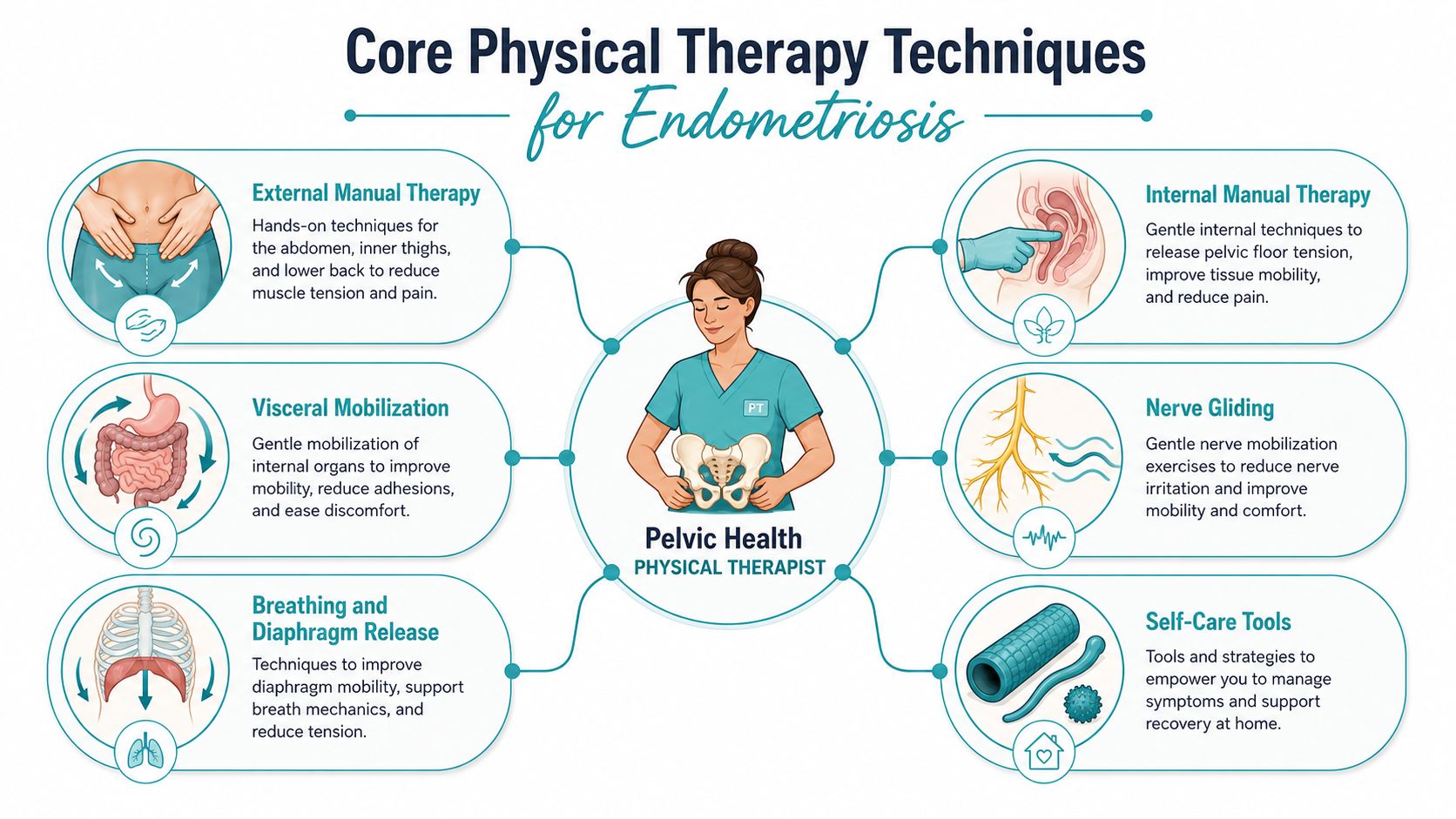
Manual therapy and tissue mobility
External manual therapy may address the abdomen, lower back, hips, and inner thighs. The therapist uses pressure and movement to assess whether soft-tissue restriction or protective guarding changes how you breathe, sit, walk, or move your pelvis.
Internal pelvic floor work is another option, not an obligation. With explicit consent, a trained therapist may assess or treat muscles such as the levator ani and obturator internus. These muscles can develop tender points that refer symptoms toward the bladder, rectum, vagina, or hips. Internal techniques may be especially relevant when penetration is painful or when relaxation remains difficult despite external work.
Some clinicians also discuss gentle organ or connective-tissue mobility techniques. Because the available evidence isn't equally strong for every manual method, ask what restriction the therapist is targeting and how progress will be measured.
Breathing and nervous-system regulation
Diaphragmatic breathing is often an early skill. As the diaphragm moves, the pelvic floor can respond with a subtle lengthening and release. A therapist may pair breathing with pelvic “drops,” supported positions, or a body scan to help you notice clenching before it becomes painful.
Pain education adds another layer. Chronic inflammation, repeated pain, and fear of movement can keep the nervous system alert. Understanding that a painful sensation doesn't always equal new tissue damage can reduce threat and make graded movement more approachable.
Movement and graded loading
Exercise should match your current tolerance. Early work may include short walks, hip mobility, gentle trunk conditioning, or supported strengthening. Later, the plan might progress toward lifting, longer walks, work tasks, or sexual activity, depending on your goals.
The purpose isn't to force your body through pain. It's to give the nervous system repeated, manageable experiences of safe movement while restoring capacity. Resources on pelvic floor release can help you understand why relaxation may come before strengthening.
A therapist may also consider nerve gliding, surface electrical stimulation, or other localized modalities when the symptom pattern suggests nerve sensitivity. The 2026 review found that locally applied treatments had a mean pain difference of -2.03, with a 95% confidence interval from -3.9 to -0.14 (Pain Medicine evidence review). That finding supports targeted care, but it doesn't mean every patient needs every modality.
Matching PT to Your Stage of Treatment
Physical therapy can change depending on where you are in the medical process. Before a diagnosis or planned surgery, the priority may be reducing guarding, preserving comfortable mobility, and helping you work, sleep, or participate in relationships while your care team investigates the cause.
Pre-surgical care can also teach practical skills for the recovery period. These may include relaxed breathing, safe transitions in and out of bed, pacing, and strategies for avoiding unnecessary pelvic clenching. The therapist should coordinate precautions with your gynecologist or surgeon rather than assume that one timeline fits everyone.
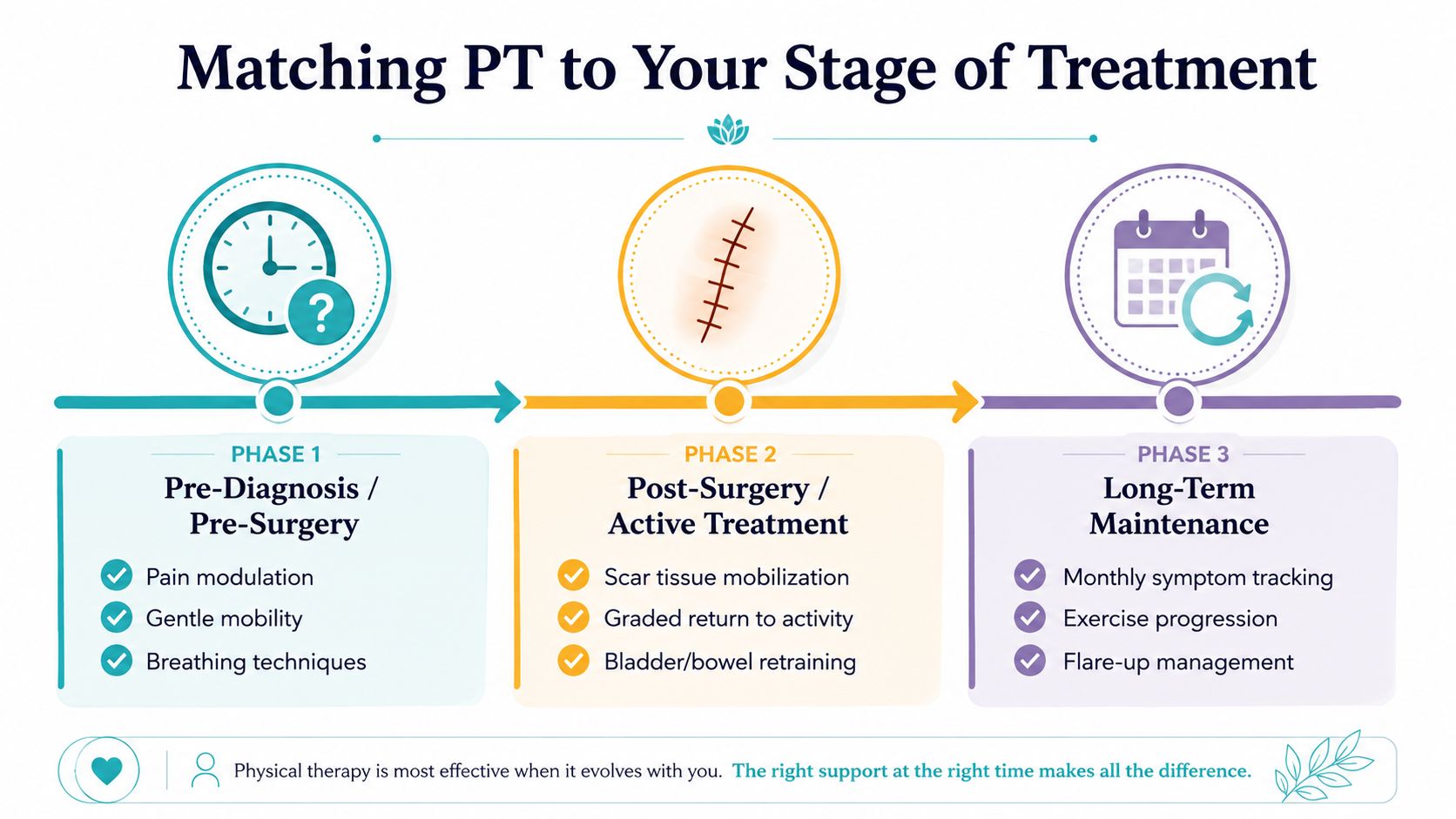
After surgery
Postoperative treatment often begins only after the surgeon confirms that healing is appropriate. Many clinicians may consider a window around two to six weeks after laparoscopy, but the actual start depends on the procedure, incision healing, complications, restrictions, and medical clearance. Early sessions may focus on breathing, comfortable walking, scar desensitization, and gentle mobility before more demanding strengthening.
A scar can feel tight, numb, sensitive, or connected to movement elsewhere in the abdomen. Once the tissue is healed and the surgeon allows contact, scar mobilization may help restore comfortable movement. It should never be aggressive or performed over an unhealed incision.
During flares and long-term care
A flare usually calls for less load, not total immobilization. Your plan may shift toward supported positions, calm breathing, brief walks, heat if medically appropriate, and pacing between activity and rest. If a technique consistently escalates symptoms, tell the therapist. The program needs adjustment.
Evidence remains promising but uneven. A 2025 systematic review reported benefits from rehabilitation approaches such as exercise, manual therapy, and electrophysical agents, while also emphasizing heterogeneity and the absence of definitive long-term protocols (systematic review of rehabilitation for endometriosis). PT works best as one coordinated layer alongside gynecology, medication or surgery when indicated, pain care, and emotional support.
Common Misconceptions About Endometriosis and Physical Therapy
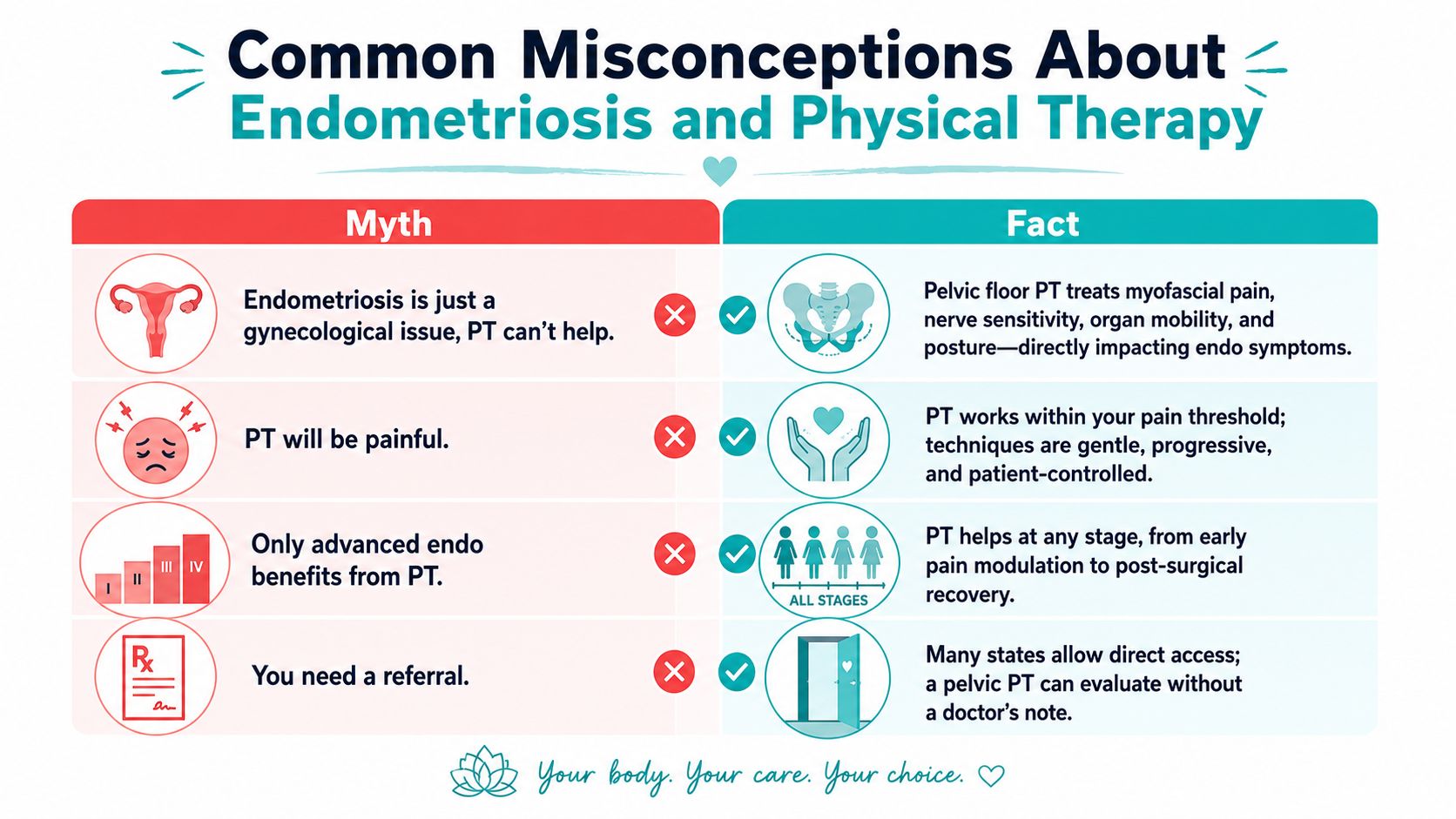
Myth: Endometriosis is only a gynecologic problem, so PT can't help.
Fact: Gynecologic care addresses disease activity, hormones, and surgical decisions. PT addresses muscle guarding, pelvic floor coordination, movement, tissue mobility, and pain-related nervous-system responses. These areas can overlap without being the same treatment.
Myth: Pelvic PT means strengthening with Kegels.
Fact: The clinical study described earlier found increased levator ani tone and impaired relaxation in many participants (pelvic floor dysfunction study). If your muscles are already braced, more squeezing may aggravate symptoms. Your first goal may be learning to release.
Myth: PT is useful only after surgery.
Fact: A therapist can help before surgery with symptom modulation, comfortable movement, and preparation for recovery. After surgery, the focus can shift toward scar mobility and graded activity once healing allows.
Myth: Improvement means the endometriosis wasn't serious.
Fact: PT treats the pain system and functional restrictions around the disease. Better movement or less painful intercourse doesn't prove that lesions were mild, and ongoing pain doesn't mean you've failed rehabilitation.
Myth: Internal treatment is mandatory.
Fact: Internal assessment is optional and should be explained clearly. You can defer it, decline it, or ask to begin with external techniques, education, and breathing.
A therapist should make the plan feel collaborative. Pain isn't a test you need to pass to receive care.
What a First Pelvic Health PT Session Looks Like
The first visit usually starts with conversation, not an internal examination. Your therapist may ask where pain occurs, how it changes across your menstrual cycle, what makes it better or worse, and how it affects work, sleep, exercise, sex, bowel movements, and urination.
Bring information about prior imaging, surgeries, medications, hormonal treatment, and medical diagnoses if you have it. Be specific about your goal. “I want less pain” matters, but “I want to sit through work meetings,” “I want bowel movements to be less frightening,” or “I want to tolerate intimacy” gives the therapist a functional target.
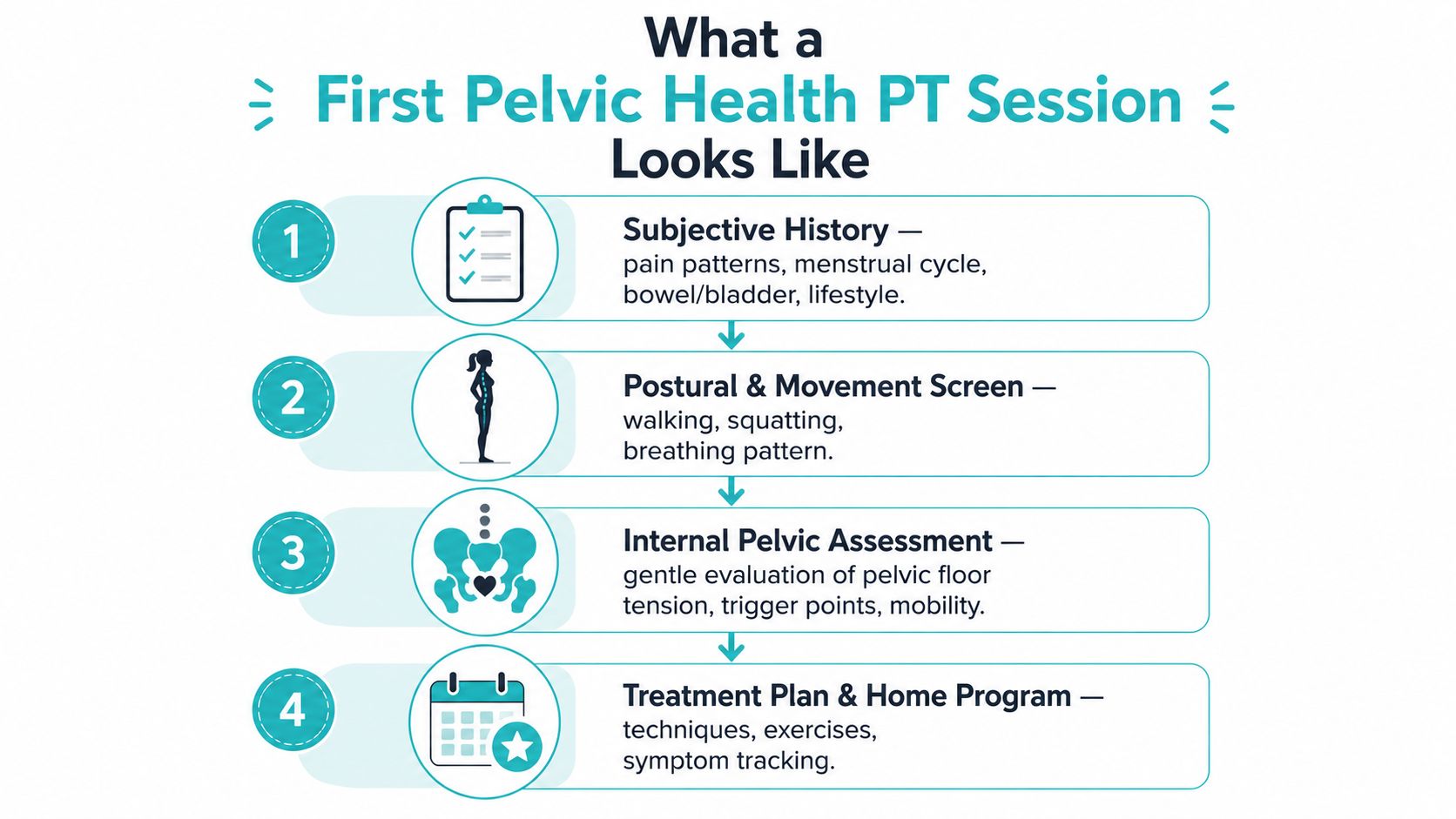
The external assessment
The therapist may observe posture, walking, breathing, hip movement, lumbar mobility, and how you perform a basic sit-to-stand or squat. They may assess abdominal, hip, back, and inner-thigh tissues from the outside. These findings help identify whether your body is bracing, avoiding movement, or overusing certain muscles.
The therapist may also look at how your breathing changes when you anticipate pain. A shallow breath and clenched abdomen can accompany pelvic floor overactivity, although these observations never provide a complete diagnosis by themselves.
The internal assessment
If you agree, an internal vaginal or rectal assessment may evaluate resting tone, tenderness, trigger points, muscle coordination, and the ability to contract and relax. The therapist uses gloves, explains each step, and checks in throughout the examination.
You can stop at any moment. An internal exam isn't mandatory on day one, and it isn't mandatory for receiving pelvic PT. A skilled clinician can begin with external assessment, education, movement, and symptom management while trust and comfort develop.
Knowing what to expect at pelvic floor therapy may make the appointment less intimidating. If you're comparing different rehabilitation options, a guide to how to decide on treatment type can also clarify why pelvic PT is specifically suited to muscle coordination and pelvic pain concerns.
Your therapist should finish by explaining the working findings in plain language. You'll typically leave with a manageable home plan, such as breathing practice, a supported position, pacing guidance, or symptom tracking, rather than an exhausting list of exercises.
Finding Pelvic Health PT Near You and When to Seek More Help
Look for a clinician who regularly treats pelvic pain, endometriosis, painful intercourse, bowel or bladder symptoms, and post-surgical recovery. The APTA Pelvic Health section and Herman & Wallace practitioner listings can be useful starting points. Depending on where you live, relevant preparation may include women's health clinical specialization or pelvic floor certification.
Call the clinic before scheduling and ask focused questions:
- Relevant experience: Does the therapist treat endometriosis-related pelvic pain and high-tone pelvic floor dysfunction?
- Treatment options: Can care begin externally if you don't want an internal examination?
- Coordination: Will the therapist communicate with your gynecologist or surgeon when needed?
- Access: Does the clinic offer telehealth for education, movement planning, and external symptom triage?
Telehealth can be a reasonable starting point when travel, pain, or privacy makes an in-person visit difficult. It can't replace every hands-on assessment, but a therapist may still help with pacing, breathing, movement, home setup, and questions for your medical team.
Seek prompt medical evaluation alongside PT for sudden heavy bleeding, new symptoms suggesting bowel obstruction, fever with pelvic pain, fainting, rapidly worsening neurologic symptoms, or possible acute infection. PT is not the right stand-alone response to a medical emergency.
Endometriosis care often requires several professionals working toward the same functional goals. A pelvic health therapist can contribute the movement and muscle perspective while gynecology and other clinicians address disease management, medication, surgery, and broader pain care.
Lake City Physical Therapy provides women's health and pelvic floor therapy for endometriosis-related pain, painful intercourse, and pelvic floor dysfunction, with in-person clinics and telehealth options. Visit Lake City Physical Therapy to learn more about pelvic health care and schedule a conversation about your symptoms and goals.

