Pelvic Floor Release: A Guide to At-Home Techniques
You may be here because your body feels “on” all the time. You try to relax, but there's still pressure, aching, a feeling of hitting a wall with penetration, trouble emptying your bowels, or an urge to pee that doesn't match how much is in your bladder. A lot of people assume those symptoms mean weakness. Often, they don't.
A tight pelvic floor can be just as disruptive as a weak one. The muscles may be gripping, guarding, and staying braced when they should be able to let go. That's where pelvic floor release comes in. Done well, it's not forceful stretching. It's a way of teaching your nervous system and muscles that they're safe enough to soften.
Understanding Pelvic Floor Tension
When pelvic floor muscles stay too active, I think of them as being stuck in “holding mode.” They may hold against stress, pain, constipation, athletic bracing, surgery, birth, or habits like constantly sucking in the stomach. Over time, that holding can start to feel normal, even when it's driving symptoms.
Pelvic floor dysfunction is common. In the United States, approximately 23.7% to 25% of adult women report at least one symptomatic pelvic floor disorder, and prevalence rises from 9.7% in women aged 20 to 39 to 49.7% in those aged 80 or older according to PubMed data on symptomatic pelvic floor disorders. Common doesn't mean normal, though. It means many people are dealing with symptoms that deserve attention.
Tight doesn't mean strong
A hypertonic pelvic floor is an overly tight or poorly relaxing pelvic floor. It can coexist with weakness, but it isn't the same thing. A muscle can be tense and still not be coordinating well. That's why doing more squeezing exercises on your own sometimes makes things worse instead of better.
If you've heard the term muscle spasm, that can be part of the picture too. For a plain-language overview, this expert advice from Nursing Assessment Australia is a useful companion read. If you want a deeper look at how overactive pelvic floor muscles show up day to day, Lake City Physical Therapy also explains the pattern well in this guide to a hypertonic pelvic floor.
What release actually means
Pelvic floor release is not about “pushing through” pain. It's about reducing unnecessary guarding. Sometimes that involves breath work and external relaxation only. Sometimes it includes internal self-release. Sometimes it requires a therapist's hands and clinical judgment.
Practical rule: If a technique makes your body brace harder, hold your breath, clench your butt, or flare your pain afterward, it isn't release.
That's why body awareness matters more than intensity. The goal is to notice what your body does when you ask it to soften. Relief often starts when you stop trying to overpower the muscles and start giving them better input.
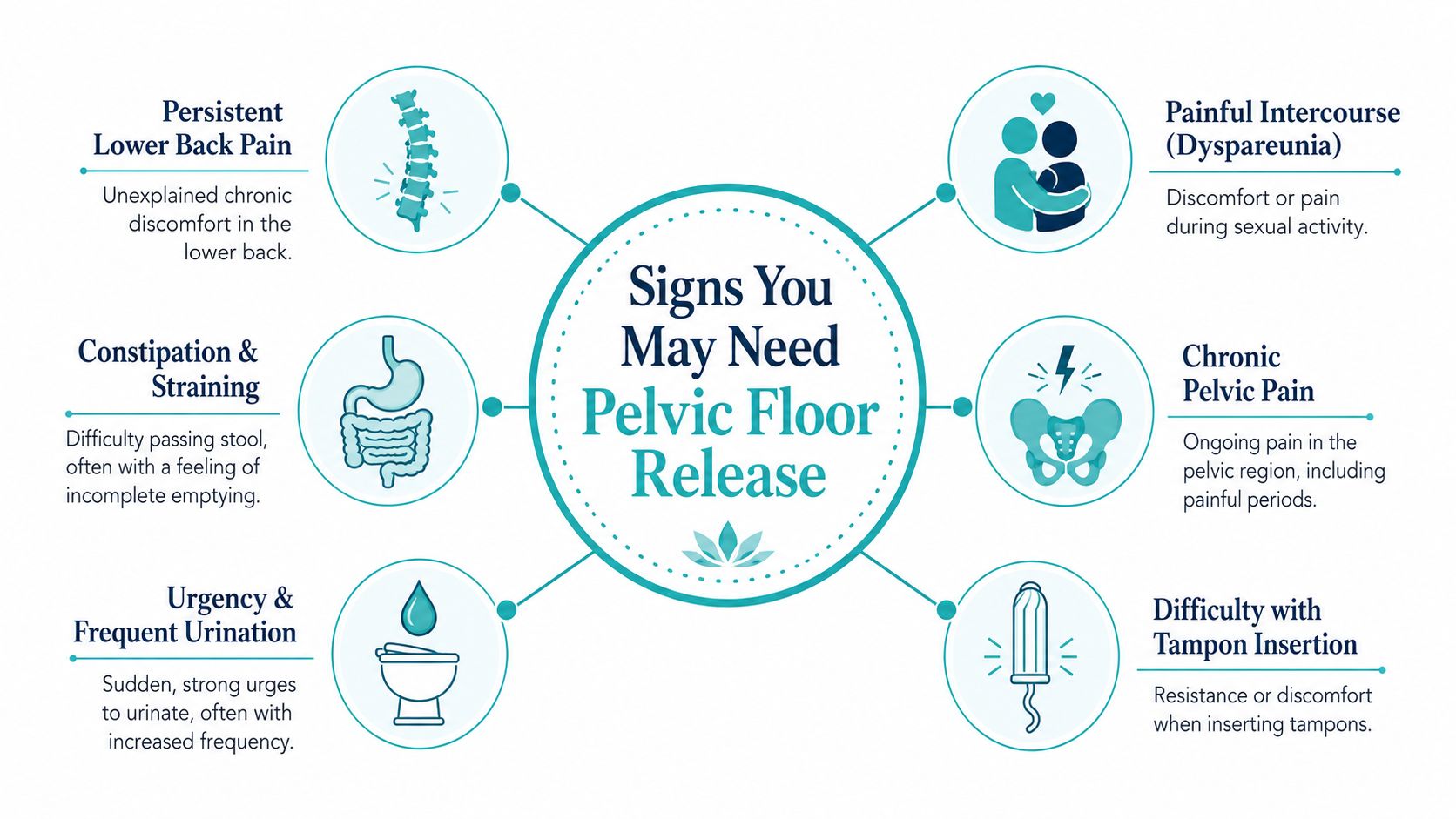
Signs You May Need Pelvic Floor Release
People are often surprised by how many symptoms can connect back to pelvic floor tension. The muscles sit at the base of the pelvis, but their effects can show up in the bladder, bowels, hips, low back, sexual function, and even your breathing pattern.
In the UK, over 60% of women have at least one symptom of poor pelvic floor health, and approximately one-fifth of women report pelvic pain globally, as noted by the Royal College of Obstetricians and Gynaecologists. If your symptoms have felt random or hard to explain, you're not imagining them.
Common patterns that point to overactivity
Some symptoms are obvious. Others are easy to miss because they don't sound pelvic floor related at first.
- Bladder urgency without much warning: You feel like you need to find a bathroom now, even when your bladder isn't full.
- Constipation or difficulty emptying: Stool may feel “stuck,” or you may strain and still feel incomplete afterward.
- Pain with penetration: Sex, tampon insertion, or even a pelvic exam may feel sharp, burning, resistant, or blocked.
- Deep pelvic aching: Symptoms may worsen after sitting, stress, exercise, or later in the day.
- Low back, tailbone, or hip discomfort: Not all low back pain is pelvic floor related, but persistent tension in the area can contribute.
Real-life examples
A runner may assume leaking or urgency on mile three means the pelvic floor is weak, when the underlying issue is that the muscles never fully let go between strides.
A new mom may describe a deep ache, pressure, or difficulty with bowel movements and think she just needs to “tighten everything back up.” In some cases, she needs the opposite first. She needs downtraining, breathing, and release.
A person with painful sex may keep stretching their hips or buying more lubricant without realizing the pelvic floor is guarding internally.
If your symptoms seem unrelated, that's often the clue. Tight pelvic floor muscles rarely create just one clean, isolated problem.
A quick self-check
You don't need to diagnose yourself, but these questions can help you decide whether pelvic floor release deserves a closer look:
| Question | Why it matters |
|---|---|
| Do you clench your stomach or butt without noticing? | Constant bracing can keep the pelvic floor active. |
| Do you push to urinate or have a bowel movement? | Healthy emptying needs pelvic floor relaxation. |
| Does penetration feel like your body says “no” before your mind does? | Protective guarding often shows up this way. |
| Do symptoms flare more when you're stressed? | The pelvic floor responds to the nervous system. |
If several of those sound familiar, release work may be more useful than more strengthening right now.
The Foundation Breath and External Relaxation
Individuals often go straight to internal techniques because that seems like the direct route. It usually isn't. If your belly is gripped, your glutes are clenched, and your breathing stays high in the chest, your pelvic floor is getting a constant message to stay on guard.
Current education often misses this point. Pelvic floor relaxation is neurologically linked to softening the abdominal core and glutes, often described as “unclenching the belly and butt,” and that whole-system view is especially important for athletes whose core and glute tension affects pelvic floor tone, as discussed in this video on the belly, butt, and pelvic floor connection.
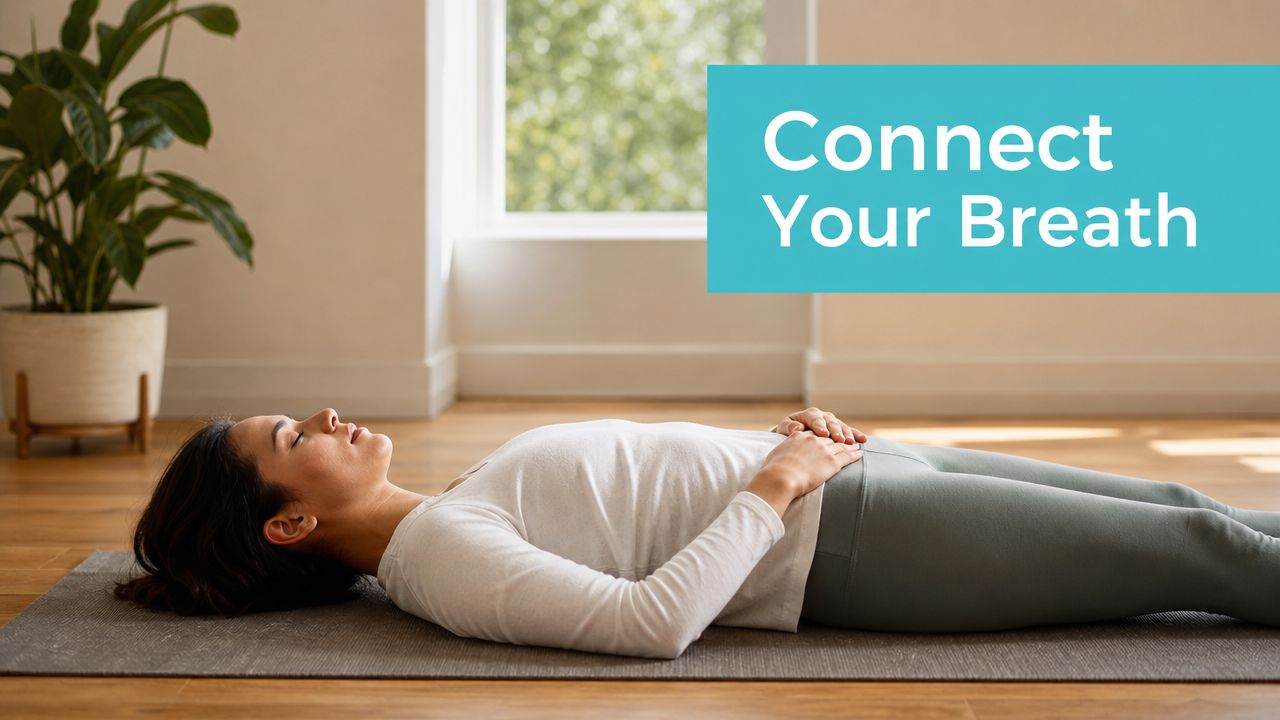
Start with 360 breathing
Lie on your back with your knees bent, or rest on your side if that feels safer. Put one hand on your lower ribs and one hand on your lower belly. Then breathe in through your nose and let the breath expand into your ribs, sides, and abdomen.
You're not trying to inflate only the stomach. You want a 360-degree expansion. Think of the ribs widening, the belly softening, and the pelvic floor dropping slightly rather than gripping upward.
On the exhale, let the air leave slowly. Don't force a hard abdominal brace. Just feel the body recoil naturally.
If you want a visual guide, this video on diaphragmatic breath and pelvic floor coordination can help you connect the timing.
What “unclench your belly and butt” actually feels like
A lot of people hear that cue and accidentally collapse their posture. That's not the goal. You're looking for less gripping, not sloppy support.
Try these cues:
- Soften the lower belly: Let it be easy for one full breath. Don't pull your navel in.
- Relax the glutes: Notice whether you're squeezing your butt cheeks together while standing, sitting, or lying down.
- Unclench the jaw: Jaw tension and pelvic tension often travel together.
- Widen the sit bones in your mind: You're not forcing movement. You're giving your nervous system a direction.
A simple external downshift sequence
Use this when symptoms are flaring or before any internal work:
- Get supported: Lie down with pillows under your knees, or sit leaning back so your abdominals don't have to work hard.
- Take slow breaths: Aim for easy inhale expansion and an unforced exhale.
- Scan for bracing: Belly, butt, inner thighs, jaw.
- Let the pelvic outlet soften: Think “drop” or “melt,” not “push.”
- Stop before irritation builds: The right dose leaves you calmer, not stirred up.
A pelvic floor rarely releases well when the rest of the body is preparing for effort.
This external work isn't a warm-up you rush through. For many people, it's the treatment.
Gentle At-Home Release Techniques
Once breathing and external relaxation feel more familiar, at-home pelvic floor release can become more specific. The key word is gentle. Many self-help guides explain where to place pressure, but they leave out the most important safety detail. Your body has to feel safe enough to let go.
A critical gap in self-help guidance is the failure to explain that effective release requires staying at a pain score under 5/10 to avoid protective muscle guarding. Without that, people often go too hard and worsen hypertonicity, as noted in this NHS leaflet on self-release of pelvic floor muscles.
The sub-threat rule
This is essential foundational information. Pelvic floor release should stay in a sub-threat zone. That means enough pressure to feel a clear contact or stretch, but not so much that your body tenses to defend itself.
Use this simple scale:
| Sensation | What it means |
|---|---|
| 0 to 2 out of 10 | Often too light to create change, though useful for very sensitive days |
| 3 to 4 out of 10 | Usually the sweet spot for self-release |
| 5 out of 10 or higher | Too much for most people doing this on their own |
If you feel your breath stop, your toes curl, your butt tightens, or you want to get away from the pressure, back off.
External techniques first
External work is often enough to reduce symptoms, especially if you're flared up, new to this, or not ready for internal techniques.
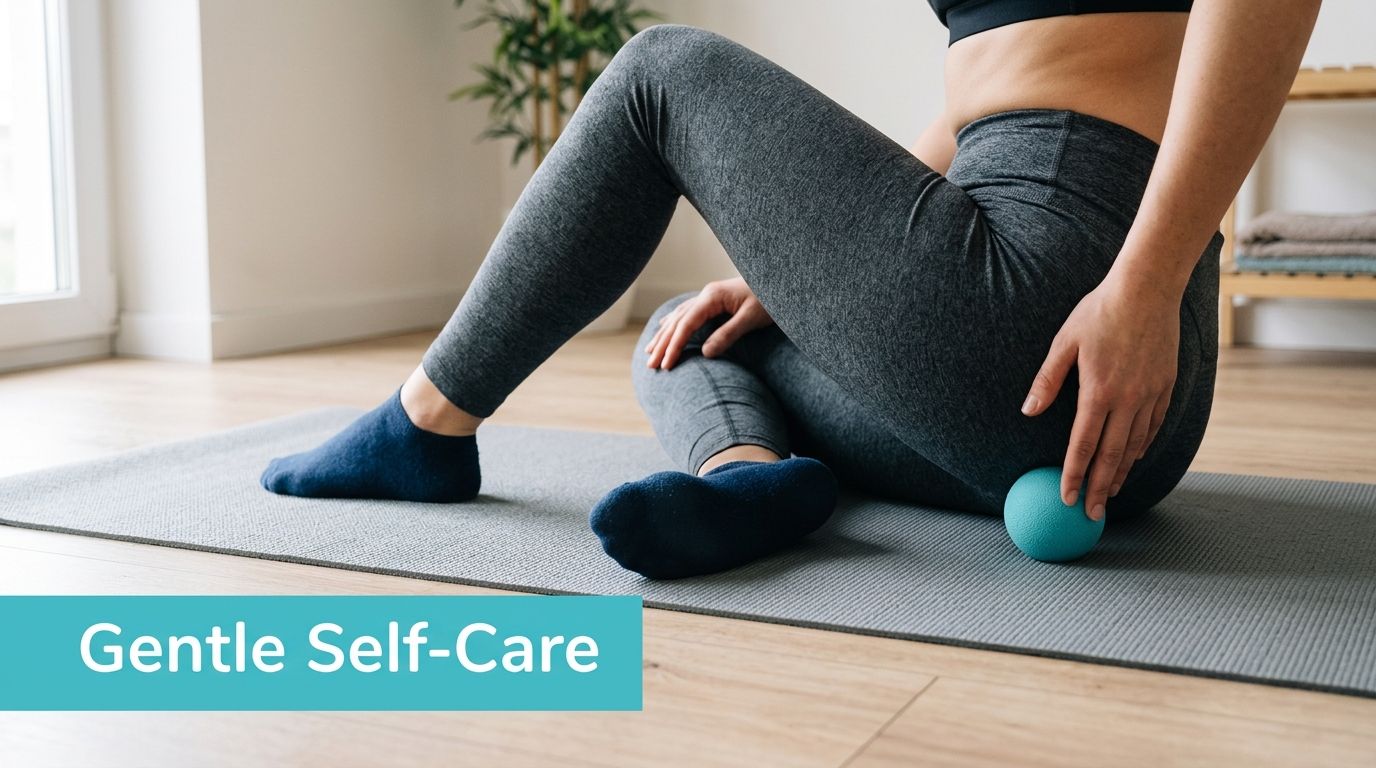
- Perineal ball release: Sit or recline with a soft massage ball or similar soft tool placed externally against the tissues between the sit bone region and the vaginal opening area. Use body weight very lightly. Pair it with slow breathing.
- Inner thigh softening: Support one leg out to the side with pillows and breathe into the groin. Don't chase a dramatic stretch.
- Glute and side-waist release: Gentle figure-four positioning, side body lengthening, or supported child's pose can reduce the pull from surrounding tissues.
- Sitting bone awareness: While seated, rock subtly side to side and notice whether one side grips more.
For people considering a tool made for internal self-treatment, this overview of what a pelvic wand is helps explain when and how it's typically used.
Internal self-release with the clockface method
If internal work feels appropriate, use a clean, lubricated finger or a pelvic wand designed for this purpose. Empty your bladder first. Get into a position where your hips, belly, and jaw can stay soft.
Then use a clockface image at the vaginal opening.
- Start slowly: Insert only as far as feels comfortable.
- Explore the side walls: Many people are taught to think of pressure around 3 to 9 o'clock rather than poking straight upward.
- Find a tender band, not the sharpest spot: You're looking for tension, not trying to “dig out” pain.
- Hold and breathe: Stay with one point while letting the inhale soften around your finger or wand.
- Wait for change: That may feel like less resistance, less tenderness, or easier breathing.
Don't scrub aggressively. Don't force deeper range. Don't chase every spot in one session.
Here's a visual walkthrough that some people find helpful after they understand the safety rules above:
What works and what usually doesn't
What tends to help:
- Short, calm sessions: A few minutes done consistently is better than one intense session.
- Breath matched to pressure: Inhale to soften. Exhale without bearing down.
- One area at a time: Let the tissue respond before moving on.
- Stopping while you still feel okay: Leave some capacity in the system.
What often backfires:
- Pushing into pain: More pressure doesn't mean more release.
- Treating it like deep tissue work: The pelvic floor usually responds better to patience than force.
- Skipping external relaxation: Internal work lands better when the whole system is less guarded.
- Using release as a substitute for evaluation: If symptoms are complex, self-treatment has limits.
The right technique feels boring compared with forceful stretching. That's often why it works better.
When to Seek Professional Pelvic Floor Therapy
Self-release can be helpful, but it can't replace a skilled evaluation when symptoms are persistent, confusing, or severe. If you've been trying stretches, wands, breathing, or online advice without meaningful change, that doesn't mean you've failed. It usually means your body needs a more precise plan.
Professional care matters because instruction errors are common. A critical clinical pitfall is incorrect exercise instruction, especially when someone holds their breath or recruits the wrong muscles, which can worsen symptoms. Stopping related management too early, such as constipation care, can also lead to treatment failure, as described in this clinical summary on internal release and treatment pitfalls.
Stop self-treatment and get guidance if you notice these signs
- Sharp or escalating pain: Discomfort that builds rather than settles needs assessment.
- Bleeding or signs of infection: These are not normal responses to self-release.
- Symptoms that feel complex: Endometriosis-related pain, major bowel issues, or pain that spreads can involve more than muscle tension alone.
- Fear or inability to relax at all: That often needs nervous system support, graded exposure, and therapist guidance.
- Ongoing constipation or straining: Pelvic floor release works better when bowel habits and stool consistency are managed too.
What a pelvic floor therapist adds
A therapist can figure out whether the problem is overactivity, poor coordination, scar restrictions, joint mechanics, breathing pattern issues, bowel habits, or a combination. That changes treatment.
They can also tailor the order of care. Some people need external work only at first. Others need internal manual therapy, movement retraining, bladder or bowel strategies, dilator progression, or biofeedback. At Lake City Physical Therapy, for example, pelvic floor physical therapy includes internal and external manual techniques for tight pelvic floor muscles as one option among the care paths available.
If you're using insurance and want to understand how referral pathways and covered providers work before scheduling, it can help to learn about health plan networks so you know what questions to ask your plan.
Professional help is not a last resort
Too many people wait until symptoms have taken over sex, exercise, travel, sleep, or bowel function. You don't have to earn care by suffering long enough first.
A pelvic floor therapist's job isn't to push you into an internal exam before you're ready. It's to assess what's driving the problem, explain it clearly, and build treatment at a pace your body can tolerate.
Partner with Experts at Lake City Physical Therapy
Pelvic floor release works best when it's guided by three things. Good body awareness, the right dose of pressure, and a plan that treats the whole system instead of only the point of pain. For some people, that starts with breath and external relaxation. For others, it includes hands-on treatment, bowel and bladder retraining, movement work, or support for return to sport and postpartum recovery.
Lake City Physical Therapy focuses on women's health care across a wide range of needs. That includes pelvic floor therapy for incontinence, prolapse, painful sex, and endometriosis-related pain, along with prenatal and postpartum rehabilitation, oncology physical therapy, and women's sports rehab for runners, CrossFit athletes, triathletes, dancers, and volleyball players.

When local support makes the difference
There's real value in working with someone who can watch how you breathe, how you brace, how you bear down, and how your symptoms respond over time. Pelvic floor tension often looks simple from the outside and turns out to have several drivers once you assess it properly.
Lake City Physical Therapy serves women through clinics in Coeur d'Alene, Hayden, Post Falls, Rathdrum, Liberty Lake, Spokane South Hill, Eagle, and Boise, with telehealth options as well. That matters if you need ongoing support rather than one-off advice.
The goal is bigger than symptom reduction
Relief matters, but so does confidence. You should be able to use the bathroom without straining, move without guarding, return to intimacy without fear, and exercise without wondering whether your body is about to protest.
The right plan won't treat your pelvic floor like an isolated part. It will look at your breath, pressure management, abdominal wall, hips, glutes, habits, stress response, and the specific situations that trigger your symptoms. That's how care becomes practical, not generic.
If you're ready for a personalized plan, Lake City Physical Therapy offers pelvic floor evaluations and women's health care designed around your symptoms, goals, and comfort level. Schedule a consultation to get clear answers and a treatment approach that fits your body.

