Lymphedema After Breast Cancer: Your Complete Guide
You finish treatment and people expect relief. Sometimes that's exactly what you feel. Sometimes it's relief mixed with a new kind of vigilance.
A sleeve feels tighter on one side. Your watch leaves a deeper mark. Your hand looks a little puffy by evening, or your arm feels strangely heavy even though you didn't do anything unusual. That's often when the questions start. Is this normal healing? Did I overdo it? Is this lymphedema after breast cancer?
Those concerns are reasonable. They don't mean you're overreacting, and they don't mean something has gone badly wrong. They mean your body has been through surgery, radiation, and recovery, and you're paying attention.
That attention matters. Lymphedema after breast cancer is common enough that every survivor should understand it, but it is not something you have to face passively. The patients who do best usually aren't the ones who panic or the ones who ignore symptoms. They're the ones who notice changes early, get the right guidance, and follow a clear plan.
That's where specialized oncology physical therapy becomes so important. Good lymphedema care isn't one massage, one sleeve, or one handout. It's a coordinated rehab process that helps you reduce swelling, protect your skin, restore shoulder and arm function, and get back to daily life with more confidence.
Your Journey After Breast Cancer Treatment
The end of cancer treatment rarely feels as neat as people imagine. Scans may be done. Incisions may be closing. Appointments may be less frequent. But many women still feel like they're learning a new version of their body day by day.
A common moment goes like this. You're getting dressed in the morning and notice your ring is harder to slide on. Later, while carrying groceries or brushing your hair, your arm feels full and tired. By nighttime, the back of your hand looks different than it did a week ago. You tell yourself to watch it. Then you wonder if waiting is smart.
That uncertainty is one of the hardest parts.
Why this stage feels confusing
Some swelling is expected after surgery and radiation. Tissue healing creates inflammation. Scar tissue can make the chest, shoulder, and armpit feel tight. Muscles may weaken when you guard the arm or stop moving normally. All of that can blur the line between routine recovery and a developing lymphatic problem.
The key difference is persistence and pattern. Routine post-treatment swelling generally settles as healing progresses. Lymphedema tends to show up as a recurring or progressive sense of heaviness, fullness, tightness, or visible swelling that doesn't behave like ordinary soreness.
Practical rule: New swelling, new heaviness, or a clear change in fit on one side deserves attention early, not after you've spent months hoping it will disappear.
What helps most early on
Patients usually regain a sense of control when they stop asking only, “Is this bad?” and start asking, “What do I do next?” That shift matters.
A useful early response looks like this:
- Notice the pattern: Is it worse by the end of the day, after activity, or in heat?
- Check function: Does your shoulder feel stiffer, or does your arm fatigue faster?
- Look at the skin: Any redness, irritation, or signs of infection need prompt medical attention.
- Get assessed: A therapist trained in oncology rehab can help distinguish swelling, scar restriction, weakness, and true lymphedema.
Fear tends to make people do one of two things. They either stop using the arm, which often creates more stiffness and dysfunction, or they push through everything without guidance. Neither works well. The better path is informed, progressive, supervised care.
What Is Lymphedema and Why Does It Happen
Your lymphatic system works like a city's drainage and cleanup network. Tiny vessels collect extra fluid, proteins, and waste from tissues, then move that fluid through lymph nodes where it's filtered before returning to circulation.
When that system is working well, you don't notice it. When part of it is disrupted, fluid can back up.
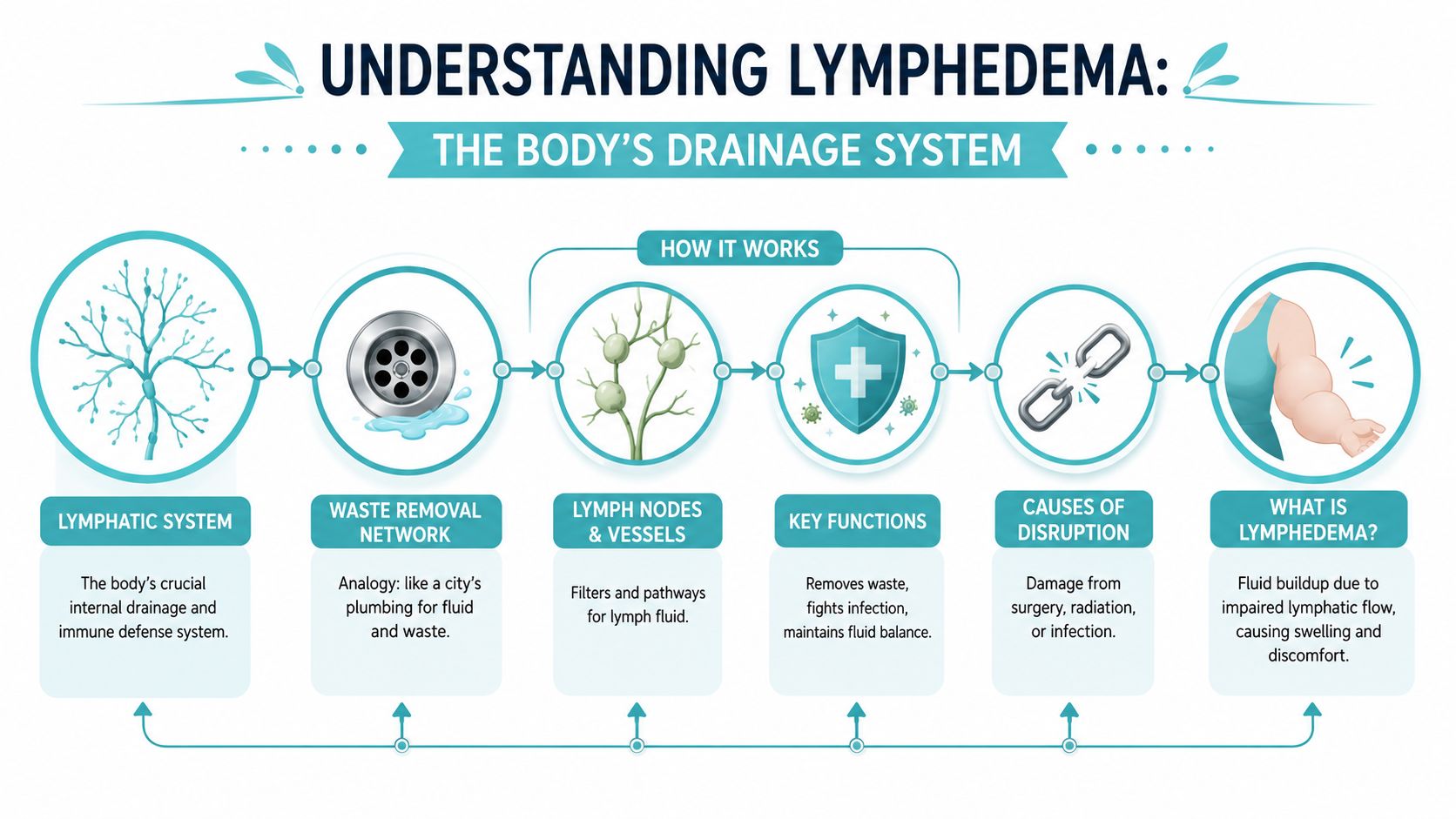
The traffic jam analogy
Breast cancer treatment can create roadblocks in that drainage system. Surgery may remove lymph nodes. Radiation can change tissue and affect the remaining pathways. As a result, lymph fluid may have a harder time moving out of the arm, breast, chest wall, or nearby tissues.
That backup is lymphedema.
If you want a simple overview of the anatomy, Lake City PT has a helpful explanation of how the lymph system works.
Why treatment raises the risk
Not everyone who has breast cancer treatment develops lymphedema. But the risk is real, and it's higher when treatment affects lymph nodes or nearby tissues. According to Fred Hutch, arm lymphoedema after breast cancer treatment is estimated at approximately 20% (1 in 5 people), while a 2024 review suggests that as many as 65% of women undergoing breast cancer surgery may suffer from lymphedema when mild or undiagnosed cases are included (Fred Hutch coverage of breast cancer treatment side effects).
That wide range tells you something important. Lymphedema doesn't always look dramatic at first. Mild cases can be missed. Symptoms may build slowly. Some women live with heaviness, aching, or subtle swelling long before anyone names it correctly.
What lymphedema is not
Lymphedema is not just “a little puffiness” to ignore indefinitely. It's also not a reason to stop moving, avoid exercise forever, or treat your arm as fragile.
A better way to think about it is this:
| Situation | What it often means |
|---|---|
| Short-term swelling right after treatment | Part of normal healing, though it should still be monitored |
| Ongoing heaviness, repeated swelling, or visible size changes | A lymphatic issue may be developing and should be evaluated |
| Swelling plus redness, warmth, or sudden pain | Contact your medical team promptly because infection is a concern |
The earlier you identify a lymphatic traffic jam, the easier it usually is to manage before tissue changes become harder to reverse.
Understanding Your Personal Risk Factors and Early Signs
Risk factors are not a prediction of your future. They're more like a weather forecast. They tell you when closer monitoring makes sense.
Some women face a relatively lower risk and still develop symptoms. Others have several strong risk factors and never progress to significant swelling. That's why personal surveillance matters more than assumptions.
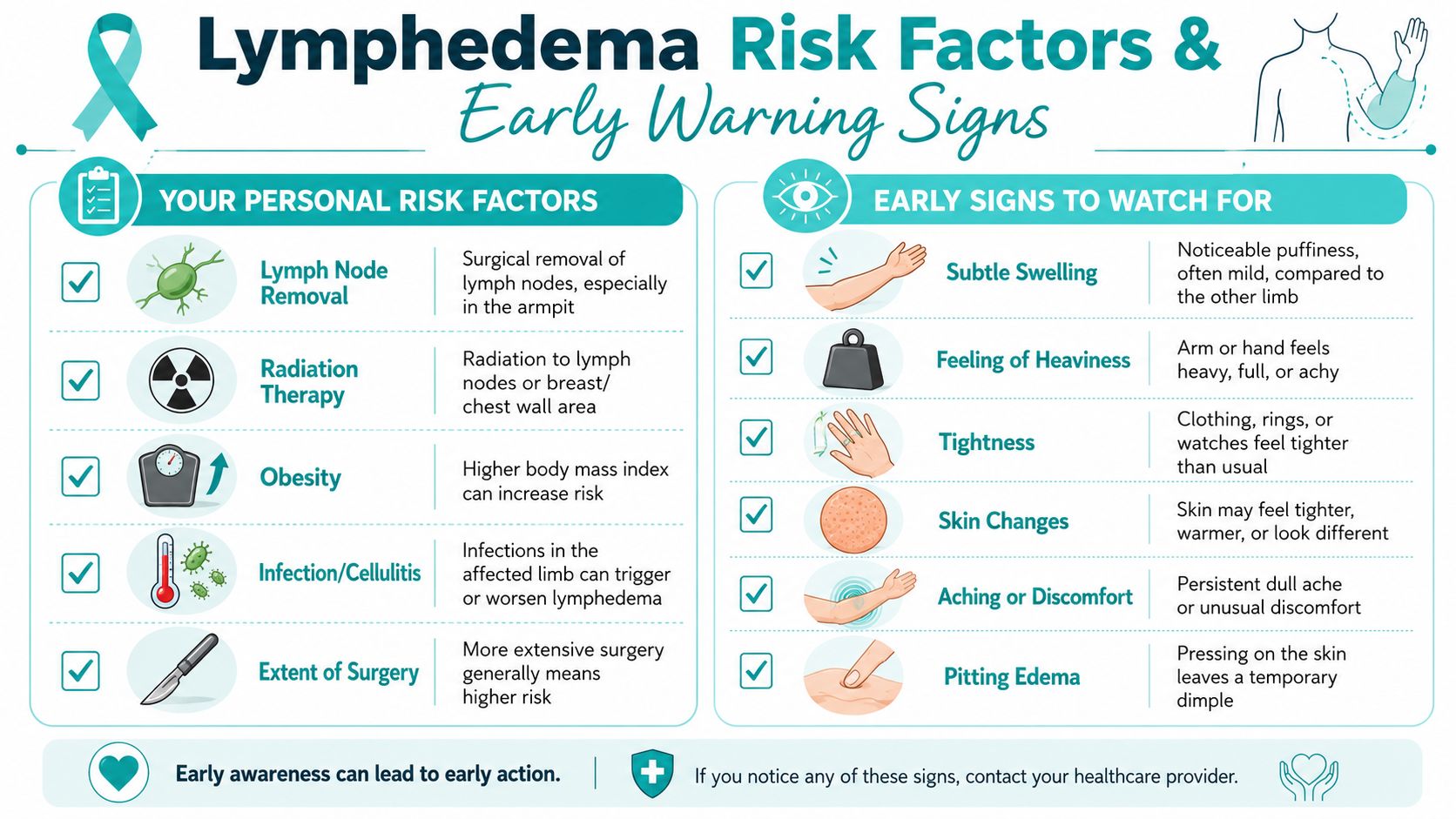
The risk factors that matter most
One of the clearest risks is axillary lymph node dissection, often shortened to ALND. Research shows that ALND significantly increases lymphedema risk, the risk rises with the number of nodes removed, high BMI at diagnosis is also an independent risk factor, and approximately 40% of individuals who undergo breast cancer surgery with lymph node removal experience lymphedema (NIH review on breast cancer-related lymphedema risk).
That doesn't mean everyone with node removal will have major swelling. It means your drainage network may have less reserve capacity. If extra strain is added through healing demands, radiation effects, infection, or reduced movement, the system may struggle.
Other factors often increase concern in clinical practice:
- More extensive surgery: More tissue disruption usually means a bigger recovery demand.
- Radiation in the breast, chest wall, or armpit region: Treated tissue can become less elastic and less efficient at fluid transport.
- Higher body weight: This is associated with greater risk and often makes management harder.
- Infection in the arm or nearby skin: Infection can worsen swelling quickly.
Early signs patients often miss
The first signs are often sensory, not visual. Patients say the arm feels “off” before they see obvious swelling.
Watch for changes like these:
- Heaviness or fullness: The arm feels weighted, thick, or fatigued.
- Tightness in clothing or jewelry: Rings, sleeves, bras, or watches fit differently on one side.
- Aching or mild discomfort: Not sharp pain, but a dull, persistent awareness.
- Reduced flexibility: Reaching overhead or behind your back feels more restricted.
- Subtle swelling: Often in the hand, forearm, armpit, chest wall, or breast.
If one arm feels different enough that you keep noticing it, that's clinically useful information even before the swelling looks dramatic.
What to track at home
You don't need medical equipment to be observant. A simple notes app works well.
Record:
- Where you feel it most
- When it shows up
- What seems to aggravate it
- Whether it resolves with rest, elevation, or overnight
This kind of pattern is valuable in the clinic. It helps your therapist see whether the issue behaves more like healing stiffness, muscular overload, scar restriction, or lymphatic congestion.
The Gold Standard of Care Complete Decongestive Therapy
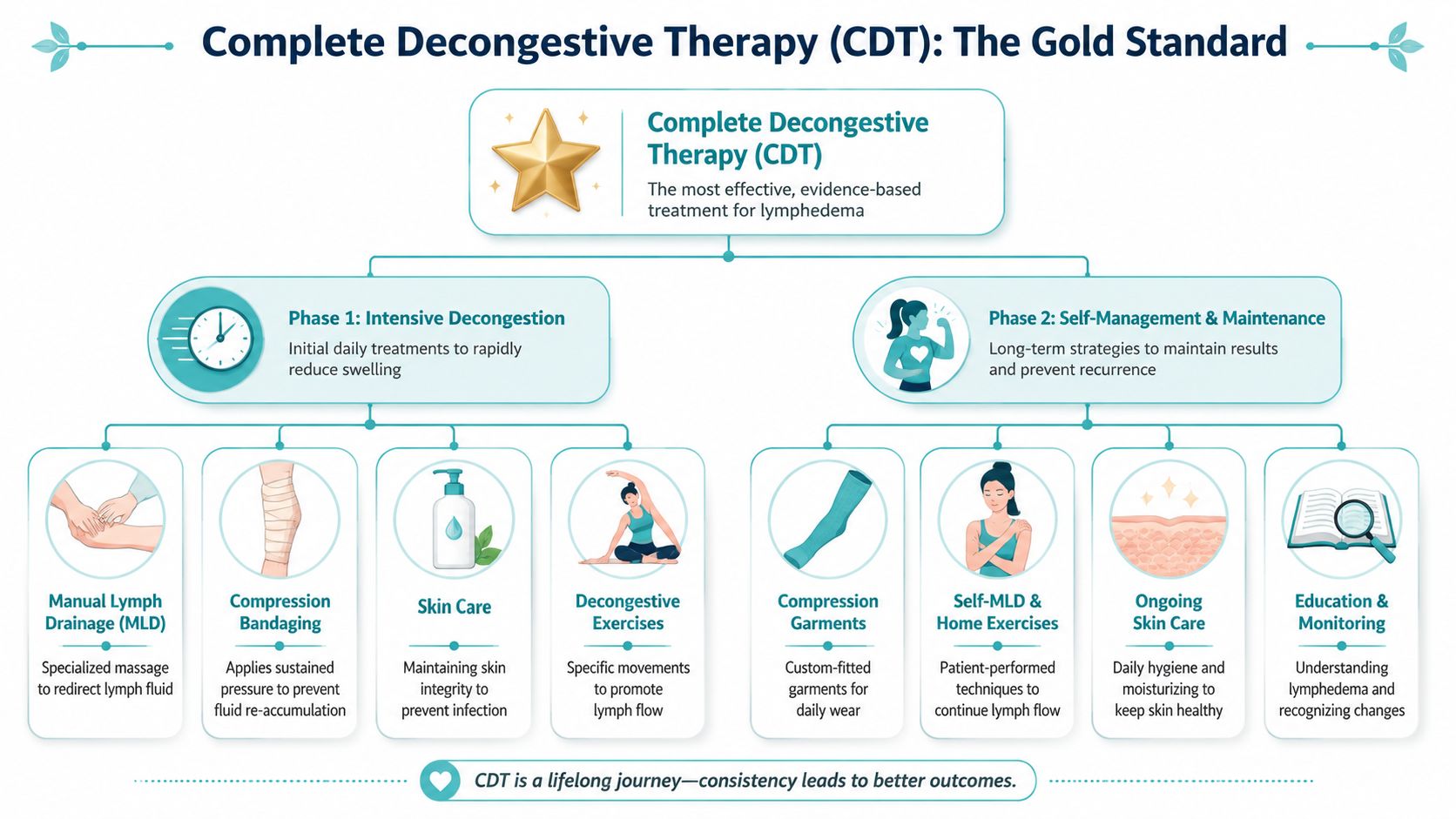
If your arm, breast, or chest wall starts to feel heavier after cancer treatment, the right plan matters early. The approach with the strongest clinical support is Complete Decongestive Therapy, or CDT.
The International Society of Lymphology identifies CDT as standard care for lymphedema. In practice, that means treatment works best as a coordinated rehabilitation plan led by a therapist trained in oncology and lymphatic care, not as a grab bag of separate tips. Access is still uneven, especially in rural areas, and delays in treatment can affect function and quality of life, as described in this review of disparities in lymphedema therapy access.
If you want to see how this plan applies to upper-extremity swelling, Lake City PT offers a useful page on lymphedema treatment for the arm.
What CDT includes
Many patients come in expecting one treatment table technique. CDT is broader than that. It combines fluid reduction, tissue care, movement, and long-term self-management so the gains from one part are supported by the next.
Manual lymphatic drainage
Manual lymphatic drainage is a specialized, gentle hands-on treatment. It is very different from standard massage.
The lymphatic system works like a neighborhood drainage network. After surgery or radiation, some routes are narrowed or blocked, so fluid needs help finding another path. A trained oncology physical therapist uses light, specific strokes in a set sequence to direct fluid toward healthier regions that can handle the load. In the clinic, I often explain it this way: we are not forcing fluid out. We are giving it a better route.
Compression therapy
Compression holds the progress you make in treatment.
Early on, that may mean short-stretch bandaging or another reduction method chosen for your body region, skin condition, and stage of swelling. Later, many people transition to a sleeve, glove, bra, pad, or custom garment. Fit matters. The wrong garment can dig in, slide, irritate the skin, or fail to control swelling, which is why proper assessment is part of treatment, not an extra.
Decongestive exercise
Exercise in CDT has a job to do. Muscle contractions, breathing, posture, and joint motion all help move lymph.
That does not mean harder is better. Early exercise may focus on shoulder mobility, chest wall motion, scapular control, and diaphragmatic breathing. As symptoms settle, strengthening and endurance work can be added with closer attention to dosage, compression use, and your response later that day and the next morning. This is one of the biggest advantages of PT-led care. The program changes as your body changes.
Skin and nail care
Skin care is part of lymphedema treatment because the skin is your first defense against infection.
Dry, cracked, or irritated skin gives bacteria an easier entry point. With reduced lymphatic transport, a small problem can escalate faster. Daily moisturizing, careful shaving and nail care, and quick reporting of redness, warmth, or sudden swelling are basic treatment tasks. They are also part of protecting your progress.
Why the full plan works better than isolated treatments
Here is the trade-off patients deserve to hear clearly. A single piece of CDT can help, but isolated treatment usually does not hold up well over time.
| Approach | What usually happens |
|---|---|
| Massage alone | May reduce discomfort briefly, but swelling often returns without compression and follow-up care |
| Compression without skilled fitting | Can help, but poor sizing or the wrong style may limit results or create pressure points |
| Resting the arm too much | Often leads to stiffness, weakness, and more fear of movement |
| A full CDT plan with reassessment | Gives you a clearer path to reduce swelling, maintain gains, and use the arm with more confidence |
A good CDT program also includes teaching. You should leave visits understanding what your swelling pattern means, which tools you need now, what can wait, and how to adjust when symptoms flare. That is how patients regain control.
For patients who also need support outside the clinic, family assistance and day-to-day planning can matter. Resources such as A Better Solution for home care plans can complement a rehab plan when extra help is needed at home.
Your Proactive Management Toolkit for Daily Life
You finish treatment, try to get back to normal, and then notice your arm feels heavier after carrying groceries or sitting at a computer too long. That moment can be unsettling. It also gives you useful information.
Daily management is where control starts to come back. In clinic, I help patients reduce swelling and choose the right tools. At home, the goal is to keep lymph moving, protect the skin, and catch small changes before they turn into bigger setbacks.
Use movement as a pump, not a test
The lymphatic system works like a neighborhood drainage network. It relies on muscle activity, breathing, and pressure changes to move fluid along. That is why the right kind of movement helps, and why too much, too soon can irritate symptoms.
A smart starting plan often includes:
- Diaphragmatic breathing: Slow belly breathing helps shift pressure in the trunk and can support lymph flow.
- Gentle shoulder and arm motion: Regular reaching, bending, and stretching can reduce stiffness and improve how the arm moves through the day.
- Graduated strengthening: Light resistance can be appropriate, but it should build gradually and match how your arm responds.
- Pool exercise or swimming: Water can provide light external pressure while you move.
The trade-off is simple. Avoiding the arm completely often leads to stiffness and weakness. Pushing through fatigue or heaviness without a plan can make symptoms flare. The middle ground works best. Move consistently, then adjust based on what your body tells you over the next 24 hours.
If you need a clearer sense of how exercise, swelling, and rehab fit together, lymphedema and the role of physical therapy explains how a PT-guided plan keeps daily activity safer and more effective.
Treat skin care as part of lymphedema care
Skin is your first barrier against infection. When that barrier gets irritated, cracked, or cut, the arm has less reserve to handle it well.
Keep the routine simple:
- Moisturize dry skin
- Check the arm and hand for cuts, bites, or irritation
- Use gloves for gardening, cleaning, or dishwashing
- Avoid tight sleeves, watches, or jewelry that leave deep marks
- Use care with heat if your skin feels more sensitive than it used to
Redness, warmth, fever, or a sudden increase in swelling should prompt a call to your medical team. Patients sometimes wait because they hope it will settle down by morning. I would rather you report it early.
Build a routine that fits real life
The best home plan is the one you can repeat on tired days, workdays, and stressful days. A 10-minute routine you do most days is more useful than an ambitious program that falls apart after a week.
A practical daily rhythm might look like this:
- Morning check: Notice heaviness, fullness, or changes in how your sleeve, bra, or shirt fits
- Movement break: A few minutes of breathing, shoulder motion, or a short walk
- Compression: Wear it as prescribed and report fit problems instead of trying to tolerate them
- Evening skin check: Look for dryness, pressure marks, cuts, or swelling changes
- Brief notes: Write down triggers such as travel, chores, exercise, or long sitting
This is also where outside support can help. If fatigue, other medical issues, or caregiving demands make follow-through harder, A Better Solution for home care plans offers a useful look at how individualized routines can support daily quality of life.
You do not need a perfect routine. You need one that is clear, realistic, and adjusted as your body changes. That is how proactive management works in daily life.
Why an Oncology Physical Therapist Is Your Essential Partner
A general rehab plan is not the same as oncology rehab. That distinction matters.
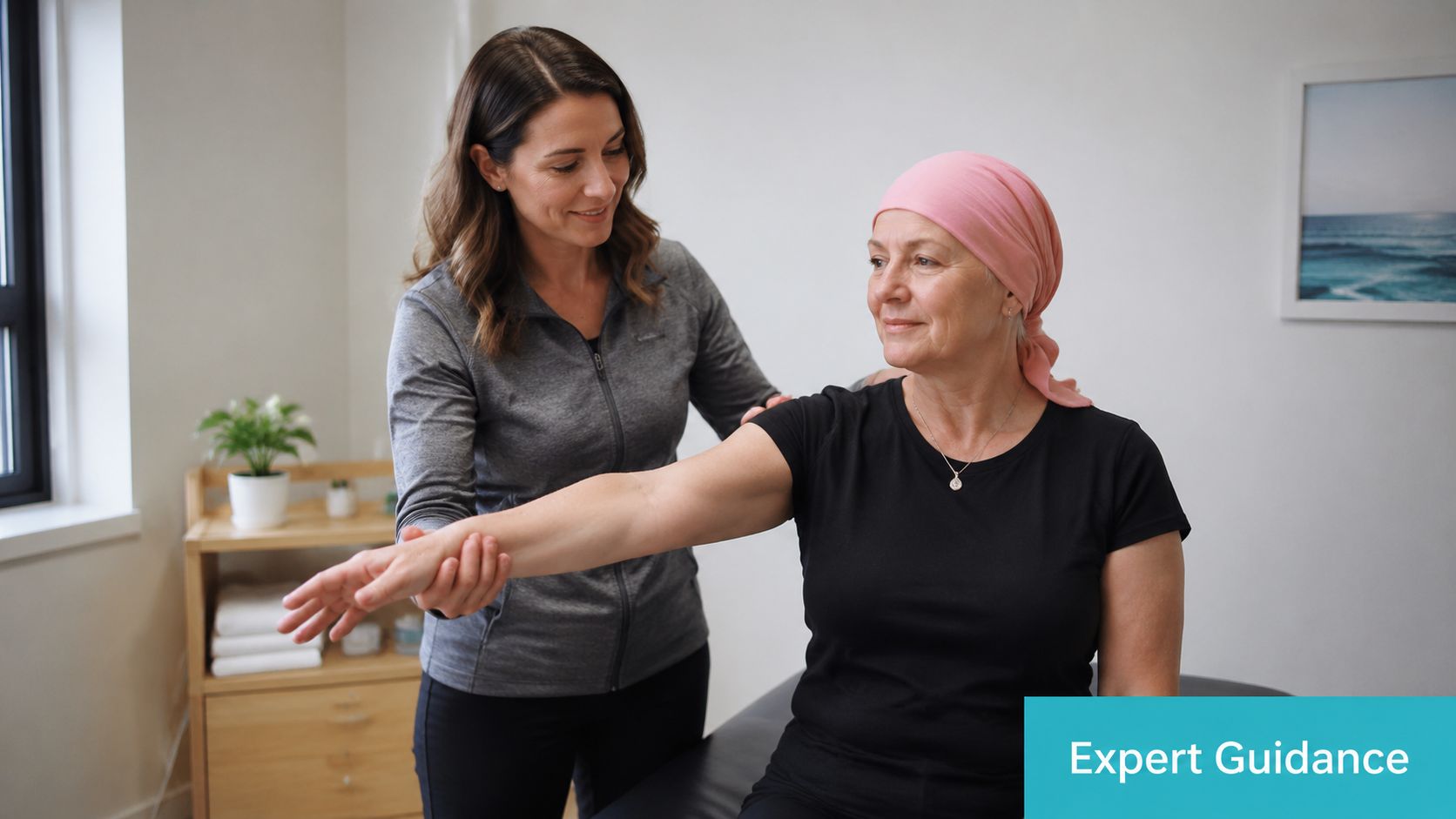
An oncology physical therapist doesn't just look at swelling. They look at the full picture. Surgery, scar tissue, radiation changes, posture, shoulder mechanics, pain, weakness, fatigue, fear of movement, and the practical demands of your life all affect outcomes. If you want a focused overview, this page on lymphedema and the role of physical therapy explains that partnership well.
What a specialist actually does
A specialist helps answer the questions patients wrestle with every day.
Is this heaviness from fluid or from stiffness?
Do you need bandaging, a sleeve, exercise progression, or all three?
Are you avoiding movements that are safe?
Is shoulder tightness changing how your arm pumps lymph?
Those questions can't be solved by a generic instruction sheet.
An oncology PT typically helps with:
- Assessment: Limb changes, tissue texture, mobility, strength, scar restriction, and function
- Hands-on treatment: Manual lymphatic drainage and other appropriate techniques
- Compression guidance: Selecting, fitting, and troubleshooting garments
- Exercise progression: Rebuilding capacity without unnecessarily provoking symptoms
- Long-term surveillance: Monitoring changes over time and adjusting the plan
Why follow-up matters long after treatment
This isn't only about the first few months after surgery. A long follow-up window matters because risk can persist for years. A joint Fred Hutch and National Cancer Institute longitudinal study found that 29% of patients developed lymphedema anywhere from two weeks to 11 years after diagnosis (Journal of Clinical Oncology study on long-term lymphedema incidence).
That finding changes the conversation. If symptoms can emerge long after treatment, patients need more than short-term discharge instructions. They need someone who can reassess the arm, breast, chest wall, and shoulder as life changes.
Here's a helpful patient education video that explains the role of physical therapy in practical terms.
The trade-offs patients should know
Trying to manage alone can work for mild, stable symptoms if you already have a clear diagnosis, the right garment, and a home plan that's working. But many patients don't.
Without specialist input, common problems include:
| Problem | What happens |
|---|---|
| Wrong garment or poor fit | Swelling control is inconsistent and frustrating |
| Too little movement | Shoulder and chest wall stiffness increase |
| Too much too soon | Symptoms flare and confidence drops |
| No monitoring | Small changes become harder to reverse |
A strong therapist does more than treat swelling. They help you trust your body again by giving you a plan that makes sense.
Finding Hope Help and Expert Care in Our Community
Lymphedema after breast cancer can feel intimidating at first because it often shows up during a period when you're already tired of medical appointments and tired of uncertainty. But this is one of the clearest places where early action changes the experience.
The women who manage it best usually do a few things well. They pay attention to subtle changes. They don't wait too long to ask questions. They work with clinicians who understand both cancer recovery and movement-based rehab.
When to reach out
It's time to contact your doctor or a qualified therapist if you notice any of the following:
- Persistent swelling: In the hand, arm, breast, chest wall, or armpit
- New heaviness or fullness: Especially if it keeps returning
- Tightness that changes function: Clothing, bras, sleeves, or jewelry fit differently
- Loss of motion: Reaching, lifting, or grooming becomes harder
- Skin changes or infection concerns: Redness, warmth, tenderness, or rapidly increasing swelling
You don't need to wait until symptoms are severe. Earlier care usually means a simpler plan and better control.
Local support makes the next step easier
Access matters. So does knowing where to go when you want specialized help close to home. Lake City Physical Therapy provides women's health and oncology rehabilitation with a patient-centered approach that includes lymphedema management, scar mobility work, and return-to-activity planning. Their team serves patients across Coeur d'Alene, Hayden, Post Falls, Rathdrum, Liberty Lake, Spokane South Hill, Eagle, and Boise, with telehealth options as well.
If you've been wondering whether what you're feeling is “enough” to get checked, it probably is. A calm, thorough evaluation can give you clarity, and clarity is often the first real step back toward confidence.
If you're dealing with swelling, heaviness, shoulder tightness, or questions about lymphedema after breast cancer, Lake City Physical Therapy offers specialized oncology rehabilitation designed to help you take control early. Their team provides patient-centered care across North Idaho and Eastern Washington, with practical treatment plans built around your symptoms, your recovery, and your goals.