What Is a Pelvic Wand? A 2026 Guide to Relief
A pelvic wand is an internal therapeutic device used to treat chronic pelvic pain through myofascial release, and in one study pain sensitivity dropped from 7.5 to 4 over six months, with 95.5% of patients reporting it helped. If you're wondering what is a pelvic wand, the simplest answer is that it's a specially designed tool used to gently release painful trigger points in the pelvic floor muscles.
If you're reading this, there's a good chance you're tired of symptoms that are hard to explain to other people. Maybe sex hurts, sitting too long creates a deep ache, tampon use suddenly feels impossible, or your pelvic muscles seem to stay clenched no matter how much you try to relax. Many people arrive at this question after weeks, months, or years of trying to “just stretch,” “just breathe,” or “just wait it out.”
That confusion makes sense. Pelvic pain can feel private, frustrating, and strangely isolating. The good news is that there are treatment tools designed for this exact problem, and a pelvic wand is one of them.
Living with Pelvic Pain and Searching for Solutions
A patient might tell me that everything started after childbirth, surgery, or a stretch of stress. Another might say she has endometriosis, bladder pressure, or pain with intimacy, but no one has clearly explained why her muscles feel guarded all the time. Someone else may be an athlete who can push through a workout but can't sit comfortably afterward.
What these stories often share is pelvic floor muscle overactivity. The muscles are working too hard, staying tight too long, or developing tender spots that reproduce familiar pain. That can create burning, aching, pressure, painful intercourse, difficulty with exams, or a sense that the body is constantly bracing.
Pelvic treatment itself isn't new. The pelvic wand is the modern evolution of therapeutic pelvic massage, a practice with roots going back at least 6,000 years, and modern instrument-assisted pelvic health research has shown significant improvement in sexual function (p=0.002) and decreased pain scores (p=0.0008) according to this history of pelvic health therapy.
Pelvic pain is real, common, and treatable. You don't have to wait until symptoms become severe to get help.
For some people, pelvic floor tension is only one piece of the picture. If endometriosis is part of your story, many patients also find it helpful to learn about nutrition alongside physical therapy, and this guide to the best diet for endometriosis symptoms can be a useful starting point. If you want a deeper look at the condition itself, this resource on endometriosis and adenomyosis explains why symptoms can feel so layered.
Why people get confused about this tool
The term “pelvic wand” can sound more intimidating than the device really is. People often assume it's a sex toy, a stretching device, or something they should buy and figure out alone. It isn't best understood in any of those ways.
A pelvic wand is a therapeutic tool. It has one job. It helps you reach pelvic floor muscles that are hard to access with fingers alone, so you can apply gentle, targeted pressure where a therapist has taught you to work.
Understanding the Pelvic Wand and Its Design
A pelvic wand is shaped for access, not for force. It functions as a precise key for a specific lock. The curves aren't there to make it complicated. They're there to help a person reach internal pelvic muscles more comfortably and accurately.
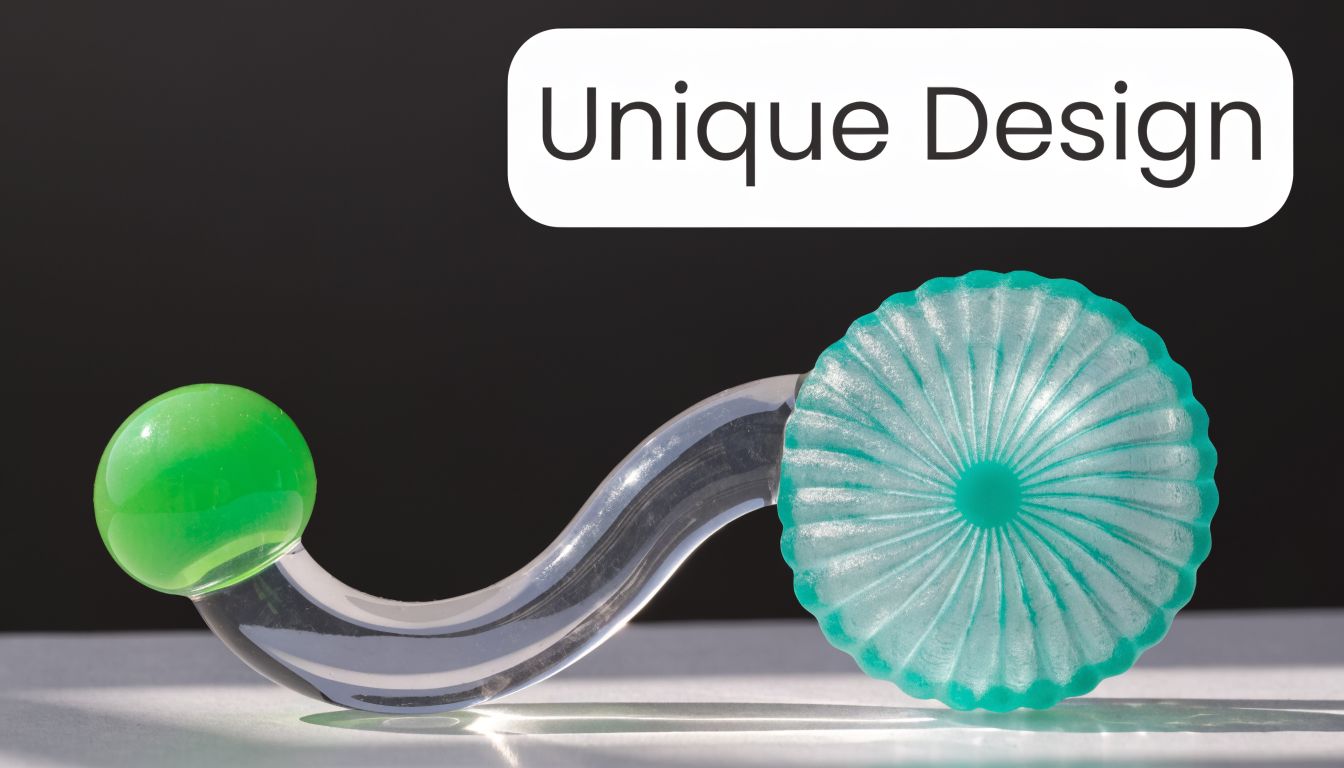
The design matters because pelvic floor muscles don't sit in a straight, easy-to-reach line. Some are closer to the entrance. Others sit deeper and off to the side. A rigid finger position often isn't enough to reach those areas without straining your hand or your body.
What the shape is designed to do
Engineered by pelvic physical therapists, the wand has dual ends, including a slim tip with a 0.5-inch diameter for initial access and a larger tapered end for deeper trigger points in muscles such as the puborectalis and obturator internus, as described on the pelvic wand product page.
That may sound technical, so here it is in plain language:
- The smaller end helps with more comfortable entry and lighter, more superficial work.
- The larger end can reach deeper tender areas once your body tolerates treatment better.
- The curved body lets the user angle toward specific muscles without twisting the wrist awkwardly.
Why it feels less intimidating once you see it
Many patients expect a pelvic wand to be bulky or harsh. In reality, the slim end is about the width of a pinkie finger. That detail matters because fear of the unknown often creates more guarding before someone even starts.
A quality wand is also made with smooth, body-safe material and rounded edges. The point isn't to stretch tissue aggressively. The point is to deliver controlled contact to a small painful spot.
Practical rule: A pelvic wand should feel purpose-built, smooth, and easy to control. If a device seems overly large, poorly shaped, or hard to hold, it probably isn't the right starting tool for you.
What a therapist helps you figure out
Even with a well-designed wand, there isn't one “correct” version for everybody. Anatomy varies. So do symptoms. A postpartum patient with scar sensitivity, a person with vaginismus, and a cancer survivor with tissue changes may all need different starting strategies.
That's why the device itself is only part of the answer. The other part is knowing which end to use, what depth is appropriate, which muscles need treatment, and when internal work should wait.
How Pelvic Wands Alleviate Pain Through Myofascial Release
The easiest way to understand this is to think about a knot in your shoulder. When you press on the knot just right, it may feel tender at first, then slowly soften. A pelvic floor trigger point behaves in a similar way.
These trigger points are tight, irritated spots within a muscle or its surrounding connective tissue. In the pelvic floor, they can create local pain or refer pain elsewhere. That means a tender point internally can contribute to symptoms that feel like vaginal pain, rectal pain, bladder pressure, tailbone discomfort, or pain with penetration.

What myofascial release actually means
Myofascial release sounds technical, but the concept is simple. You apply gentle, steady pressure to a painful, restricted spot and give the tissue time to let go. You're not jabbing. You're not scraping. You're waiting for the muscle and nervous system to stop reacting so strongly.
Clinical protocols recommend holding pressure on a trigger point for 90 to 120 seconds, which helps activate mechanoreceptors and inhibit pain signaling, leading to reduced pelvic floor muscle tension, as noted in this guidance on trigger point release with a pelvic wand.
What people often get wrong
Many people assume stronger pressure works better. Usually, it doesn't. If you push hard into a guarded pelvic floor, the muscle may defend itself and tighten more.
A better approach looks like this:
- Settle first with slow breathing and a supported position.
- Find one tender area rather than searching everywhere at once.
- Apply steady pressure that feels noticeable but not sharp.
- Wait for change instead of constantly moving.
- Stop if pain spikes or symptoms feel alarming.
The goal is release, not endurance. If you're gritting your teeth, you're probably using too much force.
Why technique matters more than the device
The wand doesn't “fix” the muscle by itself. The change happens when the tissue gets the right input. That includes pressure, angle, breath, timing, and your nervous system's sense of safety.
This is one reason pelvic floor therapists often combine internal release with other treatment approaches. For example, someone may also benefit from hip mobility work, scar treatment, down-training, or techniques like dry needling when clinically appropriate. The pelvic wand can be powerful, but it works best when it's part of a thoughtful plan instead of a random self-treatment experiment.
Key Conditions a Pelvic Wand Can Help Treat
A pelvic wand is most useful when pelvic floor muscle tension is driving symptoms. It doesn't treat every cause of pelvic pain, but it can help when internal muscles are tender, shortened, overactive, or full of trigger points.
The strongest clinical evidence we have in this article comes from chronic pelvic pain. In a study of internal trigger point wand use for chronic pelvic pain, median pain sensitivity scores fell from 7.5 to 4, a 47% reduction, over six months, and 95.5% of patients said the wand was effective for relieving pain according to the published study on PubMed.
Conditions where it may play a role
Here are some of the situations where a therapist may include a wand in care:
-
Painful intercourse
If the pelvic floor tightens reflexively, penetration can feel sharp, burning, or blocked. A wand may help release painful muscles that are contributing to that response. -
Vaginismus
In vaginismus, the pelvic floor often contracts protectively. A wand may be used later in care, once a person has the right education, safety, and readiness for internal muscle release. -
Chronic pelvic pain
Some patients describe this as pressure, aching, heaviness, or a pain they can't quite localize. Trigger points in the pelvic floor can be one contributor. -
Bladder pain and urgency linked to muscle tension
Tight pelvic muscles can mimic or intensify bladder symptoms. Releasing those muscles may reduce the “I always have to go” sensation in some patients. -
Postpartum or post-surgical scar-related guarding
After birth or surgery, the body may protect an area by tightening surrounding muscles. A wand may help when scar sensitivity and muscle overactivity occur together.
What it does not replace
A pelvic wand doesn't replace diagnosis. It won't identify whether your pain is coming from endometriosis, a skin condition, a nerve issue, active infection, organ prolapse, or tissue irritation after medical treatment. It also doesn't replace hands-on assessment.
That's why two people with the same symptom, such as pain with sex, may need very different treatment plans. One may need trigger point release. Another may need hormonal support, scar care, desensitization, or external treatment before internal work feels safe.
A realistic way to think about benefit
The wand can reduce one very important driver of pain: muscle tension. When that's part of your problem, relief can be meaningful. But it works best when it's matched to the right condition, the right body, and the right timing.
Pelvic Wands vs Other Tools and Safe Use Guidelines
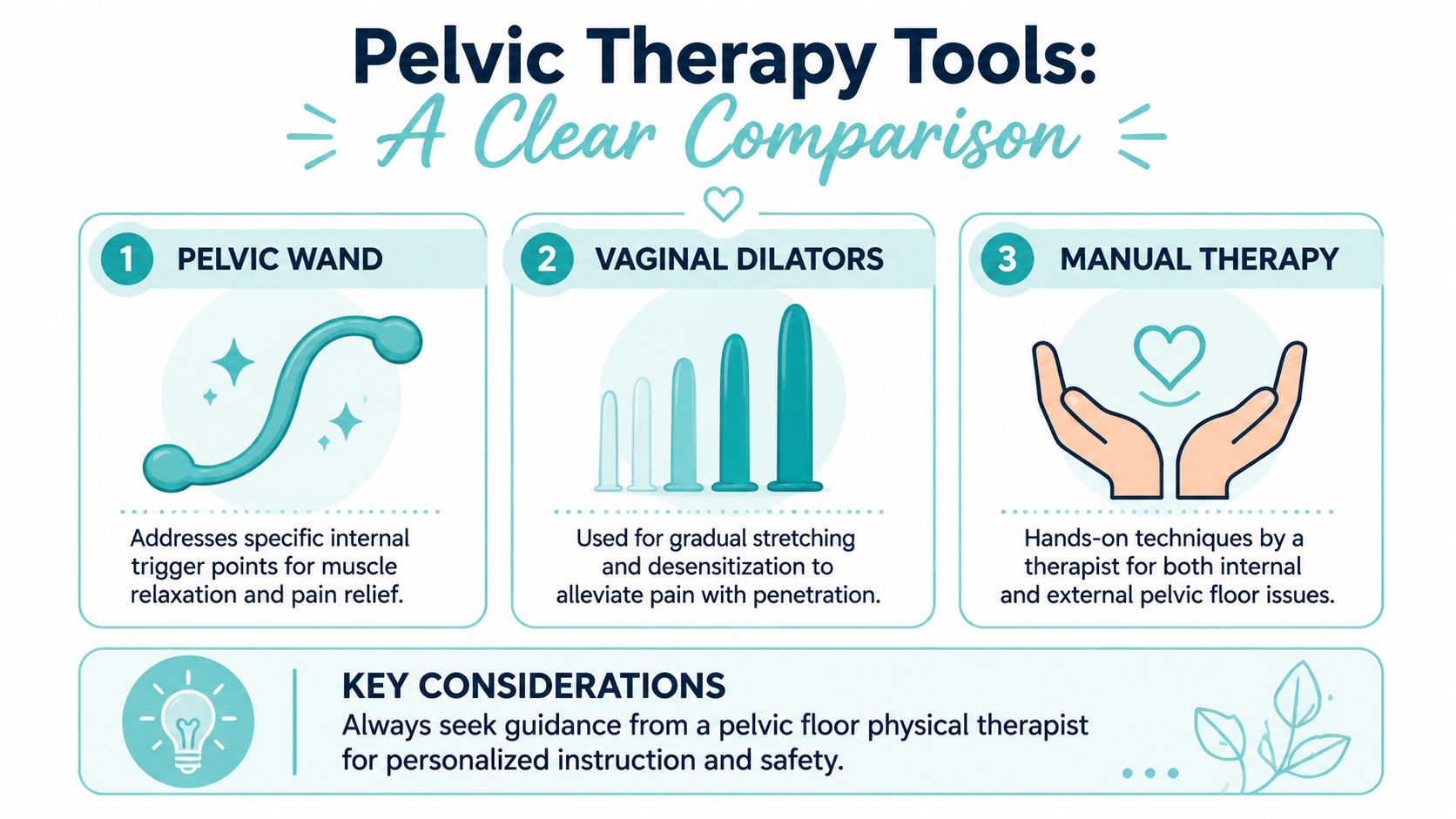
One of the biggest questions patients ask is whether a pelvic wand is the same thing as a vaginal dilator. It isn't. They can both be useful, but they solve different problems.
A simple comparison
| Tool | Main purpose | Best known use |
|---|---|---|
| Pelvic wand | Targeted trigger point release | Specific painful internal muscles |
| Vaginal dilators | Gradual stretching and desensitization | Tolerance to penetration |
| Manual therapy | Therapist-guided internal and external treatment | Individualized pelvic floor care |
A wand is more like a pressure tool. A dilator is more like a graded exposure and stretching tool. Manual therapy is broader and lets a therapist assess what your tissues, joints, breath pattern, and nervous system are doing in real time.
Why professional fit matters
Size matters more than many people realize. A 2023 study found 62% of postpartum women experienced suboptimal outcomes from mismatched dilator or wand sizes without professional guidance, highlighting why proper selection matters for dyspareunia, post-surgical scarring, and similar concerns, as described in this discussion of wand sizing and guidance.
That doesn't mean people can't learn to use these tools well. It means the starting point shouldn't be guesswork.
Some patients need a smaller tool, some need a different angle, and some shouldn't start with internal work at all.
Safety basics that matter
You don't need a complicated checklist, but you do need good habits:
- Use lubricant so the tissue isn't fighting friction.
- Choose a calm position such as side-lying or supported reclined positioning.
- Breathe instead of bracing because breath changes pelvic floor tension.
- Never push into sharp pain. Mild tenderness is different from alarm.
- Get guidance if symptoms are complex such as postpartum scarring, prolapse concerns, or pain after cancer treatment.
People sometimes compare a pelvic wand with other pelvic tools they see online, including options marketed for incontinence support, such as devices discussed in these Emsella chair reviews. Those are completely different categories. A pelvic wand is a hands-on trigger point tool. It isn't a passive chair treatment, and it isn't a replacement for an evaluation.
When not to self-direct
If you have unexplained bleeding, severe pain, active infection, fresh surgical healing, major tissue sensitivity, or a history that makes internal work emotionally difficult, pause and get assessed first. The safest plan is always the one built around your body, not around a product listing.
When to See a Pelvic Floor Therapist at Lake City PT
The most important thing to know about a pelvic wand is this: it works better when it isn't used alone. The device can help, but guidance changes the outcome.

Recent guidelines found that self-wand use alone produced 45% pain reduction, while pairing it with 4 to 6 PT sessions that included breathwork and scar mobilization increased that to 78%, which strongly supports a hybrid approach in this overview of wands compared with dilators.
What a therapist adds that a product can't
A therapist helps answer questions a wand can't answer:
- Is this a pelvic floor issue?
- Which muscle is involved?
- Are you dealing with trigger points, scar restriction, nerve irritation, prolapse support issues, or something else?
- Is internal work the right first step, or should treatment start externally?
That matters for postpartum patients, oncology patients, and athletes in particular. Those groups often have layered symptoms. A postpartum runner may have scar guarding plus pressure symptoms. A cancer survivor may have tissue changes that require a slower, more protective plan. An athlete may have pelvic floor overactivity linked to breathing mechanics and load management.
Good care should feel clear and respectful
If you've been hesitant to get help, that's understandable. Pelvic therapy should never feel rushed, vague, or impersonal. You deserve clear explanations, consent at every step, and a treatment plan that makes sense to you.
The best use of a pelvic wand is often as homework from a skilled therapist, not as a mystery device you try to decode on your own.
When someone asks what is a pelvic wand, the most complete answer isn't just “a tool for muscle release.” It's a tool that can extend your progress between visits, reinforce what your body is learning, and give you more control over flare-ups when it's prescribed thoughtfully.
If you're dealing with painful sex, pelvic pressure, postpartum symptoms, endometriosis-related pain, scar tightness, or recovery after cancer treatment, Lake City Physical Therapy can help you figure out whether a pelvic wand belongs in your plan and, just as important, how to use it safely and effectively. A skilled pelvic floor evaluation can turn a confusing symptom pattern into a clear treatment path.

