Pregnancy Exercise Second Trimester: Safe Workouts for 2026
Somewhere around the start of the second trimester, many women notice a shift. You may still have random waves of fatigue, but you're not in that first-trimester survival mode anymore. You want to move again. You also don't want to do the wrong thing, strain your core, or trigger pelvic pressure that leaves you wondering whether you should've skipped the workout.
That uncertainty is common, especially if your body used to feel predictable. The second trimester is often the sweet spot for rebuilding a routine, but it's also the point where exercise needs better strategy. Your posture changes, your abdominal wall is under more load, and your pelvic floor has to respond to every squat, step, and breath.
A good pregnancy exercise second trimester plan doesn't just tell you to “stay active.” It teaches you how to train with your changing body, not against it.
Welcome to Your Second Trimester Energy Boost
You wake up with more energy than you had a few weeks ago, and for the first time in a while, a workout sounds appealing instead of impossible. Then the questions start. Can you go back to strength training? Is jogging still okay? What if you feel pressure through your pelvis or your abs start to dome?
Those questions matter, because the second trimester is often the best window to rebuild a routine with more confidence and better structure.
For many pregnant women, movement is a useful part of prenatal care. ACOG recommends regular moderate exercise during pregnancy, and that guidance supports a practical goal rather than a perfect one. Keep your body active, keep symptoms in check, and choose exercise that still feels controlled as your body changes.
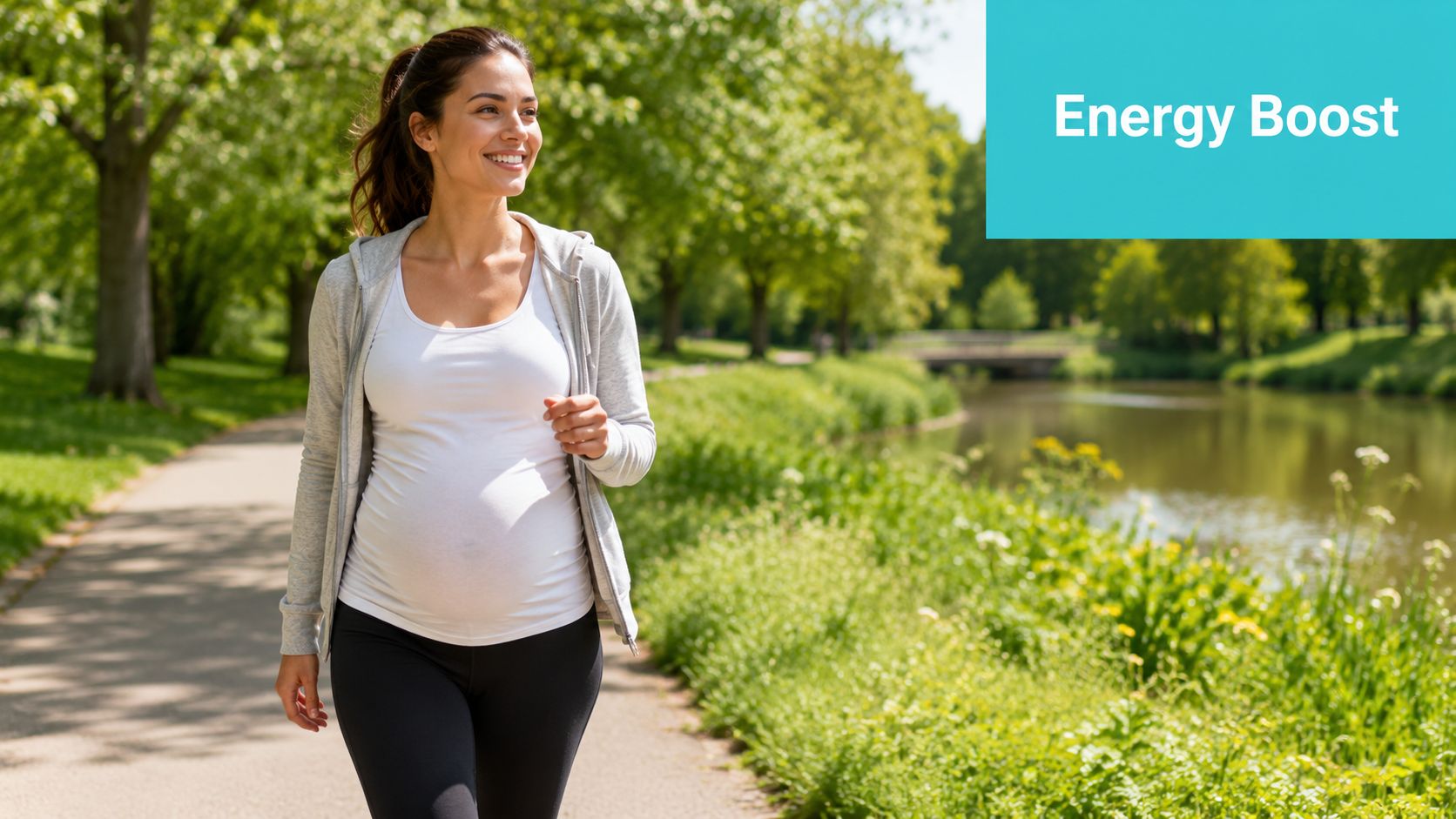
What this usually looks like in real life
A good second-trimester plan often looks simple on paper. Walking. Two or three strength sessions each week. Mobility work that leaves your hips, rib cage, and back feeling less restricted. What makes it effective is how you do it.
That is where generic advice usually falls short. Good prenatal training includes breath timing, pressure control, and pelvic floor coordination inside the workout itself. During a squat, that may mean inhaling to prepare, exhaling through the effort, and noticing whether you feel supported or heavy through the pelvic floor. During a push or pull movement, it may mean reducing the load, changing your stance, or using an incline so your core can manage the demand well.
The right version of a workout also depends on your starting point. If you are newer to exercise, you may need shorter sessions, slower tempos, and more recovery between sets. If you were training hard before pregnancy, you may still lift, row, or cycle at a high level, but your program needs sharper modification choices so performance does not come at the cost of pelvic pressure, leaking, or symptom flare-ups.
If nausea is still hanging on, even mildly, whether exercise can help nausea in pregnancy is worth reading before you decide that movement is off the table for the day.
Fuel matters too. If appetite is unpredictable, a practical eating guide for expecting mothers can help you plan meals and snacks around activity.
The goal is consistent, well-matched training
You do not need to exercise like your pre-pregnancy self to make progress. You need sessions that match your current capacity, respect day-to-day changes, and leave you feeling steadier afterward.
The best second-trimester routine improves strength, stamina, and body awareness at the same time. That includes your breath, your abdominal wall, and your pelvic floor.
Your Non-Negotiable Safety Principles for Exercise
The second trimester is where “just do what you did before” stops being reliable advice. You may still be capable of a lot, but your body is now managing a growing uterus, more joint laxity, a shifting center of gravity, and different pressure demands through the abdominal wall and pelvic floor.
That doesn't mean exercise becomes fragile. It means it becomes more deliberate.
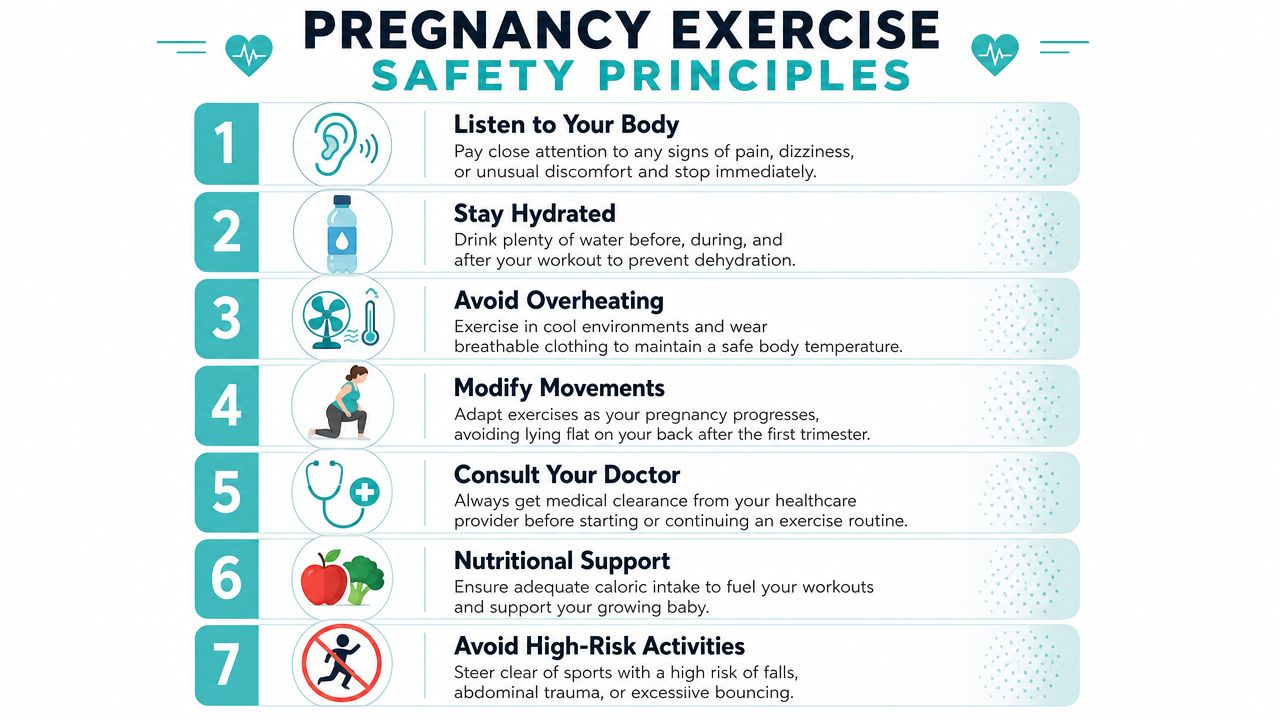
Rule one is no flat-on-your-back training
One of the clearest second-trimester changes is positional. After gestational week 14, lying flat on your back becomes a poor default for exercise because the growing uterus can compress major blood vessels and reduce blood flow to mother and baby, as described in this clinical review on exercise in pregnancy.
No supine rule: once you're past the first trimester, skip workouts that keep you flat on your back for extended periods.
That affects more than classic ab work. It also changes how you do pressing, bridging, stretching, and recovery positions. In practice, that often means propping your torso up, moving to side-lying, standing, quadruped, or using an incline bench.
Use effort, not heart rate, to guide intensity
Pregnancy changes cardiovascular response, so the old idea that you should stay under a fixed heart-rate ceiling isn't dependable. A better target is the Borg Rating of Perceived Exertion, with 13 to 14, or “somewhat hard,” as the recommended moderate zone.
If you don't use an RPE scale regularly, use the talk test.
You should be able to speak in short sentences while you exercise. If talking feels strained or choppy, back off.
This is one of the simplest ways to make pregnancy exercise second trimester training safer without overcomplicating it.
The other safety rules that matter in the gym and at home
Some principles sound basic, but they're the ones women most often skip when they're trying to squeeze in a workout.
- Watch for symptom change: pain, dizziness, unusual shortness of breath, pressure that builds instead of settles, or a sense that your body is not tolerating the movement means stop and reassess.
- Choose stability over ego: your balance changes before you fully trust that it has changed. A bench, wall, TRX, or countertop can be a smart modification, not a regression.
- Keep the room and your clothing breathable: overheating makes exercise feel harder faster.
- Hydrate early, not just after: waiting until you feel depleted usually means you started the session behind.
- Fuel enough to train: under-eating often shows up as shakiness, fatigue, and poor pressure control.
Round ligament discomfort can also show up more during this phase, especially with rolling, quick pivots, or getting in and out of bed. If you're not sure whether that pulling sensation is typical or something to modify around, this guide to ligament pain during pregnancy is worth reading.
What doesn't work well
Women often get told one of two extremes. Either “keep doing everything” or “avoid almost everything.” Neither is useful.
What works better is this: keep the movement pattern if you can, then change the position, range, load, tempo, or support. That approach protects strength and confidence without ignoring the realities of a changing body.
Building Your Weekly Second Trimester Workout Plan
You get halfway through the week, one day of good energy turns into two rough nights of sleep, and the original plan stops fitting your body. That is normal. A good second-trimester routine has to work on average days, not just your best ones.
Activity often drops during pregnancy even in women who want to stay consistent, as noted earlier. The answer usually is not more ambition. It is a plan with enough structure to keep you training and enough flexibility to account for symptoms, work, sleep, and changing pressure demands through the abdomen and pelvic floor.
A simple weekly template
A balanced pregnancy exercise second trimester routine usually includes aerobic work, strength training, and daily mobility, with breath control built into all three.
| Day | Main focus | Example |
|---|---|---|
| Monday | Cardio | Brisk walk or stationary bike with steady breathing |
| Tuesday | Strength | Full-body session with squat, row, supported push, and exhale on effort |
| Wednesday | Mobility plus easy cardio | Walking plus hip, rib cage, and thoracic mobility |
| Thursday | Strength | Full-body session with hinge, carry, and controlled core pressure |
| Friday | Cardio | Swimming, walking, or elliptical at a conversational pace |
| Saturday | Light movement | Mobility, recovery walk, or prenatal yoga |
| Sunday | Flexible day | Rest or an easy session based on energy |
Use this as a base, not a rigid rule.
How to build around real energy levels
Some women do better with 15 to 25 minutes most days. Others prefer three or four longer sessions. Both are reasonable if symptoms stay settled during the workout and later that day.
A workable structure looks like this:
- Cardio days: choose walking, swimming, stationary cycling, or elliptical work that lets you keep your breath controlled. If you cannot exhale smoothly during effort, the pace is probably too high.
- Strength days: train full-body patterns such as squat, hinge, row, press, and carry. Pair each rep with pressure management. Inhale to prepare. Exhale through the harder part of the movement. Let the pelvic floor respond with the breath rather than gripping through the whole set.
- Mobility most days: spend a few minutes on hips, upper back, rib cage motion, and positions that help you breathe well. Mobility that improves breathing mechanics usually improves lifting mechanics too.
Practical rule: if the plan only works on high-energy days, it needs adjustment.
What a sustainable week feels like
The right week usually leaves you looser, steadier, and less irritated through the low back, hips, and pelvis. It should not regularly leave you with pelvic heaviness, abdominal doming that does not improve with a cue change, urine leakage you did not have before, or next-day fatigue that wipes out normal activity.
For beginners, a strong starting point is simple. Begin with walking or cycling 2 to 3 days per week, plus 2 short strength sessions. Use supported versions early. Box squats instead of free squats. Incline push-ups instead of floor push-ups. Split the session into two 10-minute blocks if that is what your energy allows.
For women who were training hard before pregnancy, the goal is usually to keep the training identity while changing how load and pressure are managed. That can mean swapping barbell back squats for front-loaded options like goblet squats or double-kettlebell front squats, shortening sets before form and breath break down, reducing impact volume, or using intervals that stay aerobic instead of repeatedly spiking intensity. Runners may keep run days but add planned walk breaks sooner. Lifters may keep compound lifts but use more support, less bracing force, and more room for the abdomen.
Those are not regressions. They are good programming for a body that is adapting quickly.
Sample Strength Workouts for a Strong Pregnancy
Strength training in the second trimester should feel grounding. You're not trying to prove fitness. You're building support for posture, load transfer, daily movement, and the demands that keep increasing as pregnancy progresses.
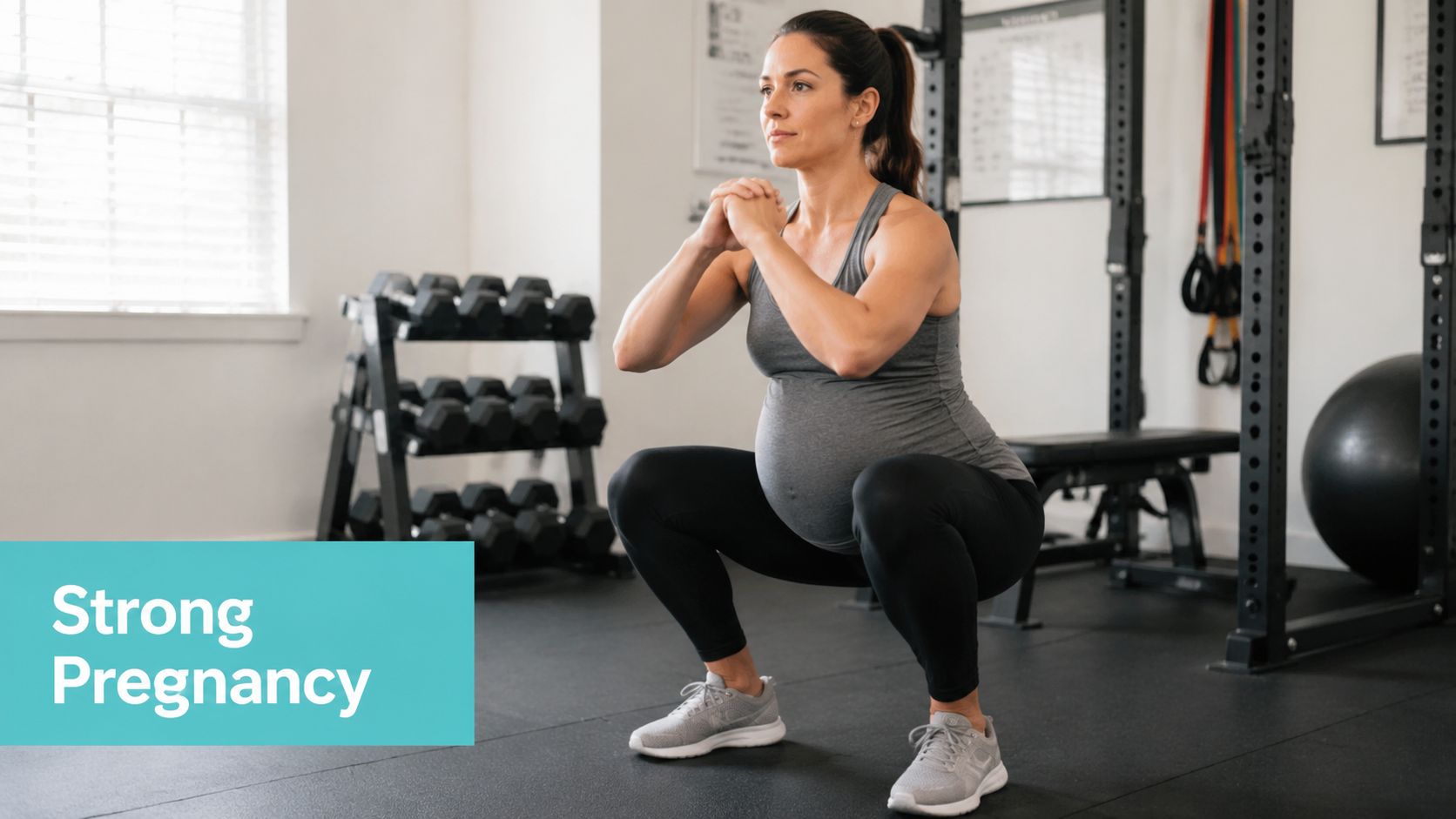
A common mistake is treating core work as a separate add-on. In reality, every good strength exercise is core work if you use it well. That's where breath and pelvic floor cues matter. According to NASM's pregnancy exercise guidance, effective second-trimester core training relies on managing intra-abdominal pressure, and regressions such as raised-hand planks held for 5 to 10 seconds and wall push-ups are safe when there's no abdominal bulging and you coordinate breath with core engagement.
Goblet squat
Hold a dumbbell or kettlebell close to your chest. Set your feet at a stance that gives your belly room. Inhale as you lower, keep your ribs stacked over your pelvis, and stand up without rushing.
If deep range feels fine, use it. If your hips or pelvis feel crowded, shorten the range and use a box behind you as a target.
Breathing and pelvic floor cues
Exhale as you rise. Think of gently gathering through your lower abdomen and pelvic floor instead of clenching hard. I often cue this as a subtle “zip up” through the deep core on the effort.
For beginners, bodyweight squats to a bench are enough. For experienced lifters, loaded squats can stay in the program if you can keep pressure controlled and symptoms quiet.
Supported bent-over row
Use one hand on a bench, chair, or rack for support. Hinge from the hips, keep the neck long, and row the weight toward your side without twisting your trunk.
This is a useful exercise in pregnancy because it strengthens the upper back, which often gets overloaded as the breasts enlarge and the rib cage changes position.
Breathing and pelvic floor cues
Inhale to prepare. Exhale as you pull the weight. Keep the lower belly responsive, not braced so hard that the rib cage flares or your breath stops.
If hinging feels unstable, do the row with your chest supported on an incline bench or use a resistance band in standing.
Elevated glute bridge
Traditional floor bridge setups may become less comfortable as pregnancy progresses because of the no-supine principle discussed earlier. A better option is a bridge with the head and shoulders raised on a wedge, couch, or bench so you're not fully flat.
Drive through the heels, lift the hips only as high as you can without arching through the low back, then lower with control.
This is a good place to watch for compensation. If you feel hamstrings cramping or pressure bearing down, reduce the range.
Here's a visual walkthrough if you like following along:
Breathing and pelvic floor cues
Exhale as you lift. Think “blow before you go.” That means the exhale starts just before the effort, which helps manage pressure instead of forcing it downward.
If you notice doming through the abdomen or a heavy pelvic feeling, switch to a smaller bridge, a sit-to-stand, or a supported hip hinge.
Bird dog and incline plank
Bird dog is one of the most useful second-trimester exercises because it trains trunk control without putting you flat on your back. Start on hands and knees, exhale, then slowly reach one arm and the opposite leg without shifting your pelvis.
Incline plank is the plank variation I use far more often in pregnancy than floor planks. Put your hands on a bench, countertop, or wall and hold briefly with a long spine.
Breathing and pelvic floor cues
For bird dog, exhale on the reach and return before you lose control. For incline plank, breathe continuously and keep the hold short. If you see abdominal bulging, shorten the lever, raise the hands more, or switch to a wall version.
If the exercise is technically possible but your breath disappears, your load is too high for that moment.
A sample strength day
- Goblet squat or sit-to-stand: 2 to 3 rounds
- Supported row: 2 to 3 rounds
- Raised glute bridge or hip hinge: 2 to 3 rounds
- Bird dog or incline plank: 2 to 3 rounds
- Farmer carry if tolerated: short, controlled walks with steady breathing
For high-performance athletes, the main adjustment usually isn't whether you can still train. It's whether you can keep training quality high while reducing unnecessary pressure spikes, impact accumulation, and breath-holding habits.
Mobility Drills and Pelvic Floor Preparation
Mobility work in pregnancy should earn its place. It's not about becoming more flexible everywhere. In the second trimester, the goal is usually to create room where you feel stiff, improve breathing mechanics, and help your pelvis and rib cage move well enough that strength work feels better.
Women are often told to “do Kegels” without much explanation. That's incomplete advice. Many pregnant women, especially athletes, need better guidance on combining pelvic floor lengthening with breath work such as 360-degree inhale expansion and an exhale lift, which is important for managing pelvic pressure and preparing for birth, as discussed in this UC Davis article on safe exercise during pregnancy.
Mobility drills that usually help
Use these slowly. None of them should feel forced.
- Cat-cow: move through the spine gently and let the rib cage expand on the inhale.
- Hip circles in hands-and-knees or standing: helpful when the pelvis feels stiff or compressed.
- Thoracic rotation in side-lying or quadruped: useful if your upper back feels locked up from desk work or breast changes.
- Supported adductor rock-back: opens the inner thighs without demanding a deep stretch hold.
- Child's pose with knees wide if comfortable: a good reset for breathing and rib expansion.
Kegel versus pelvic drop
A Kegel is a lift. A pelvic drop is a relaxation and lengthening. You need both skills.
If your pelvic floor only knows how to grip, it may not respond well to impact, bowel function, or birth preparation. If it only relaxes and never lifts, it may not offer enough support under load. The goal is responsiveness.
Try this cue. Inhale and let the pelvic floor soften and widen. Exhale and feel a gentle lift, not a hard squeeze.
That pattern connects your diaphragm, abdominal wall, and pelvic floor in a way that is much more useful than random tightening.
For a more focused walkthrough, Lake City Physical Therapy has a clear guide to pelvic floor exercises in pregnancy.
A short daily sequence
You can use this on its own or as your warm-up:
- 360 breathing for several slow breaths with hands around the ribs.
- Cat-cow for a few controlled repetitions.
- Hip circles each direction.
- Supported deep squat hold or wide-knee child's pose if comfortable, breathing into the pelvic floor.
- Gentle pelvic floor lift on exhale for a few breaths, then full relaxation again.
If you like understanding the body mechanics behind these drills, visual anatomy references can help. Some women enjoy studying muscle layers and pelvic relationships through valuable anatomy resources for scientists, especially if they learn better when they can see the structures involved.
What many women miss
The pelvic floor isn't separate from your workout. It's responding during your squats, carries, bike intervals, stair climbing, and even how you get out of bed.
That's why I prefer integrating breath and pelvic floor cues into the workout itself. It's more functional, and it prepares you for the demands of late pregnancy and postpartum recovery.
Red Flags and When to Partner with a Physical Therapist
Some symptoms mean stop exercising and contact your medical provider promptly. Others aren't emergencies, but they do mean your body needs a more individualized plan.
Stop and seek medical guidance right away
- Vaginal bleeding
- Fluid leakage
- Chest pain
- Severe headache
- Dizziness or fainting
- Painful regular contractions
- Marked difficulty breathing
- Calf pain or swelling
These symptoms should never be brushed off as “probably normal exercise stuff.”
Yellow flags that deserve a pelvic health assessment
These are the issues I see most often when a woman is technically still exercising, but not tolerating it well:
- Pelvic pressure or heaviness: especially if it builds during squats, running, or long walks
- Urine leakage with exercise: common, yes. Normal or something you have to accept, no
- Abdominal doming or bulging: a sign you need to adjust pressure management
- Persistent back, hip, pubic, or tailbone pain
- A feeling that every workout makes symptoms worse the next day
A physical therapist who works in women's health can assess movement patterns, breathing mechanics, pelvic floor function, lifting strategy, and return-to-exercise decisions with much more precision than generic online advice.
When support matters even more
If you're an athlete, have a history of pelvic pain, feel anxious about symptoms, or keep searching for answers and finding vague reassurance, getting individual care is worth it. Mental load matters too. For women trying to make sense of anxiety-related concerns during pregnancy, this anxiety in pregnancy ICD 10 guide can be a useful starting point for understanding how these concerns are categorized and discussed.
You do not need to wait until things are severe. Early guidance usually means fewer symptom spirals, fewer unnecessary restrictions, and more confidence in what your body can still do.
If you want expert help building a safe, personalized pregnancy exercise second trimester plan, Lake City Physical Therapy offers women's health physical therapy for prenatal exercise, pelvic floor symptoms, pain, and return-to-activity support across North Idaho and Eastern Washington. Their team can help you modify workouts, address pressure and leakage, and keep you moving with more confidence through pregnancy and beyond.

