Pregnant Bladder Pressure Relief Guide
You're probably feeling it in the middle of an ordinary day, a full bladder that seems to show up too often, pressure low in the pelvis, maybe a small leak when you cough, laugh, or stand up too fast. That discomfort is real, and it doesn't mean you're overreacting. Pregnant bladder pressure is common, but common doesn't mean it should be ignored or managed with guesswork.
What changes during pregnancy is not just how much urine you hold, but how your bladder, pelvic floor, and abdomen share load. When those systems stop coordinating as well, urgency, frequency, leakage, and the feeling of pressure can show up together. The good news is that there are practical ways to reduce strain, and there are clear signs that tell you when it's time to get checked.
Why Bladder Pressure Changes During Pregnancy
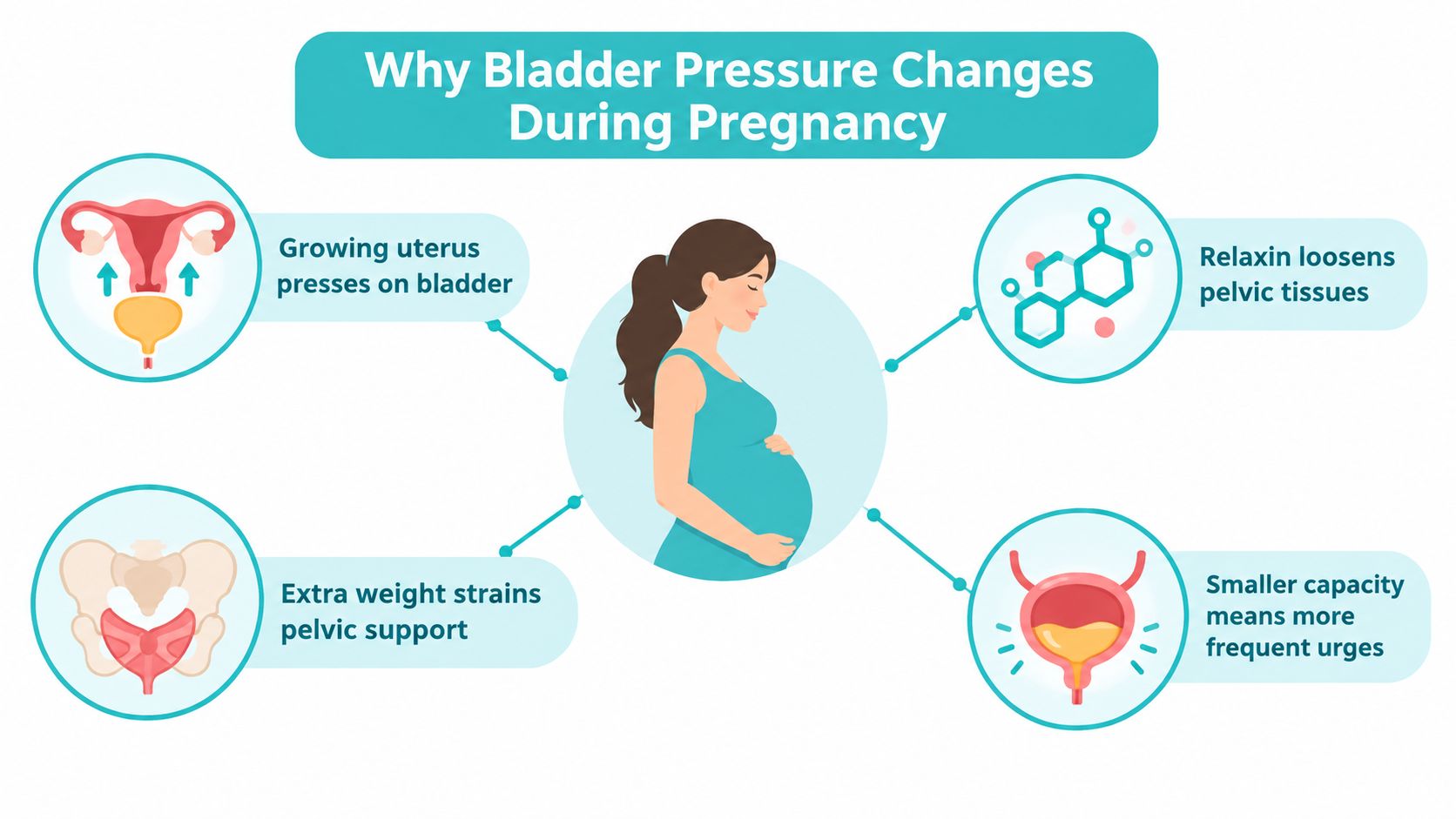
The bladder doesn't just get “squished.” As the uterus enlarges, it changes the pressure environment around the bladder, and bladder muscle tone also declines as pregnancy progresses. A clinical review reports that around the third month, bladder tone begins to drop while capacity gradually increases, which helps explain why your body can feel different even when you haven't changed your fluid intake. The relationship between fullness and sensation shifts too, so urgency can show up earlier or later than expected. Clinical urodynamic observations help show why the feeling of pressure doesn't always match the amount of urine present.
Sensation and pressure aren't the same thing
In those observations, the first desire to urinate often appeared at 250 to 400 mL with only 4 to 8 cmH₂O of pressure, while maximum urge was delayed until roughly 1,000 to 1,200 mL at 12 to 15 cmH₂O. In nonpregnant or postpartum reference physiology, maximum urge commonly occurs sooner, around 450 to 550 mL and about 20 cmH₂O. That difference matters because many pregnant patients assume their bladder pressure should feel predictable, but pregnancy changes the whole pattern.
Voiding is different from filling. The same review notes pressure can rise to about 60 to 70 cmH₂O during urination, which is a separate phase from passive filling and sensation. That's why it helps to think in terms of bladder mechanics, not just “too much pee” or “not enough water.”
Practical rule: if the bladder feels full early, that feeling may reflect altered support and sensation, not just bladder volume.
The expanding uterus, pelvic anatomy changes, and altered bladder tone can all contribute to urgency, frequency, incomplete emptying, or leakage as pregnancy advances. If you want a broader overview of pregnancy-related leakage and support changes, the article on urinary incontinence during pregnancy gives helpful background on how these symptoms overlap.
Daily Strategies for Managing Pelvic Load
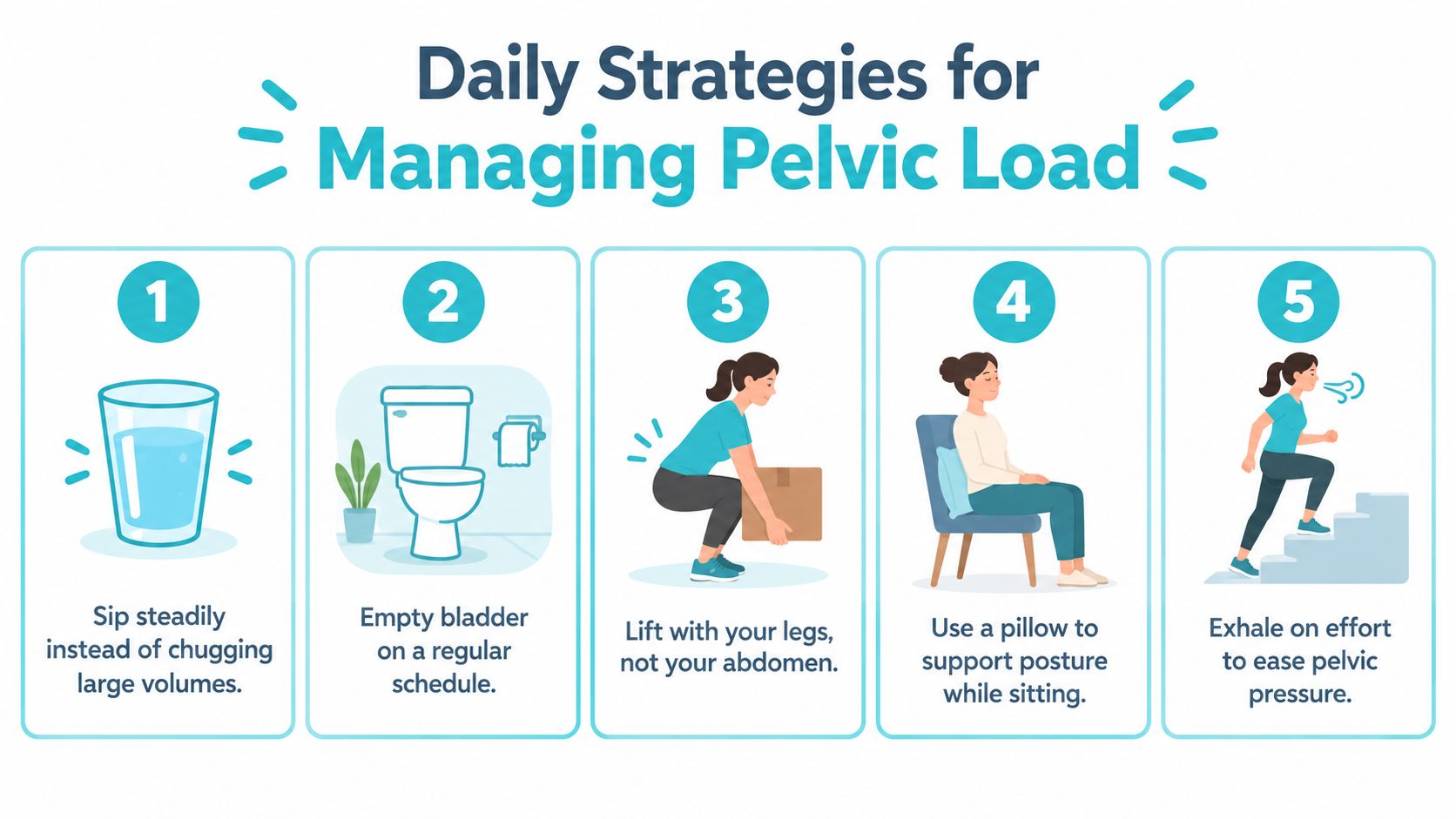
The fastest wins usually come from changing how pressure gets managed, not from trying to “hold it” harder. If coughing, lifting, or getting off the couch makes symptoms spike, the goal is to lower the downward load and help your pelvic floor share the work instead of taking a sudden hit. A 2021 systematic review found urinary incontinence rose from about 9% in the first trimester to 34% in the third trimester (systematic review), which fits what many people notice as the pregnancy progresses.
Five habits that reduce strain
- Sip steadily: Smaller, regular amounts of fluid are often easier on urgency than chugging a large glass at once.
- Empty on a schedule: Don't wait until pressure is intense, especially if you already notice leakage with movement.
- Lift with your legs: Exhale as you lift, stand, or carry, so your abdomen doesn't bear the whole effort.
- Support sitting posture: A pillow behind the back or under the pelvis can help reduce slumping and abdominal compression.
- Use the exhale on effort: That small breathing change can soften pressure spikes during stairs, transfers, and reaching.
A short video can help make the breathing and load-shifting pieces more concrete.
The toileting details matter too. Feet supported, knees slightly apart, and a relaxed belly can help the pelvic floor lengthen for emptying instead of bracing. If you're also dealing with a growing belly and postural strain, the piece on wrapping a pregnant belly may be useful when you're deciding whether external support feels relieving or restrictive.
When Kegels Are Not the Right Answer

Not every bladder complaint in pregnancy means the pelvic floor is weak. Some people leak with coughing or sneezing because support under load isn't keeping up. Others feel constant pressure, urgency, or incomplete emptying because the muscles are too guarded, poorly coordinated, or both. If you keep doing repeated squeezes in that situation, symptoms can feel tighter, not better.
Match the exercise to the problem
Stress leakage usually shows up with pressure spikes, like a cough, laugh, lift, or quick stand. Urgency, on the other hand, often feels like a sudden need to find a bathroom fast, and retention feels more like difficulty emptying or lingering fullness. Those patterns don't call for the same strategy.
Recent research indicates that pelvic-floor dysfunction symptoms vary across pregnancy and affect urinary function, and that urinary incontinence during pregnancy is the factor most strongly associated with bothersome incontinence after childbirth (recent study). That points to a bigger truth, symptoms don't always mean weakness, and the right plan depends on what your muscles are doing.
If the pelvic floor can't relax, it usually can't contract well either.
That's why a good assessment looks at breathing, timing, pressure control, and relaxation, not just strength. In many cases, the first fix is coordination, not more squeezing. Sometimes that means down-training, toileting strategy, and load management before strengthening enters the picture.
Distinguishing Normal Pressure from Medical Red Flags

Mechanical pressure is usually positional. It tends to feel like dull fullness, heaviness, or urgency that tracks with the day, your posture, or the baby's position. The worry starts when symptoms stop behaving like a normal pressure response and start looking like infection or an obstetric issue.
What needs prompt evaluation
ACOG recommends a urine culture for pregnant patients with symptoms of acute cystitis, and notes that UTI symptoms can resemble normal pregnancy symptoms or threatened preterm birth (ACOG guidance). That overlap is exactly why the triage question matters.
Use this as a practical filter:
- Burning, blood, or foul-smelling urine should not be brushed off as “just pressure.”
- Fever, flank pain, or costovertebral tenderness raises concern for pyelonephritis and needs prompt medical assessment.
- Painful contractions, vaginal bleeding, or fluid leakage should be treated as obstetric warning signs, not bladder symptoms.
- Sudden difficulty urinating, visible blood, or rapidly worsening pelvic pressure also needs medical review.
I tell patients to stop self-managing when the symptom combo changes. A pressure feeling that eases with rest is different from a burning, feverish, or painful picture that doesn't settle. If you're unsure, that's not a reason to wait, it's a reason to call.
The Role of Prenatal Pelvic Floor Physical Therapy
A prenatal pelvic floor assessment looks at the full picture, not just the Kegel question. The bladder, pelvic floor, diaphragm, hips, and abdominal wall all influence pressure, so a useful exam checks how you breathe, how you move, and whether your muscles are too weak, too tight, or out of sync. For many pregnant patients, that's the missing piece.
Why individualized care matters
A multicentre analysis of 927 women in the third trimester found that 97.3% reported at least one urinary disorder, with poor pelvic-floor contraction capacity identified as a key risk factor (analysis). That kind of prevalence tells you why proactive screening makes sense in prenatal care, especially when symptoms are already affecting sleep, exercise, or confidence.
This is also where specialized care can help sort out what kind of pressure you have. Some people need strengthening, some need relaxation and coordination, and some need both over time. If you're looking for a clinic example of this kind of care, Lake City Physical Therapy offers prenatal pelvic floor work focused on pressure management, urinary urgency, and leakage.
For practices that educate patients about women's health services, resources like strategic marketing for allied health can help explain these services clearly, which matters because a lot of pregnant patients still think pelvic floor care is only for postpartum recovery.
Your Action Plan for Pelvic Health
Start with the symptoms you can observe. Notice whether pressure changes with standing, coughing, lifting, or end-of-day fatigue, and whether leakage is tied to effort, urgency, or both. Keep fluids steady, exhale on effort, support your posture, and use a toileting position that lets the pelvic floor relax instead of brace.
Then watch for the symptoms that change the plan. Burning, fever, blood in the urine, flank pain, vomiting, sudden leakage of fluid, vaginal bleeding, or painful contractions deserve prompt medical attention. If pressure keeps building, emptying feels incomplete, or the bladder symptoms are interfering with sleep and daily life, a pelvic floor evaluation can sort out whether the issue is mechanical, muscular, or medical.
Lake City Physical Therapy provides prenatal and postpartum pelvic floor rehabilitation, with care options for bladder leakage, pelvic pressure, and pressure-management strategies across pregnancy. They also offer telehealth and convenient online scheduling, so it's easier to get help without waiting for symptoms to settle on their own.
If pregnant bladder pressure is making daily life harder, Lake City Physical Therapy can assess what's driving the symptom, whether it's load, coordination, or something that needs medical referral. Their prenatal and postpartum pelvic floor services are built to address urinary urgency, leakage, and pelvic pressure with practical, individualized care. Visit Lake City Physical Therapy to explore options and schedule support that fits your stage of pregnancy.

