First Poop After C Section: A Step-by-Step Recovery Guide
You're lying in a hospital bed, sore, tired, and suddenly aware that you need to have a bowel movement. The urge may bring a wave of fear: Will pushing hurt the incision? Could the wound open? What if nothing happens? After a cesarean birth, those concerns are common, especially when anesthesia, opioid pain medicine, limited movement, and abdominal tenderness have all slowed your normal routine.
The first poop after c section is usually less about forcing your body and more about creating the conditions for it to work. Gentle walking when medically permitted, adequate fluids, gradual fiber, appropriate medication, and a coordinated pelvic floor can make the experience more manageable. The guidance below isn't a substitute for your obstetric clinician, but it can help you understand what to ask for and how to protect your comfort.
The First Bowel Movement After Cesarean Section
You are finally ready to use the bathroom, but sitting up pulls at the incision and the urge to bear down makes your whole abdomen tense. Fear that the wound might open can make you hold your breath and tighten your pelvic floor. That response can make stool harder to pass, even when it has already reached the rectum.

A cesarean incision is closed in layers, and a normal bowel movement generally does not generate enough force to open a properly healing wound. The usual obstacle is pain and protective muscle tension, rather than wound dehiscence. Avoid forcing a dry stool or straining while holding your breath, which sharply increases pressure through the abdomen and pelvic floor.
Use a folded pillow or your hand to support the incision. Exhale gently as the stool moves, without breath-holding or forceful abdominal bracing. Let the pelvic floor widen and descend instead of clenching around the anus. This coordinated, low-pressure push allows the diaphragm, abdominal wall, and pelvic floor to work together while limiting stress on healing fascia and sensitive scar tissue. If pain becomes sharp, stop and ask for help.
Constipation is common after cesarean birth, particularly with opioid pain medicine. Merck Manual's postpartum guidance recommends encouraging defecation before discharge and notes that if no bowel movement occurs within three days, a mild cathartic such as psyllium, docusate, or bisacodyl may be considered.
A calmer way to approach the toilet
Sit with your feet supported and your knees slightly higher than your hips if comfortable. Keep the pillow against the incision, inhale, then breathe out slowly while allowing the pelvic floor to soften. A pelvic floor physical therapist can help you coordinate this relaxation, especially if scar sensitivity or fear causes persistent bracing.
Ask your care team:
- Pain medicine: Which prescribed medicines may slow the bowel, especially opioids?
- Bowel plan: Should you continue a stool softener or another medication at home?
- Escalation: What should you do if you still have not passed stool or gas?
- Recovery limits: Which walking and lifting instructions apply to you?
For healing milestones, review this C-section recovery timeline. The first bowel movement is a practical opportunity to protect the incision, coordinate breathing, and build confidence in your recovering body.
Hospital Protocols and Initial Medication Strategies
Your hospital stay is the easiest time to establish a bowel routine because nurses and clinicians can observe your symptoms, review medications, and adjust treatment. The aim isn't to give everyone the same laxative. It's to identify what your bowel is doing and respond before stool becomes dry, painful, and difficult to pass.
Use a simple sequence
Start with assessment. Tell your nurse whether you've passed gas, felt bowel activity, or developed increasing bloating. The care team may also consider bowel sounds, hydration, mobility, opioid exposure, and symptoms that could signal a complication.
Walk as permitted. Short, assisted trips can stimulate bowel activity and reduce the effects of prolonged bed rest. Follow your surgical and nursing instructions, especially if you feel dizzy, weak, or unsteady.
Take prescribed medication as directed. Docusate may be used as a stool softener, while psyllium, bisacodyl, or another clinician-selected medicine may be considered when the situation calls for more help. These products don't all work in the same way, so don't add an over-the-counter option without checking with your obstetric clinician or pharmacist.
Drink according to your care plan. Oral fluids support softer stool, but fluid goals may need to be adjusted if you have a medical restriction. Ask specifically what and how much you should drink.
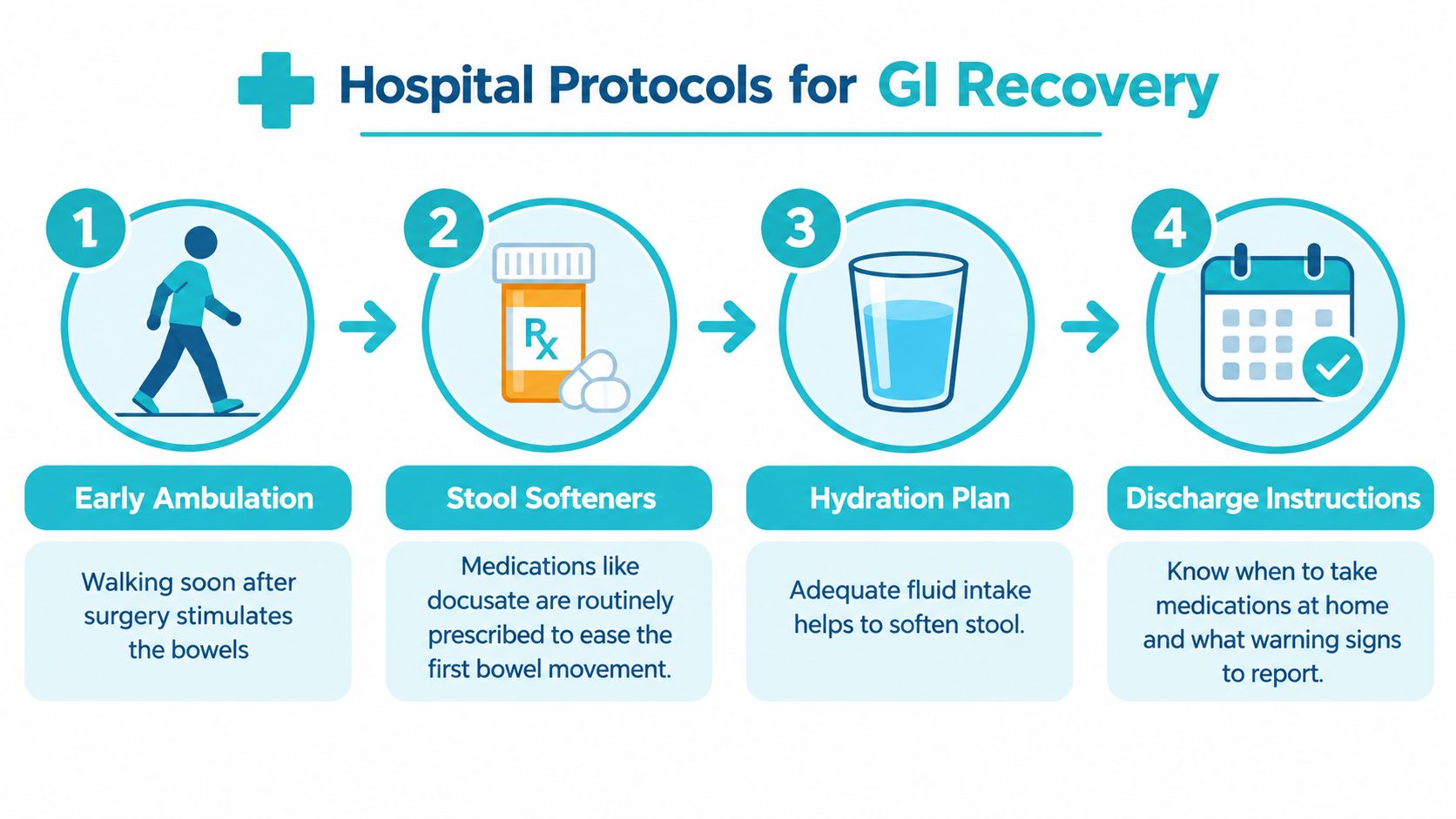
Before discharge, ask for written instructions rather than relying on memory while exhausted. Confirm when to take each medication, whether iron or opioid treatment could worsen constipation, what symptoms require a call, and whom to contact outside office hours. If the prescribed plan isn't working, report that before leaving instead of waiting until the stool becomes harder.
A small post-cesarean study illustrates why clinicians sometimes use medication selectively. Among 60 post-cesarean patients, 80% of those receiving laxatives had a bowel movement during hospitalization compared with 46.7% without laxatives, as reported in this cesarean-specific study. Those findings aren't universal benchmarks because the sample was small and protocols vary, but they support a conversation when symptoms persist.
Practical rule: Tell the team what is happening before discharge. A bowel regimen is easier to adjust early than after severe pain, distension, or vomiting develops.
For additional preparation around movement, incision care, and daily function, see these C-section recovery essentials.
Choosing Safe Laxatives and Stool Softeners
Breastfeeding can make medication decisions feel more complicated, but you don't have to choose between “natural” remedies and aggressive treatment. The appropriate option depends on stool consistency, bowel activity, hydration, other medicines, and whether your clinician is concerned about ileus or obstruction.
Compare the main categories
| Option | How it helps | What to discuss |
|---|---|---|
| Bulk-forming agents, such as psyllium | Adds bulk and holds water in stool. | It needs adequate fluid and may be unsuitable if obstruction is possible. |
| Stool softeners, such as docusate | Helps stool incorporate water, which may make passage more comfortable. | Ask whether it fits your symptoms and discharge plan. |
| Osmotic agents | Draw water into the bowel to soften stool and support passage. | Confirm the product, dose, timing, and breastfeeding considerations with a clinician or pharmacist. |
| Stimulant laxatives, such as bisacodyl | Encourages bowel contractions when a stronger effect is needed. | Use clinician guidance, especially after surgery or when pain and bloating are significant. |
A common mistake is adding a large amount of fiber while drinking too little. Fiber can help when introduced gradually with sufficient fluids, but an abrupt increase may leave you feeling more full and uncomfortable. If you're already distended, nauseated, or unable to pass gas, don't keep adding fiber at home. Contact your care team.
Breastfeeding parents should ask a pharmacist or obstetric clinician to review the exact product rather than assuming every over-the-counter medicine is interchangeable. Discuss prescribed iron, opioid pain medicine, allergies, prior bowel conditions, and the feeding plan. Medication choice should also account for whether the bowel is moving, not just whether stool hasn't appeared.
The evidence doesn't support treating every postpartum patient automatically. A Cochrane review of postpartum laxatives found insufficient randomized-trial evidence to establish their overall effectiveness and safety for immediate postpartum use, while cesarean-specific research suggests medication may help selected patients. That combination calls for a stepped plan, not a rigid rule.
If constipation keeps returning, pelvic floor coordination may be part of the problem. A pelvic health clinician can assess whether you're over-recruiting the pelvic floor, pushing excessively, or struggling to relax, as described in pelvic floor therapy for constipation.
Proper Positioning and Breathing Techniques
The safest push is usually a low-pressure exhale, not a prolonged, forceful bearing-down effort. Your abdominal incision may feel stretched because pressure changes inside the abdomen, but that sensation doesn't mean the wound is opening. Supporting the area and reducing unnecessary bracing can make the movement feel more controlled.

Set up your body
- Sit fully on the toilet. Avoid hovering, because partial weight-bearing can keep the pelvic floor tense.
- Place your feet on a stable low stool. Let your knees sit higher than your hips, and lean forward slightly while keeping your back supported rather than curling sharply over the incision.
- Hold a clean pillow against the lower abdomen. Use gentle, steady contact. You're providing comfort and sensory support, not compressing the wound forcefully.
- Relax your jaw and shoulders. The pelvic floor often responds to overall bracing. Unclench your teeth and let your belly move.
- Inhale into the ribs and abdomen. Allow the lower trunk to expand without forcing it.
- Exhale slowly as if blowing out a candle. Let the pelvic floor lengthen while the stool moves. Don't hold your breath and push until your face, neck, and abdomen are rigid.
Breathe around the effort. You're coordinating pressure, not trying to overpower the incision.
Give yourself time, but don't sit and strain through escalating pain. If nothing happens after a few relaxed attempts, stand up, walk if allowed, drink according to your care plan, and try again later. Repeated force can increase soreness and reinforce fear, while a calmer attempt gives the rectum and pelvic floor a better chance to coordinate.
Scar tissue also deserves a measured approach. In the early healing period, don't massage an incision unless your surgical team has cleared it and shown you what is appropriate. Later, a pelvic floor physical therapist may assess scar mobility, abdominal tension, breathing mechanics, and the way your trunk and pelvic floor share pressure during everyday tasks.
Hydration, Fiber, and Safe Mobility
A sustainable bowel routine is built from small actions repeated throughout the day, not one large intervention. Sip fluids regularly within your medical instructions, choose foods that provide gradual fiber, and take brief walks when your clinician has cleared you to move.
A postpartum education protocol cited a target of approximately 25 to 30 grams of fiber daily and at least 2 liters of fluid daily when not medically restricted, alongside early ambulation. Treat those figures as planning guidance, not a prescription. Your obstetric team may adjust them for swelling, blood pressure, kidney concerns, nausea, or other conditions.
Make the routine practical
Start with foods you tolerate. Oatmeal, pears, prunes, cooked vegetables, lentils, and whole grains can be easier to add gradually than a sudden large serving of raw produce. Pair fiber with fluids, and notice whether a particular food increases gas or discomfort.
Movement should be gentle and frequent. Walk to the bathroom, take a short corridor walk with assistance, or move around your room as permitted. Stop for dizziness, increasing incision pain, bleeding that concerns you, or unusual shortness of breath, and follow the mobility restrictions provided by your surgical team.
Don't treat fiber, water, and walking as substitutes for medical care when symptoms are worsening. They support normal bowel function, but they won't resolve a possible obstruction, ileus, infection, or medication problem. The goal is to keep stool from becoming harder while your care team monitors recovery.
Recognizing Red Flags and When to Seek Care
Some pressure, tenderness, gas, and hesitation are common during the first bowel movement after surgery. Symptoms that intensify or combine need a different response. They may signal a bowel problem, infection, medication issue, or a complication requiring examination.
Stop home treatment and contact your care team urgently for
- Increasing abdominal distension: Your abdomen becomes progressively swollen, tight, or more painful instead of gradually settling.
- Vomiting: This is especially concerning with bloating, worsening pain, or difficulty keeping fluids down.
- Inability to pass gas: Treat this as more urgent when it occurs with abdominal swelling or vomiting.
- Fever: Fever with increasing abdominal or incision pain requires prompt medical assessment.
- Worsening pain: Severe, escalating, or distinctly unusual pain should not be managed by taking additional laxatives.
- Rectal bleeding: Substantial or persistent bleeding, particularly with significant pain, needs evaluation.
- Incision changes: New separation, drainage, spreading redness, or rapidly increasing tenderness should be reported to the surgical team.
A cesarean incision is designed to tolerate normal movement and gentle bowel emptying. The fear that one careful bowel movement will open the wound is understandable, but forceful breath-holding and straining increase pressure through the abdomen and pelvic floor. Exhale as you allow stool to pass, keep the effort gentle, and stop if pain sharply increases. Scar sensitivity, protective muscle tension, and poor pelvic floor coordination can make this harder, even when the incision is healing normally.
As noted earlier, constipation is common after cesarean birth and after opioid use. If you have gone several days without a bowel movement, contact your clinician for individualized advice rather than repeatedly increasing fiber or laxatives. Vomiting, marked distension, or inability to pass gas warrants earlier assessment.
Call sooner rather than later if your instincts tell you this feels different from ordinary constipation. Your care team can decide whether you need an examination, medication adjustment, or other treatment.
If symptoms remain mild but stool has not passed, tell your obstetric office when you last passed stool and gas, what you have eaten and drunk, which medicines you take, whether pain is improving, and whether swelling is increasing. These details help distinguish delayed recovery from a problem needing prompt care.
Lake City Physical Therapy provides postpartum pelvic floor rehabilitation addressing breathing, relaxation, abdominal and trunk function, bowel regularity, excessive pushing, and C-section scar care. After medical complications have been ruled out, persistent fear, pain, or coordination difficulties may benefit from individualized support through Lake City Physical Therapy.

