What Causes Urinary Incontinence and How to Treat It
You cough while lifting your child, laugh with friends, or hurry to the bathroom, then notice a small leak. Maybe it started after pregnancy. Maybe it appeared around menopause. Maybe you've had it for years and assumed pads, constant bathroom trips, or avoiding exercise were part of life.
They aren't.
Urinary incontinence usually reflects a problem with storage, pressure, support, or nerve coordination, not a personal failure and not automatically an inevitable part of aging. Once the pattern is understood, treatment can be matched to the cause instead of relying on generic advice such as “just do Kegels.”
When Leaks Happen and Why You Are Not Alone
A woman named Maria notices leakage whenever she sneezes. She can walk, shop, and sleep normally, but a sudden cough creates a quick burst of urine. Her friend Dana has a different experience. Dana feels an intense urge while opening the front door and sometimes can't reach the toilet in time. Both women have urinary incontinence, but their bladder control systems are failing in different ways.
That distinction matters because the cause determines the treatment. A pelvic floor that struggles to respond to a jump may need strength and impact training. A bladder that contracts too early may need urge-suppression strategies and bladder retraining. Someone who can't empty fully needs a different medical evaluation altogether.
Urinary incontinence affects about 423 million adults aged 20 or older worldwide, according to a population estimate summarized by the National Center for Biotechnology Information in its clinical overview of urinary incontinence. The same source reports that 25% to 45% of women have some degree of urinary incontinence, with symptoms also affecting younger women and women over 60.
That means you're not unusual, careless, or alone. Leakage can follow childbirth, develop with hormonal changes, accompany diabetes or neurologic disease, or emerge when chronic constipation and increased abdominal pressure overload the system. It can also begin years after the original trigger, which explains why a person may wonder, “Why am I leaking now when my last baby was born so long ago?”
The most useful question isn't “What's wrong with me?” It's “Which part of my bladder-control system needs support?”
For a broader explanation of symptoms, assessment, and management, the complete guide to incontinence Australia can provide additional patient education. The sections below will help you recognize the main leakage patterns, connect them with likely causes, and understand when pelvic floor therapy or medical care makes sense.
How Bladder Control Works During the Storage Phase
Your bladder works more like a flexible reservoir with a coordinated valve system than like a simple container. The bladder wall, made largely of the detrusor muscle, relaxes as urine collects. At the same time, the bladder neck and urethra remain closed so urine stays inside until you choose to empty.
The pelvic floor adds a supportive hammock beneath the bladder and urethra. The urethral sphincter acts like an adjustable valve, while nerves send messages between the bladder, spinal cord, and brain. Continence depends on all of these parts working together at the right moment.
Pressure must stay on the right side
During storage, urethral closure pressure needs to remain higher than bladder pressure. Coughing, sneezing, running, lifting, and jumping briefly increase pressure inside the abdomen and bladder. A healthy support system responds by helping the urethra close firmly enough to resist that pressure.
Stress incontinence develops when that pressure balance fails. Clinical guidance describes stress leakage alongside findings such as bladder neck dilation, reduced functional urethral length, weaker bladder neck support, and lower maximum urethral closure pressures in relevant analyses. The Merck Manual's explanation of urinary incontinence mechanisms also identifies bladder outlet problems, detrusor overactivity or underactivity, and detrusor-sphincter dyssynergia as ways storage and emptying can go wrong.
Storage and emptying are different jobs
The bladder should remain relaxed while it stores urine, then contract when you intentionally urinate. If the detrusor contracts too soon, you may experience urgency and urge leakage. If it contracts weakly or the outlet remains obstructed, urine may remain behind, creating overflow symptoms. If the sphincter and bladder contract out of sequence, pressure can build against a closed outlet.
These problems can feel similar from the outside, but they aren't interchangeable. A person who leaks after a squat may need better pressure management and pelvic support. Someone who leaks after a sudden “gotta go” sensation needs a plan for bladder signals and urge control.
This short educational video offers another visual explanation of bladder function and control:
A pelvic floor clinician uses your symptoms to determine whether the main issue is force, timing, tissue support, muscle activity, or incomplete emptying. That's why an individualized assessment is more useful than performing the same exercise routine for every type of leakage.
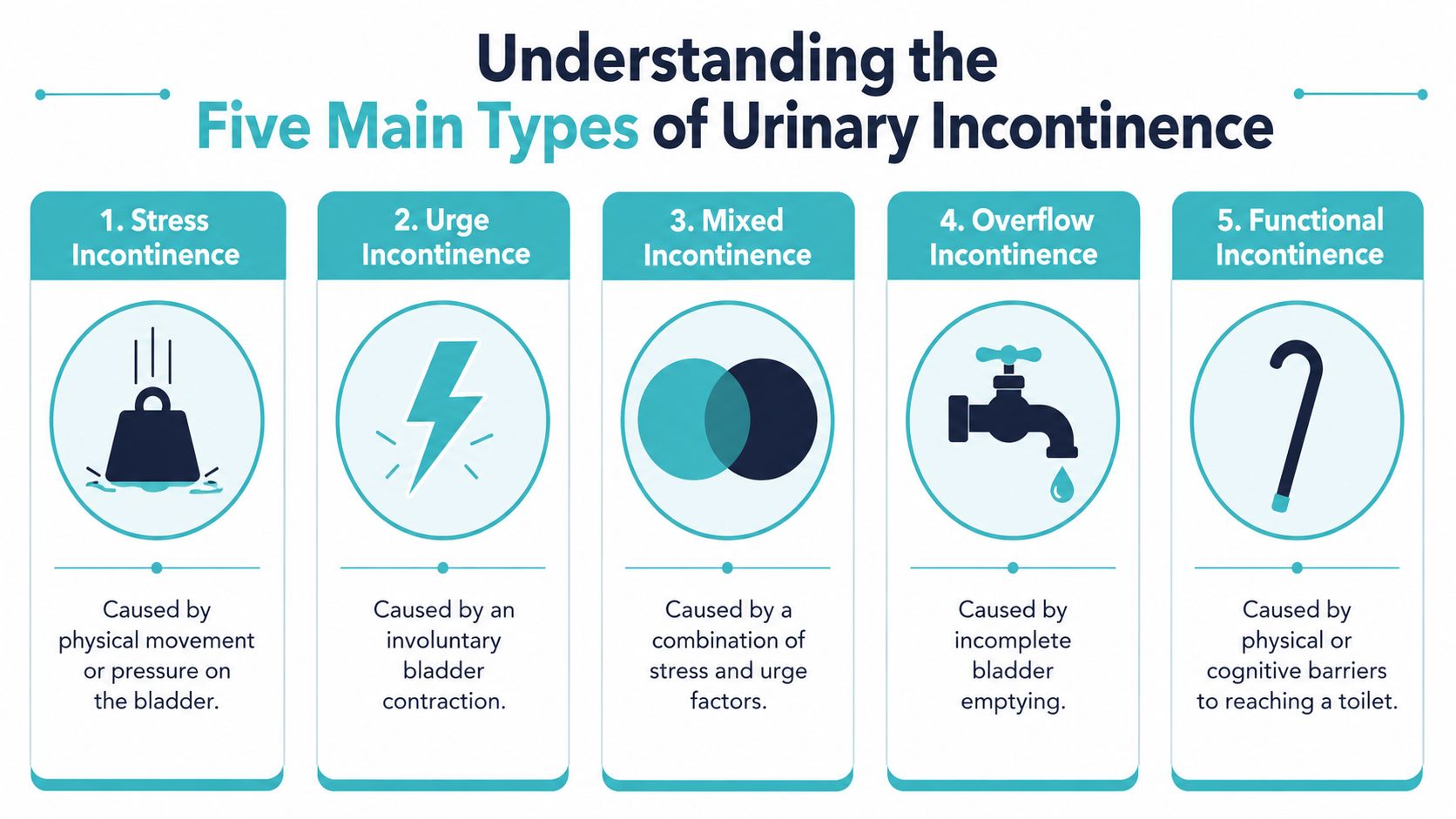
Understanding the Five Main Types of Urinary Incontinence
The easiest way to recognize urinary incontinence patterns is to compare the trigger, sensation, and amount of warning. These clues don't replace an examination, but they can help you describe the problem accurately.
| Type | Primary mechanism | Typical trigger | Hallmark clue |
|---|---|---|---|
| Stress incontinence | Reduced urethral or pelvic support | Coughing, laughing, lifting, running, or jumping | Leakage occurs with pressure or movement, often without strong urgency |
| Urge incontinence | Involuntary detrusor contraction | A sudden urge, hearing running water, or approaching the toilet | The urge feels immediate and difficult to defer |
| Mixed incontinence | Stress and urge mechanisms together | Exercise may trigger leakage, while urgency causes separate episodes | Both movement-related leaks and urgency-related leaks occur |
| Overflow incontinence | Incomplete emptying or outlet obstruction | Leakage from an overfilled bladder | Dribbling, weak flow, hesitancy, or a feeling that urine remains |
| Functional incontinence | Difficulty reaching or using the toilet | Mobility, environmental, or cognitive barriers | Bladder control may be present, but access or timing creates accidents |
Stress leakage is a pressure problem
Stress incontinence doesn't mean emotional stress. It means physical stress placed on the bladder and urethra. A cough, sneeze, laugh, lift, or landing can raise bladder pressure faster than the pelvic floor and sphincter can respond.
If this is the pattern you recognize, the guide on what causes stress incontinence offers a focused explanation. Treatment may involve pelvic floor strengthening, but it can also require coordination, breathing, hip and trunk mechanics, and graded exposure to impact.
Urgency changes the treatment target
Urge incontinence involves a bladder contraction that occurs before you're ready to urinate. You may feel a powerful need to go with little warning, leak on the way to the bathroom, or experience frequency without obvious exertion.
Mixed incontinence combines both patterns. You might leak during a run and also lose urine when urgency strikes. Treating only the pelvic floor's strength won't address every part of mixed leakage, so the plan may include both pressure control and bladder retraining.
Overflow and functional incontinence deserve particular care. Difficulty emptying can reflect obstruction, weak bladder contraction, medication effects, or nerve problems. Functional leakage may occur because pain, reduced mobility, clothing, or the bathroom environment makes timely access difficult. Those patterns call for medical review and practical support, not repeated squeezing exercises.
A worldwide review found a median female prevalence of 27.6%, with stress incontinence identified as the most common subtype at 50%, followed by mixed incontinence at 32% and urge incontinence at 14%. The review also reported 45% prevalence among U.S. women in population-based research (PubMed review).
What Causes Urinary Incontinence Across the Body Systems
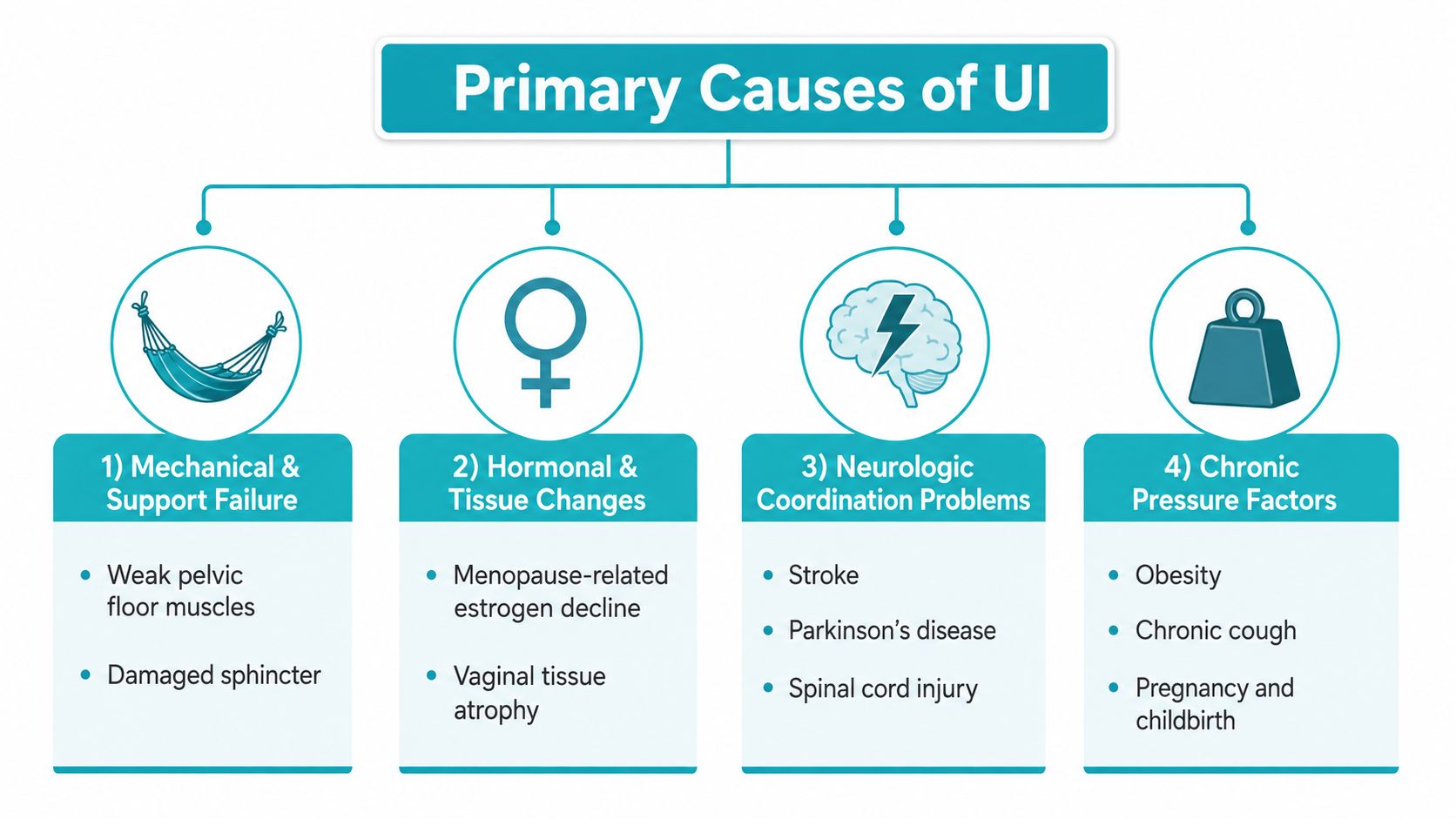
The causes become easier to understand when grouped by the part of the system under strain. Individuals often have more than one contributing factor, such as childbirth-related support changes combined with menopause, constipation, or increased body weight.
Mechanical and support failure
Stress leakage often begins with changes in the structures that keep the urethra closed during movement. Pregnancy and vaginal birth can stretch or injure pelvic floor muscles, connective tissue, and nerves. The levator ani and urethral support system may then respond less effectively when abdominal pressure rises.
Intrinsic sphincter deficiency is another possibility. In this situation, the urethral sphincter itself may not generate enough closing force, even if a person is making a good effort with pelvic floor contractions. Bladder neck support, functional urethral length, and the ability to coordinate the pelvic floor with movement all influence the result.
Hormonal and tissue changes
Estrogen loss around menopause can affect vaginal and urethral tissues. Vaginal atrophy may contribute to irritation, urinary symptoms, and reduced tissue resilience. This is one reason leakage can appear or worsen long after pregnancy, rather than being limited to the postpartum period.
Neurologic coordination problems
The bladder and sphincter depend on accurate communication between the brain, spinal cord, and peripheral nerves. Neurologic disease can disrupt sensation, detrusor activity, sphincter relaxation, or the ability to recognize and respond to bladder signals. Depending on the disruption, a person may experience urgency, retention, overflow, or mixed symptoms.
Chronic pressure and tissue stress
Obesity, constipation, chronic coughing, smoking, and diabetes can add repeated pressure or affect tissue and nerve health. Aging may increase detrusor overactivity, reduce bladder contractility, and lower urethral closure pressure. These mechanisms are described in a clinical review of female urinary incontinence causes.
Continence depends on balance. The bladder must store without contracting too early, while the urethral outlet and pelvic support must resist pressure without blocking emptying.
You can reduce some daily contributors by addressing constipation, treating persistent cough, reviewing bladder irritants with a clinician, and building movement gradually. A practical collection of bladder leakage prevention tips may help you identify habits to discuss with your healthcare provider.
Key Risk Factors That Make Leaks More Likely Over Time
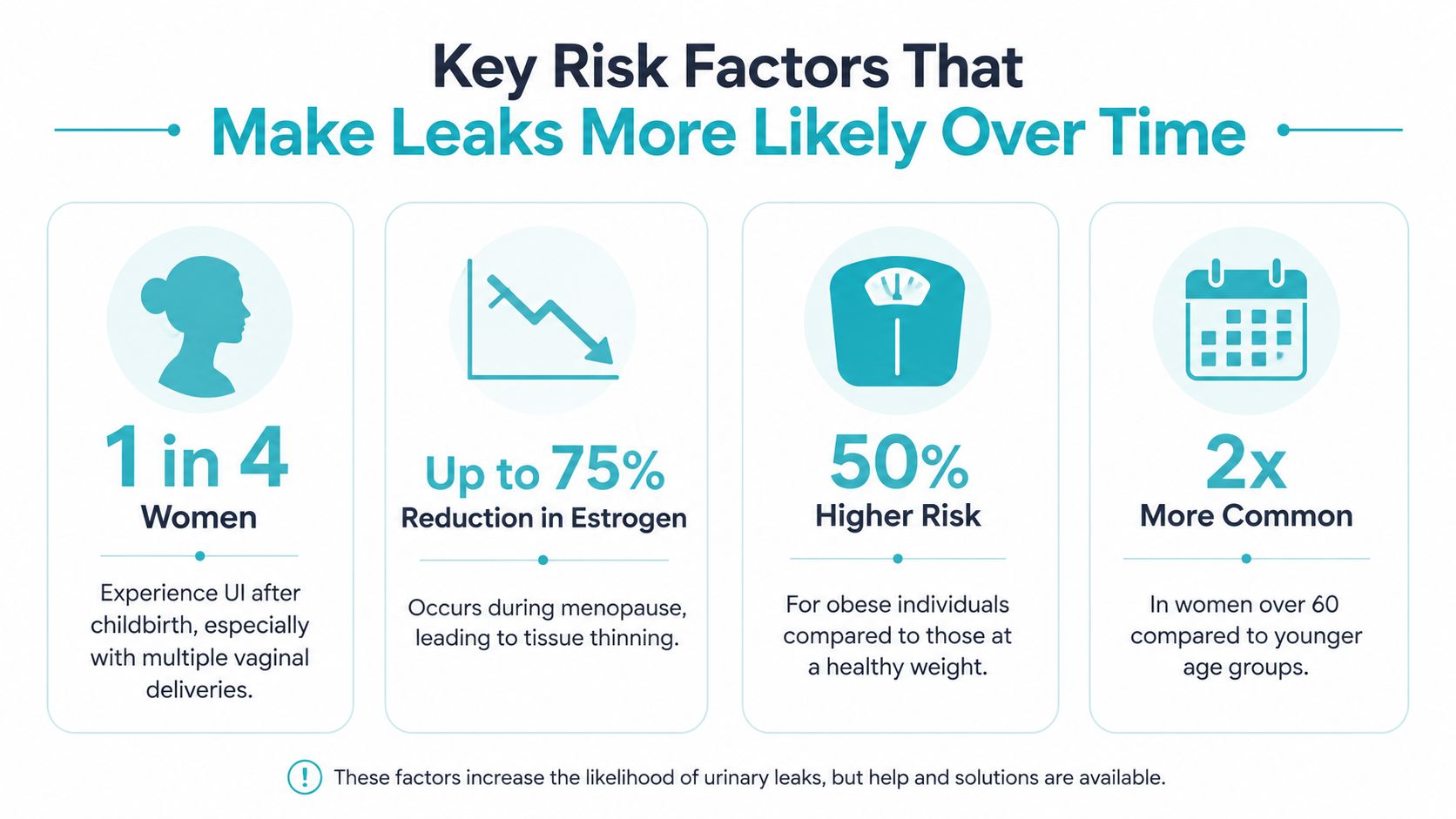
Risk factors often work as a chain rather than a single cause. Pregnancy may stretch the pelvic floor, childbirth may add nerve or muscle trauma, and later menopause may change tissue quality. If constipation, smoking, increased BMI, or a chronic cough adds repeated pressure, symptoms can become noticeable years after the original event.
Life stages can leave different footprints
Pregnancy increases load on the pelvic floor and changes how pressure moves through the abdomen. Multiple or complex vaginal deliveries, high infant birth weight, and delivery-related trauma can increase the challenge to pelvic support. A person may recover well at first, then notice leakage later when running, lifting, or entering a new hormonal stage.
Menopause can alter vaginal and urethral tissue through estrogen loss and atrophy. That doesn't mean every woman will develop incontinence, and it doesn't mean symptoms should be dismissed as “just aging.” It means a clinician should consider tissue health alongside muscle strength and bladder behavior.
Age-related changes can affect bladder contractions, sensation, contractility, and urethral closure. Hysterectomy and other pelvic procedures may also be relevant to a person's history, although their significance depends on the individual's anatomy, symptoms, and recovery.
Health conditions and daily factors matter
The National Center for Biotechnology Information identifies associations between urinary incontinence and pregnancy, childbirth, diabetes, increased BMI, age-related changes, multiple vaginal deliveries, high infant birth weight, hysterectomy, postmenopausal changes, smoking, and constipation. These factors don't prove that one event caused a particular person's symptoms, but they help a clinician decide what to investigate.

A recent European urology overview also reports meaningful associations involving higher BMI, hypertension, multiple vaginal deliveries, bladder-emptying difficulty, depression, and smoking. Those findings support a broader view of continence. Your pelvic floor deserves attention, but so do blood pressure, bowel habits, mood, medications, mobility, and bladder emptying.
Some risks can't be changed, such as age or past childbirth. Others may be addressed gradually with clinical support. The goal isn't blame or rapid weight loss. It's to identify which pressures, tissue changes, movement demands, or coordination problems are modifiable for you.
How Incontinence Is Evaluated and Treated With Evidence Based Care
A useful evaluation starts with the leakage pattern, not with an automatic prescription for Kegels. Your clinician may ask when leakage occurs, whether urgency comes first, how often you urinate, whether you strain to empty, what medications you take, and whether symptoms began after childbirth, surgery, menopause, illness, or a change in activity.
A bladder diary can reveal patterns that are difficult to remember during an appointment. Record drinks, urination, urgency, leakage, activity, bowel symptoms, and nighttime episodes for several days. The purpose isn't to monitor yourself perfectly. It's to show whether the main issue appears related to pressure, urgency, incomplete emptying, or access to the toilet.
The assessment should test function
A pelvic floor physical therapist may assess breathing, abdominal pressure management, posture, hip and trunk movement, pelvic floor contraction and relaxation, endurance, and the ability to coordinate a contraction with coughing or lifting. The clinician may also check whether you can fully relax. A constantly clenched pelvic floor can contribute to urgency, pain, or difficulty emptying, so stronger isn't always better.
Medical evaluation may include urine testing or other investigations when symptoms suggest infection, blood in the urine, significant retention, neurologic disease, or another condition requiring medical management. Seek prompt care for visible blood, fever, painful urination, new severe pelvic or back pain, sudden neurologic changes, or an inability to urinate.
Treatment follows the mechanism
For stress incontinence, treatment can include pelvic floor muscle training, exhalation and pressure control, lifting technique, graded impact, and strategies that prepare the pelvic floor before a cough or movement. For urgency, therapy may use urge suppression, bladder retraining, scheduled voiding, fluid and irritant review, relaxation, and coordination work. Mixed symptoms need a combined plan.
Medical treatments may also have a role. Depending on the cause, a healthcare professional may discuss topical tissue treatment, medication, devices, procedures, or surgery. Overflow symptoms require particular caution because strengthening without addressing retention or obstruction may miss the central problem.
Patient participation makes the plan more useful. Tracking symptoms, practicing the assigned exercises, reporting side effects, and adjusting goals with your clinician are all part of active patient participation in care plans. For an overview of available approaches, see incontinence treatment options.
Lake City Physical Therapy provides women's health pelvic floor therapy for urinary incontinence, as well as prenatal, postpartum, oncology, and women's sports rehabilitation. Care can include individualized exercise, bladder strategies, movement retraining, and education, with clinic locations across North Idaho and Eastern Washington and telehealth availability.
Taking the Next Step Toward Dryness and Confidence
You don't need to identify the exact diagnosis before asking for help. Start by observing the pattern: does urine escape with coughs and movement, follow a sudden urge, drip after incomplete emptying, or happen because reaching the toilet is difficult? Write down triggers, urgency, bowel symptoms, nighttime urination, and recent changes in health or medication.
Use pads as a practical tool if needed, but don't let them become the only plan. Persistent leakage can affect exercise, work, intimacy, sleep, and confidence, while the underlying cause may respond to targeted treatment. The guide on how to stop leaking urine can help you think through the next steps.
Contact a healthcare professional promptly if you see blood in your urine, develop fever or painful urination, cannot empty your bladder, experience sudden severe symptoms, or notice new weakness, numbness, or loss of bowel and bladder control. These signs need medical assessment rather than self-directed pelvic floor exercises.
For ordinary but frustrating leakage, pelvic floor physical therapy can provide a clear starting point. A clinician can determine whether you need strength, relaxation, timing, bladder retraining, pressure management, tissue care, or referral for additional medical evaluation. Your symptoms are information, not a verdict on your body.
Lake City Physical Therapy offers personalized pelvic floor therapy for urinary incontinence, including bladder retraining, movement strategies, and pelvic floor rehabilitation designed to your symptoms. Visit Lake City Physical Therapy to explore locations in North Idaho and Eastern Washington, telehealth availability, and convenient scheduling.

